
Find the perfect alarm to keep your household safe from invisible threats with our top-rated choices for homeowners and renters.
Key Takeaways
- Electrochemical sensors provide the most accurate detection and are the widely recommended choice for modern home safety.
- Interconnected devices offer superior protection by triggering all alarms in the house when one detects danger.
- Proper placement is just as critical as the device itself, with experts recommending detectors on every level of your home.
Carbon monoxide (CO) is often called the “silent killer” because it is colorless, odorless, and tasteless, making it impossible to detect without help. While no one wants to imagine a gas leak in their home, having a reliable detector is an essential, highly effective layer of defense that protects your family from this invisible threat. Whether you are renting a studio apartment or managing a large multi-story house, investing in the right monitoring system gives you peace of mind and potentially saves lives. If you are currently setting up services for a new place, adding these devices to your moving utilities checklist is a smart step. We have compiled a list of the best carbon monoxide detectors for every living situation so you can find the perfect match for your safety needs.
How We Selected Top-Rated Carbon Monoxide Detectors

To choose the best detectors for this year, we analyzed market-leading models based on critical safety criteria. We prioritized devices that are UL Listed (meeting Underwriters Laboratories safety standards) and feature electrochemical sensors, which are widely regarded by safety experts for their accuracy. We also evaluated ease of installation, the clarity of alerts (such as voice or digital displays), and reliability features like battery backups. While we did not conduct laboratory testing ourselves, our recommendations are based on manufacturer specifications, safety agency guidelines, and verified user satisfaction.
Quick Comparison: Top Carbon Monoxide Detectors of 2025
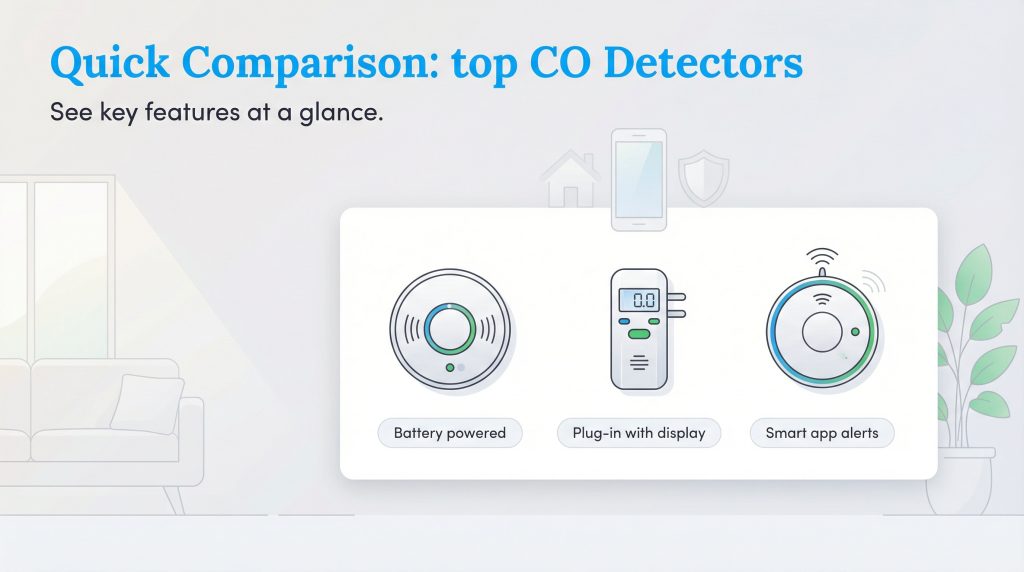
| Product Name | Best For | Power Source | Key Feature | Price |
|---|---|---|---|---|
| Kidde Nighthawk (KN-COPP-3) | Best Overall | Plug-In + 9V Backup | Digital Display | ~$45.00 |
| First Alert SC5 | Best Smart Tech | Hardwired (w/ 3V backup) or Pure Battery (CR123A) | Precision Sensors, Voice & App Alerts | ~$110.00 |
| First Alert CO615 | Best for Renters | Plug-In + 9V Backup | Simple Setup | ~$36.00 |
| Kidde KN-COB-IC | Best Hardwired | Hardwired + 9V Backup | Interconnectable | ~$49.00 |
| Kidde KN-COPP-B-LPM | Best Battery-Operated | 3 AA Batteries | Flexible Placement | ~$28.00 |
Best Overall Carbon Monoxide Detector
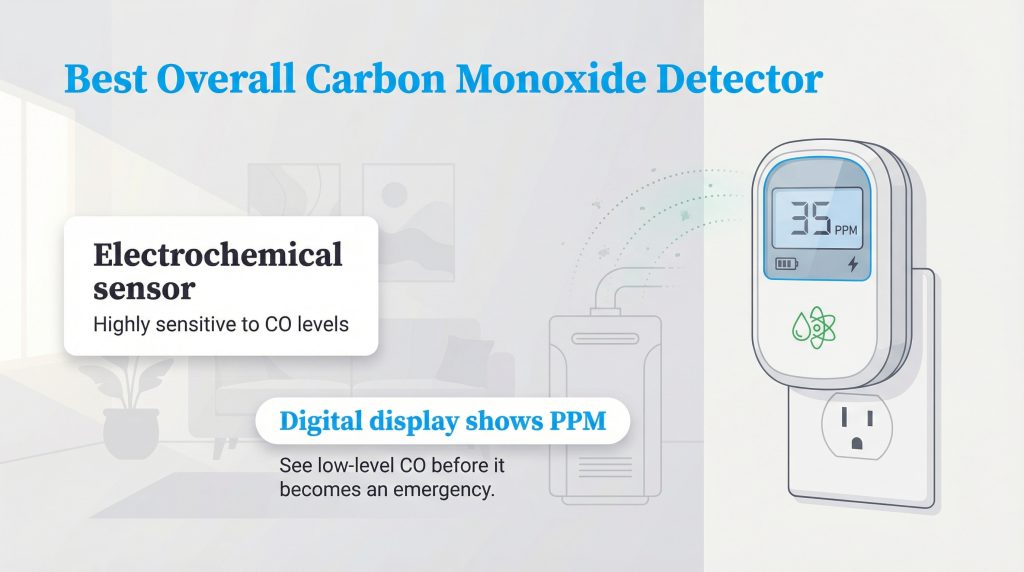
For most homes, the best choice is a standalone unit that balances accuracy, affordability, and ease of use. Our top pick is the Kidde Nighthawk (KN-COPP-3), a widely trusted model that has set the standard for residential safety. We specifically recommend looking for a model like this that is equipped with an electrochemical sensor and a digital display. The electrochemical sensor is highly sensitive to CO levels, ensuring you get alerted to danger quickly.
The digital display on the Nighthawk is a key feature because it shows you the current parts per million (PPM) of carbon monoxide in your air. While a standard alarm only beeps when levels become dangerous, a digital screen allows you to see if low levels are present, which could indicate a developing issue with an appliance before it becomes an emergency. These units are typically plug-in with a battery backup, making them easy to install anywhere.
Best Smart Carbon Monoxide Detector
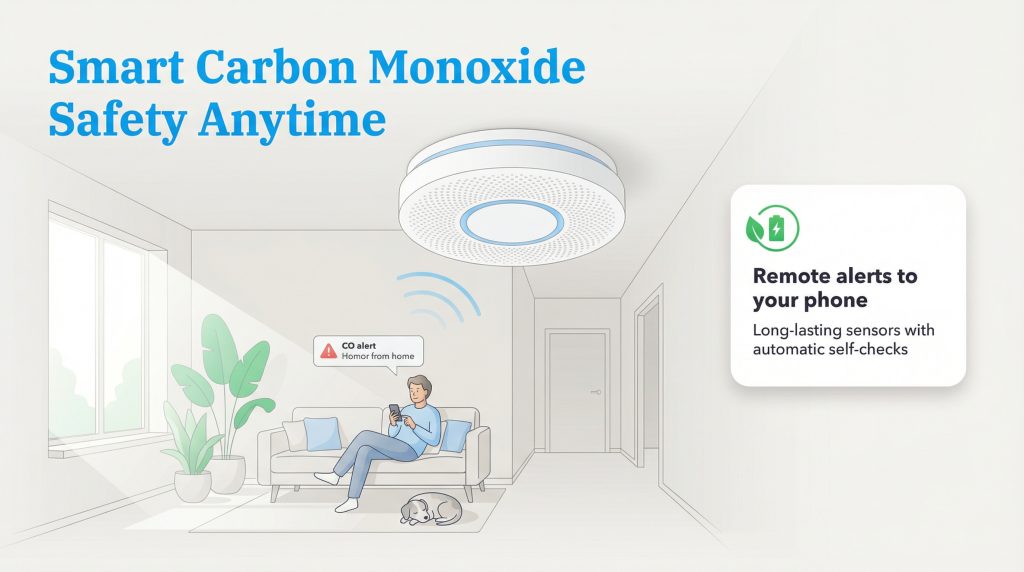
For homeowners who demand the ultimate in connected residential safety, or for those staring down the imminent expiration date of their beloved Google Nest Protect, the First Alert SC5 Smart Smoke and Carbon Monoxide Alarm is the undisputed champion of the modern smart tech category. Because Google has officially discontinued the manufacturing of the Nest Protect, they partnered directly with First Alert to engineer the SC5 as its seamless, officially recommended successor.
The SC5’s greatest strength is how effortlessly it bridges the logistical gap left by its predecessor. If you are upgrading from an expired Nest Protect, you will be thrilled to discover that the SC5 utilizes the exact same mounting bracket, meaning absolutely no drilling, no patching drywall, and zero installation headaches. The hardwired version even includes a specialized quick-connect adapter that snaps directly into your existing Nest wiring harness.
Beyond its frictionless installation, the SC5 operates as a highly sophisticated dual-threat monitor. It is equipped with advanced “Precision Detection” technology that meets the rigorous new UL 217 9th Edition standards. This means the 10-year electrochemical sensor provides hyper-accurate carbon monoxide readings, while the advanced photoelectric smoke sensor is meticulously calibrated to distinguish between a genuine, highly combustible synthetic fire and a slightly overcooked steak. This algorithmic precision drastically reduces those frustrating, ear-splitting cooking false alarms.
In the event of a genuine emergency, the SC5 refuses to rely on a jarring, chaotic siren alone. Instead, it utilizes a sophisticated voice-alert system, providing a “Heads-Up” warning that clearly announces both the type of danger and its exact location (e.g., “Warning! Carbon Monoxide detected in the utility room!”). Because the units wirelessly interconnect via an internal mesh network, an alarm triggered in the basement will cause the unit in your master bedroom to immediately wake you up and tell you exactly where the problem is originating.
Furthermore, if you are away from home, the SC5 leverages your dual-band Wi-Fi network to send instant push notifications directly to your smartphone via the First Alert or Google Home application. This constant connectivity allows you to contact emergency services or a trusted neighbor immediately, rather than relying on an alarm that no one is home to hear. The application also actively monitors battery life and overall sensor health, mercifully sending a silent push notification to your phone when the battery voltage runs low, forever eliminating the dreaded 2:00 AM diagnostic chirp.
Pros:
- The Official Successor: Acts as the direct, Google-endorsed replacement for the discontinued Nest Protect, utilizing the exact same physical mounting bracket and electrical wiring connectors for instant, tool-free installation.
- Precision Detection Technology: Certified to the latest UL 217 9th Edition standards, significantly reducing false alarms from cooking steam while rapidly identifying fast-burning synthetic fires.
- Advanced Smart Alerts: Delivers detailed push notifications to your smartphone anywhere in the world and provides localized voice alerts identifying the specific room and threat.
- Ecosystem Harmony: Interconnects wirelessly with other SC5 units and integrates seamlessly into the Google Home ecosystem, even operating alongside your remaining, unexpired Nest devices.
Cons:
- Feature Omissions: Unlike the ultra-premium Nest Protect, the SC5 unfortunately lacks the embedded ambient nightlight (pathlight) and passive motion sensor.
- Ecosystem Limitations: Currently optimized strictly for the Google Home environment; it lacks native integration with Apple HomeKit, Amazon Alexa voice assistants, or universal Matter protocols.
- Aesthetic Shift: The physical housing relies on a standard injection-molded plastic build that feels slightly less robust than the heavy-gauge finish of its predecessor.
Best Plug-In Carbon Monoxide Detector for Renters
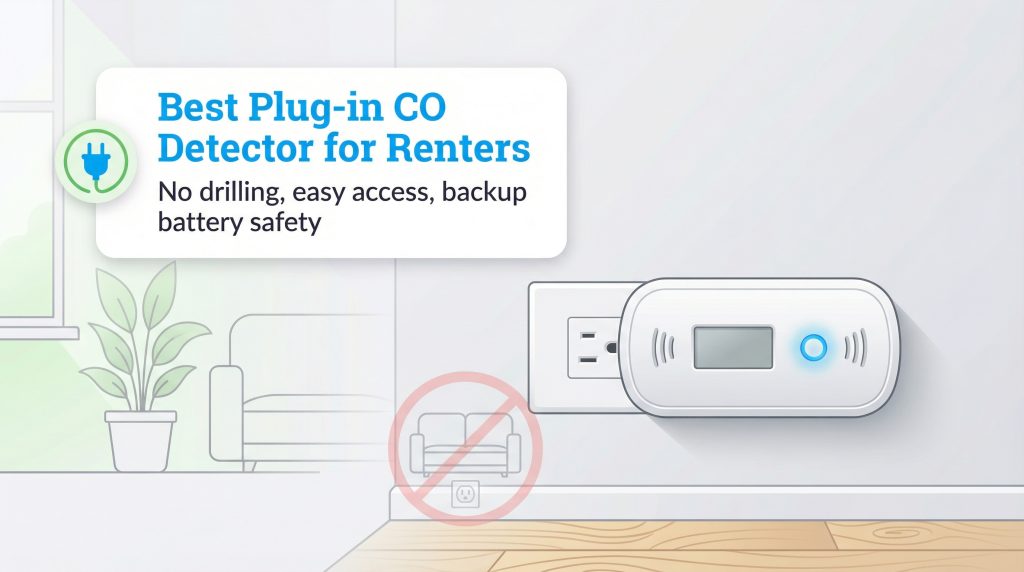
Renters need safety solutions that don’t require drilling holes or messing with electrical wiring. A plug-in carbon monoxide detector, such as the First Alert CO615, is the perfect solution for apartment living. You simply plug the device into any standard wall outlet, and it begins monitoring the air immediately. Because power outages often accompany storms, which is also when people might use portable generators, these units come with a backup battery to keep them running even when the electricity goes out.
Since these sit lower to the ground than ceiling-mounted units, they are easy to test and inspect. Just ensure the outlet you choose isn’t blocked by a couch or heavy curtains, as airflow is necessary for the sensor to work correctly.
Best Hardwired Carbon Monoxide Detector
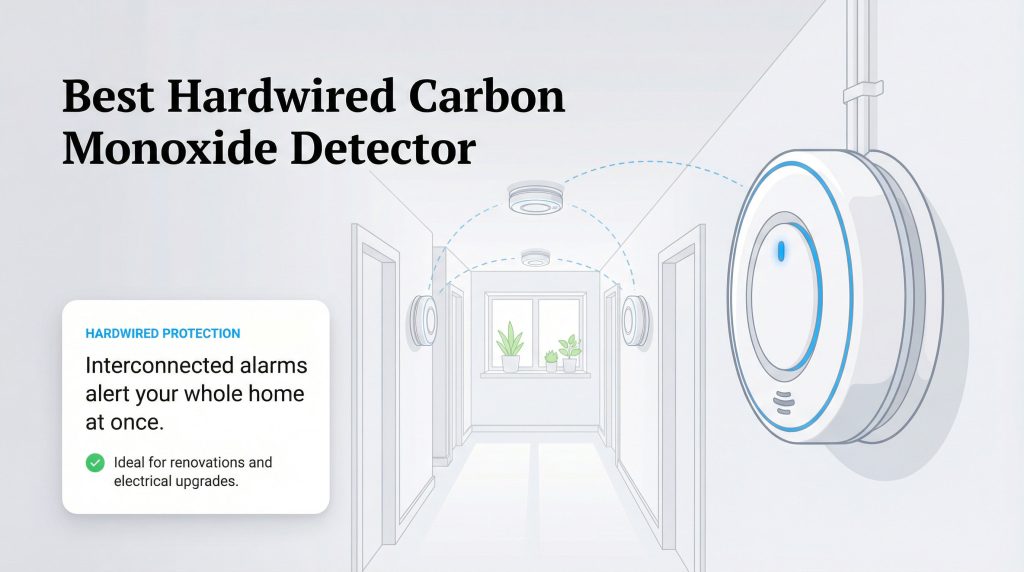
If you are a homeowner undergoing renovations or looking to replace existing wired units, hardwired detectors are one of the most reliable forms of protection. Models like the Kidde KN-COB-IC connect directly to your home’s electrical system, usually with a battery backup for emergencies. The biggest advantage here is “interconnectivity.”
With interconnected hardwired units, if the detector in your basement senses carbon monoxide, every alarm in the house will sound. This ensures that even if you are sound asleep in a second-floor bedroom, you will hear the alert from the basement immediately. Installation generally requires a professional electrician unless you have confident DIY electrical skills, but the whole-home coverage is unmatched. If you are updating your electrical system, you might also want to check our guide on saving on your electric bill.
Best Combination Smoke and Carbon Monoxide Detector
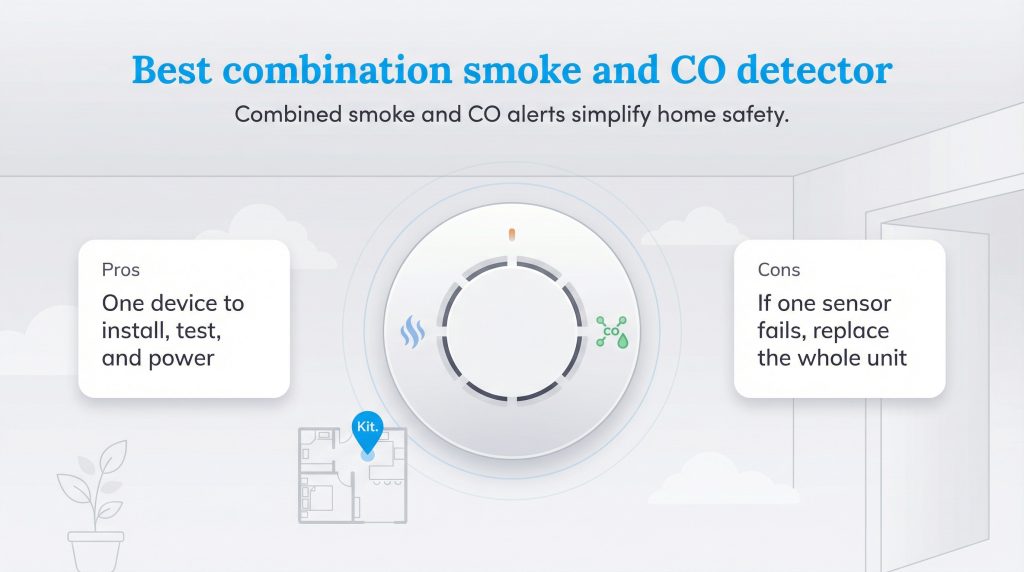
Many people prefer 2-in-1 devices to reduce the number of gadgets on their ceilings. A combination smoke and carbon monoxide detector handles both threats in a single unit. This simplifies maintenance since you only have one device to test and one battery to change. Major brands like Kidde and First Alert offer many UL-listed models in this category.
The main difference often comes down to the alert style. Some First Alert models offer programmable voice alerts that tell you exactly what the danger is and where it is located (e.g., “Warning! Carbon Monoxide in Kitchen”). This can be less panic-inducing than a generic siren. The potential downside to combination units is that if one sensor fails, you must replace the entire device, which can be more expensive than replacing a single-function alarm.
How to Choose the Right Sensor and Power Source
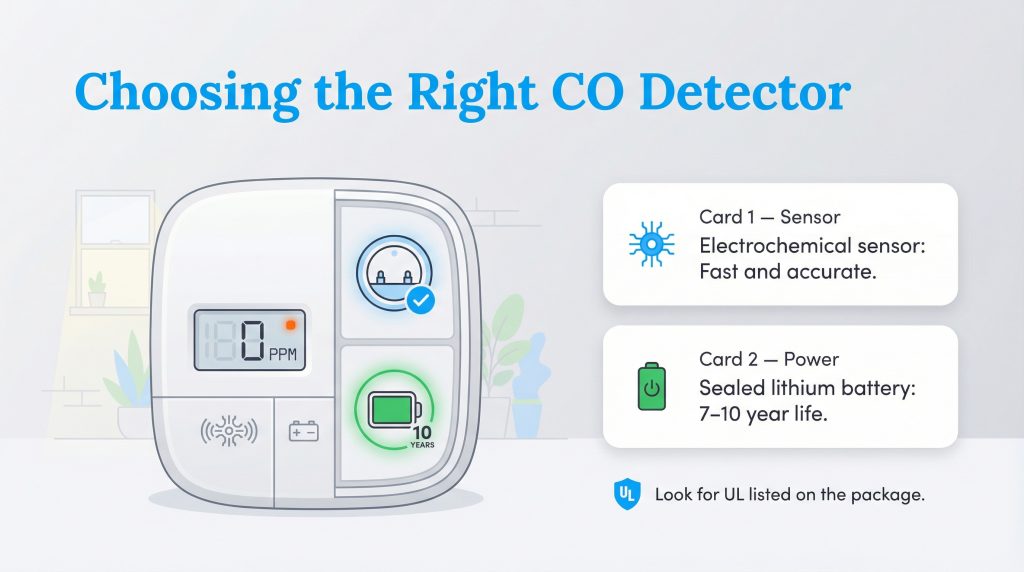
When shopping for a detector, the technology inside matters. You will generally see two types of sensors: electrochemical and metal oxide. Experts widely recommend Electrochemical Sensors because they are highly accurate and respond quickly to varying levels of CO. Always check the packaging to ensure the device is “UL Listed,” meaning it meets strict safety standards set by Underwriters Laboratories.
Power source is your next big decision. You can choose between replaceable batteries (usually AA or 9V) and sealed lithium batteries. Detectors with sealed lithium batteries are designed to last for the full 7 to 10-year life of the unit. While they might cost a few dollars more upfront, you won’t have to buy replacement batteries every six months. This convenience also prevents that annoying low-battery chirp at 2 a.m.
Best Battery-Operated Carbon Monoxide Detector for Flexible Placement
For areas without outlets or hardwiring, a battery-operated unit like the Kidde KN-COPP-B-LPM is ideal. These freestanding units can be placed on a shelf or mounted to a wall anywhere in the room. They are particularly useful for older homes with fewer outlets or for travel use.
Where to Install Carbon Monoxide Detectors
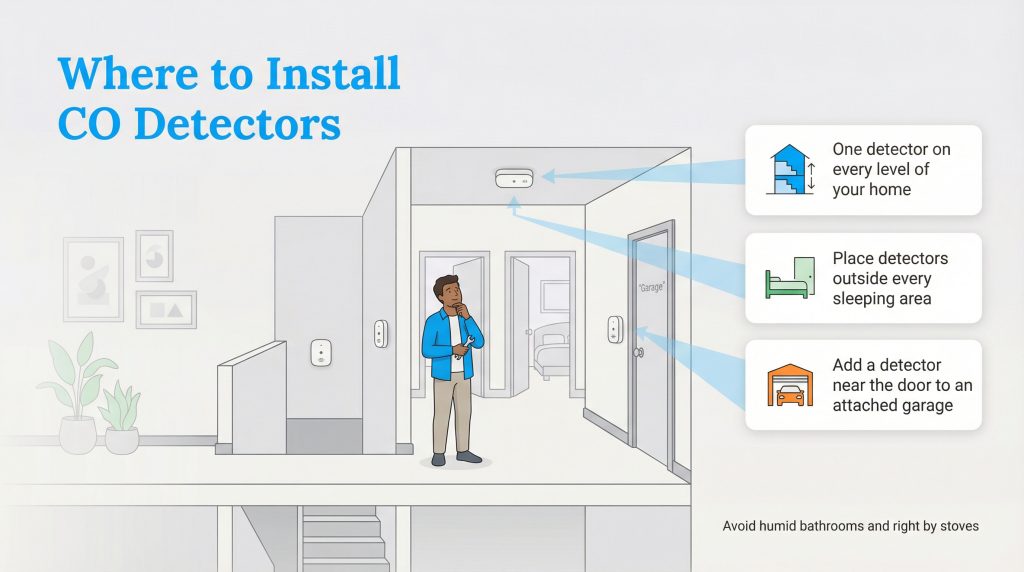
Carbon monoxide detector placement is crucial because carbon monoxide can accumulate anywhere in your home. At a minimum, you should install a detector on every level of your house, including the basement. It is especially important to place them outside every sleeping area so the alarm will wake you up if a leak occurs at night. If you have an attached garage, ensure there is a detector inside the house near the door connecting to the garage.
There is often confusion about height. Because carbon monoxide mixes with the air in a room, detector height is usually flexible. You can often mount them on a wall or ceiling as long as you follow the manufacturer’s recommendations. However, avoid installing them in humid bathrooms or directly next to a stove, as steam and normal cooking heat can trigger false alarms. For a comprehensive approach to safety, consider adding this step to your broader home safety plan.
Decoding the Beep: Maintenance and Lifespan
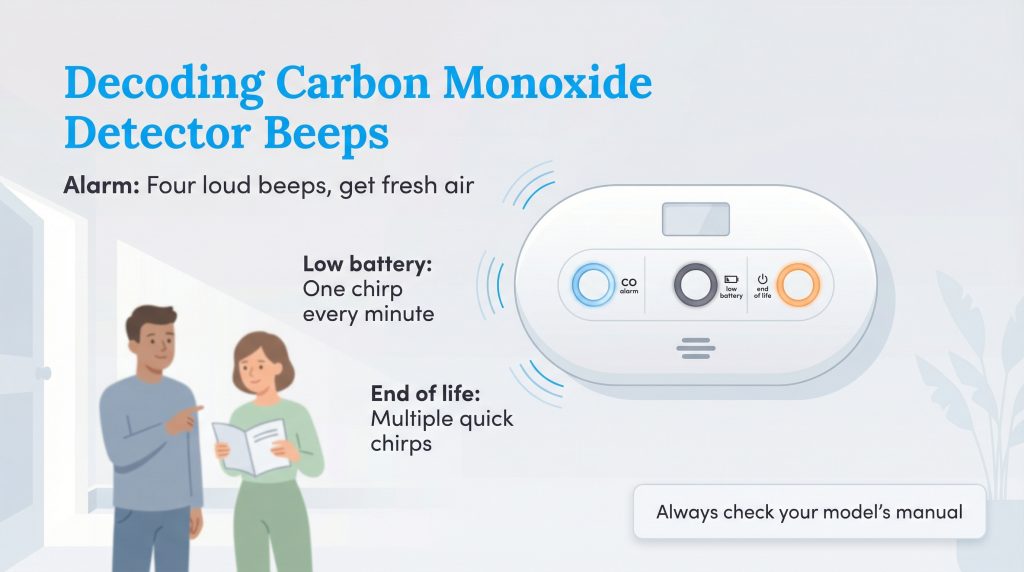
Carbon monoxide detectors speak their own language, and knowing what the beeps mean is vital. Many brands use four loud beeps followed by a pause to signal a CO emergency, you should move to fresh air immediately. If the unit chirps once every minute, it usually means the battery is low. Some models use different patterns, like multiple quick chirps, to indicate the detector is at the end of its life. Always confirm the exact meaning in your detector’s user manual.
To keep your sensors working accurately, gently vacuum the outside of the detector once a year to remove dust and pet dander. Clogged vents can prevent air from reaching the sensor. For more detailed information on safety standards and response plans, you can review resources from the Consumer Product Safety Commission (CPSC).
Prioritizing Prevention With the Right Detector
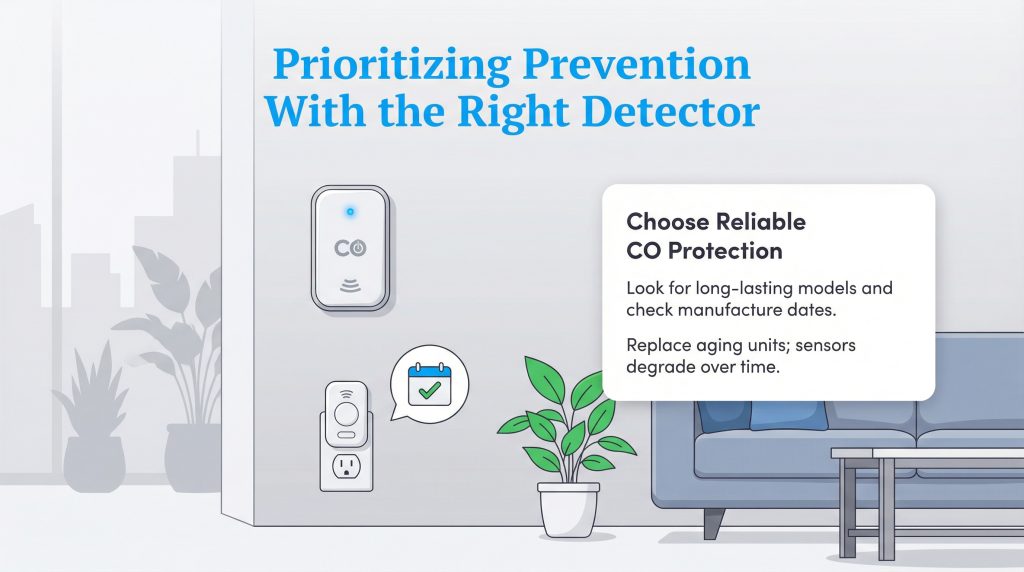
Investing in a high-quality carbon monoxide detector is one of the smallest investments you can make for a massive return on safety. Whether you choose a smart device that texts your phone or a simple plug-in unit for your apartment, the most important thing is that you have one installed and working. By choosing long-lasting models and maintaining them properly, you are building a home that is not only safer but also more efficient and sustainable. Before you install any new device, flip it over and check the manufacture date on the back to ensure you aren’t buying old stock, as the sensors degrade over time.
FAQs About Carbon Monoxide Detectors
What is the difference between a smoke detector and a carbon monoxide detector?
How often should I replace my carbon monoxide detector?
Can I just use one CO detector for my whole house?
Do carbon monoxide detectors detect natural gas leaks?
What should I do if the alarm goes off?
About the Author

LaLeesha has a Masters degree in English and enjoys writing whenever she has the chance. She is passionate about gardening, reducing her carbon footprint, and protecting the environment.