Learn how to check WM availability, choose the right cart size, compare local pricing, and avoid common trash-service fees.
Key Takeaways
- Confirm whether your home is covered by a municipal WM contract or an open-market trash plan.
- Compare cart sizes, pickup frequency, recycling options, and fees before you enroll.
- Use your service address, not just your ZIP code, to verify pickup schedules and service rules.
If you need to set up Waste Management (WM) services at a new home, start by confirming whether the company serves your address and whether your city or homeowners association already has a contracted provider. Moving is stressful enough without worrying about where your moving boxes and weeknight dinner scraps are going to end up, so getting your essential utilities humming along in the background is a top priority. Navigating the WM new customer setup process does not have to be a headache, as long as you understand your local service boundaries, select the right container for your family, and note your designated collection days.
Waste Management Coverage Area and Major Cities
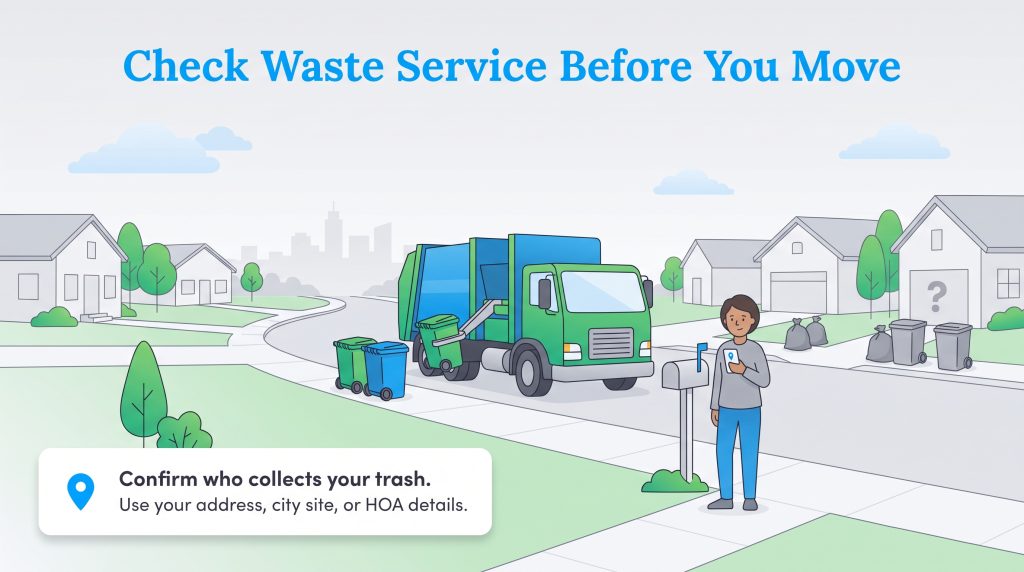
Waste Management operates a massive nationwide footprint, making it one of the largest environmental services providers in North America. We know that checking your Waste Management coverage area is a critical first move on your new home utility setup checklist. While the company covers extensive territories, residential curbside availability depends entirely on your exact street address. Service areas often rely on complex local zoning agreements, meaning WM might operate on one side of a neighborhood but not the other.
You will find comprehensive WM collection routes across 10 major U.S. metropolitan areas, including:
- Atlanta, Georgia
- Chicago, Illinois
- Dallas-Fort Worth, Texas
- Denver, Colorado
- Houston, Texas
- Los Angeles, California
- Miami, Florida
- Phoenix, Arizona
- Seattle, Washington
- Tampa, Florida
Because city boundaries dictate who handles residential waste, you cannot assume your previous provider will tag along to your new ZIP code. To ensure you aren’t left with overflowing garbage bags on the curb during your first week, use the official online address checker on WM.com to confirm exact neighborhood-level service boundaries.
Municipal Contracts vs. Open-Market Trash Plans
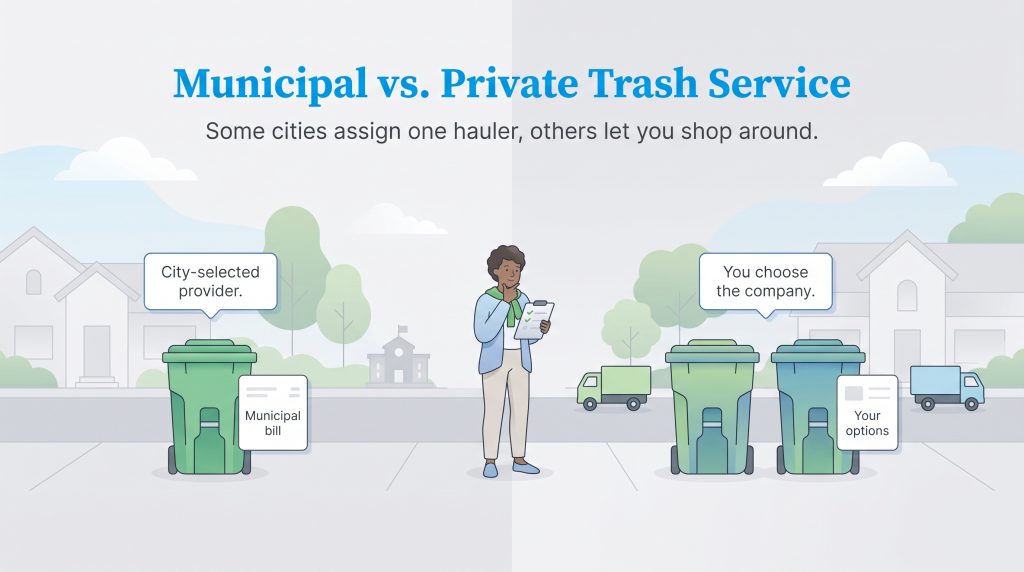
One of the biggest points of confusion for new homeowners involves understanding whether they even have a choice in their waste collection provider. The answer is a bit of both, depending on where you live. WM is a non-government, investor-owned company, but it frequently provides residential collection through exclusive contracts with local governments. If your city has a franchise agreement with WM, you must use their Waste Management trash service, and the cost is typically rolled right into your municipal water or city utility bill.
Conversely, if you live in an open-market area, the local government leaves trash collection entirely up to the residents. In these open-market zones, you must research companies, compare rates, and subscribe directly with a provider of your choosing. This approach gives you the flexibility to shop around, but it also requires a bit more legwork on your end to secure the best service.
| Service Type | Who Chooses the Provider? | How You Are Billed | Best Next Step |
|---|---|---|---|
| Municipal Contract | City government or HOA | Rolled into municipal utility bill | Verify setup with your city water or public works department. |
| Open-Market Subscription | You (the resident) | Billed directly by the waste provider | Compare local private haulers and request quotes. |
Waste Management Plans, Bin Sizes, and Pricing
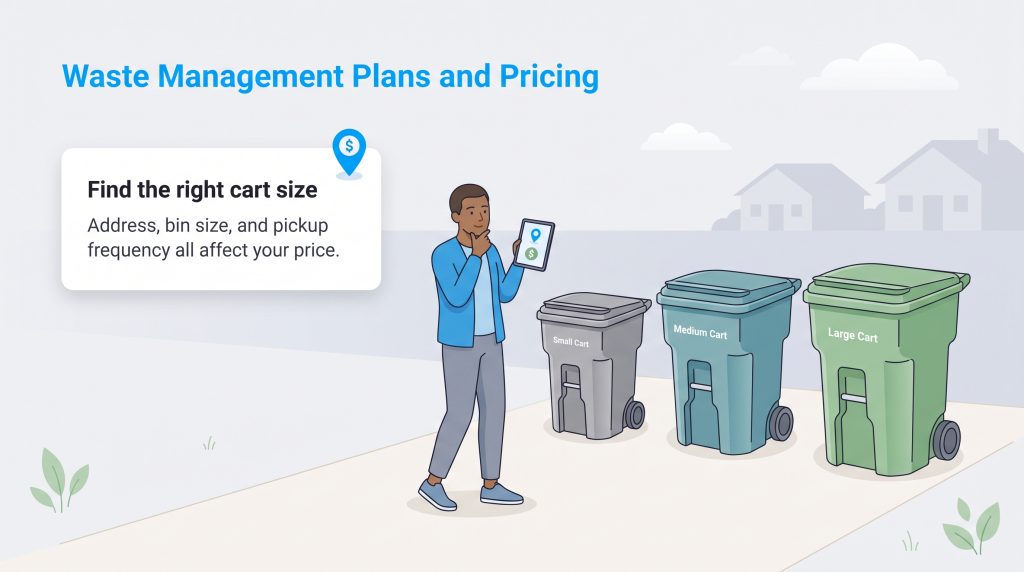
Because local landfill fees, fuel costs, and municipal taxes vary wildly from state to state, WM requires your exact address to generate an accurate quote. Waste Management rates and fees fluctuate based on contract type, pickup frequency, and local surcharges. In many open-market areas, residential trash collection usually falls somewhere around $20 to $60 per month before extra add-ons.
Let’s look at the estimated open-market monthly rates you might encounter:
| Service Package | Estimated Monthly Cost |
|---|---|
| Basic Trash Only | $20 to $35 |
| Trash + Recycling | $30 to $50 |
| Trash, Recycling + Yard Waste | $40 to $60+ |
Choosing the right Waste Management bin sizes is crucial for keeping your costs down and avoiding overage fees. The company typically offers three standard cart sizes. When making your selection, think about how often you cook at home, how many people live in your house, and how effectively you utilize the EPA’s guidelines for properly sorting common recyclables to divert bulk away from the main trash can.
| Bin Size | Ideal Household Size | Standard 13-Gallon Bags It Holds |
|---|---|---|
| 35-Gallon | one to two people | two to three bags |
| 64-Gallon | three to four people | four to five bags |
| 96-Gallon | five or more people | six to seven bags |
Roll-Off Dumpsters and Bagster Services
If you are tackling a move-in renovation, landscaping project, or massive garage cleanout, standard curbside bins will not be enough. Fortunately, arranging a dumpster rental Waste Management service is incredibly straightforward. For medium-sized projects, the WM Bagster is a highly convenient option; you simply buy the durable woven bag at a local hardware store, fill it with up to 3,300 pounds of debris, and schedule a flat-fee pickup online. For larger construction efforts, you can rent temporary roll-off dumpsters ranging from 10 to 40 yards.
Keep in mind that WM enforces strict rules regarding what can go into these temporary containers. Prohibited items for both Bagsters and roll-off dumpsters typically include:
- Hazardous waste and toxic chemicals
- Wet paint and chemical solvents
- Car batteries and tires
- Appliances containing Freon (like refrigerators or air conditioners)
- Medical waste
Common Fees, Contracts, and Bulk Trash Rules
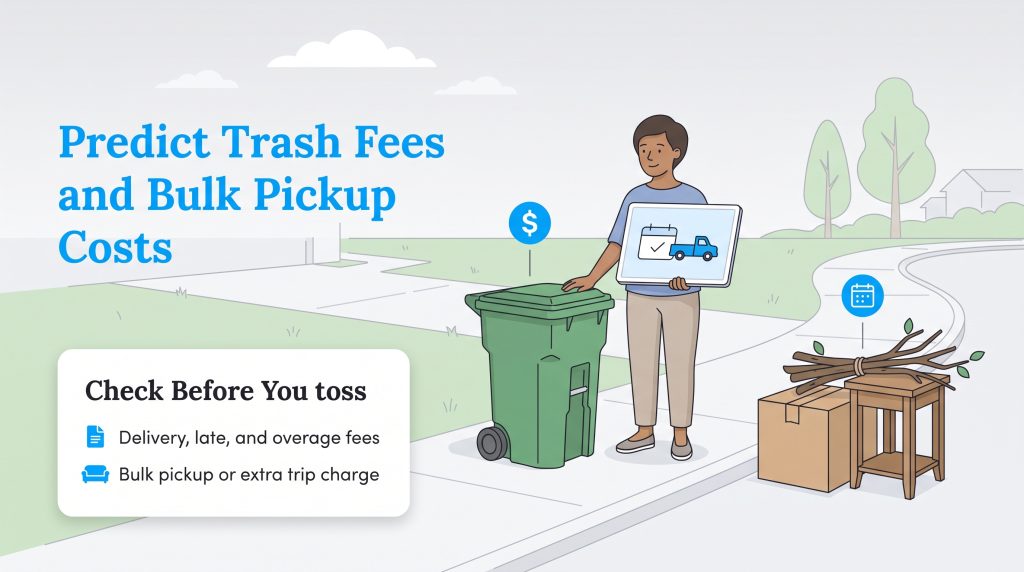
New customers are sometimes surprised by common setup hassles and extra line items on their first invoice. Standard contract lengths for residential service in open-market areas typically run for 12 to 36 months, though some regions allow for month-to-month agreements. Breaking these agreements early can trigger an early termination fee, so always review the fine print before signing up. You will also encounter a one-time cart delivery fee, and potential overage charges if your bin lid cannot close completely due to overflowing garbage.
Other specific fees to watch out for include:
- Early Termination Fee: Charged if you cancel your service contract before the agreed-upon term ends.
- Contamination Fee: Applied if non-recyclable materials (like plastic bags or food waste) are found in your recycling cart.
- Cart Removal Charge: A final fee billed when WM comes to collect their containers after you cancel your service.
- Late Payment Penalty: Added to your bill if your monthly payment misses the due date.
You must also familiarize yourself with Waste Management bulk pickup rules before dragging a broken dresser to the curb. Depending on your specific contract, some municipal agreements include a few free bulk pickups per year for large items like moving boxes, old furniture, or yard waste. In open-market areas, you will generally need to log into your account and schedule a special pickup for an extra flat fee, ensuring the truck is properly equipped to handle the heavy lifting.
Deals, Discounts, and Ways to Save
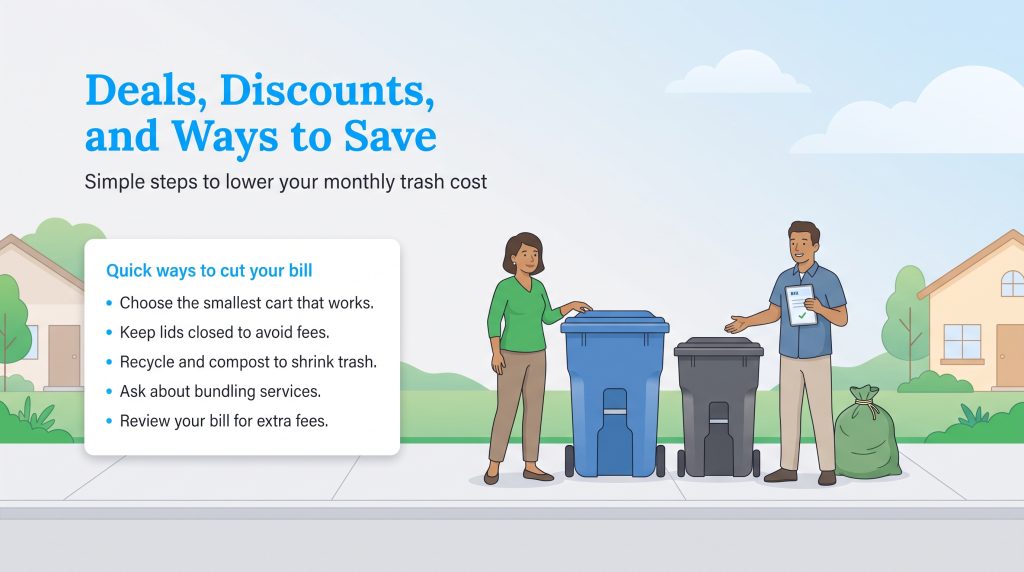
Nobody wants to spend more on trash collection than absolutely necessary. If you operate on the open market, reducing your service footprint is the fastest way to save. Consider downsizing to a smaller container if you rarely fill up your current 96-gallon cart, which instantly lowers your monthly base rate. Additionally, check local ordinances to see if you can legally share a larger bin with a trusted neighbor, splitting the bill down the middle.
You can also secure savings by actively managing your billing preferences. Setting up paperless billing and enrolling in autopay might not drastically lower your base rate, but some local franchises offer small statement credits for doing so. At the very least, autopay helps you avoid missed payments, late fees, and paper invoice clutter. Finally, do not hesitate to call and ask about available discounts; WM frequently honors senior citizen rates, military discounts for active duty and veterans, and negotiated HOA group rates for neighborhoods that sign up together.
Managing Your Account: The My WM Mobile App and Customer Service
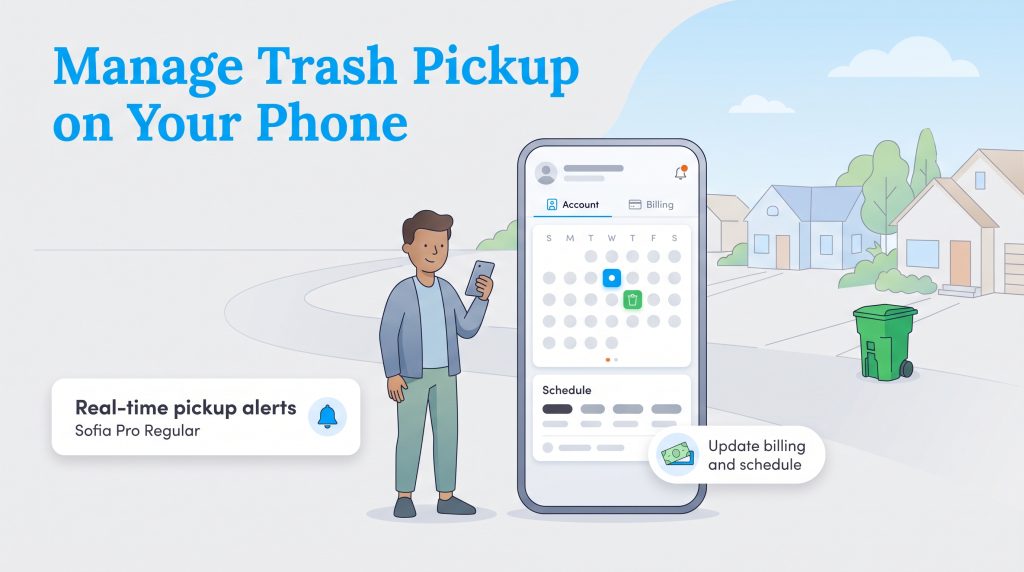
Keeping tabs on your waste services is incredibly easy thanks to the My WM digital web portal and mobile app. The platform allows you to view invoices, update payment methods, check your WM trash pickup schedule, and monitor real-time routing updates. Whether a winter storm delays trucks in your neighborhood or a national holiday shifts your pickup by a day, the app ensures you are never left guessing when to wheel your bins down the driveway.
When issues arise, you need to know exactly how to reach WM customer service. You can contact their support team via the highly responsive live chat feature inside the My WM app, by calling the local support number listed on your monthly invoice, or by submitting a digital ticket through their online contact page.
If your driver skips your house, resolving the issue digitally is usually faster than calling. Here is a step-by-step guide to reporting a missed pickup and checking for outages directly via the My WM app:
- Open the My WM app and log into your account dashboard.
- Tap the “Services” tab to view your current pickup schedule and check for active neighborhood service outages.
- If no outage is reported, select the specific container (Trash, Recycling, or Yard Waste) that was missed.
- Tap “Report Missed Pickup” and follow the prompts to confirm the date and container type.
- Submit the request, and WM will typically dispatch a recovery truck within one to two business days.
WM’s Eco-Conscious Initiatives and Conservation Efforts
We appreciate companies that look beyond simply hauling garbage from point A to point B, and WM takes their environmental responsibilities seriously. If sustainability matters to you, check whether your local plan includes recycling, yard waste, or organics collection, because those services vary heavily by market.
To reduce their carbon footprint and provide an environmentally mindful choice for consumers, WM focuses on several key conservation programs:
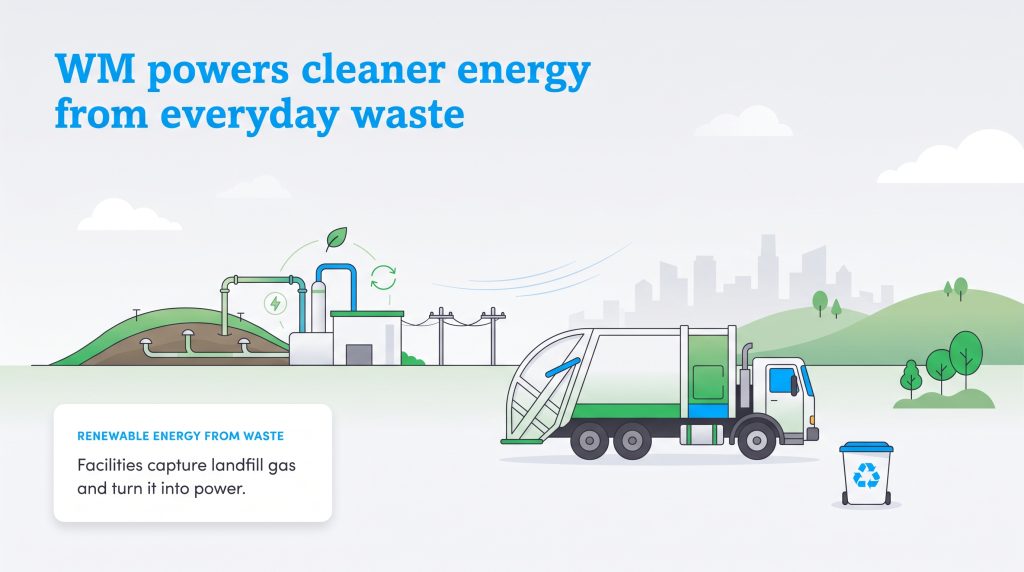
- Landfill-Gas-to-Energy: WM captures methane from decomposing waste and converts it into clean electricity to power local grids. These efforts consistently meet strict Environmental Protection Agency (EPA) sustainability standards.
- Renewable Natural Gas Vehicles: The company operates one of the largest heavy-duty fleets running on alternative fuels, utilizing renewable natural gas captured directly from their landfills to power collection trucks.
- Advanced Recycling Infrastructure: WM heavily invests in automated sorting technologies at their material recovery facilities, improving recycling purity and diverting millions of tons of waste away from landfills every year.
What Customers Are Saying: WM Reviews and Ratings
Whenever you sign up for a new utility, checking aggregated customer feedback provides valuable transparency. Across platforms like Trustpilot, Reddit, and the Better Business Bureau, WM reviews and ratings paint a comprehensive picture of what it is like to be a customer. While your experience will heavily depend on your local branch and routing dispatchers, the national sentiment reveals some clear patterns.
Pros:
- Reliable Local Drivers: Many reviewers highlight their neighborhood drivers, praising them for consistency, friendliness, and care when returning empty bins to the curb.
- Excellent Digital Experience: Customers consistently praise the My WM app for its intuitive interface, easy autopay setup, and helpful schedule notifications.
- Broad Service Availability: Users appreciate that WM can service rural and suburban areas where other private haulers simply will not travel.
Cons:
- Missed Pickups in Busy Markets: A recurring complaint involves trucks missing scheduled stops and the ensuing frustration of waiting days for a recovery dispatch.
- Slow Customer Service: Some users report long hold times when calling the primary customer service line, noting that digital chat support is often a necessary workaround.
- Delayed Cart Replacements: Negative trends point to delays when requesting a replacement for a cracked or stolen garbage can.
WM vs. Republic Services: Which Is Better?
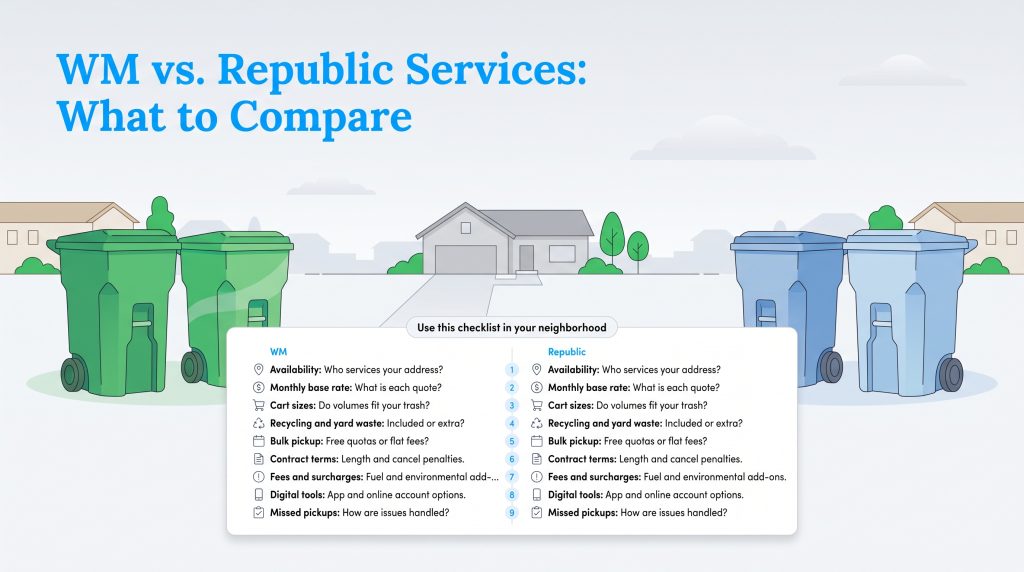
If you live in an open-market area, you will likely find yourself comparing WM to other national giants. Both WM and Republic Services are incredibly well-known in the waste industry, offering similar cart sizes, specialized dumpster rentals, and reliable neighborhood routing. Deciding which provider is better ultimately comes down to comparing local market factors.
Use this checklist to evaluate which waste hauler aligns best with your specific household needs:
- Monthly Base Rate: Compare the quoted rates for your desired pickup frequency to see who offers the most budget-friendly foundation.
- Recycling and Yard Waste: Check if eco-conscious add-ons are included in the base rate or require a separate fee.
- Bulk Pickup Rules: Ask about free annual pickups versus expensive flat fees for tossing heavy items like mattresses.
- Contract Terms: Review the length of the service agreement, taking special note of early cancellation penalties.
- Fees and Surcharges: Compare the extra costs hidden in the fine print, such as fluctuating fuel, environmental, or administrative charges.
- Digital Tools: Evaluate the mobile app features available in your market to ensure you can easily manage your account on the go.
Making the Right Choice for Your Home’s Waste Needs
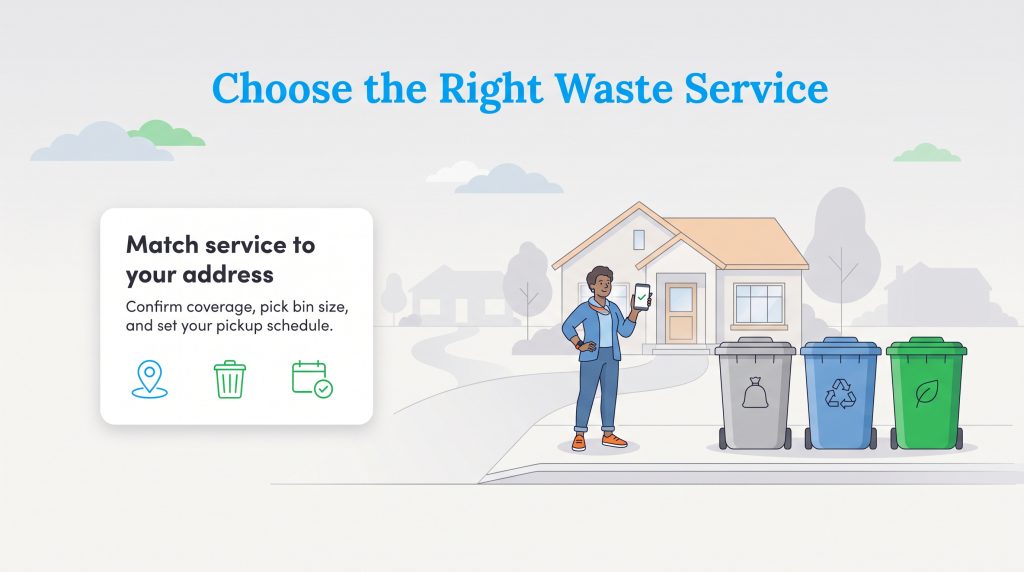
Organizing your trash and recycling logistics isn’t the most glamorous part of moving, but getting it right ensures your new household runs efficiently. Waste Management is best for homeowners and renters who want an excellent digital app experience to manage their schedules, billing, and neighborhood outages. It is also the obvious, and often mandatory, choice for users living in municipally contracted zones or strict HOA communities where WM is the designated provider. If you value seamless technology and robust sustainability initiatives, WM is a highly reliable option.
On the other hand, budget-conscious open-market shoppers should look elsewhere if they prefer supporting local mom-and-pop haulers. Because WM is a massive corporate entity, extra line items like environmental fees, fuel surcharges, and cart removal charges can quickly inflate a seemingly low base rate. If you are willing to sacrifice advanced digital app features for flat-rate, locally owned pricing, a smaller neighborhood competitor might be a better fit for your driveway.
Frequently Asked Questions About Waste Management (WM)
Does Waste Management require a yearly residential contract?
What time does Waste Management collect trash in my neighborhood?
How do I report a missed pickup to Waste Management?
What holidays disrupt the Waste Management pickup schedule?
How do I contact Waste Management customer service?
Can I put yard waste in my regular WM trash bin?
Does Waste Management provide special equipment for renovations?
What should I do if my Waste Management bin is damaged or stolen?
Can I transfer WM service to a new address?
How far in advance should I set up WM service before moving?
About the Author

LaLeesha has a Masters degree in English and enjoys writing whenever she has the chance. She is passionate about gardening, reducing her carbon footprint, and protecting the environment. She also recently served as President of the Board for City Sprouts (a community garden).