Duquesne Light Company Guide: Electricity Rates & Price to Compare

Duquesne Light delivers your electricity, but eligible customers can compare supply offers against its default rate.

Relocating to the greater Pittsburgh area — or just trying to wrangle an unusually high electric bill — brings enough stress without needing an advanced degree to understand your energy options. We know that picking the right setup feels overwhelming when you are staring down moving boxes and a mounting to-do list. Consider this practical guide your resource to managing your Duquesne Light Company service. We will break down exactly how the price to compare works, guide you through the deregulated market, and help you assess whether another offer meets your needs.
Quick-Reference: Essential Duquesne Light Tasks
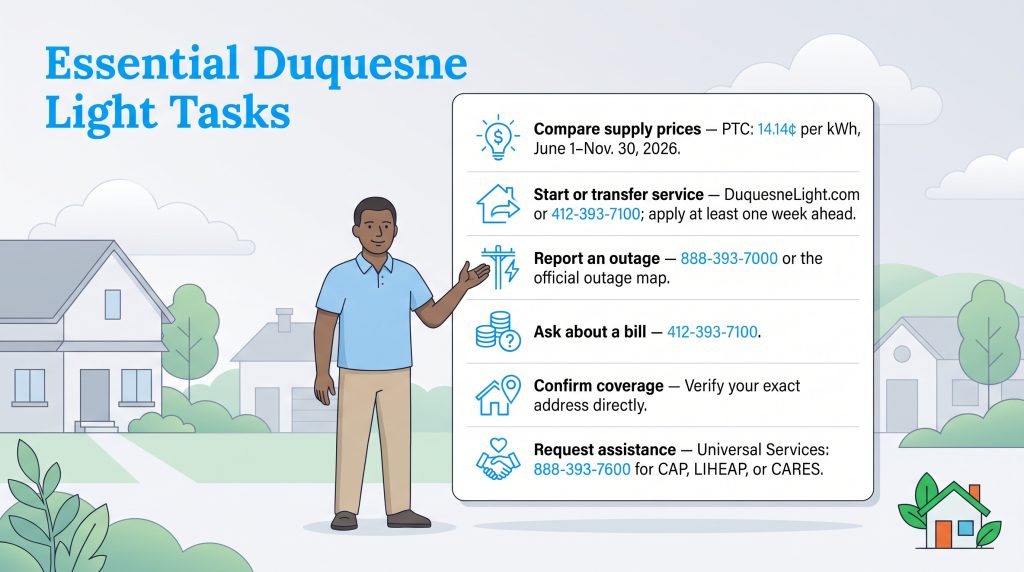
If you are short on time, use this quick reference guide to find the specific contact information or benchmark data you need for your Duquesne Light service.
| Reader’s Task | Information the Article Should Provide |
|---|---|
| Compare supply prices | The residential Price to Compare (PTC) is 14.14 cents per kWh, effective June 1 through Nov. 30, 2026. This default rate is approved by the PUC. |
| Start or transfer service | Apply online at DuquesneLight.com or call 412-393-7100. Have your new address, move-in date, and identification ready. Apply at least a week ahead of your move to help ensure timely activation. |
| Report an outage | Call the dedicated outage line at 888-393-7000 or use the official Duquesne Light Outage Map online. |
| Ask about a bill | Contact customer service at 412-393-7100. |
| Confirm coverage | Check your exact address with Duquesne Light directly, as ZIP codes and municipality names alone do not guarantee service. |
| Request assistance | Call Universal Services at 888-393-7600 to inquire about CAP, LIHEAP (for heating emergencies), or CARES programs. |
Understanding the Duquesne Light Service Area
Before diving into rates and plans, you need to make sure your home actually falls within the Duquesne Light service area. Powering Western Pennsylvania, the utility currently delivers electricity to about 600,000 customers. The coverage map primarily spans Allegheny and Beaver counties.
If you are setting up a new residence, you will likely rely on their infrastructure if you live in these major municipalities:
- Pittsburgh
- Monroeville
- Mount Lebanon
- Beaver Falls
However, municipality or ZIP code alone may not establish service for a specific address, so you should verify your exact address with the utility.
Quick Fact
Know Who to Call. Your electricity supplier can change, but Duquesne Light remains responsible for delivery and utility-side outage restoration at a home in its service territory.
How Utilities and Suppliers Differ in Pennsylvania
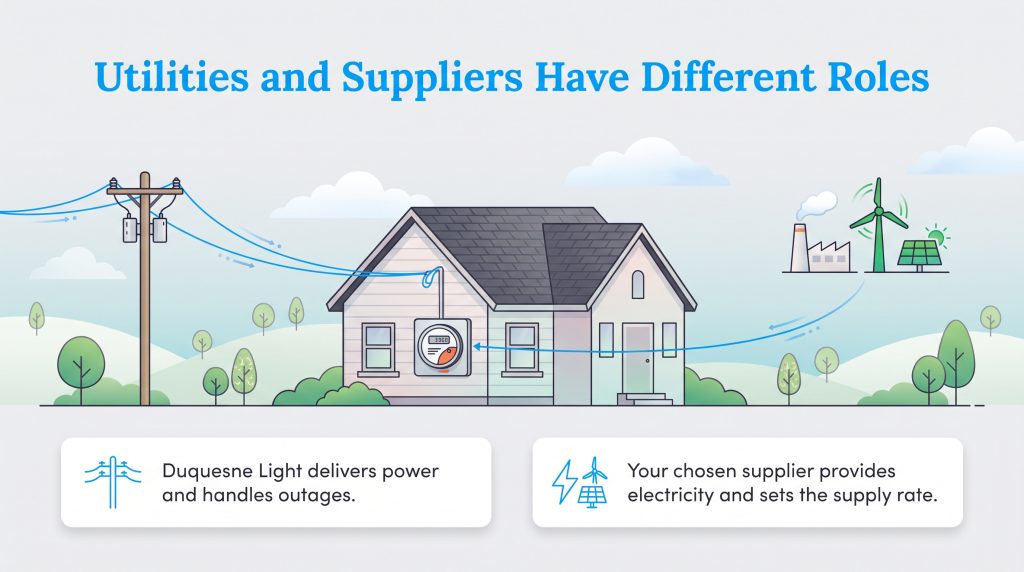
Pennsylvania operates a deregulated energy market. To make sense of this, it helps to clearly define how utilities and suppliers differ in Pennsylvania. Duquesne Light Company is your utility. They own the poles, maintain the wires, and physically deliver the power to your meter. No matter who you buy your electricity from, Duquesne Light will always be the one keeping the grid running.
Your energy supplier, however, is the company that procures or supplies the electricity you consume. By default, Duquesne Light acts as your supplier unless you decide to shop around. Taking advantage of Pennsylvania’s official PAPowerSwitch shopping website allows you to separate these two entities, often unlocking competitive pricing and greener energy sources.
| Responsibility | Utility Company (Duquesne Light) | Energy Supplier (Your Choice) |
|---|---|---|
| Primary Roles | Maintains infrastructure, delivers electricity, and reads meters. | Procures or supplies the actual electricity you consume. |
| Who You Call for Outages | Always Duquesne Light. | No action needed; they do not handle repairs. |
| Who Sets the Supply Rate | Set by procurement outcomes and approved tariffs under PUC oversight (via the Price to Compare). | The independent supplier (varies by market conditions). |
Current Duquesne Light Price to Compare (PTC) and Pricing
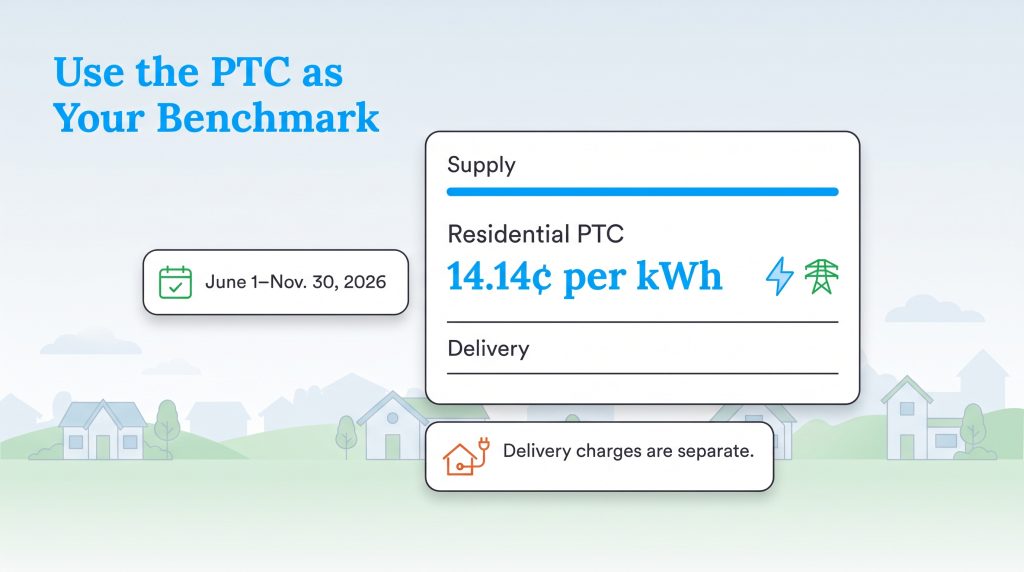
Your monthly electric bill splits into two main charges: distribution (delivery) and generation (supply). You may also see customer charges, riders, and applicable taxes on your statement. While you cannot negotiate the distribution fees, the supply side is open to alternative options depending on available offers and your eligibility. If you skip shopping for a third-party supplier, you automatically pay the default Duquesne Light price to compare (PTC). This figure acts as your crucial benchmark when evaluating the deregulated market.
Currently, the residential PTC sits at 14.14 cents per kWh, and this specific rate remains in effect from June 1 through Nov. 30, 2026. This figure includes both the default supply and transmission components. Remember that the PTC is not the total delivered electricity price, as it excludes delivery charges. When comparing offers, look at the total estimated cost over the length of the contract, factoring in monthly supplier fees, introductory pricing, and cancellation terms. Keep in mind that the PTC fluctuates twice a year, usually in June and December, meaning that a 12- or 24-month contract from a supplier may span several default-rate periods.
Money-Saver
Calculate your potential savings using this formula: Estimated monthly supply cost = monthly kWh × rate in cents ÷ 100 + applicable supplier fees. For example, if you use 1,000 kWh, a hypothetical rate of 14 cents per kWh produces $140 in supply charges. A 12-cent offer produces $120 before supplier fees — a potential $20 difference. Delivery charges are separate.
Exploring Plans, Pricing, and Eco-Conscious Suppliers
Taking control of your energy costs means exploring the available suppliers actively competing for your business. Beyond simple dollars and cents, the deregulated market offers a prime opportunity to make an environmentally mindful choice. If you are interested in an eco-conscious alternative, you can seek out renewable energy plans. Renewable electricity offers commonly substantiate their claims through renewable energy certificates, or RECs. It is important to know that electricity delivered to your home remains part of the shared grid mix, but purchasing RECs supports renewable generation on your behalf.
When you are ready to shop, head over to the official PA Power Switch shopping portal to compare available offers. You will encounter two primary plan types. Fixed-rate plans can provide a stable supply rate during the contract term, shielding your budget from seasonal market spikes. Variable-rate plans shift monthly based on wholesale energy costs, offering flexibility, but cancellation terms and fees depend entirely on the specific offer you choose.
Deals, Discounts, and Ways to Save Energy
Reducing your carbon footprint and lowering your monthly expenses often go hand in hand. Duquesne Light offers several robust energy efficiency programs, including the Watt Choices appliance recycling program, which often provides cash rebates for recycling old, working refrigerators or freezers. Program funding and availability can change, so always check the current terms. You can also utilize your account data to spot usage trends, helping you pinpoint exactly when your household consumes the most power.
For those needing financial assistance, the utility provides essential safety nets. Programs like the Customer Assistance Program (CAP) offer reduced monthly payments for qualifying households; be sure to check current income requirements and any shopping restrictions. You can also apply for the Low Income Home Energy Assistance Program (LIHEAP) to secure federal grants that help eligible households with heating costs and qualifying heating emergencies. If you are looking to take matters into your own hands, explore our guide on creating an energy-efficient home to find immediate, actionable upgrades.
Eco Edge
Reduce “vampire energy” by plugging your entertainment centers and home office equipment into smart power strips. Shutting them down completely when devices aren’t in use cuts phantom power draw and actively reduces your monthly carbon output.
How to Report and Search for Duquesne Light Outages
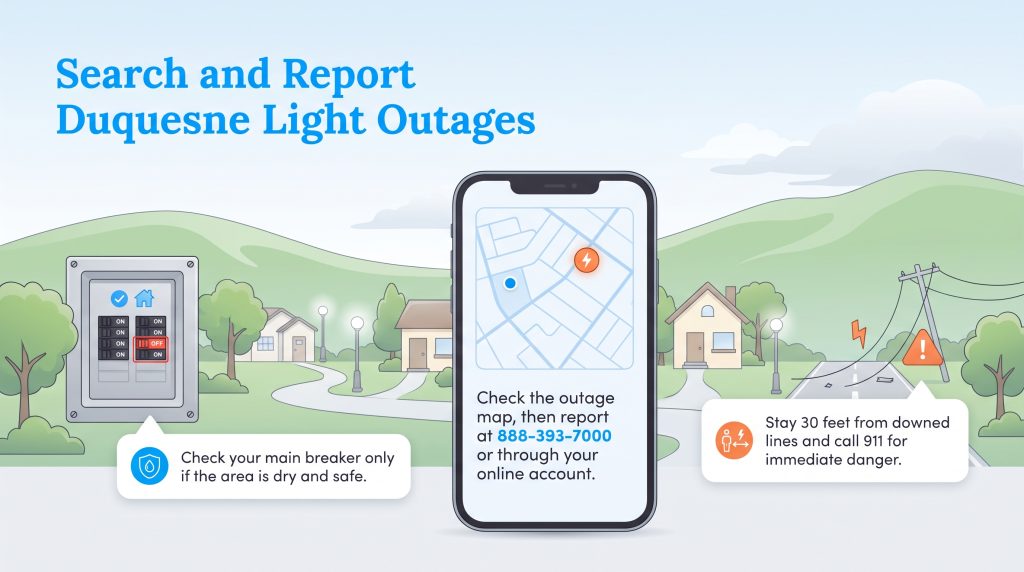
Severe weather rolling through the Ohio River Valley can cause downed branches and sudden darkness. Regardless of which energy supplier you selected, Duquesne Light is always responsible for restoring your power. Their crews maintain the lines and manage the grid for the entire service area.
If your home goes dark, follow these quick steps to get things back on track:
- First, safely check your home’s main circuit breaker to ensure the issue is not an isolated tripped switch, provided you do not have to approach wet, damaged, sparking, or unsafe electrical equipment.
- Look out the window to see if streetlights or neighboring houses are also out of power.
- Visit the Duquesne Light online outage map via your smartphone to see if the disruption is already a known issue.
- Report your specific outage using their dedicated phone system at 888-393-7000 or through your online account portal.
Heads Up
Always assume any downed power line is live and deadly. Stay at least 30 feet away, do not touch lines or objects in contact with them, and call 911 immediately if there is immediate danger, such as sparking lines or blocked roadways.
Managing Your Account With the Mobile App
Modern utility management shouldn’t require waiting on hold or hunting down paper bills. The Duquesne Light Company mobile app puts the control center right in your pocket. Designed for busy homeowners and renters, the interface allows you to pay bills instantly, set up automatic payments, and configure custom text or voice alerts for neighborhood outages. Better yet, the app tracks your energy usage. Spotting trends in your power consumption makes it significantly easier to enact sustainable, money-saving adjustments throughout the week.
Fees, Guarantees, and Starting Your Service
Handling the logistics of a move requires keen timing, especially when dealing with utilities. When you are ready to start or transfer Duquesne Light service, you can complete the process entirely online or over the phone at 412-393-7100. Depending on your credit history or previous standing with the utility, you might be required to pay a security deposit before the lights click on. Check the applicable tariff or speak to a representative to understand any fees that may apply to your account setup.
Generally, transferring an existing connection happens smoothly within a few business days, provided the physical meter is already intact and functioning. If your new build requires a brand-new line, the timeline extends significantly, requiring coordinated site visits.
Pro Tip
Do not wait until the moving truck is in the driveway. It is recommended to apply at least one full week ahead of your official move-in date to help ensure you have uninterrupted power from day one.
Top Comparisons: Default Supply vs. Competitive Suppliers
The beauty of the Pennsylvania energy market is that while you cannot choose a different delivery utility for an address in Duquesne Light’s territory, eligible customers can compare supply arrangements. Sticking with the default PTC offers simplicity. You never have to worry about contract end dates, and rate adjustments happen on a highly predictable, twice-a-year schedule. For temporary renters or those who despise hunting for deals, coasting on the default setup requires less ongoing contract management.
Conversely, switching to an independent supplier opens up a world of customization. Exploring third-party competitors frequently uncovers opportunities to lock in a fixed rate for 12 to 24 months. Furthermore, leaving the default utility mix is a primary way to actively support renewable infrastructure through the purchase of RECs, although you can also look into rooftop solar or separate REC purchases. If prioritizing long-term price stability or supporting renewable infrastructure matters to you, shopping the deregulated market is worth considering if the terms fit your needs.
| Decision Factor | Default Supply | Competitive Supplier |
|---|---|---|
| Rate changes | Follows the applicable default-service schedule | Depends on the contract |
| Contract management | No competitive-supplier renewal to track | May require renewal monitoring |
| Fees | Check applicable utility terms | Check monthly and cancellation fees |
| Renewable claims | Review default fuel-mix information | Review renewable percentage and REC terms |
| Best fit | Readers prioritizing simplicity | Readers willing to evaluate and manage an offer |
Choose Supply Terms That Fit Your Home
Navigating the complexities of your home’s electricity doesn’t have to be a guessing game. While Duquesne Light Company reliably maintains the local grid and delivers the power to your doorstep, you wield authority over how that energy is sourced and priced. By actively monitoring the price to compare and exploring alternative suppliers, you can assess whether another offer meets your needs while potentially supporting a greener, more sustainable power grid. Take charge of your account, utilize those mobile tools, and make choices that benefit both your wallet and the environment.
Frequently Asked Questions About Duquesne Light Company
Still have questions about setting up or managing your electricity service? Check out these frequently asked questions to learn more about rates, billing, and outages in the Duquesne Light service territory.
What Is the Duquesne Light Customer Service Number?
How Often Does the Duquesne Light Price to Compare Change?
Can I Choose a 100% Renewable Energy Plan in Pittsburgh?
Will I Get Two Separate Bills if I Switch Energy Suppliers?
What Happens if My Energy Supplier Goes Out of Business?
About the Author

David has been an integral part of some of the biggest utility sites on the internet, including InMyArea.com, HighSpeedInternet.com, BroadbandNow.com, and U.S. News. He brings over 15 years of experience writing about, compiling and analyzing utility data.