
-
- Three hardware tiers are expected, ranging from 100 Mbps to 1 Gbps to suit different household needs.
-
- Broad service availability is anticipated in the mid-2020s following full constellation deployment.
-
- Competitive pricing models are expected to undercut current market leaders, though exact monthly fees are still estimated.
Amazon’s upcoming satellite service aims to provide high-speed connectivity for rural households, potentially offering a competitive alternative to Starlink.
Finding reliable high-speed internet in rural areas is a challenge, but Amazon’s satellite initiative, officially known as Project Kuiper, could change the landscape. While rumors and search trends often refer to the service as “Amazon Leo,” Amazon has not yet confirmed a separate consumer brand name. If you have been waiting for a viable alternative to existing satellite providers, this Project Kuiper profile breaks down the projected specs, estimated costs, and installation requirements to help you decide if this new utility is worth the wait or if you should act now.
What Is Amazon Leo (Project Kuiper)?
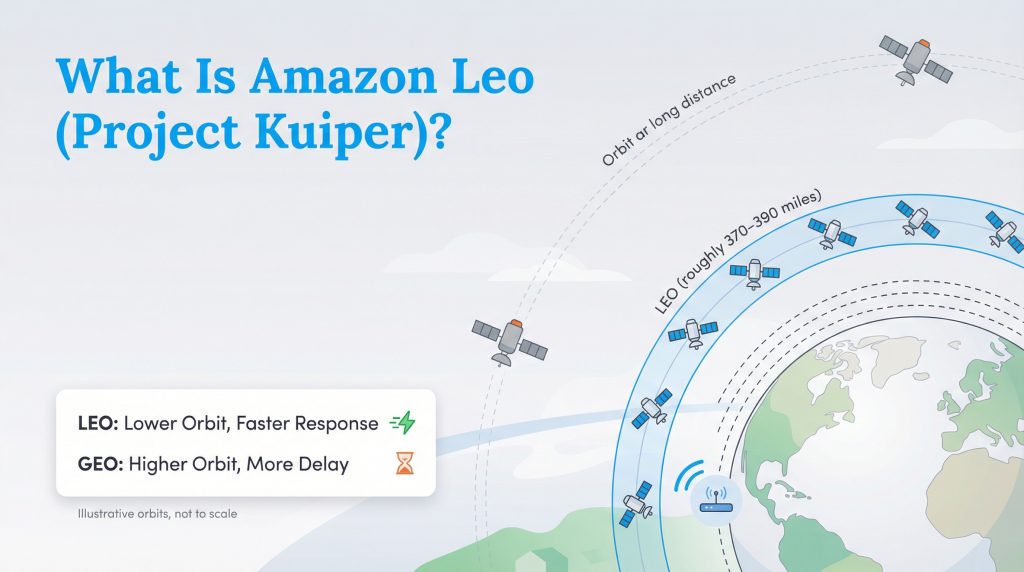
“Amazon Leo” is a frequently used unofficial term for Project Kuiper, Amazon’s initiative to increase global broadband access. While the company has not officially rebranded the service as of late 2024, the goal remains clear: providing fast, affordable broadband through a massive constellation of satellites in Low Earth Orbit (LEO).
Unlike traditional satellite internet providers like Viasat or HughesNet, which rely on geostationary satellites orbiting over 22,000 miles away, LEO technology operates much closer to the planet. Amazon’s satellites are planned to orbit roughly 370 to 390 miles above Earth across multiple orbital shells. This proximity significantly reduces the time it takes for data to travel back and forth, resulting in a snappier, more responsive internet connection that feels much closer to a wired cable or fiber service.
The Hardware Profile: Standard, Compact, and Enterprise
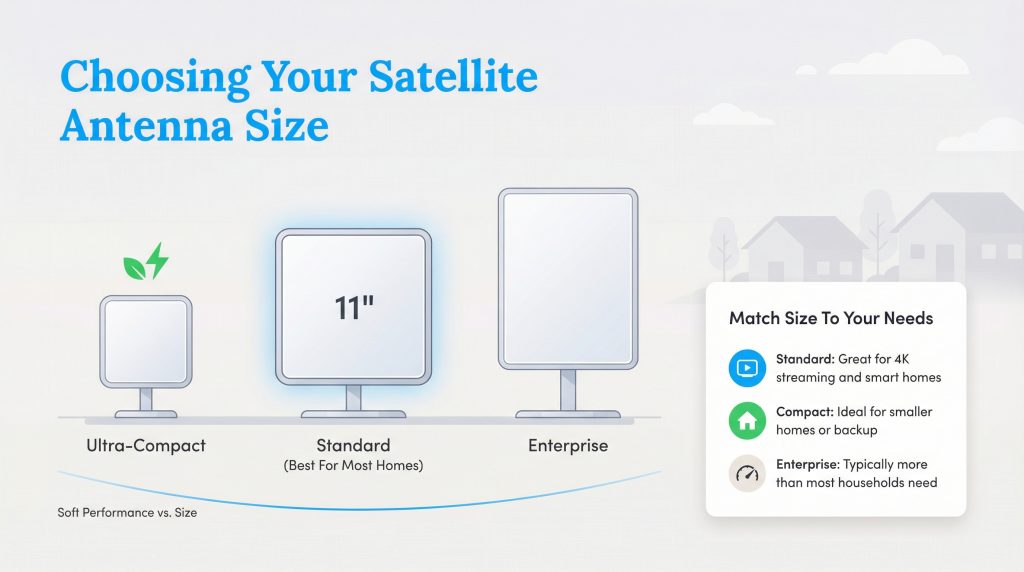
When you sign up, you aren’t just buying a service; you are buying a piece of hardware that needs to live on your roof or lawn. Amazon has previewed three distinct customer terminals (antennas) designed to balance performance, size, and cost. Understanding these projected tiers is vital for choosing the right fit for your home once the service launches.
| Projected Model | Target Speed | Approx. Size | Best For |
|---|---|---|---|
| Ultra-Compact | Up to 100 Mbps | 7-inch square | Travelers, tiny homes, and budget-conscious users. |
| Standard | Up to 400 Mbps | 11-inch square | Standard residential homes and families with multiple devices. |
| Enterprise | Up to 1 Gbps | 19 x 30 inches | Enterprise businesses and heavy power users. |
For most homeowners, the Standard model is expected to be the sweet spot. It offers robust speeds capable of handling 4K streaming and smart home devices without the massive footprint of the Enterprise model. Its 11-inch square design is discreet enough to mount on a standard roof eave without looking like an industrial eyesore. The smaller Ultra-Compact is surprisingly capable for its size, making it an excellent backup option or primary connection for smaller households.
If you are unsure which speed tier aligns with your digital lifestyle, you can read more about how much internet speed you really need to avoid overpaying for bandwidth you won’t use. While the Enterprise model offers incredible power, few residential users require a gigabit connection just for streaming movies and checking email.
Speed and Performance Expectations
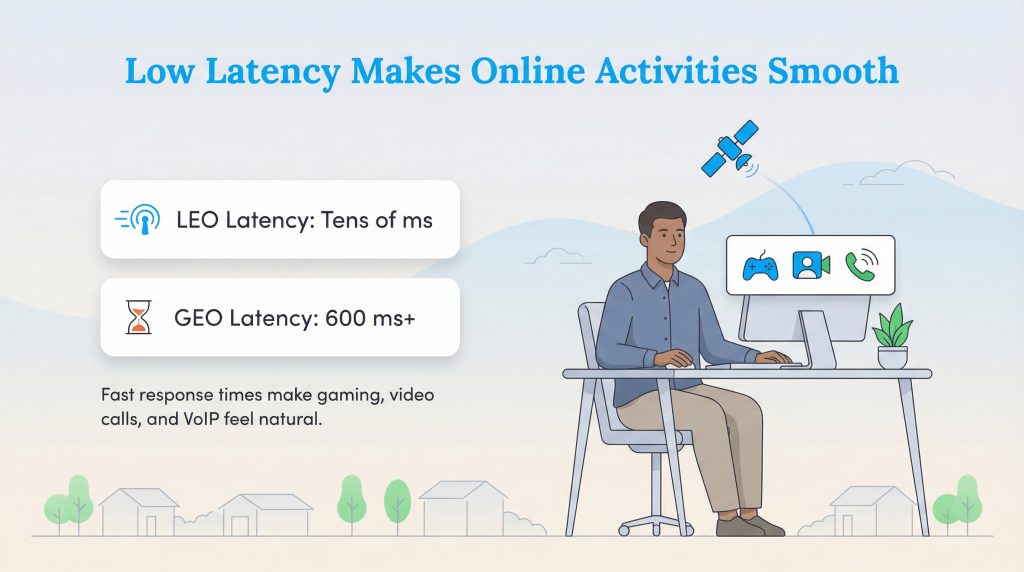
Raw speed numbers are important, but latency is the true hero of LEO technology. Latency is the delay, measured in milliseconds (ms), that happens between when you click a link and when the server responds. Amazon targets latency in the tens of milliseconds, similar to other LEO networks. In comparison, traditional geostationary satellite internet often suffers from latency higher than 600ms, which causes noticeable lag.
This low latency means you should eventually be able to participate in activities that were previously impossible on satellite connections. Real-time online gaming, Zoom video calls for work, and Voice over IP (VoIP) phone services become smooth and reliable. However, keep in mind that Project Kuiper speeds are “up to” targets. Real-world performance will fluctuate based on network congestion and your physical location.
Projected Costs and Availability
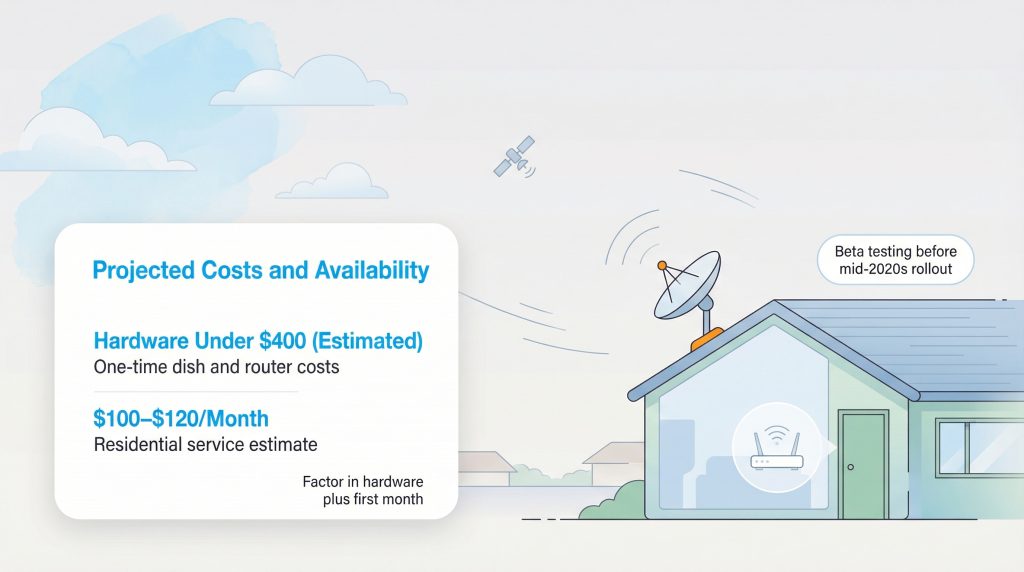
Cost is often the deciding factor for families switching utilities. While Amazon has not released final pricing, current analyst estimates place the service in a highly competitive bracket. The Standard hardware is estimated by Amazon to cost less than $400 to produce. This may translate to a reasonable one-time manufacturing and shipping fee for the dish and Wi-Fi router.
Monthly service fees are expected to land between $100 and $120 for residential tiers, based on current market rates for similar services. Amazon has historically been aggressive with pricing to gain market share, so hypothetical bundles with Prime memberships could eventually lower this effective cost. Regarding the timeline, Amazon is ramping up satellite launches, with beta testing planned before a broader commercial rollout likely in the mid-2020s. If you are budgeting for this transition, remember to account for the total cost of ownership: the upfront hardware fee plus your first month of service.
Project Kuiper vs. Starlink
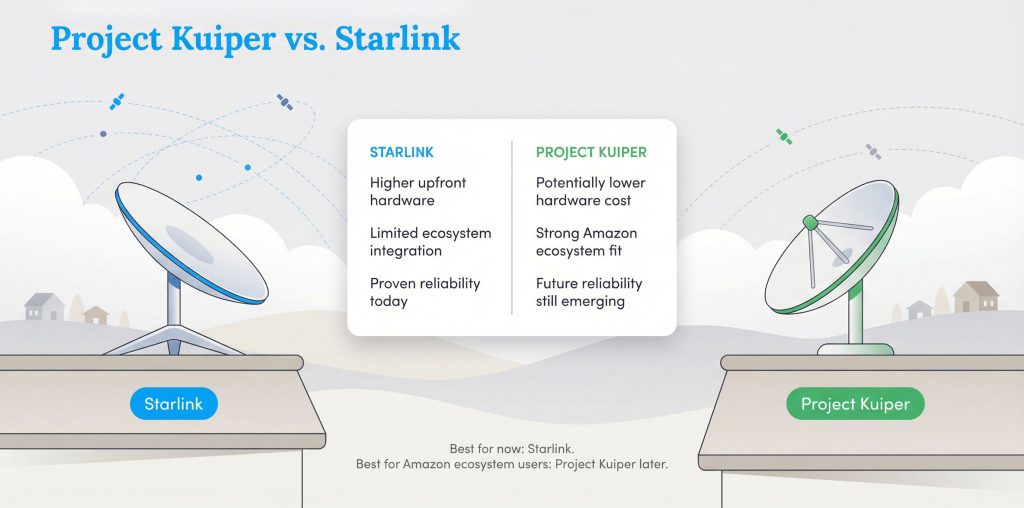
This is the comparison every rural homeowner wants to see. Starlink has a multi-year head start, but Amazon’s service is catching up quickly. When you compare Project Kuiper vs Starlink, three main factors stand out: price, ecosystem, and reliability.
Amazon leverages its massive manufacturing capability to potentially produce antennas at a lower cost than competitors, which could translate to cheaper upfront fees for you. Furthermore, if your home already runs on an ecosystem of Ring cameras, Echos, and Prime Video, Project Kuiper could theoretically integrate seamlessly with these services. However, this is currently speculation. Starlink currently wins on proven reliability simply because their constellation is fully operational today. You might prefer waiting for Amazon if you want to stay within the Amazon billing ecosystem, but Starlink remains the proven choice for immediate needs.
For a deeper dive into the current market leader, check out our full Starlink review to see how the user experience stacks up.
Preparing Your Home for Satellite Internet
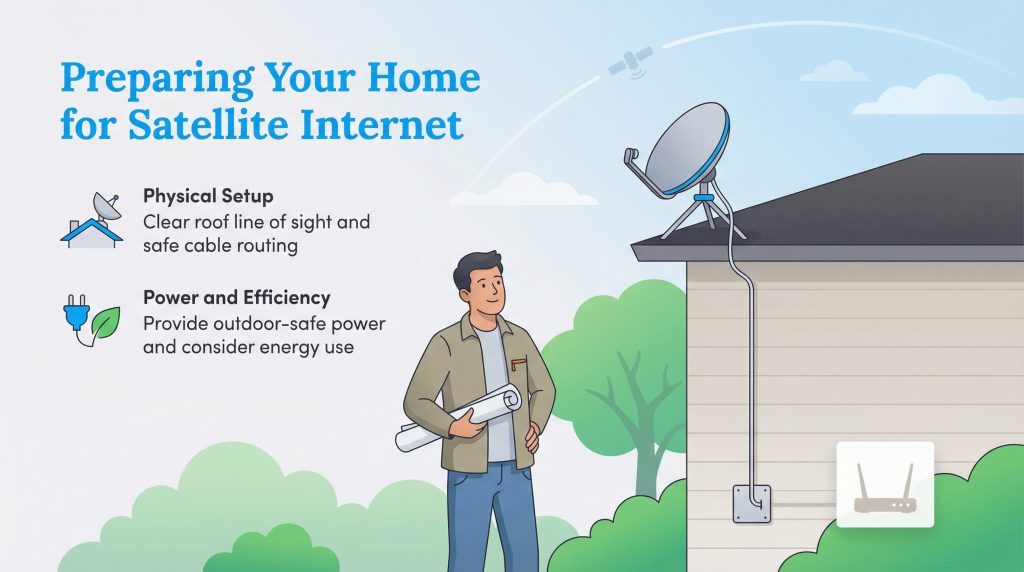
Getting ready for satellite internet involves more than just ordering the kit. You need to plan your physical installation to ensure safety and signal quality. Most users will mount the standard antenna on the roof using a tripod or eave mount. You will need to drill a small hole through your exterior wall to route the proprietary cable from the dish to the indoor router.
Energy consumption is another consideration. Satellite dishes are active electronic devices that draw power continuously to track satellites and melt snow. Ensure you have an available outdoor-rated outlet or a clear path to an indoor power source. If you are energy-conscious, you will be pleased to know that Amazon has focused on efficiency with their hardware designs.
You can read more about the project’s updates and mission on the official About Amazon website.
How To Decide If Project Kuiper Is Worth Waiting For
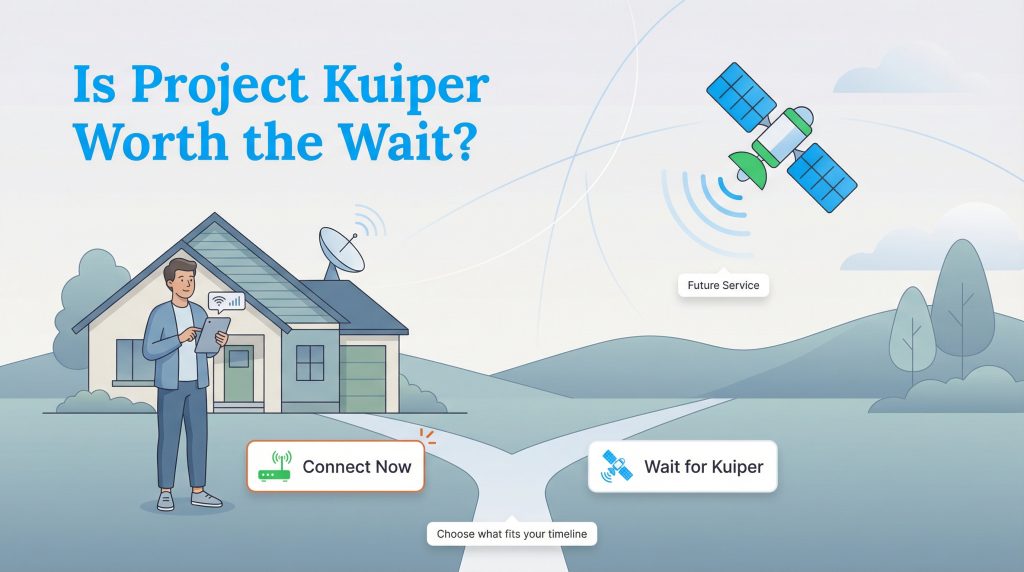
Deciding between waiting for Amazon’s new service or choosing a current provider comes down to your timeline and your trust in the brand. If you can manage with your current internet situation until service becomes widely available, waiting could reward you with competitive pricing and seamless integration with the services you already use. However, if you have no connectivity today, waiting isn’t practical. In that case, buying a system that works now is the smarter move for your household. Ultimately, the entry of a major player like Amazon is a win for all rural residents, as competition drives innovation and lowers prices across the board.
Find Internet Providers Available in Your Area
FAQs About Amazon Leo (Project Kuiper)
When will Amazon’s satellite internet be available in my area?
How much will the service cost per month?
Can I install the equipment myself?
Is Project Kuiper faster than Starlink?
What happened to Project Kuiper?
About the Author

David has been an integral part of some of the biggest utility sites on the internet, including InMyArea.com, HighSpeedInternet.com, BroadbandNow.com, and U.S. News. He brings over 15 years of experience writing about, compiling and analyzing utility data.