
Understanding the dangers of the “silent killer” and how proper utility maintenance protects your family.
Key Takeaways
- Carbon monoxide (CO) is an odorless, colorless gas produced by the incomplete burning of fuels like natural gas, propane, and wood.
- Common household sources include gas furnaces, water heaters, stoves, and dryers, making regular utility maintenance essential for prevention.
- Installing carbon monoxide detectors on every level of your home and near sleeping areas is the single most effective way to prevent poisoning.
You can’t see it, smell it, or taste it, which is exactly why carbon monoxide is so dangerous. This “silent killer” is a toxic gas produced whenever fuel-burning appliances in your home, like your furnace, stove, or water heater, don’t burn their fuel completely. Without proper ventilation or functioning detectors, this gas can build up to harmful levels before you even realize something is wrong. By understanding where it comes from, recognizing the physical symptoms of exposure, and managing your utilities with safety in mind, you can protect your household from this preventable hazard.
What Is Carbon Monoxide and How Is It Produced?
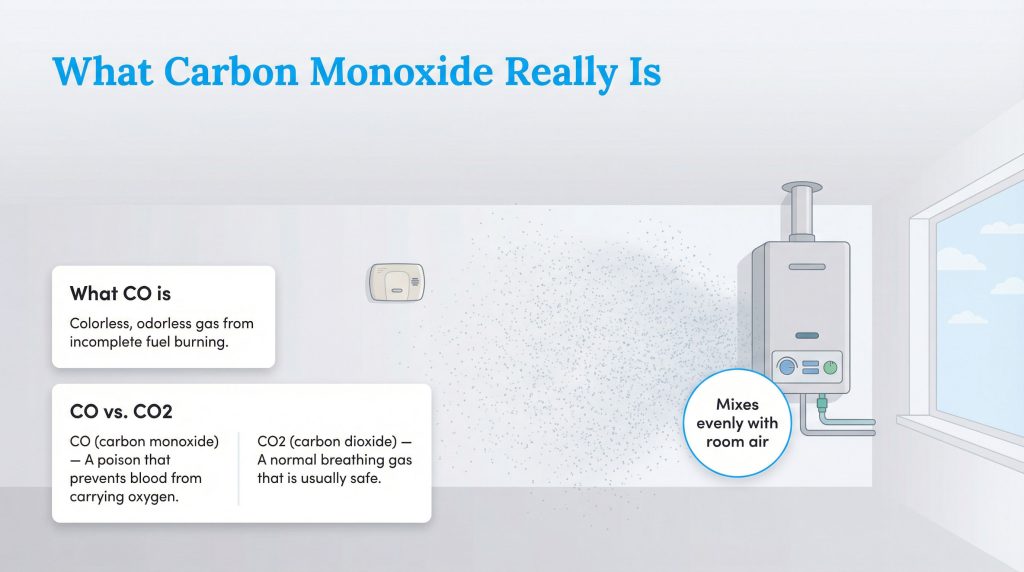
Carbon monoxide (CO) is a colorless, odorless, tasteless gas produced when fuel doesn’t burn completely, and it can be deadly at high levels. To keep your home safe, it helps to understand the science behind this gas. While it sounds technical, the concept is actually quite simple.
How Is Carbon Monoxide Produced in Your Home?
Carbon monoxide is the result of “incomplete combustion.” When fuels like natural gas, oil, propane, or wood burn, they need oxygen to burn completely. If there isn’t enough oxygen available during the burning process, the fuel doesn’t break down fully. This is exactly how carbon monoxide is produced—it is released into the air as a byproduct.
Is Carbon Monoxide Heavier Than Air?
A common misconception is that carbon monoxide is heavier than air and sinks to the floor. In reality, CO is roughly the same weight as air. This means it mixes evenly throughout a room, which is why detector placement is so important.
- The “Silent Killer”: It earns this nickname because it violates all our usual warning systems. It is odorless, colorless, and tasteless. Unlike a gas leak, which often has a rotten egg smell added to it, CO gives you no sensory clues.
- CO vs. CO2: It is easy to confuse Carbon Monoxide (CO) with Carbon Dioxide (CO2), but they are very different. Carbon Dioxide is what you naturally exhale when you breathe and is generally safe in normal amounts. Carbon Monoxide is a poison that blocks your blood’s ability to carry oxygen to your organs.
Identifying Common Carbon Monoxide Sources in Your Home
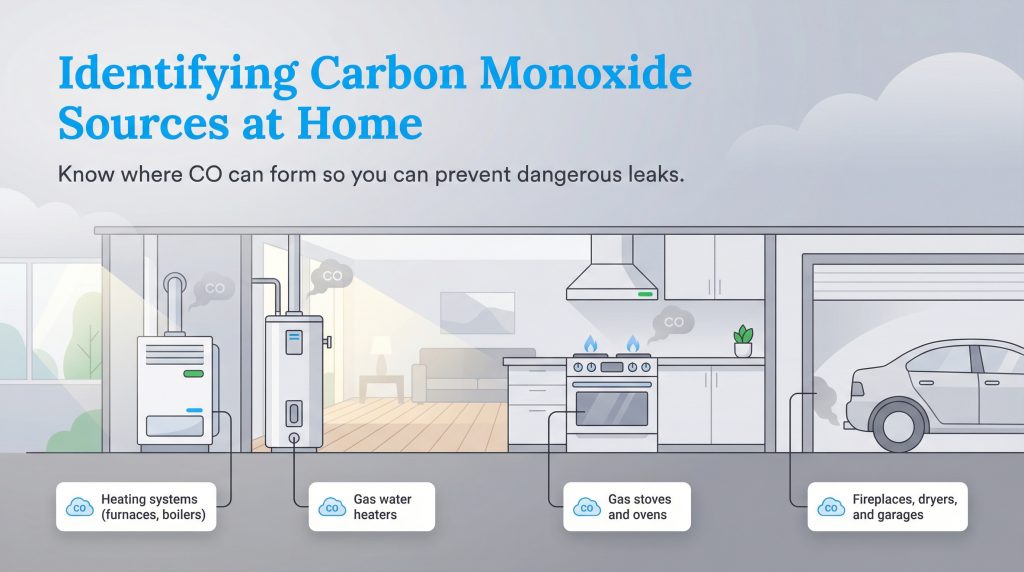
If you use utilities that rely on burning fuel, you have potential sources of CO in your house. Identifying these carbon monoxide sources in home appliances is the first step toward prevention.
- Heating Systems: Your central heating system is often the biggest culprit. Gas furnaces and boilers can leak CO if the heat exchanger is cracked or if the flue is blocked. You can learn more about managing your natural gas systems to ensure they run efficiently and safely.
- Water Heaters: Gas water heaters require proper venting to push exhaust outdoors. If the vent is obstructed or installed incorrectly, the exhaust can “backdraft” into your home.
- Kitchen Appliances: Gas stoves and ovens release small amounts of CO. However, a major safety risk occurs when people use their gas oven to heat their home, a dangerous practice that can lead to poisoning.
- Other Sources: Gas clothes dryers, gas fireplaces, and cars left running in attached garages are also frequent sources. Fumes from a car can seep into the living space quickly, even if the garage door is open.
Recognizing the Symptoms of Carbon Monoxide Poisoning
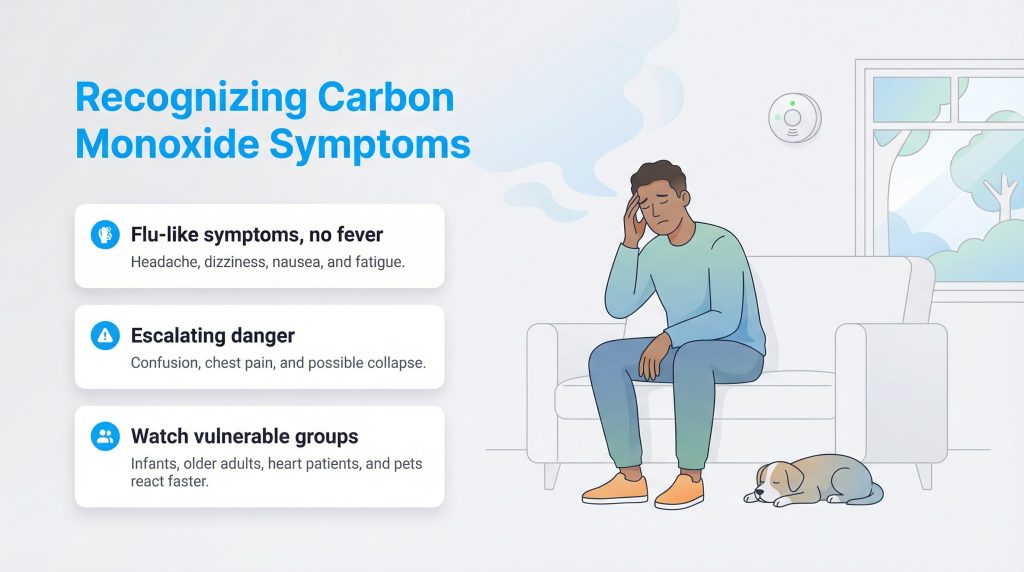
Because you can’t smell the gas, your body’s reaction is often the only warning you get before an alarm goes off. Knowing the carbon monoxide poisoning symptoms can save your life.
- The “Flu-Like” Warning: The most tricky aspect of CO poisoning is that it feels like the flu. Victims often dismiss their symptoms as a seasonal bug, but there is one key difference: CO poisoning does not cause a fever.
- Early Symptoms: Watch for a dull headache, dizziness, weakness, upset stomach, vomiting, chest pain, and confusion. According to the CDC, headache is the most common early sign.
- High-Level Exposure: If the concentration of gas is high, symptoms can escalate rapidly to loss of consciousness or death.
- Vulnerable Groups: Be aware that infants, the elderly, people with chronic heart disease, and pets may show symptoms sooner than healthy adults.
Prevention Starts With Smart Utility Maintenance
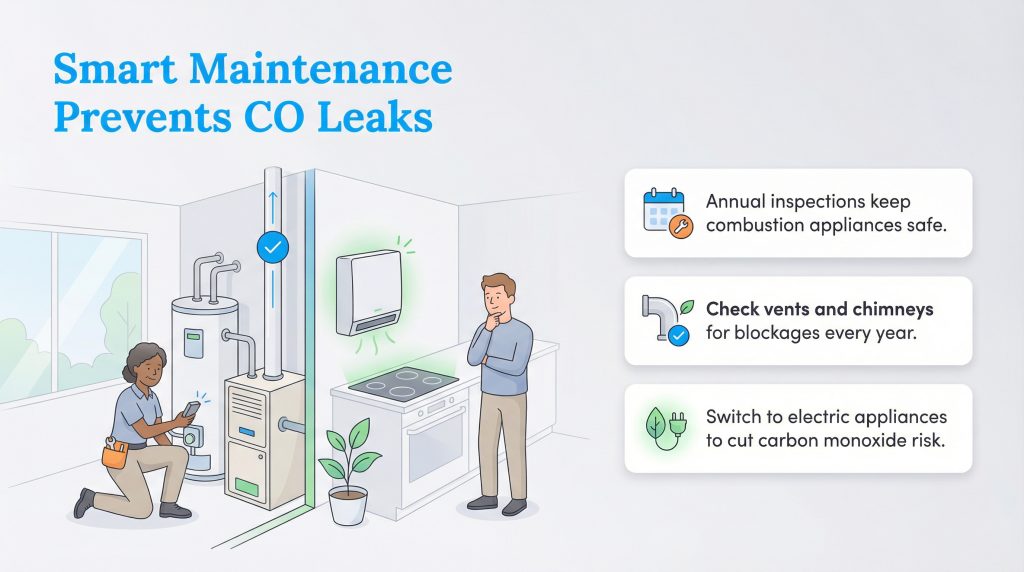
Preventing exposure is far better than reacting to it. By staying on top of your home maintenance, you can significantly reduce the risk of a leak.
- Annual Inspections: Have a qualified technician service your heating system, water heater, and any other gas, oil, or coal-burning appliances every year. The best time to do this is in the fall before you turn the heat on for winter. This is especially important when moving into a previously owned home.
- Venting Checks: Make sure your gas appliances are vented properly. Check your chimney and vents annually for blockages like bird nests, debris, or rust that could trap deadly gases inside.
- An Eco-Conscious Alternative: One of the most effective ways to eliminate the risk of carbon monoxide is to transition to electric appliances. Replacing a gas furnace with a heat pump or a gas range with an induction stove removes the combustion process entirely. This is an environmentally mindful choice that simultaneously improves your indoor air quality and can help you save on your electric bill with more efficient technology.
Essential Guide to Carbon Monoxide Detectors
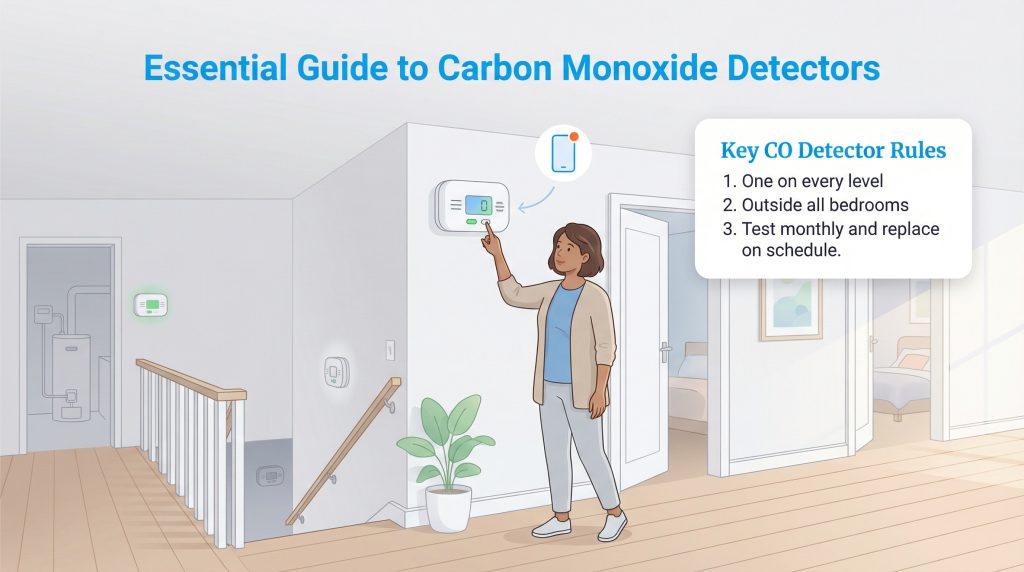
Detectors are your last line of defense. Proper carbon monoxide detector placement is critical because if they are in the wrong spot, they may not alert you in time. Indoors, safe carbon monoxide levels should be as close to zero as possible, and detectors are designed to warn you before levels become dangerous.
- Placement Rules: Install a detector on every level of your home, including the basement. Most importantly, place them in the hallway outside every sleeping area so the alarm wakes you up at night. Avoid putting them right next to fuel-burning appliances or in humid bathrooms to prevent false alarms.
- Types of Detectors: You can choose from battery-operated, plug-in, or hardwired models. Smart detectors are an excellent modern option; they can send alerts directly to your smartphone, helping you manage your home safety even when you aren’t there.
- Maintenance: Test your alarms once a month by pressing the test button. Replace the batteries every six months (unless they have a sealed 10-year battery) and replace the entire unit according to the manufacturer’s instructions, often every 5 to 10 years.
Emergency Protocol: What to Do If the Alarm Sounds
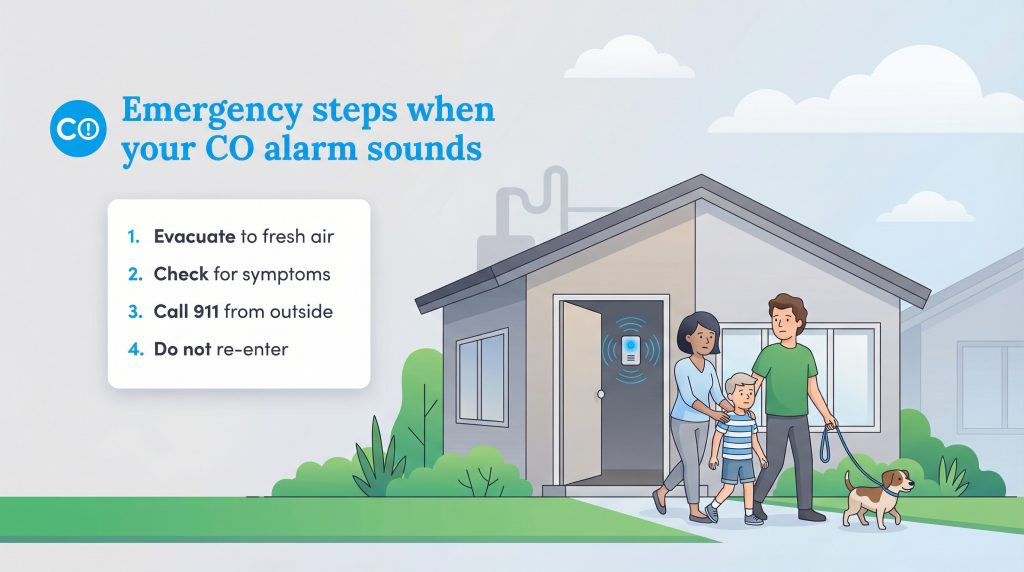
If your detector starts beeping, knowing exactly what to do if carbon monoxide alarm goes off prevents panic and ensures safety.
- Don’t Panic, But Act Fast: Never ignore an alarm or assume it is a mistake. Treat it as a life-threatening emergency.
- Evacuate Immediately: Get everyone, including pets, out of the house and into fresh air immediately.
- Check for Symptoms: Once outside, do a headcount and ask if anyone is feeling dizzy, nauseous, or has a headache.
- Call for Help: Call 911 or the fire department from a mobile phone or a neighbor’s house.
- Do Not Re-enter: Do not go back inside the building for any reason until emergency responders have declared it safe.
Taking Control of Your Home’s Air Safety
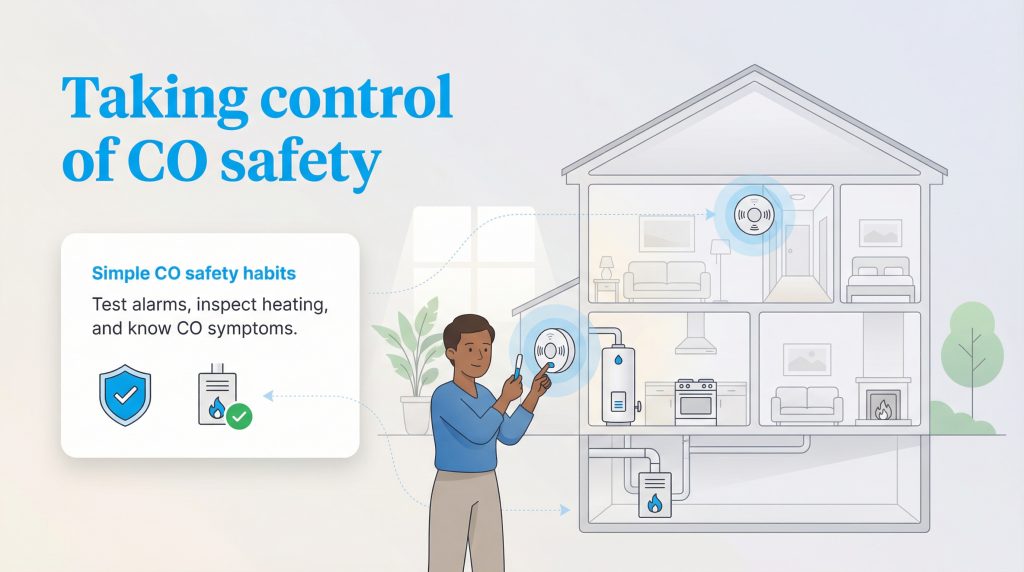
Carbon monoxide is scary because you can’t see it coming, but it is also one of the most preventable household hazards. By understanding the sources, recognizing the symptoms, and keeping your detectors up to date, you can rest easy knowing your family is protected. Don’t wait for an emergency to check your systems; take a moment today to test your alarms and schedule that annual heating inspection. At UtilitiesForMyHome, we recommend building carbon monoxide checks into your yearly utility maintenance routine to ensure your home remains a safe haven.
FAQs About Carbon Monoxide
Can I smell carbon monoxide if it leaks?
How long does it take to get carbon monoxide poisoning?
Does opening a window help with carbon monoxide?
What are safe carbon monoxide levels in a home?
Do electric heaters produce carbon monoxide?
About the Author

Claudio is a sustainability-focused writer with a background in Anthropology and Psychology from NC State University. He has spent over 15 years working in writing, interpretation, and translation, driven by a deep interest in how human culture shapes the environment. Today, he shares his curiosity with readers by writing about sustainable living solutions and the connection between everyday choices and environmental impact.