
Why the Middle East conflict is driving up your energy costs, and the exact steps you can take today to lower your bill.
Key Takeaways
- Global Energy Disruption: The recent military escalation involving the U.S., Israel, and Iran has severely disrupted critical shipping routes like the Strait of Hormuz, causing an immediate surge in global oil and natural gas prices.
- Regional Rate Hikes Expected: Because the U.S. is heavily tied to global Liquefied Natural Gas (LNG) markets, domestic utility bills will likely increase, with the most severe impacts expected in New England, the Midwest, and Texas.
- Scams and Rate Traps: Consumers must be on high alert for predatory variable-rate energy contracts and a surge in utility scams, where criminals impersonate energy providers to demand immediate, untraceable payments.
- Proactive Cost Offsets: Households can actively combat rising bills by locking in fixed-rate energy plans, applying for federal assistance programs if eligible, and making high-yield energy efficiency upgrades to their HVAC and water heating systems.
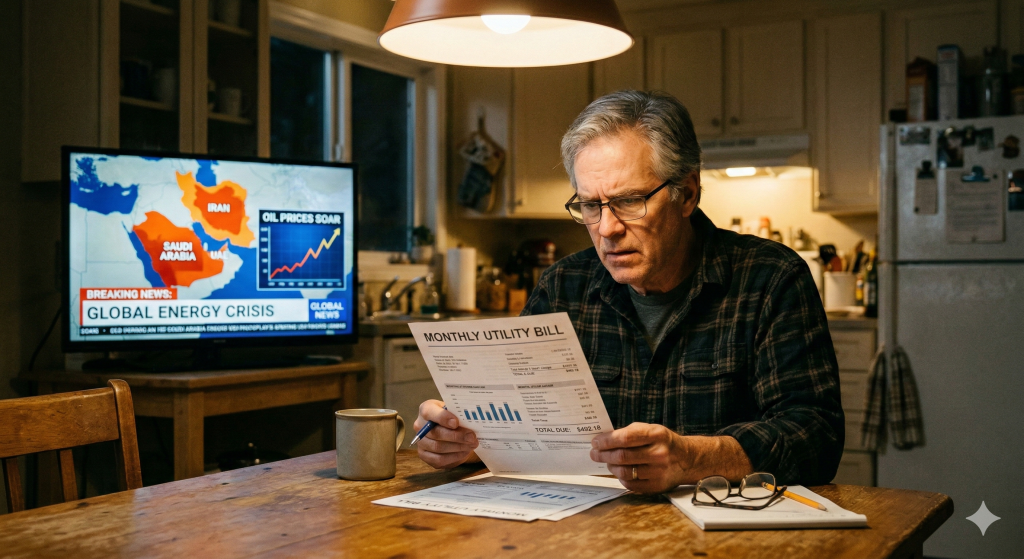
If you have been watching the news recently, you might be wondering how a geopolitical conflict thousands of miles away can impact the utility bills arriving in your mailbox. Following the intense military strikes between the United States, Israel, and Iran in late February and early March 2026, global energy markets were immediately thrown into chaos.
For American consumers, it is crucial to understand how this international crisis translates into local electricity and heating costs, what regions are most vulnerable, and what immediate steps you can take to protect your household budget.
The Ripple Effect: From the Middle East to Your Meter
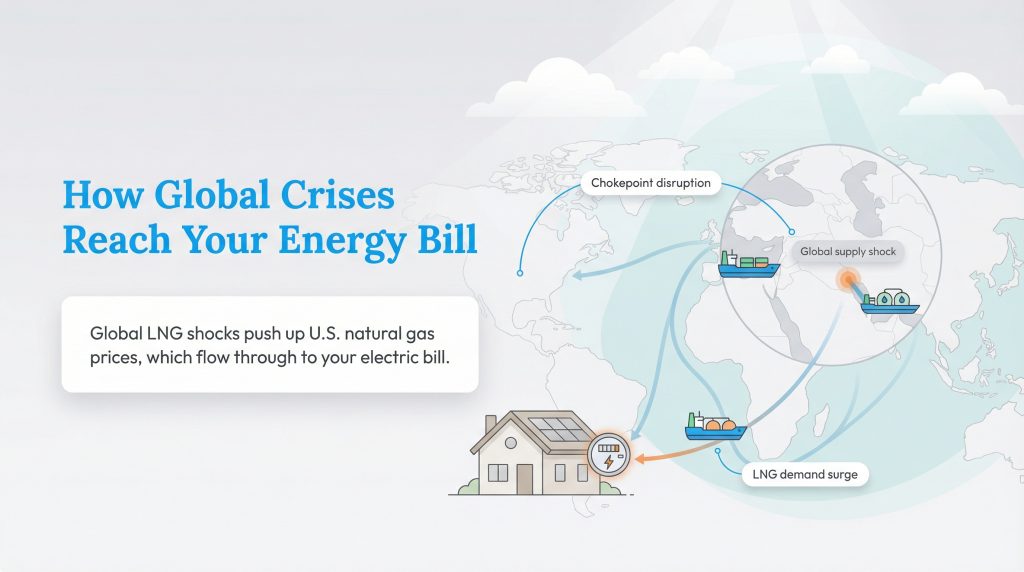
While the United States produces an abundance of natural gas, our energy grid is deeply connected to the global market through Liquefied Natural Gas (LNG) exports. The recent conflict essentially paralyzed shipping traffic through the Strait of Hormuz, a critical chokepoint that facilitates about 20% of the world’s daily oil and LNG supply. Furthermore, major global producers like QatarEnergy were forced to halt LNG production following drone strikes on their facilities.
When global supplies tighten this dramatically, international buyers scramble to purchase American LNG. This massive overseas demand drains our domestic natural gas inventory, driving up the baseline U.S. Henry Hub natural gas prices. Because natural gas is the primary fuel used to generate electricity in the U.S., these wholesale price spikes are eventually passed down to you, the consumer.
Which Areas Will Be Most Impacted?
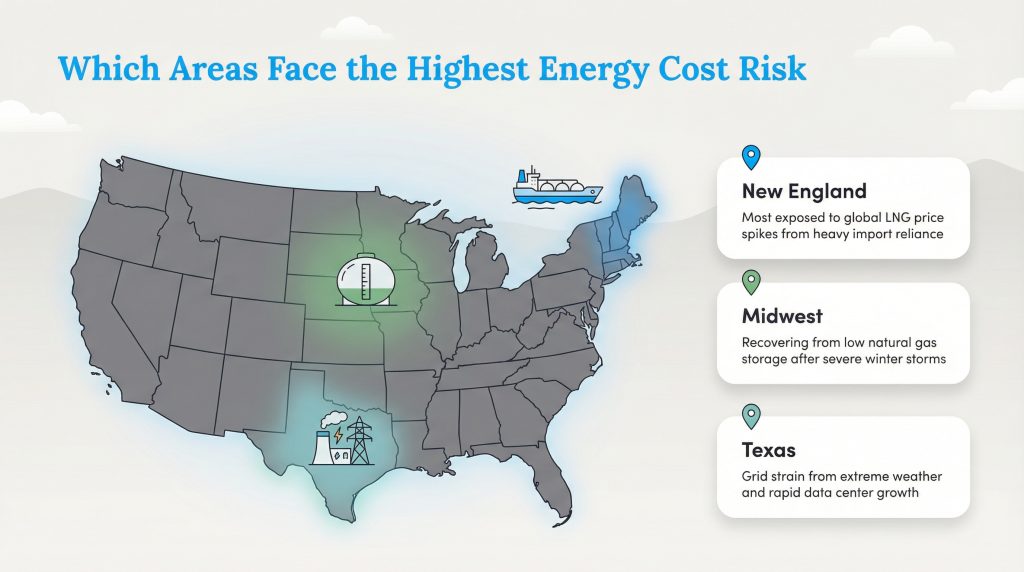
While all Americans will likely feel the pressure of rising energy costs, certain regions are particularly vulnerable to this specific crisis:
- New England: This region is the most acutely exposed to global LNG price shocks. Due to a lack of domestic pipeline infrastructure, New England relies heavily on imported LNG to keep the lights and heat on during extreme weather, forcing them to compete directly with panicked European and Asian buyers.
- The Midwest: Following severe winter storms in January 2026, the Midwest was left with natural gas storage levels sitting 11.6% below the five-year average. Utilities will now have to refill these depleted storage reserves during the summer while competing against high wartime prices.
- Texas: The Texas grid is already under immense strain from extreme weather and massive load growth from data centers. Forward wholesale power contracts for the summer of 2026 are already trading aggressively high, meaning retail providers will likely raise rates to cover their increased fuel costs.
What to Watch Out For
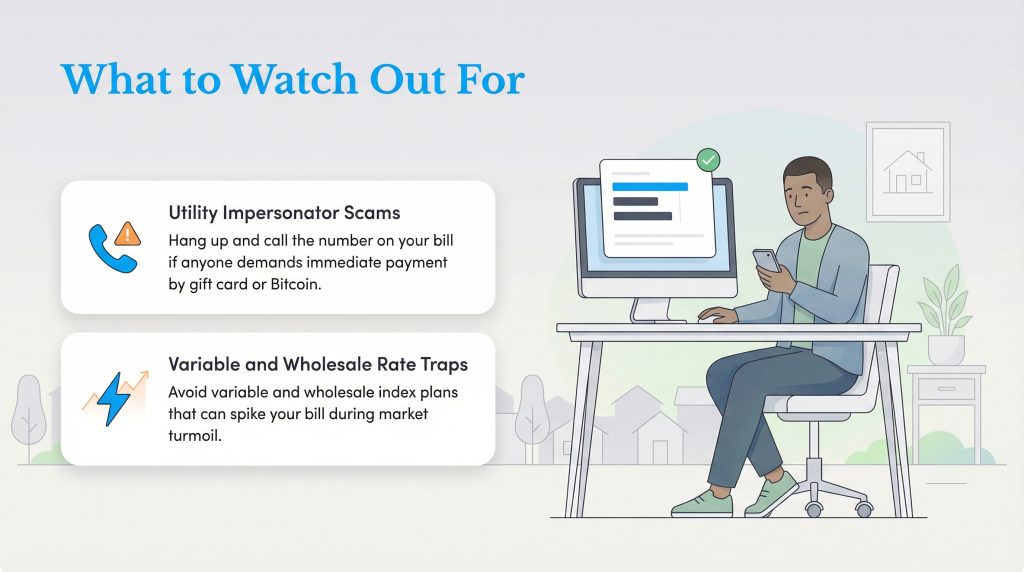
During periods of energy market volatility, bad actors and predatory pricing structures thrive. Keep a close eye out for the following:
1. Utility Impersonator Scams Officials have issued warnings regarding scammers who are using the geopolitical crisis to panic consumers. These criminals call residents, impersonating local utility representatives, and threaten to immediately shut off power unless a payment is made over the phone. A major red flag is if the caller demands payment via untraceable methods, such as prepaid debit cards, gift cards, or Bitcoin. If you receive a call like this, hang up immediately and dial the official customer service number listed on your actual utility bill.
2. Variable and Wholesale Rate Traps If you live in a deregulated state where you have the “power to choose” your energy provider, avoid variable-rate (month-to-month) or wholesale index plans. These plans fluctuate directly with the market; a sudden geopolitical spike could multiply your electricity bill overnight without warning. Similarly, be wary of gimmick plans offering “free nights and weekends,” as they usually mask exorbitant daytime rates.
What You Can Do to Offset Increases
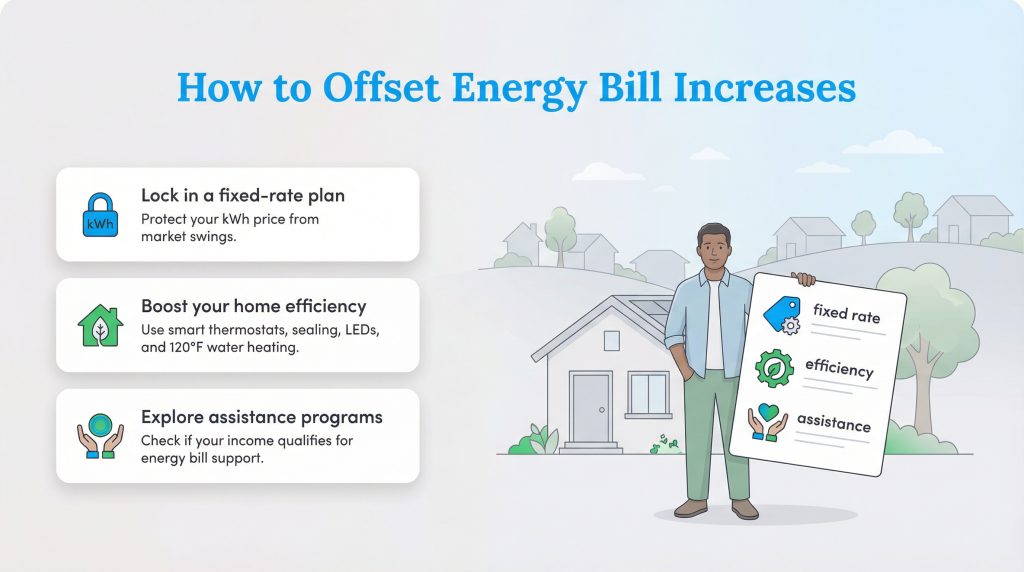
You don’t have to be at the mercy of global markets. Implementing strategic energy management can significantly insulate your wallet:
Lock in a Fixed-Rate Plan In deregulated markets, your best defense is transitioning to a fixed-rate contract. This locks in your price per kilowatt-hour (kWh) for the duration of the term (usually 12 to 36 months), shielding you entirely from wartime wholesale volatility. Always read the Electricity Facts Label (EFL) to verify there are no hidden minimum usage penalties.
Optimize Your Energy Efficiency Heating and cooling account for roughly half of a home’s total energy use. You can drastically reduce consumption by:
- Installing a Smart Thermostat: According to the Department of Energy, properly utilizing a smart thermostat can save you an average of 8% to 10% on heating and cooling costs.
- Checking Ductwork and Filters: Sealing air leaks in your HVAC ducts can improve efficiency by up to 20%. Ensure you change your air filters every two months; a clogged filter forces your system to use significantly more electricity to push air through your home.
- Lowering Water Heater Temperatures: Water heating is the second-largest energy expense in most homes. Lowering your water heater’s thermostat to exactly 120°F can trim 6% to 10% off your bill.
- Switching to LEDs: Replacing traditional incandescent bulbs with LED options can reduce your lighting-related electricity usage by up to 75%.
Leverage Assistance Programs If you are operating on a fixed or restricted income, you may qualify for the Low-Income Home Energy Assistance Program (LIHEAP). This federally funded program provides a one-time payment directly to your utility vendor to help cover heating costs and protects certified customers from winter service disconnections. Generally, households with gross incomes at or below 200% of the federal poverty guidelines (for example, $64,300 for a family of four) are eligible to apply through their local Community Action Agency.
About the Author

David has been an integral part of some of the biggest utility sites on the internet, including InMyArea.com, HighSpeedInternet.com, BroadbandNow.com, and U.S. News. He brings over 15 years of experience writing about, compiling and analyzing utility data.