
Residents can expect a lower supply charge on their spring bills as market prices stabilize and state auctions drive costs down.
Key Takeaways
- Columbia Gas of Ohio’s default supply rate dropped to $0.4809 per Ccf in April 2026, offering immediate relief for residential customers.
- The price cut is fueled by a successful state-run auction and high natural gas storage levels following an unseasonably warm winter.
- You can choose to stay on the default rate or switch to a retail supplier to lock in long-term savings or support renewable energy projects.
If you have been keeping an eye on your monthly expenses, we have some good news for your home budget. Columbia Gas of Ohio recently announced a significant dip in its natural gas supply rates, falling from $0.5345 to $0.4809 per Ccf for the current billing cycle. While energy costs can often feel like a rollercoaster, this downward trend reflects a stabilizing market and a surplus of supply that is finally trickling down to your wallet. In this guide, we will break down why these rates are changing, how this affects your shopping experience, and what you can do to make your home more energy-efficient for the long haul.
Why Your Natural Gas Rates Are Trending Down
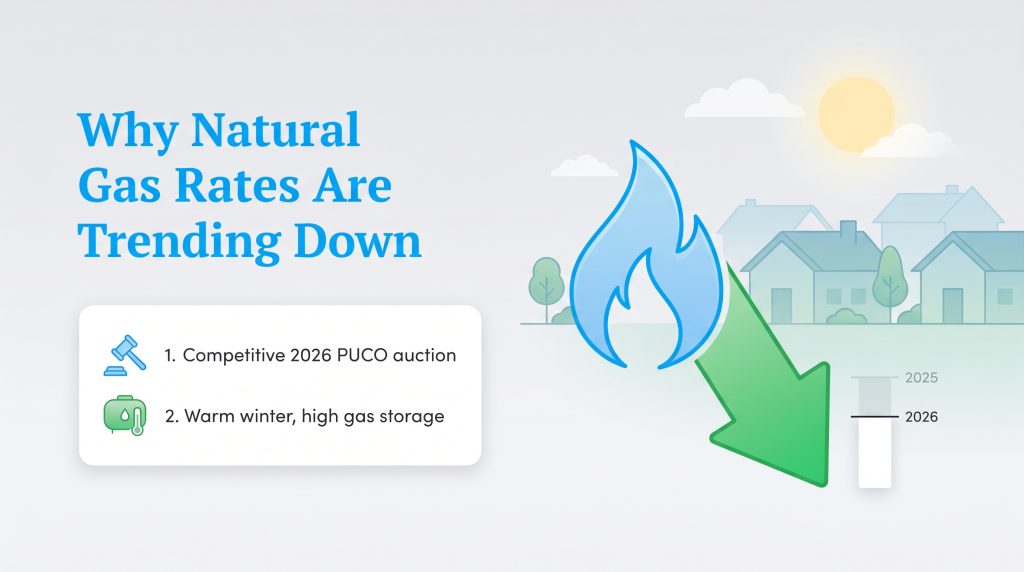
The recent drop in prices is not just a stroke of luck — it is the result of how Ohio regulates its energy market. Most residents use the Standard Choice Offer (SCO), which is a default price that changes every month based on the market. Two big factors came together this April to push those numbers down.
The Success of the January 2026 State Auction
Every year, the Public Utilities Commission of Ohio (PUCO) holds an auction to determine the “Retail Price Adjustment.” This is a fixed fee that suppliers charge to cover their operational costs, and it stays the same for 12 months. In Jan. 2026, this auction was much more competitive than the year before, resulting in a $1 decrease per Mcf (1,000 cubic feet) compared to 2025. This means that before we even look at the market price of gas, you are already starting with a lower baseline cost than you had last year.
High Storage Levels and a Warm Winter
Nature also played a massive role in lowering your bill. According to the Energy Information Administration, natural gas storage levels across the country are about 8% above seasonal norms. Because the winter of 2025 – 2026 was unseasonably warm — in fact, it was the warmest March on record — people simply didn’t need to turn up their thermostats as high. When demand is low and storage is full, prices naturally fall, and we are seeing that reflected in the $0.4809 rate today.
How This Rate Change Impacts Your Monthly Bill
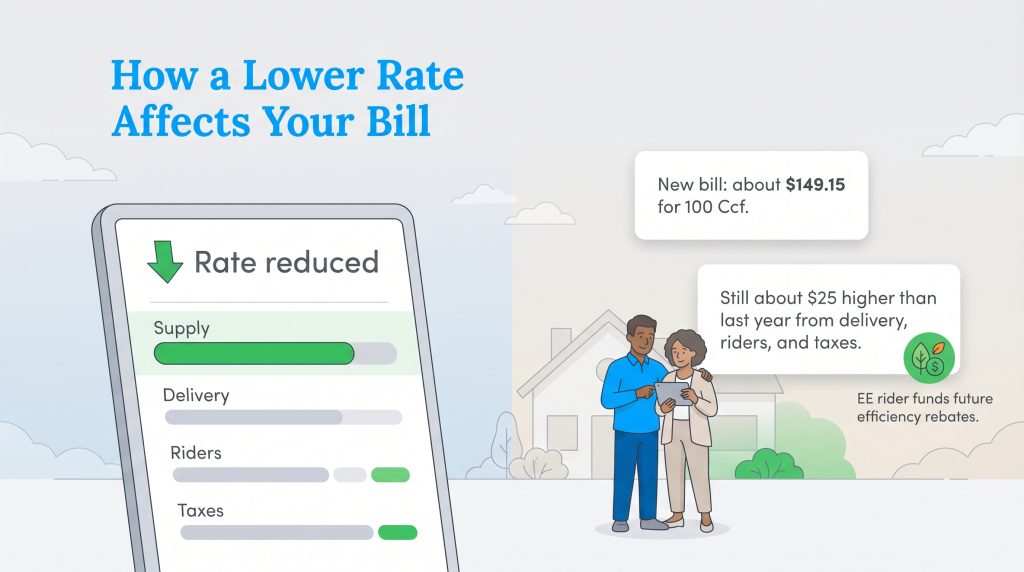
While a lower rate is always welcome, it is important to remember that the supply price is only one part of your total bill. Even though the commodity price is down, other costs like delivery fees and infrastructure upgrades can still influence the final amount you owe.
For a typical household using 100 Ccf of gas, Columbia Gas of Ohio estimates a monthly bill of approximately $149.15. This includes the gas itself, delivery charges, and local taxes. Interestingly, this is still about $25 higher than the same time last year because of new riders, such as the Energy Efficiency (EE) rider that took effect on Jan. 1, 2026. This rider costs about $0.00634 per therm for residential customers but helps fund rebates for energy-saving equipment that can save you more money in the future.
Your Options for Managing Changing Energy Costs
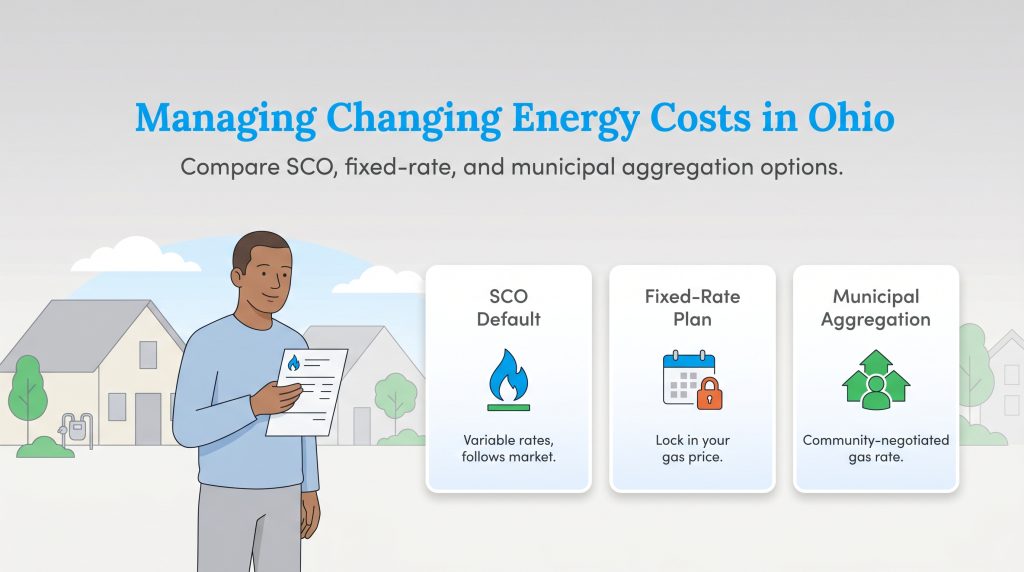
In Ohio, you have the power to choose who supplies your natural gas. While many people stick with the default SCO rate, you might find a better fit for your lifestyle by exploring the CHOICE program or a municipal aggregation plan.
| Provider | Rate ($/Ccf) | Plan Type | Termination Fee |
| Columbia Gas (SCO) | $0.4809 | Variable | $0 |
| American Power & Gas | $0.3490 | Variable | $0 |
| XOOM Energy | $0.5090 | 12-Month Fixed | $220 |
| IGS Energy | $0.9790 | 36-Month Fixed | $199 |
Locking in a Fixed Rate for Stability
If you prefer a predictable monthly bill, a fixed-rate plan might be your best bet. Suppliers like XOOM Energy or Energy Harbor allow you to lock in a price for 12 to 36 months. This protects you if prices spike during a sudden cold snap next winter. However, keep an eye out for early termination fees — some contracts charge as much as $220 if you decide to switch back before the term is up.
Benefiting from Municipal Aggregation
Many cities, including those in the Northwest Ohio Aggregation Coalition (NOAC), use their collective buying power to negotiate lower rates for their residents. For example, Archer Energy was recently selected to provide gas to NOAC communities at a rate lower than the Columbia Gas default. These programs are usually “opt-out,” meaning you are automatically enrolled unless you tell them otherwise. It is a great “set it and forget it” way to ensure you are getting a competitive price.
Major Ohio Cities and Areas Affected
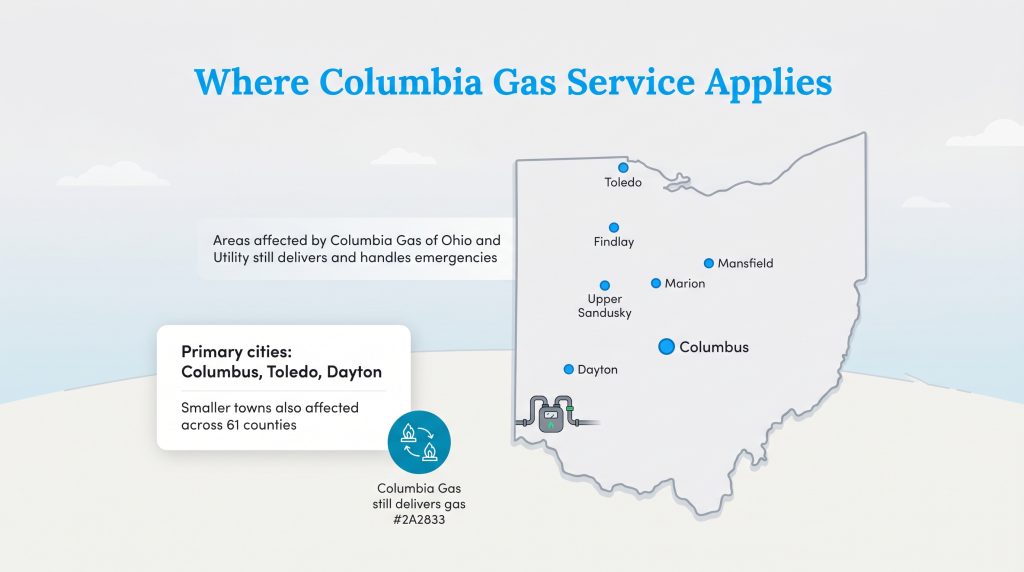
Columbia Gas of Ohio is one of the largest utilities in the state, serving approximately 1.5 million customers across 61 different counties. This rate change will be felt in major metropolitan hubs and rural towns alike.
The primary cities impacted by this $0.4809 rate include Columbus, Toledo, and Dayton. Smaller urban centers like Mansfield, Marion, Findlay, and Upper Sandusky are also within the service footprint. Regardless of which city you live in, Columbia Gas remains responsible for the physical delivery of the gas and responding to emergencies, even if you choose a different supplier through the Ohio Apples to Apples comparison tool.
Sustainable Choices for an Eco-Conscious Home

Saving money is great, but saving energy is even better for the planet. We always encourage our readers to look for environmentally mindful choices that reduce their carbon footprint while lowering their bills.
- WarmChoice Program: If your household meets certain income requirements, you may qualify for free home weatherization and safety checks on your gas appliances.
- ENERGY STAR Rebates: You can often find rebates for high-efficiency furnaces, smart thermostats, and water heaters. These products use less gas to get the same job done, which is the most permanent way to lower your bill.
- Renewable Natural Gas (RNG): Some suppliers, such as IGS Energy, offer plans that include 100% renewable content or carbon offsets. This is a fantastic eco-conscious alternative for those who want to support clean energy projects.
Making the Most of Lower Natural Gas Prices
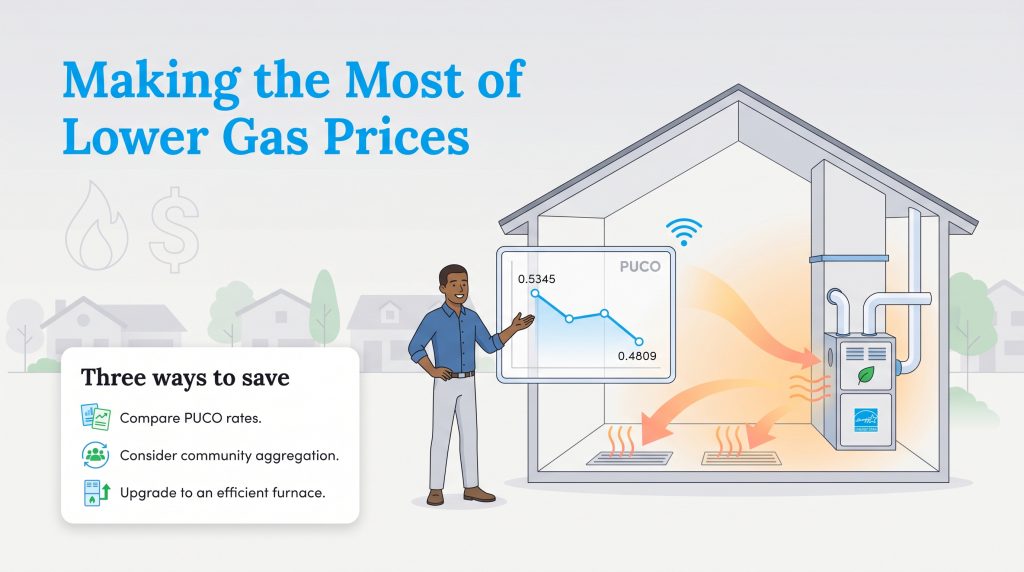
The shift from $0.5345 down to $0.4809 per Ccf is a great reminder of how much the energy market can change in just a few months. By staying informed and checking your options on the PUCO website, you can take control of your home’s energy costs. Whether you decide to stay on the default rate, join a local aggregation group, or invest in an Energy Star certified furnace, the goal is to create a home that is both comfortable and cost-effective. We hope this update helps you feel a little more confident the next time you open your utility bill.
Frequently Asked Questions About Columbia Gas of Ohio Rates
What is the difference between the SCO and the CHOICE program?
Can I switch back to Columbia Gas if I don’t like my new supplier?
Why is my bill still high if the gas rate went down?
Am I eligible to switch suppliers if I am on the PIPP Plus plan?
About the Author

Claudio is a sustainability-focused writer with a background in Anthropology and Psychology from NC State University. He has spent over 15 years working in writing, interpretation, and translation, driven by a deep interest in how human culture shapes the environment. Today, he shares his curiosity with readers by writing about sustainable living solutions and the connection between everyday choices and environmental impact.