
Key Takeaways
- A Tale of Two Utilities: Starting February 1, 2026, SoCalGas procurement rates have jumped nearly 12%, while PG&E customers will see a massive 35% decrease in their gas commodity costs.
- The “Why” Matters: PG&E’s drop is largely due to the expiration of a two-year regulatory surcharge, whereas SoCalGas is facing higher wholesale gas prices driven by winter heating demand.
- Bill Impact: Typical PG&E households can expect to save roughly $7.00 on gas costs this month, while SoCalGas customers will see their bills inch higher despite the approaching end of winter.
- Relief is Coming: Regardless of your provider, all residential natural gas customers will receive a California Climate Credit ranging from $36 to $46 on their April bills.
For California residents, opening a utility bill is often a source of anxiety. However, for February 2026, the news you receive depends entirely on your zip code. A sharp divergence has emerged between the state’s two largest energy providers: Southern California Gas Company (SoCalGas) and Pacific Gas and Electric (PG&E).
While Northern California residents are finally seeing relief after years of high costs, Southern Californians are facing a late-winter spike. Here is everything you need to know about the changes, why they are happening, and how to manage your bill.
The Numbers: What You Are Paying Now
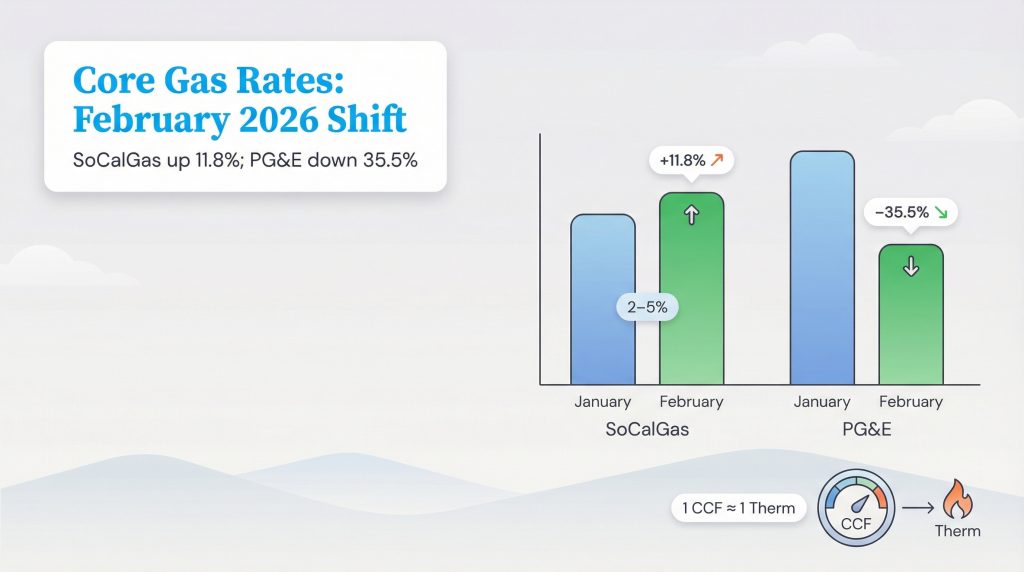
Effective February 1, 2026, the “Core Procurement Rate”, the price the utility charges for the natural gas itself, shifted dramatically.
- SoCalGas: The rate increased from roughly $0.496 per therm in January to $0.555 per therm in February. This represents an 11.8% increase in the cost of the fuel.
- PG&E: The rate plummeted from $0.638 per therm in January to $0.412 per therm in February. This is a 35.5% decrease and marks one of the lowest rates PG&E customers have seen in over a year.
Note: Utilities bill in “Therms” (a unit of heat energy), though your meter measures “CCF” (volume). One CCF is roughly equal to one Therm.
Why Are Rates Going in Opposite Directions?
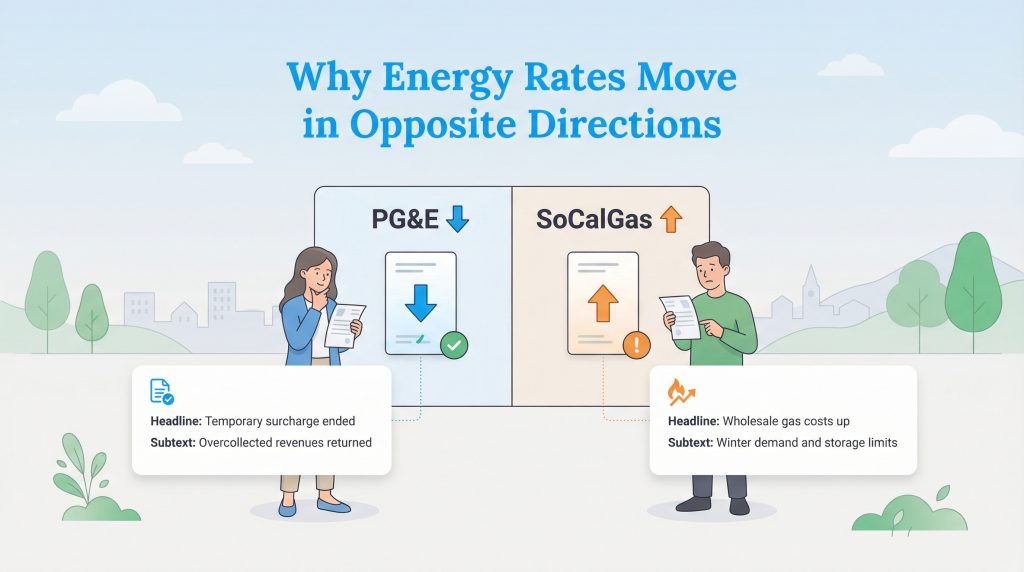
It is rare to see such a split, but specific regulatory and market forces are driving this divide.
Why PG&E Rates Dropped: The primary driver for the decrease is regulatory “housekeeping.” For the past two years, PG&E rates included a temporary surcharge designed to recover costs from the 2023 General Rate Case. That 24-month amortization period ended on December 31, 2025. With that debt paid off, the surcharge has fallen off the bill, resulting in immediate savings. Additionally, PG&E over-collected revenues in 2025 due to higher customer demand, and they are now returning that surplus to ratepayers.
Why SoCalGas Rates Rose: SoCalGas customers are feeling the brunt of market volatility. The utility attributes the nearly 6-cent hike to a sharp rise in the wholesale price of natural gas (up 4.5 cents) and adjustments to their balancing accounts (up 1.3 cents). Unlike PG&E, SoCalGas is grappling with regional storage constraints and higher spot market prices typical of the winter heating season.
Impact on Your Wallet
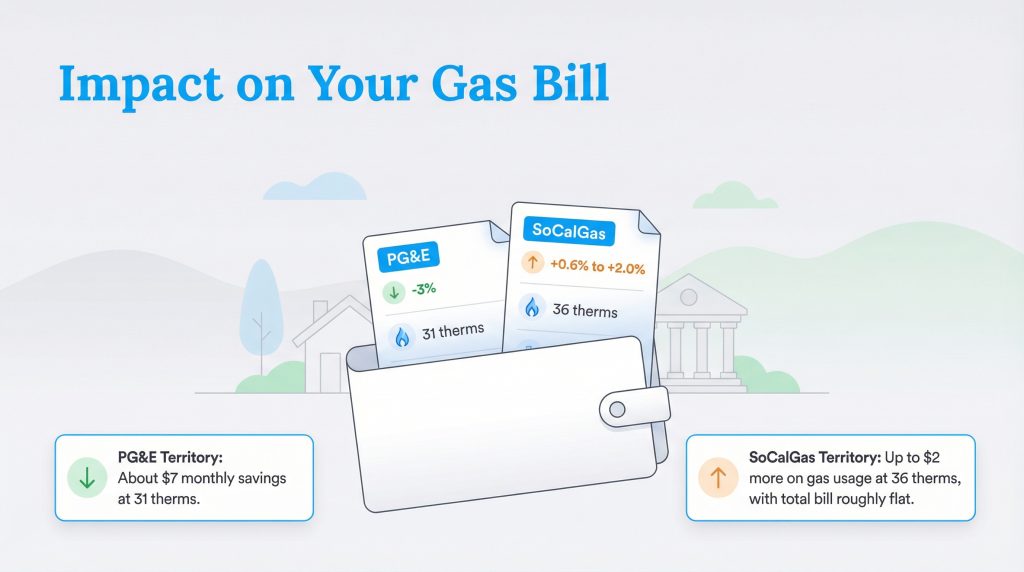
How does this translate to the bottom line?
- PG&E Territory: A typical household using 31 therms will see their commodity cost drop by roughly $7.00 compared to January. Total bill savings typically hover around 3%.
- SoCalGas Territory: A household using 36 therms will see the commodity portion of their bill rise by over $2.00. While a decrease in transportation charges (the cost to deliver the gas) helps cushion the blow, the overall bill is expected to remain flat or increase slightly by 0.6% to 2.0%.
Which Cities Are Impacted?
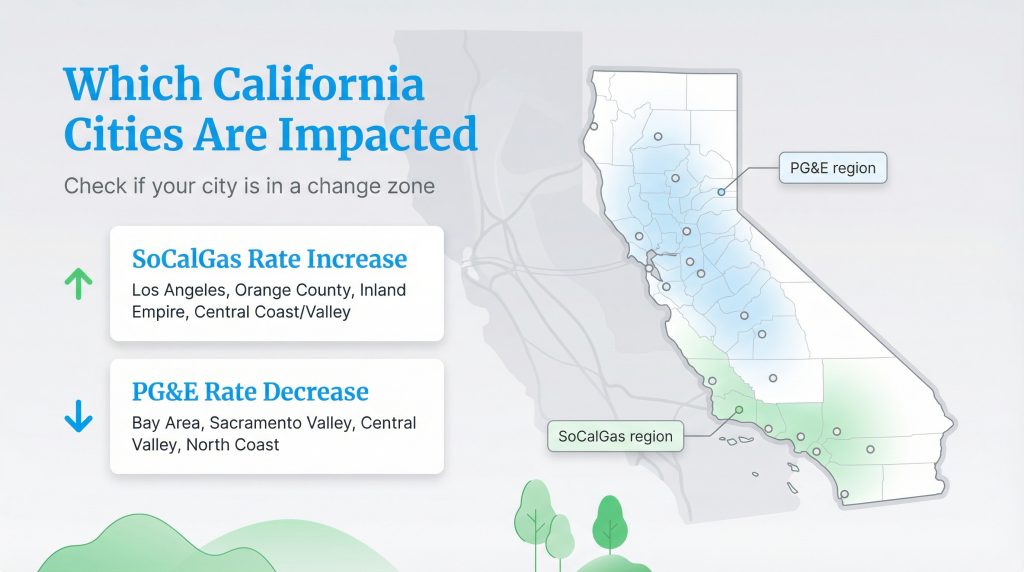
Check your bill or the list below to see which trend affects you.
SoCalGas (Rate Increase):
- Los Angeles County: Los Angeles, Santa Clarita, Glendale, Burbank, Pasadena, Pomona, Lancaster, Palmdale.
- Orange County: Anaheim, Santa Ana, Irvine, Huntington Beach.
- Inland Empire: Riverside, San Bernardino, Fontana, Moreno Valley.
- Central Coast/Valley: San Luis Obispo, Santa Barbara, Visalia, Bakersfield (partial).
PG&E (Rate Decrease):
- Bay Area: San Francisco, Oakland, San Jose, Fremont, Hayward, Berkeley.
- Sacramento Valley: Sacramento, Elk Grove, Roseville, Chico, Redding.
- Central Valley: Fresno, Stockton, Modesto, Merced.
- North Coast: Eureka, Arcata.
How to Offset the Costs
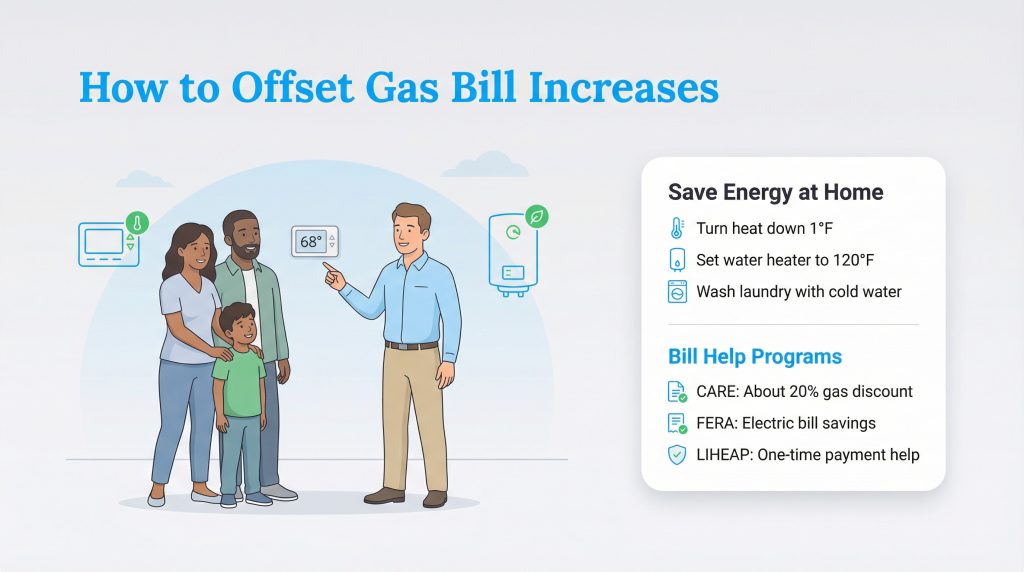
If you are in the “increase zone” (or just want to save more money), small adjustments can yield real savings.
- The “One Degree” Rule: Lowering your thermostat by just 1°F can save 1-3% on your heating bill. Aim for 68°F when awake and 55-58°F when sleeping.
- Dial Down the Water Heater: Set your water heater to 120°F (often the “B” setting). This prevents scalding and reduces standby heat loss.
- Wash Cold: Switching laundry loads to cold water eliminates the gas used to heat the water, which can be a significant portion of monthly usage.
- Check for Financial Assistance:
- CARE Program: Provides a 20% discount on bills for qualified households. Income limit for a family of 4 is $64,300. SoCalGas or PG&E.
- FERA Program: Offers an 18% discount on electric bills for larger households (3+ people) with slightly higher incomes.
- LIHEAP: A federally funded program that offers one-time cash grants to help pay down utility bills. Find a Local Provider.
Learn more about How To Save on Your Natural Gas Bill
Good News on the Horizon: The April Climate Credit
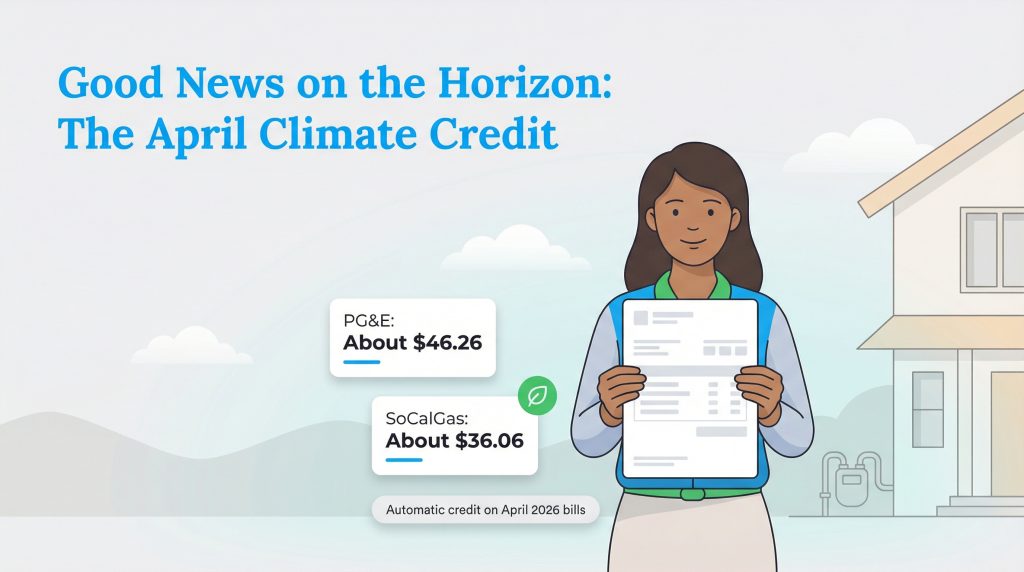
Regardless of February’s volatility, relief is scheduled for spring. In April 2026, all residential natural gas customers will receive the California Climate Credit automatically on their bills.
- PG&E Customers: ~$46.26 credit
- SoCalGas Customers: ~$36.06 credit
Data sources: SoCalGas Advice Letter 6578-G, PG&E Advice Letter 5160-G1.
About the Author

David has been an integral part of some of the biggest utility sites on the internet, including InMyArea.com, HighSpeedInternet.com, BroadbandNow.com, and U.S. News. He brings over 15 years of experience writing about, compiling and analyzing utility data.