
Lowering your monthly natural gas expenses requires a mix of simple daily habit changes and smart, eco-conscious home upgrades
Key Takeaways
- Adjusting your thermostat and water heater settings provides immediate relief to your utility budget.
- Sealing air leaks and adding insulation are cost-effective ways to retain heat and reduce energy waste.
- Upgrading to ENERGY STAR certified appliances offers long-term, sustainable savings for your household.
When the temperature drops, finding ways to lower your gas bill in the winter becomes a top priority for most households. We know opening that monthly statement can induce panic during the coldest months, but you have realistic options to cut your natural gas bill without freezing in your own living room. By blending simple behavioral adjustments with long-term energy saving tips, you can take control of your utility costs. Whether you are aiming to reduce natural gas consumption for environmental reasons or just want to keep more money in your wallet, making a few targeted changes around your house will create a cozier, more affordable living space.
Why Is My Gas Bill So High?
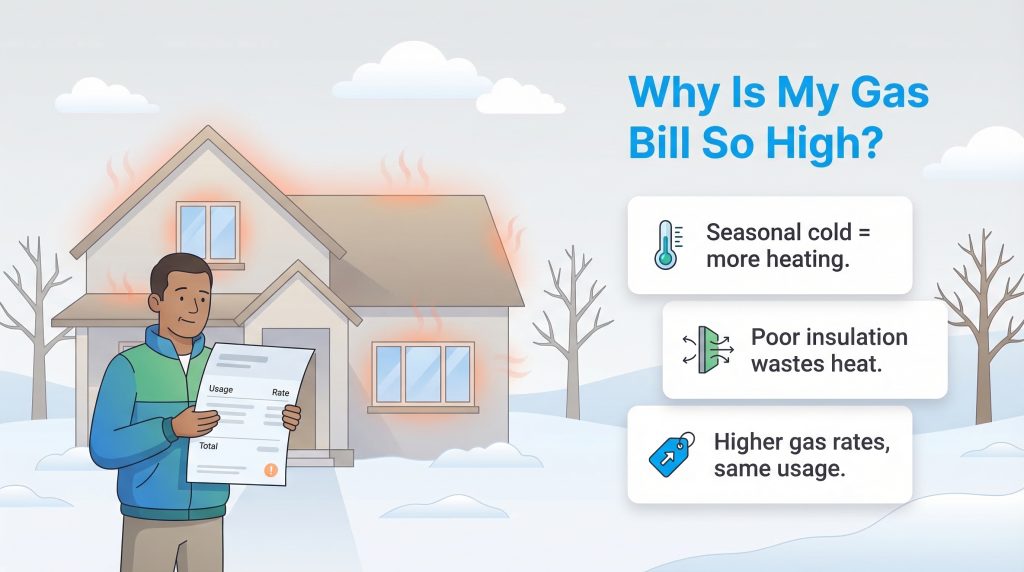
If you recently opened a surprisingly expensive utility statement, you might be wondering why your costs skyrocketed overnight. Several common culprits usually drive up those charges. First, fluctuating natural gas rates can inflate your costs even when your actual usage remains exactly the same. Second, sudden changes in weather force your furnace to work overtime, especially if your property lacks proper insulation. Finally, relying on outdated heating technology means your equipment burns significantly more energy to produce the same amount of warmth compared to modern units. Combine those drafty windows with older, inefficient appliances fighting to keep up, and your monthly expenses can quickly multiply.
How Your Gas Bill Is Calculated
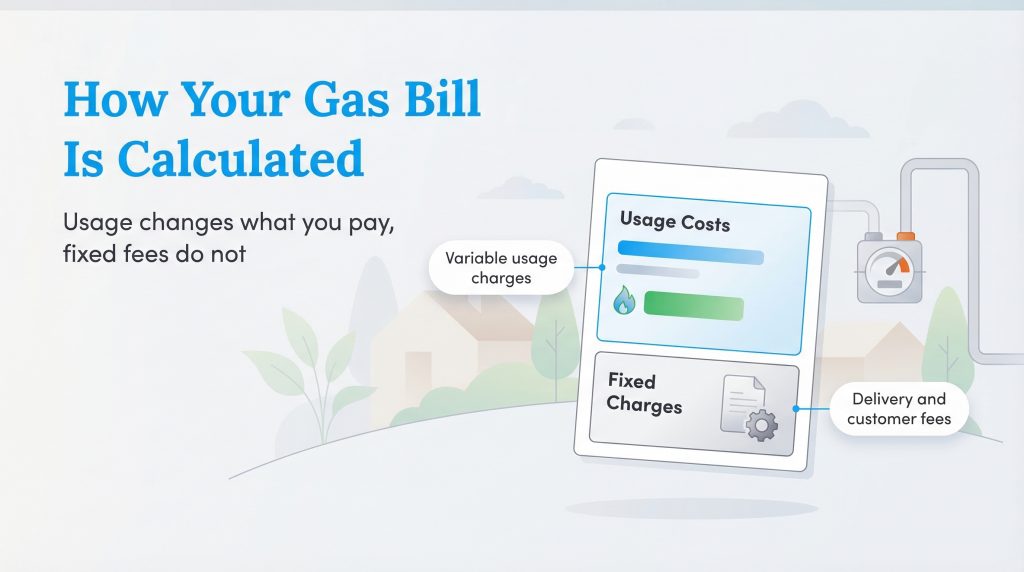
To effectively lower your expenses, it helps to know exactly where your money goes each month. Your bill is generally split into two main categories: your actual energy usage (measured in therms or cubic feet) and the fixed charges from your utility company. While you cannot control standard delivery fees or base customer charges used to maintain public pipelines, you can directly influence your variable supply costs by reducing how much gas you consume. If your usage remains steady but your bill still spikes, you may be experiencing a seasonal rate increase or a longer-than-usual billing cycle. Learn more about Understanding Your Gas Bill.
Quick Fixes to Save on Your Gas Bill Today
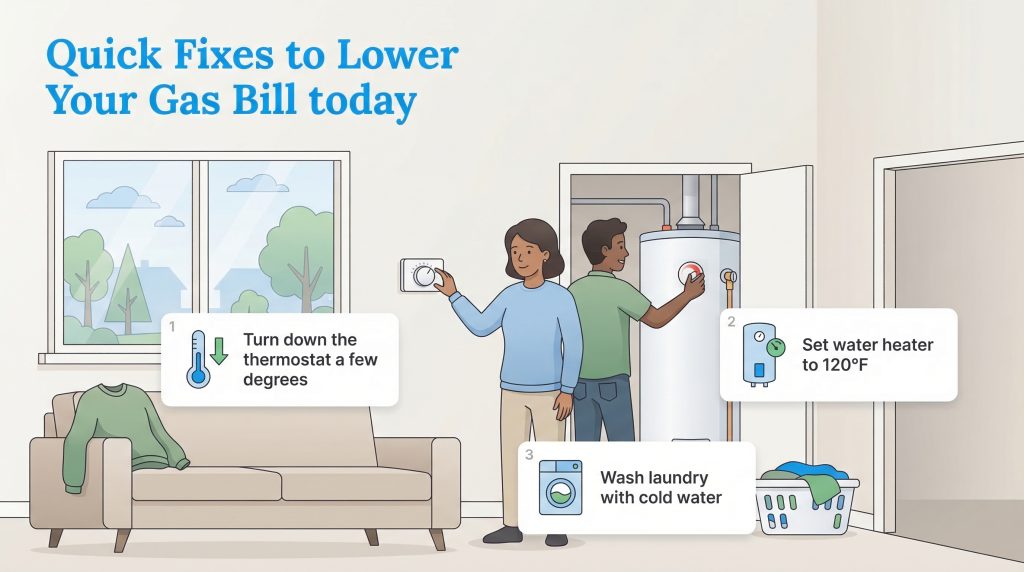
You don’t need a massive renovation budget to start seeing immediate financial changes. Implementing a few low-cost or no-cost actions right now can quickly lower your energy usage and prevent wasteful habits. These environmentally mindful choices require very little effort but deliver noticeable results almost overnight. Whether you own your property or are currently renting, these straightforward adjustments are excellent starting points for anyone looking to quickly cut costs.
| Tip | Cost | Difficulty | Potential Savings | Best For |
|---|---|---|---|---|
| 1. Adjust the thermostat to best winter setting | Free | Easy | High | Renters & Homeowners |
| 2. Unblock heat vents and registers | Free | Easy | Medium | Renters & Homeowners |
| 3. Utilize curtains and window treatments | Free | Easy | Medium | Renters & Homeowners |
| 4. Reverse your ceiling fans | Free | Easy | Low | Renters & Homeowners |
| 5. Lower water heater temperature | Free | Easy | Medium | Renters & Homeowners |
| 6. Wash clothes in cold water | Free | Easy | Low | Renters & Homeowners |
| 7. Weatherstrip doors and windows | Low | Easy | Medium | Renters & Homeowners |
| 8. Clean your dryer vents | Free | Easy | Medium | Renters & Homeowners |
| 9. Replace your furnace filter regularly | Low | Easy | Medium | Renters & Homeowners |
| 10. Switch gas providers and energy plans | Free | Easy | High | Renters & Homeowners |
| 11. Use a smart or programmable thermostat | Medium | Medium | High | Homeowners |
| 12. Improve attic and wall insulation | High | Hard | High | Homeowners |
| 13. Insulate hot water pipes and heater | Low | Medium | Low | Homeowners |
| 14. Install an on-demand hot water system | High | Hard | High | Homeowners |
| 15. Upgrade to a high efficiency furnace | High | Hard | High | Homeowners |
Adjust the Thermostat to the Best Winter Setting
Dropping the temperature inside your house by just a few degrees during the winter can make a meaningful difference in your monthly expenses. According to energy experts, the best winter thermostat setting is exactly 68 degrees Fahrenheit when you are awake and active at home. You likely won’t even notice this slight adjustment if you wear a cozy sweater and a thick pair of socks around the house. Practicing proper thermostat settings prevents your heating system from cycling on constantly, giving your equipment a much-needed break while trimming down your utility charges. For more specific temperature guidelines, the Department of Energy offers proven thermostat strategies.
Unblock Heat Vents and Registers
Take a few minutes to walk through your home and check the location of your heating registers. Moving a couch, rug, or set of heavy drapes that might be blocking airflow is a zero-cost hack that immediately improves your comfort. Blocked vents force your HVAC system to work much harder to distribute warm air, needlessly increasing your gas usage. Giving your vents plenty of clearance allows the heat you are actively paying for to circulate freely throughout the room.
Utilize Curtains and Window Treatments
Commanding your window treatments to work with the sun is an effortless method for natural gas conservation. Open your curtains on south-facing windows during the day to let sunlight naturally warm your living spaces. Once the sun goes down, firmly close the drapes to create an extra layer of insulation against the nighttime cold. Heavy, thermally lined curtains are particularly effective at trapping the heat inside where it belongs, lessening the burden on your central heating system.
Reverse Your Ceiling Fans
You might think fans are only for summer, but they play a crucial role in winter energy saving tips. Set your ceiling fans to spin clockwise on a low speed during the colder months. Because hot air naturally rises, this reverse motion gently pushes the warm air trapped near the ceiling back down into the room without creating a chilling breeze. This simple trick helps you lower your gas bill in the winter by maximizing the warmth your furnace already produced.
Lower the Water Heater Temperature
Dial your water heater setting back to 120 degrees Fahrenheit for an immediate reduction in your monthly energy usage. Many manufacturers ship water heaters with a default setting as high as 140 degrees Fahrenheit, which is significantly hotter than most households realistically need. Making this practical DIY adjustment lowers the amount of energy required to keep that tank warm, actively shrinking your bill. As an added benefit, it also protects your family by preventing accidental scalding at the tap.
Wash Clothes in Cold Water
Heating the water for laundry demands a surprising amount of energy, but simply switching your washing machine to the cold cycle eliminates that expense entirely. Modern laundry detergents are specifically formulated to break down stubborn stains and clean fabrics beautifully in cold water. Since water heating affects both gas and electric setups depending on your specific appliances, making this simple switch can also help you save on your electric bill throughout the year. Plus, washing your clothing in cold water actually helps preserve the color and fabric integrity of your favorite garments.
Weatherstrip Doors and Windows
Take a quick walk around your home to identify tiny gaps around your exterior doors and window frames. Sealing those sneaky drafts with fresh weatherstripping or a simple bead of caulk is a vital step for natural gas conservation. Stopping chilly winter breezes from invading your living room means your furnace doesn’t have to work nearly as hard to maintain a comfortable temperature, letting you easily save on your gas bill while eliminating cold spots.
Clean Your Dryer Vents
If you operate a gas-powered dryer, keeping the exhaust path clear is crucial for both efficiency and home safety. Clean the lint trap after every single load of laundry, and make a habit of thoroughly clearing out the main exhaust vent at least once a year. A restricted vent forces your dryer to run longer to dry the same amount of clothing, which needlessly burns extra fuel. Better airflow translates directly into faster drying times and lower utility expenses.
Replace Your Furnace Filter Regularly
A clogged, dirty air filter acts like a wall, forcing your furnace to work significantly harder to push warm air throughout your home. Checking your filter every single month and replacing it as soon as it looks gray and covered in dust is a high-impact, low-cost way to maintain airflow. This inexpensive habit not only lowers your natural gas consumption but also extends the mechanical lifespan of your HVAC equipment by preventing overheating.
Mid-Level and Long-Term Investments for Sustainable Savings
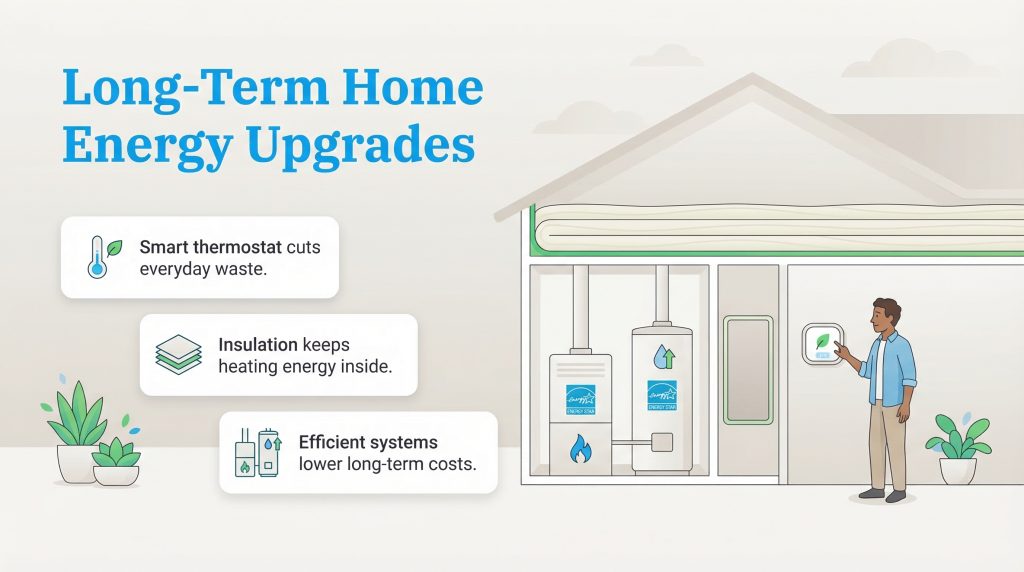
While immediate habit changes provide quick relief to your budget, tackling larger structural improvements unlocks the highest financial returns over the years. These upgrades require an upfront investment, but they offer substantial eco-conscious benefits that pay off beautifully in the long run. If your current furnace or water heater is more than 15 years old, planning for these replacements now can save you from an emergency purchase later.
Switch Gas Providers and Energy Plans
If you live in a deregulated energy market, sticking with the same provider year after year could mean you are severely overpaying for your supply. You can actively lower your rates by shopping around to switch gas providers and comparing different natural gas plans. We highly recommend locking in a competitive, flat rate natural gas plan right before winter hits, which shields your household budget from unexpected mid-season price spikes. Take a few minutes to compare local offers and see how much you could save on your gas bill.
Use a Smart or Programmable Thermostat
Swapping out an old, manual dial for a programmable or smart thermostat takes the guesswork out of daily temperature control. If you prefer a simple approach, setting a standard programmable schedule to automatically lower the temperature while you are at work or asleep ensures you are not paying to heat an empty space. For a more advanced upgrade, smart devices learn your family’s routine over time and optimize your heating schedule automatically. Either option stands out as a premier energy-saving investment that practically pays for itself through consistently lower utility charges.
Improve Attic and Wall Insulation
Your home relies on a thick thermal barrier to trap heat inside where it belongs. Taking the time to properly seal and insulate your property prevents warm air from seeping through your attic roof or thin exterior walls. Adding high-quality insulation is a cornerstone of sustainable living, ensuring your furnace output stays contained and your heating system operates at peak efficiency. In fact, comprehensive air sealing is widely considered one of the highest-return investments you can make for your home’s energy profile.
Insulate Hot Water Pipes and the Water Heater
Exposed hot water pipes running through unheated basements or crawl spaces lose a significant amount of heat before the water even reaches your faucet. Slipping inexpensive foam pipe insulation sleeves over these exposed lines is a straightforward DIY project that helps water retain its heat as it travels through your walls. You can also wrap older, tank-style water heaters in an insulating blanket to reduce standby heat loss, allowing your equipment to operate far more efficiently.
Install an On-Demand Hot Water System
Traditional hot water tanks continuously burn gas to keep gallons of water heated 24/7, even when you are asleep or away on vacation. Upgrading to an on-demand hot water system, also known as a tankless water heater, solves this problem by heating water only exactly when you turn on the tap. This revolutionary approach eliminates standby heat loss entirely, which dramatically helps reduce natural gas consumption. While the upfront installation cost is higher than standard models, the long-term monthly savings are undeniable.
Upgrade to an ENERGY STAR High Efficiency Furnace
When an aging furnace finally reaches the end of its lifespan, resist the urge to buy the cheapest replacement model available on the market. Instead, look specifically for ENERGY STAR certified water heaters and a high efficiency furnace that use a fraction of the fuel required by standard, builder-grade units. While these advanced models definitely cost more upfront, the cost-benefit analysis of a high efficiency furnace versus standard models heavily favors the upgrade. Because they convert nearly all of their input fuel directly into usable heat, their incredibly efficient operation translates directly into massive long-term savings on your utility statements.
Preparing for a Lower Winter Gas Bill
Successfully reducing your household energy usage is entirely within your grasp. You can permanently save on your gas bill by blending smart daily habits with targeted, eco-conscious home improvements. Pick one or two quick fixes to implement this weekend, and enjoy the peace of mind that comes from mastering your monthly utility expenses. Whether you are adjusting a thermostat or setting up natural gas service at a brand-new address, taking proactive steps today will benefit your budget all winter long.
Frequently Asked Questions About Saving on Your Gas Bill
Does turning down the heat at night actually save money?
Should I close the vents in unused rooms?
How do I know if my windows are letting cold air in?
Will a smart thermostat work with my older furnace?
Are there government programs to help pay for heating bills?
Why is my gas bill so high all of a sudden?
What is the best winter thermostat setting to save money?
Do gas fireplaces save money on heating bills?
Does a tankless water heater really reduce natural gas consumption?
About the Author

David has been an integral part of some of the biggest utility sites on the internet, including InMyArea.com, HighSpeedInternet.com, BroadbandNow.com, and U.S. News. He brings over 15 years of experience writing about, compiling and analyzing utility data.