
Finding the right natural gas provider comes down to comparing total costs, contract terms, and customer service reliability.
Key Takeaways
- Gas South offers more flexibility for customers with lower credit scores through their “no deposit” options, while Constellation often provides more competitive long-term fixed rates.
- Constellation generally has a simpler fee structure with a flat customer service charge, whereas Gas South’s fees can vary based on your specific plan and location.
- Both providers serve the Atlanta Gas Light territory, meaning your actual gas delivery remains the same, but your billing, perks, and contract terms will differ significantly.
Choosing the best natural gas provider in Georgia can feel overwhelming when you are bombarded with confusing rate charts and promotional offers. Whether you are moving into a new home in Atlanta or looking to switch from Gas South to Constellation to lower your monthly bills, the difference often lies in the fine print regarding fixed rates, early termination fees, and customer service charges. This guide breaks down the pros and cons of these two market leaders to help you lock in the best deal for your budget and lifestyle.

- $0.659 /THM
- $6.95-7.95
- 90 days
- 12-36 Months

- $0.590 /THM
- $6.95-9.95
- None
- 1-24 Months
*rates may vary by location and household usage
At a Glance: Constellation vs. Gas South Features
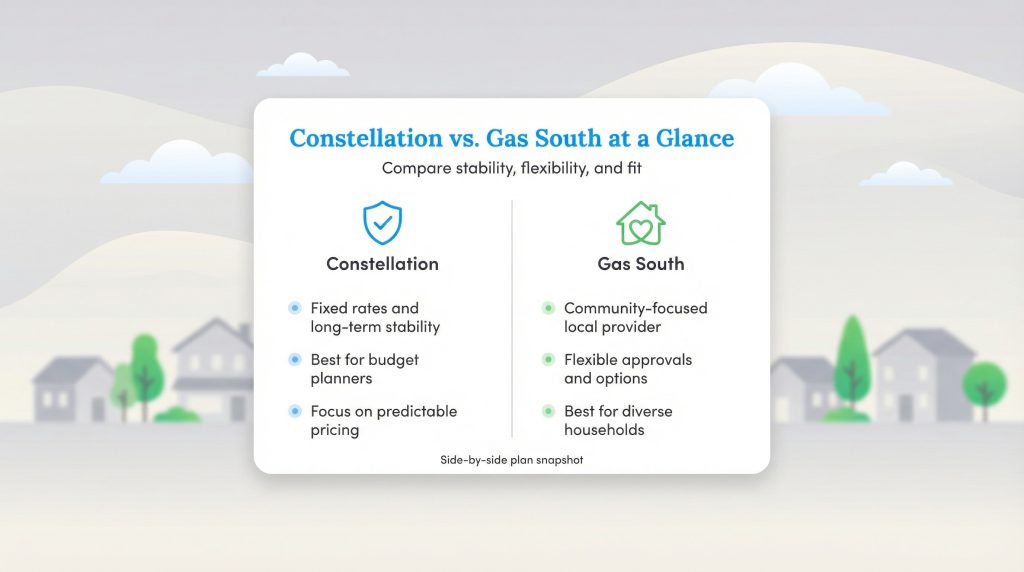
When comparing these two major players, it is helpful to see the core differences side-by-side before diving into the fine print. While both companies are certified marketers in Georgia, they target slightly different types of customers. Constellation is often the go-to for stability and long-term fixed rates, while Gas South positions itself as the community-focused local option with flexible approvals. If you are browsing different natural gas plans, this table highlights the key distinctions you need to know.
| Feature | Constellation | Gas South |
|---|---|---|
| Contract Lengths | Commonly offers 12, 24, or 36-month fixed plans (options vary by ZIP) | Often includes 6, 12, and 24-month plans, plus OneRate options |
| Deposit Requirements | Credit check required; deposit may apply | In many cases, offers no-deposit options for qualifying customers |
| Monthly Service Fee | Typically charges a flat monthly customer service fee (often around $7–$8) | Customer service charge usually ranges by plan and credit tier, often in the $7–$10/month range |
| Early Termination Fee | Often around $150 on fixed-term plans, but the exact fee can vary by contract | Often around $150 on fixed-term plans, but the exact fee can vary by contract |
| Best For | Long-term price stability | Flexibility and building credit |
Comparing Natural Gas Rates and Plan Types
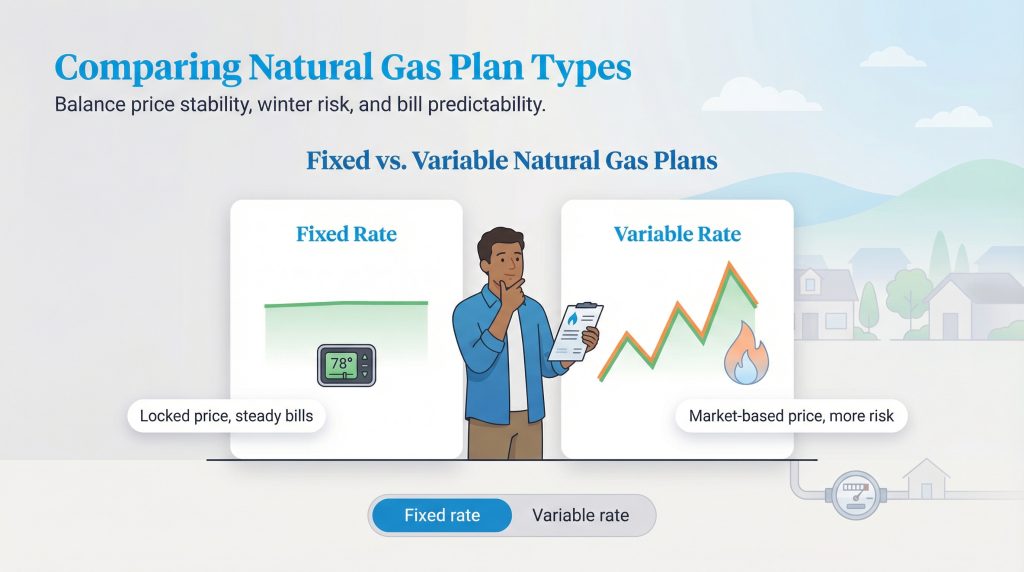
The most significant factor for most homeowners is the price per therm, but the “sticker price” doesn’t always tell the whole story. Both providers offer fixed-rate and variable-rate plans, yet their approaches to these contracts differ. Understanding these nuances is critical to avoiding bill shock during the cold winter months.
When analyzing the Gas South fixed vs variable rate options, you will notice a distinct trade-off. A fixed rate protects you from market spikes, locking in a set price per therm for the duration of your contract. This is ideal for budgeting. In contrast, variable rates fluctuate with the market conditions. While they offer flexibility since there is no long-term contract, they can skyrocket in winter when demand is high.
Gas South Plans and Pricing
| Plan Name | Rate | Plan Type | Base Charge | Cancellation Fee | |
|---|---|---|---|---|---|
| 6 Month Fixed - $50 in Bill Credits | $0.590 /THM | 6 Months Fixed Rate | $6.95-9.95 | $150 | Check Availability |
| Intro Variable | $0.690 /THM | 1 Months Fixed Rate | $6.95-9.95 | $150 | Check Availability |
| 12 Month Fixed - $50 in Bill Credits | $0.690 /THM | 12 Months Fixed Rate | $6.95-9.95 | $150 | Check Availability |
| 24 Month Fixed -$50 in Bill Credits | $0.750 /THM | 6 Months Fixed Rate | $6.95-9.95 | $150 | Check Availability |
| Variable | $2.110 /THM | 1 Months Fixed Rate | $6.95-9.95 | $150 | Check Availability |
Constellation frequently appears among the lower-priced fixed-rate options in Georgia comparison tools, especially on 12- and 24-month plans. Their strategy focuses on customers who want to “set it and forget it.” Gas South, on the other hand, offers unique “OneRate” plans where you pay a flat monthly amount regardless of usage (within limits), which can appeal to those who hate fluctuating bills, though the effective price per therm might be higher.
Constellation Plans and Pricing
| Plan Name | Rate | Plan Type | Base Charge | Cancellation Fee | |
|---|---|---|---|---|---|
| 24 Month + Water Heater Protection | $0.659 /THM | 24 Months Fixed Rate | $7.95 | $150 | Check Availability |
| 24 Month Home Natural Gas Plan | $0.659 /THM | 24 Months Fixed Rate | $7.95 | $150 | Check Availability |
| 12 Month Home Natural Gas Plan | $0.669 /THM | 12 Months Fixed Rate | $6.95 | $150 | Check Availability |
| 12 Month + Water Heater Protection | $0.669 /THM | 12 Months Fixed Rate | $6.95 | $150 | Check Availability |
| 36 Month Home Natural Gas Plan | $0.759 /THM | 36 Months Fixed Rate | $7.95 | $150 | Check Availability |
Both companies are regulated marketers approved by the Georgia Public Service Commission (PSC). This certification ensures that regardless of which plan you choose, they must adhere to state standards for billing and service.
Fee Structures and Billing Transparency for Constellation vs. Gas South
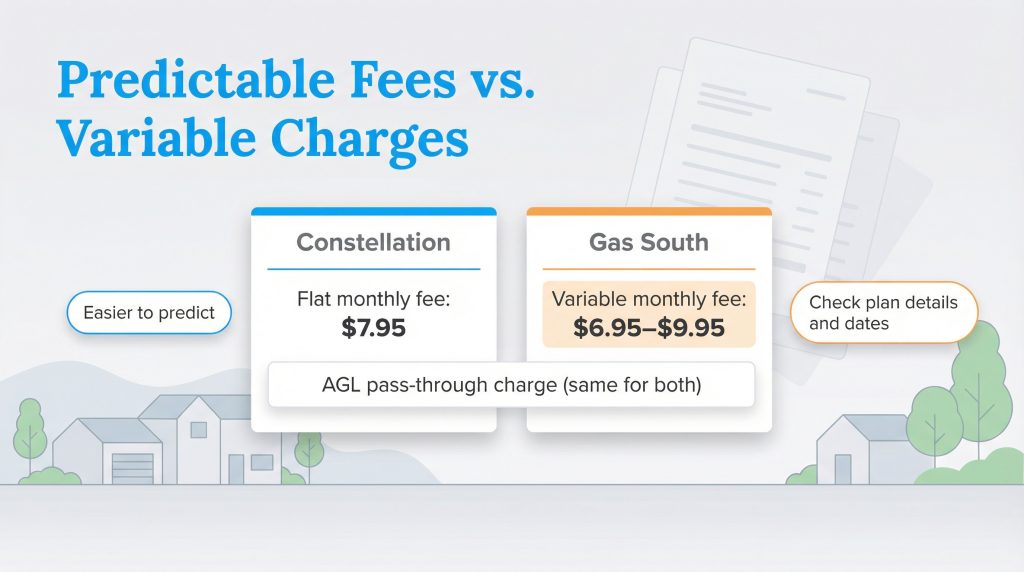
Hidden fees are the number one complaint among utility customers, so transparency here is vital. While the base rate per therm is important, the recurring monthly fees can add up to over $100 a year. You need to know exactly what will appear on your bill beyond actual gas usage.
Constellation typically charges a flat customer service fee, often around $7.95 per month. This fee remains consistent regardless of how much gas you use, making it easier to predict your total bill. It is a straightforward cost of doing business that covers their administrative expenses.
Gas South’s structure is slightly more complex. If you are worried about Gas South hidden fees, pay close attention to their customer service charge. This fee can vary between roughly $6.95 and $9.95 per month depending on your specific plan and credit tier. While a difference of three dollars might seem small, it adds up over the life of a two-year contract. Additionally, some specific promotional plans might waive this fee for a short period, so always check when that promotion expires.
It is important to clarify that neither company controls the “AGL Pass-Through Charge.” This fee comes directly from Atlanta Gas Light for maintaining the pipelines and meters. Whether you choose Constellation or Gas South, this specific charge will appear on your bill and is determined by your home’s dedicated capacity factor, not by the marketer you choose.
Customer Service and Satisfaction Reviews
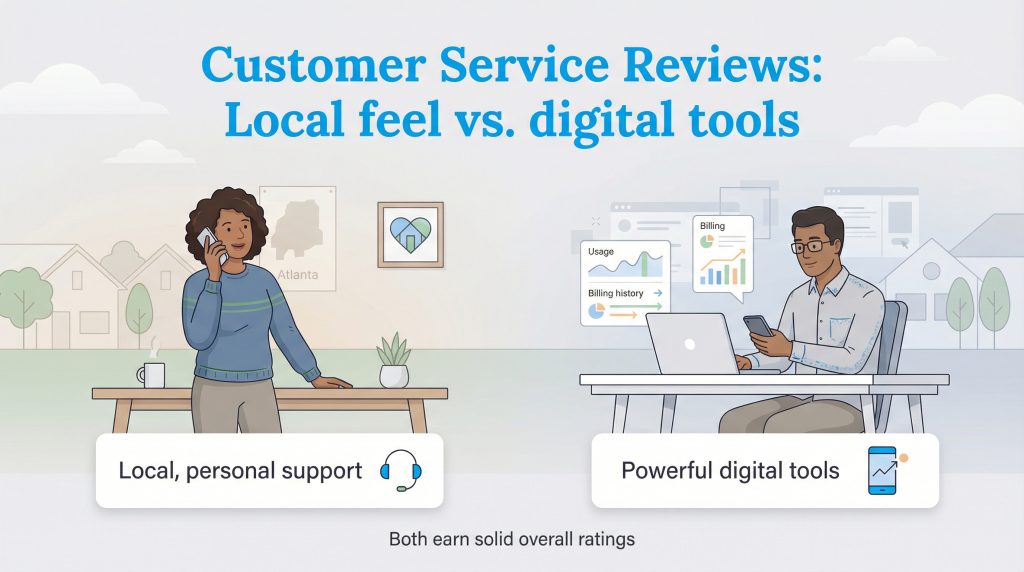
Low rates lose their appeal quickly if you can’t get a human on the phone when you have a billing issue. Reviews for utility companies are often polarized, but looking at aggregate sentiment helps reveal which company treats its customers better.
When comparing Gas South vs Constellation reviews, a pattern emerges regarding their strengths. Gas South heavily markets its local roots, emphasizing that their customer support team is based in Atlanta. Many customers appreciate speaking to local representatives who understand the area’s specific needs. Reviews often highlight their community involvement and “hometown” feel as a major positive.
Constellation Energy Georgia reviews often reflect the experience of dealing with a large national brand. Users frequently praise their digital tools, such as their mobile app and online portal, which make paying bills and tracking usage very efficient. However, some users report that because it is a massive company, getting personalized support for unique issues can sometimes take longer than with a smaller, local provider. Ultimately, both companies generally maintain solid ratings compared to smaller, budget-tier marketers.
Eco-Conscious Programs and Perks

For environmentally mindful homeowners, the source of the energy and the company’s commitment to sustainability matter. Both companies have made strides in offering greener options, though they package them differently.
If you are looking for an eco-conscious alternative, both providers offer ways to offset your carbon footprint. Gas South has partnered with various environmental initiatives to support carbon offset projects. They often highlight these partnerships as part of their community-first branding. Constellation also offers energy plans that include carbon offsets, allowing you to match your natural gas usage with credits that fund renewable energy or methane capture projects.
Beyond the gas itself, both companies frequently offer smart home technology as a signing bonus. Getting a free or discounted smart thermostat is a great energy-saving option that helps you reduce consumption automatically. Installing a smart thermostat can often lower your heating and cooling costs by around 8% a year, according to ENERGY STAR data. These devices learn your schedule and adjust the temperature when you are away, ensuring you aren’t heating an empty house.
Eco Edge: Installing a smart thermostat can lower your heating and cooling costs by about 8% annually. Check out our guide on saving on energy bills to see how small tech upgrades make a big difference.
The Verdict: Should You Switch from Gas South to Constellation?

There is rarely a single “perfect” provider for everyone, as the right choice depends on your credit situation, your desire for long-term price stability, and how much you value local customer service. However, we can break down who wins in specific scenarios.
You should choose Constellation if you want a straightforward fixed rate and a predictable monthly service fee. They are often the better choice for homeowners focused purely on the lowest price per therm over a 12 to 24-month period and who prefer managing their account digitally.
On the other hand, you should choose Gas South if you need more flexibility. If you are renting or have a lower credit score, their “No Deposit” options can save you significant upfront cash. Additionally, if you prefer supporting a company with a Georgia-based headquarters and local support teams, Gas South is likely the better fit. Before you decide to switch from Gas South to Constellation (or vice versa), always check your current contract’s end date to ensure you won’t be hit with an early termination fee.
| Scenario | Better Choice | Why It Fits |
|---|---|---|
| Long-term price stability | Constellation | Offers competitive fixed rates for up to 36 months, protecting you from inflation. |
| Renting or lower credit | Gas South | Frequently offers “No Deposit” options that lower your upfront move-in costs. |
| Local support preference | Gas South | Headquartered in Atlanta with a strong focus on local community service. |
| Predictable monthly fees | Constellation | Typically uses a flat monthly service fee, avoiding variable tiered charges. |
Making the Final Decision on Your Natural Gas Provider
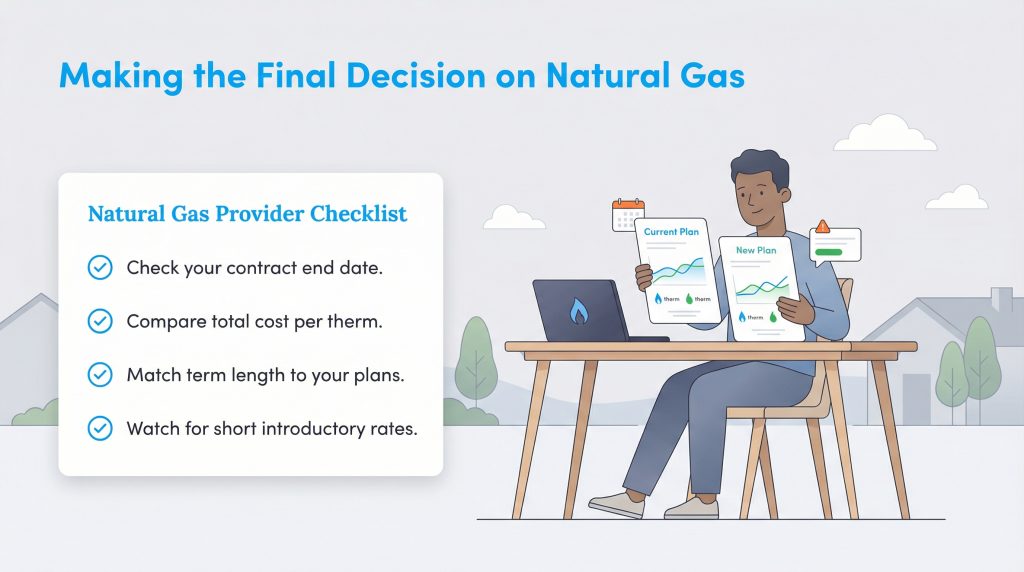
Ultimately, the best natural gas provider Georgia residents can choose is the one that aligns with their financial goals and service expectations. Take a moment to review your last few gas bills to see your actual usage, then compare that against the fixed rates currently offered. A few minutes of comparison now can save you hundreds of dollars over the next year.
To make your decision easier, follow this simple checklist:
- Check your current contract expiration date to ensure you won’t be charged an Early Termination Fee for switching too soon.
- Compare the total cost per therm, including the monthly service fee, rather than just looking at the advertised rate.
- Review the contract term length to make sure it fits your housing plans, especially if you might move within a year.
- Read the fine print for any introductory rates that might expire after the first month.
Choosing The Right Natural Gas Fit For Your Home
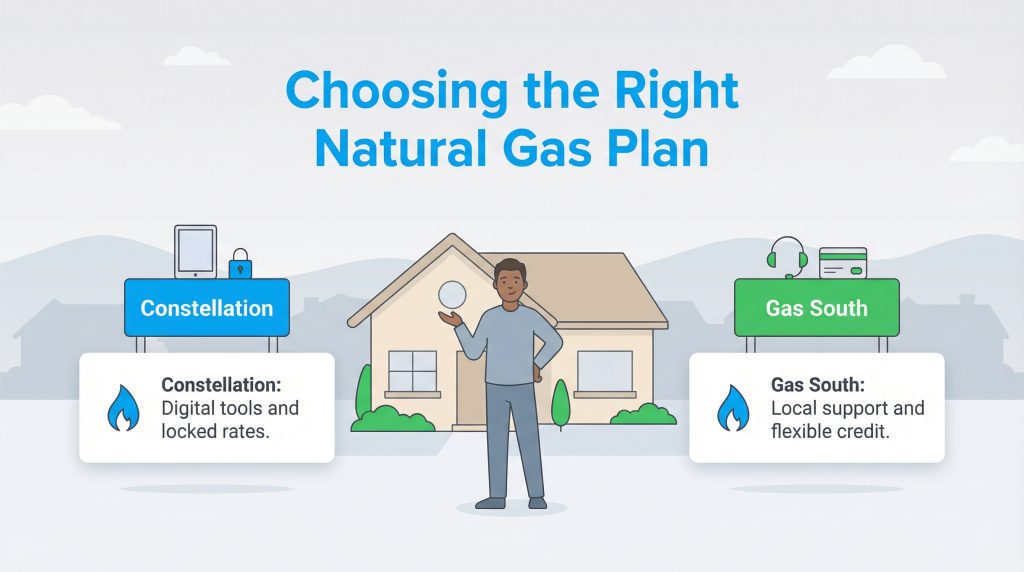
Both Constellation and Gas South are reputable, regulated providers that have served Georgia residents for years. If you value digital convenience and long-term rate locking, Constellation is a strong contender. If you prioritize local customer service and flexible credit options, Gas South may be the better partner for your home. By weighing these factors against your specific household needs, you can confidently sign up for a plan that keeps your home warm and your budget intact.
FAQs About Constellation And Gas South
Who is the cheapest gas provider in Georgia?
Is Gas South the same as Atlanta Gas Light?
Does Constellation require a deposit?
How much does it cost to switch from Gas South to Constellation?
Can I keep my natural gas provider if I move?
Is a fixed or variable rate better in Georgia?
About the Author

David has been an integral part of some of the biggest utility sites on the internet, including InMyArea.com, HighSpeedInternet.com, BroadbandNow.com, and U.S. News. He brings over 15 years of experience writing about, compiling and analyzing utility data.