
Installing the right detector provides critical early warnings for leaks, keeping your home safe and efficient.
Key Takeaways
- Home safety requires distinguishing between stationary monitors for 24/7 protection and portable “sniffers” for pinpointing leaks.
- Placement matters because natural gas rises while propane sinks, meaning the location of your device determines its effectiveness.
- Smart features like WiFi connectivity and mobile alerts provide peace of mind even when you are away from the house.
You probably don’t think about your gas lines often, but a small leak can turn into a major safety hazard, and a waste of money, in seconds. While natural gas providers add a “rotten egg” smell (mercaptan) to help you catch issues, relying on your nose alone isn’t foolproof, especially if the leak is small or located in a basement you rarely visit. We selected these devices based on UL listings, manufacturer specifications, and verified customer reviews to ensure top-tier safety standards. Investing in a quality natural gas detector is a simple, proactive step that protects your family from explosive hazards and prevents raw methane, a potent greenhouse gas, from escaping into the environment. In this guide, we break down the most reliable options on the market, from smart home devices to essential tools for RV owners.
Top Picks at a Glance

Below are our top seven recommendations for 2025, categorized to help you find the exact protection your home needs.
| Category | Recommended Product |
|---|---|
| Best Overall | Kidde Nighthawk (KN-COEG-3) |
| Best Smart Detector | Shelly Gas WiFi Sensor |
| Best Budget Monitor | First Alert Plug-In (GCO1CN) |
| Best for RVs | MTI Industries Safe-T-Alert 35 Series |
| Best Portable Sniffer (Pro) | Klein Tools ET120 |
| Best Portable Sniffer (Value) | Techamor Y201 Pro |
| Best Battery-Operated | DeNova Detect Natural Gas Alarm |
Detailed Reviews of the Best Natural Gas Detectors
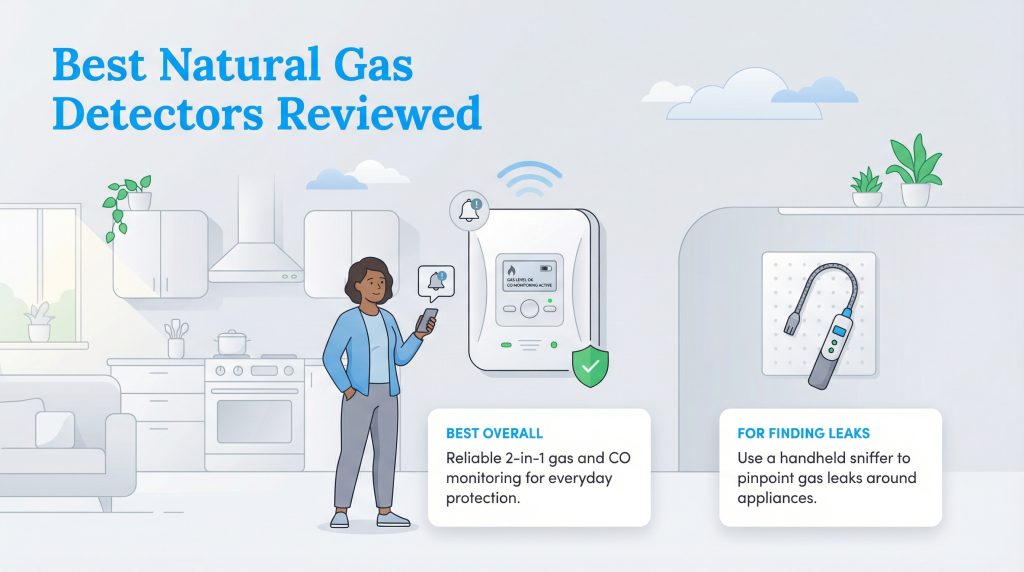
We have selected these devices based on reliability, sensor accuracy, and ease of installation. Whether you need a 24/7 monitor for your kitchen or a handheld tool to check a pipe fitting, these are the best tools for the job.
1. Best Overall: Kidde Nighthawk (KN-COEG-3)
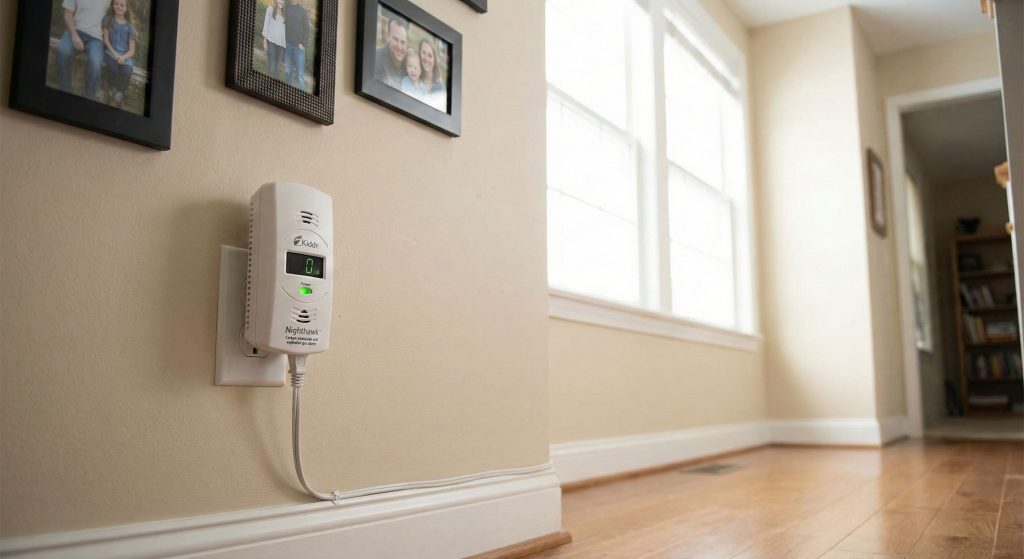
The Kidde Nighthawk remains the gold standard for residential gas detection because it offers reliable 2-in-1 protection. It detects both explosive gases (methane and propane) and carbon monoxide. Its digital display is a standout feature, showing you real-time readings of CO levels in parts per million (PPM), while a loud “GAS” alarm sounds if combustible agents are detected. We love that it includes a 6-foot extension cord, which allows you to plug it into a low outlet but mount the unit high on the wall, critical for detecting natural gas which rises to the ceiling.
Price: ~ $98
Pros:
- Detects Natural Gas, Propane, and Carbon Monoxide
- 9V battery backup keeps it running during power outages
- Flexible mounting options with included extension cord
Cons:
- The design is a bit bulky compared to modern smart devices
- Must be replaced every 7-10 years (check date of manufacture)
2. Best Smart Detector: Shelly Gas WiFi Sensor
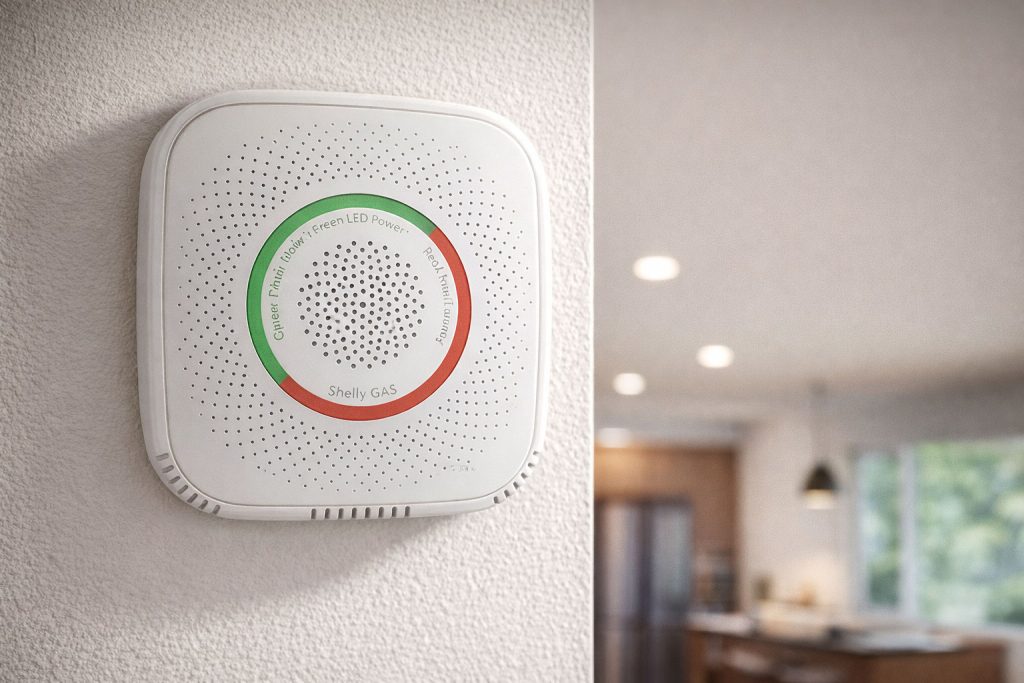
If you want to receive alerts on your phone while you are at work or on vacation, the Shelly Gas sensor is a top-tier choice. Unlike many “smart” home devices that require a separate hub, the Shelly connects directly to your home WiFi. It is a compact plug-in unit that provides sound and light alarms locally while sending push notifications to the Shelly Cloud app, making it an excellent smart natural gas detector for modern homes. Note: Shelly sells two distinct versions, one for CNG (Compressed Natural Gas) and one for LPG (Liquid Propane Gas). Ensure you buy the “CNG” version for a home with standard utility gas lines.
Price: ~ $55
Pros:
- Direct WiFi connection (no hub required)
- Mobile alerts allow you to monitor your home remotely
- Flame-resistant shell
Cons:
- You must choose between the CNG or LPG model (it doesn’t do both)
- Plug-in only; no battery backup for WiFi features if power fails
3. Best Budget Monitor: First Alert Plug-In (GCO1CN)
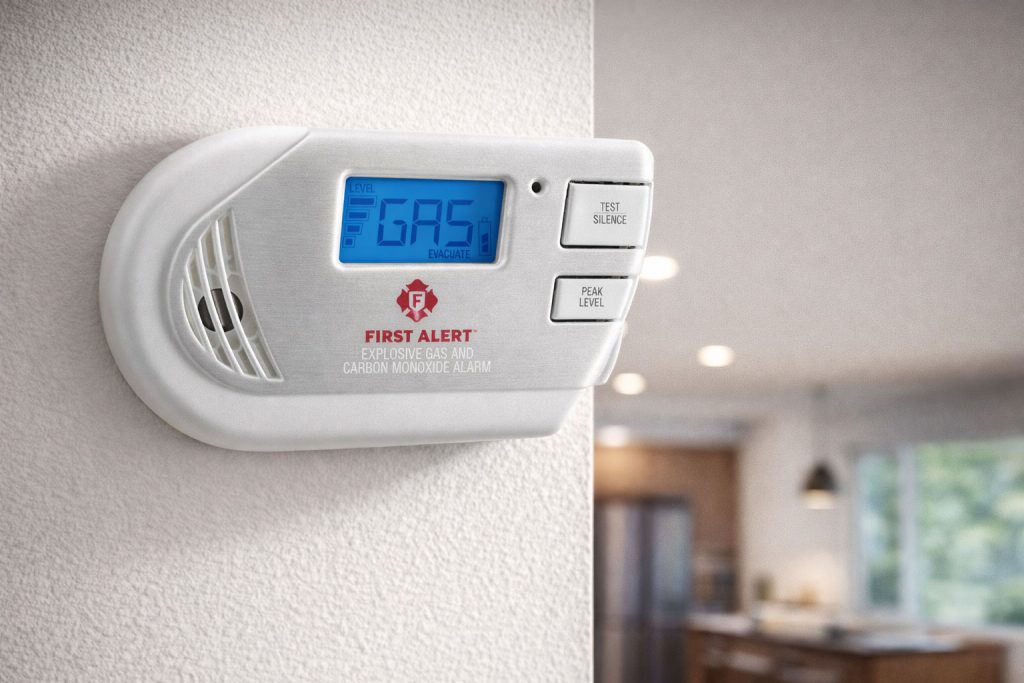
For homeowners who want a simple, “plug-and-play” solution without breaking the bank, the First Alert GCO1CN is a proven performer. Like the Kidde Nighthawk, it is a combination alarm that detects explosive gases (methane and propane) and carbon monoxide. It features a backlit display that makes it easy to read in dark hallways or basements. It plugs directly into any standard wall outlet, making installation instantaneous. However, unlike the Kidde, this specific model typically lacks a battery backup in some versions, so double-check the model specs if you need power-outage protection.
Price: ~ $80
Pros:
- Affordable price point
- Simple, direct plug-in installation
- Backlit display for easy reading
Cons:
- No battery backup on many models (blind during power outages)
- Low placement (due to outlet location) is better for propane than natural gas unless you use an extension cord
4. Best for RVs: MTI Industries Safe-T-Alert 35 Series
RVs and travel trailers have unique safety needs because they often use propane for heating and cooking in small, enclosed spaces. The MTI Industries Safe-T-Alert is the industry standard for recreational vehicles. It is designed to be hardwired into your RV’s 12-volt electrical system, ensuring it is always on as long as your rig has power. This “Dual” model detects both LP (Propane) gas and Carbon Monoxide. Because propane is heavy and sinks, this unit is designed to be flush-mounted near the floor, exactly where you need it in a camper.
Price: ~ $76
Pros:
- Designed specifically for the vibration and temperature fluctuations of RVs
- Hardwired 12V operation (no batteries to change)
- Detects both Propane and CO
Cons:
- Requires cutting a hole for flush mounting
- Not suitable for standard 120V home outlets
5. Best Portable Sniffer (Pro): Klein Tools ET120
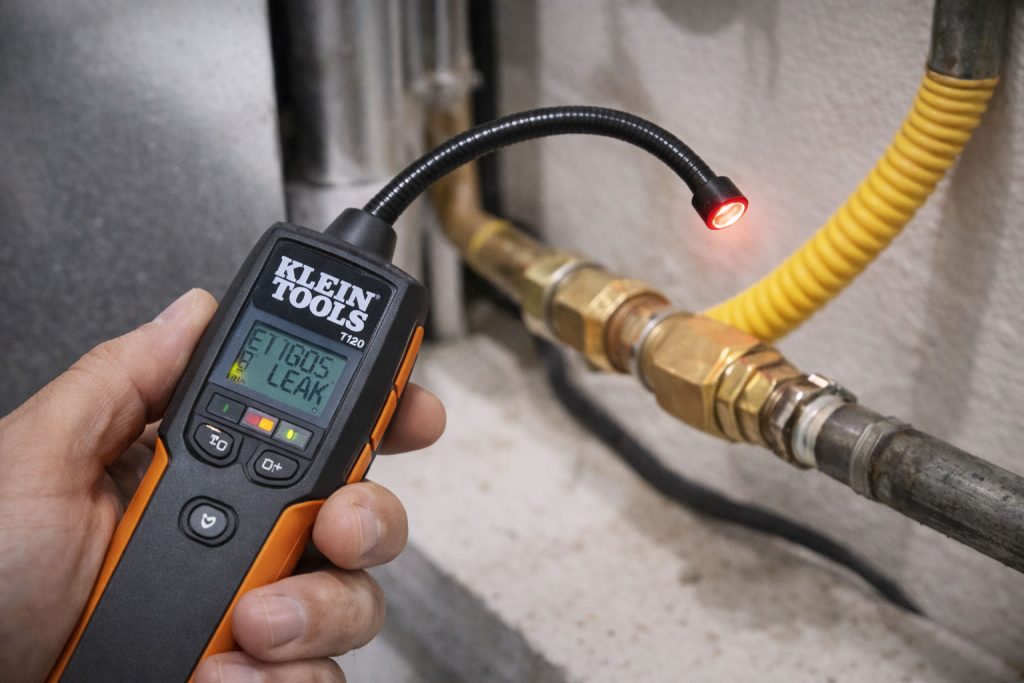
Sometimes you know there is a leak, perhaps you smell it, but you can’t find the exact source. That is where a portable “sniffer” comes in. The Klein Tools ET120 is a favorite among HVAC professionals and DIYers alike. It features a long, flexible 18-inch gooseneck probe that allows you to reach behind stoves, water heaters, and into tight piping areas. It detects methane, propane, and other combustible gases with high sensitivity. The device uses both audible beeps and visual LED lights to indicate the concentration of gas as you get closer to the leak.
Price: ~ $130
Pros:
- 18-inch gooseneck probe reaches tight spots
- Rugged, durable build quality from a trusted tool brand
- Adjustable sensitivity helps pinpoint small leaks
Cons:
- Not a continuous monitor (manual use only)
- Uses standard AAA batteries (not rechargeable)
6. Best Portable Sniffer (Value): Techamor Y201 Pro
If you don’t need a professional-grade tool but want something handy in your toolbox for occasional checks, the Techamor Y201 Pro is an excellent value. It is widely popular for its simplicity and effectiveness. Like the Klein, it features a flexible probe to sniff out leaks around appliances and pipes. It detects methane, propane, and butane. While the build quality isn’t as rugged as the Klein, it is perfectly adequate for a homeowner who wants to double-check a connection after installing a new gas dryer or stove.
Pros:
- Very affordable
- Simple operation
- Flexible probe for hard-to-reach areas
Cons:
- Slower warm-up time than professional models
- Feels less durable than the Klein ET120
7. Best Battery-Operated: DeNova Detect Natural Gas Alarm
For years, it was nearly impossible to find a reliable residential natural gas alarm that didn’t require a wall outlet. That changed with DeNova Detect. This unit is one of the first widely available residential natural gas alarms to be 100% battery-operated, boasting a 10-year lithium battery life. This is a game-changer for installation because it allows you to mount the detector exactly where it belongs, 6 inches from the ceiling, without worrying about unsightly cords or the lack of a nearby outlet. It also features voice alerts (“Danger! Gas leak!”), which can be more effective than a simple siren.
Price: ~ $110
Pros:
- 100% wireless with 10-year battery life
- Can be installed high on the wall (ideal for Natural Gas)
- Voice alerts in English and Spanish
Cons:
- Higher upfront cost than plug-in models
- Detects Natural Gas only (not Propane or CO)
Natural Gas vs. Propane vs. Carbon Monoxide
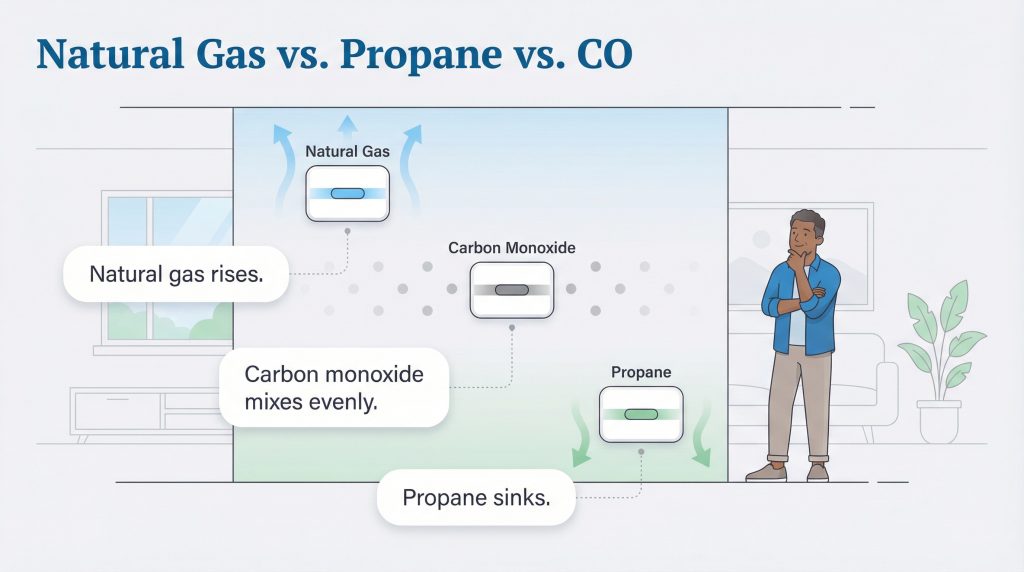
It is easy to confuse these different hazards, but buying the wrong detector can leave you unprotected. Understanding the physical properties of these gases will help you choose the right device and place it correctly. Many homeowners assume one device covers everything, but most detectors either sense combustible gas or carbon monoxide, only specific combo units do both.
- Natural Gas (Methane): This is the fuel delivered via utility lines to most suburban and urban homes. It is lighter than air, meaning it rises and accumulates near the ceiling.
- Propane (LPG): This fuel is common in rural homes, RVs, and gas grills. It is heavier than air, meaning it sinks and pools along the floor.
- Carbon Monoxide (CO): A deadly, odorless byproduct of burning fuel (like gas, wood, or oil). It mixes with air roughly evenly. Note: Most standard CO detectors do not detect explosive gases like methane or propane unless specified as a “Combo” unit. See our list of Best Carbon Monoxide Detectors
How to Choose the Right Gas Detector
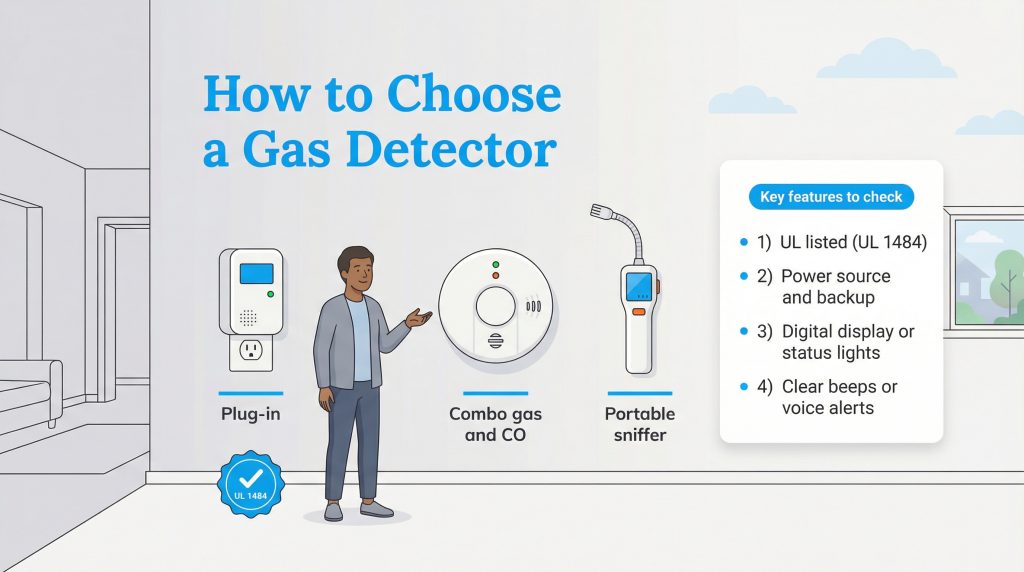
When shopping for the best natural gas detector, look for these key features to ensure you are getting a reliable device:
If you want a simple home gas leak detector that also covers carbon monoxide, look for a combo natural gas and CO alarm. If you only need to check fittings after a repair, a portable gas sniffer is usually enough. For smart-home users, a smart natural gas detector with WiFi alerts can be worth the extra cost.
- UL Listing: Ensure the device meets UL 1484 standards. This certifies it has passed rigorous safety testing for residential gas detectors.
- Power Source: Plug-in models are easiest to install but need a backup battery to function during power outages. Hardwired models are seamless but require professional installation. Battery-only models (like DeNova) offer the most placement flexibility.
- Digital Display vs. Lights: A digital readout (measured in PPM or LEL – Lower Explosive Limit) gives you precise information about leak severity, whereas a simple green/red light only tells you “safe” or “danger.”
- Voice Alerts: Some advanced models speak (“Gas Leak Detected”), which is often less confusing than a generic beep, especially for children or the elderly who might confuse it with a smoke alarm.
Where to Install Your Gas Detectors
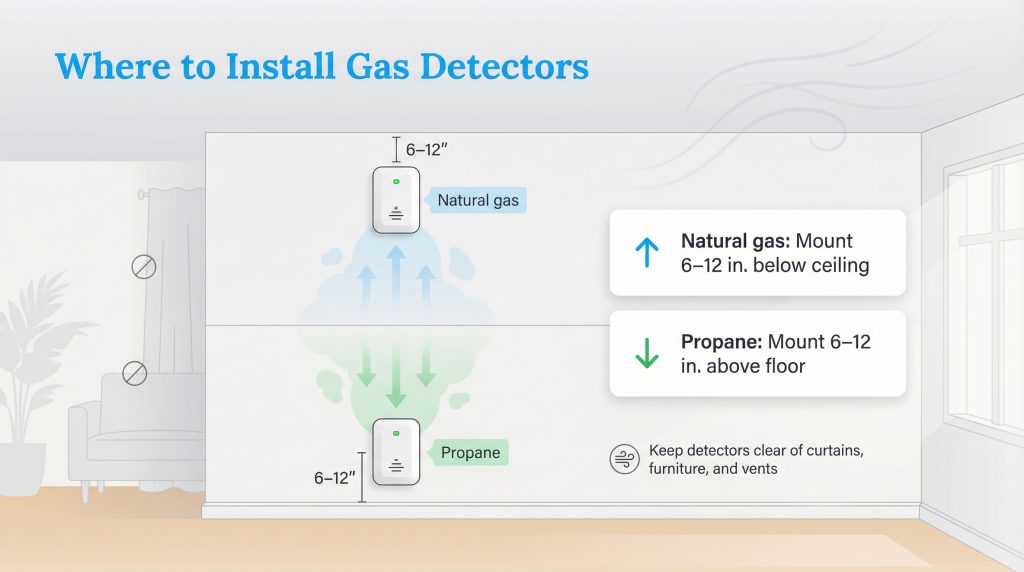
Because gases behave differently, placement is the most important factor in whether your alarm will sound in time. A detector placed in the wrong spot may not alert you until the gas levels are already critically high.
- For Natural Gas: Since methane rises, install the detector high on the wall, about 6 to 12 inches from the ceiling. This ensures the sensor catches the gas as it accumulates at the highest point.
- For Propane: Since propane sinks, install the detector low on the wall, typically 6 to 12 inches from the floor.
- Avoid Dead Zones: Do not place detectors behind curtains, furniture, or in corners where airflow is blocked. Keep them away from open windows, ceiling fans, or vents that might blow the gas away from the sensor before it can be detected.
If you are setting up utilities in a new home, start with our guide to natural gas service for new homes to understand your setup. You can also check out our guide on how to read your gas meter to better monitor your usage and detect potential leaks through unusual consumption spikes.
Stay Safe and Save Energy

Installing a natural gas detector is one of the most cost-effective ways to secure your home. Not only does it protect your family from immediate danger, but it also serves as a diagnostic tool to ensure your appliances are running efficiently and without leaks. Preventing leaks keeps your home safe and ensures you aren’t paying for wasted energy or releasing harmful emissions. Whether you choose a simple plug-in model or a smart device integrated into your home security system, the peace of mind is worth the investment. To keep bills low while staying safe, see our tips on reducing your natural gas usage.
FAQs About Natural Gas Detectors
Do natural gas detectors also detect carbon monoxide?
How long do home gas leak detectors last?
What should I do if my gas detector alarm goes off?
Can I use a portable gas sniffer as a permanent monitor?
Are plug-in gas detectors accurate?
About the Author

LaLeesha has a Masters degree in English and enjoys writing whenever she has the chance. She is passionate about gardening, reducing her carbon footprint, and protecting the environment.