
Understanding the fixed fees on your Georgia natural gas bill helps you budget better and manage your home’s energy efficiency.
Key Takeaways
- These fees are mandatory for all AGL customers, regardless of which natural gas marketer you choose.
- The Dedicated Design Day Capacity (DDDC) is the largest portion of the charge and is based on your home’s potential demand on the coldest day of the year.
- While you cannot negotiate these fees directly, improving your home’s insulation can eventually lower your capacity rating and reduce future costs.
Opening your natural gas bill can be a frustrating experience, especially when you see significant fees listed even during months when you barely used your heater or stove. Many Georgia residents are baffled by the “Atlanta Gas Light Pass Through Charge”, often referred to simply as the base charge, and wonder why it constitutes such a large portion of their monthly expenses. We are here to demystify the math behind those confusing acronyms, explain exactly what the Dedicated Design Day Capacity (DDDC) means for your wallet, and clarify why these regulated charges are necessary to maintain the safe, reliable infrastructure that brings energy to your home.
What Is the Atlanta Gas Light Pass-Through Charge?
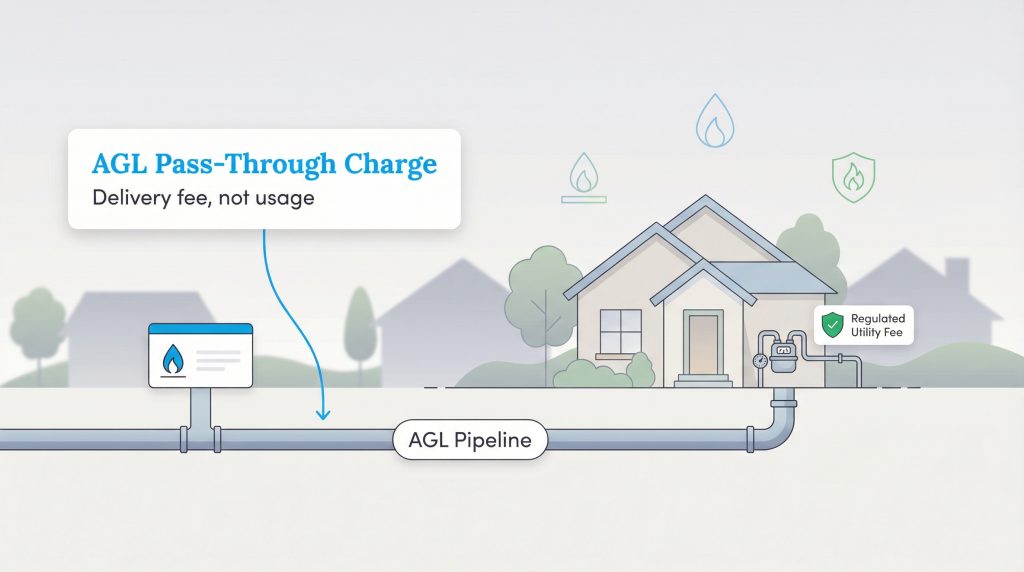
The Atlanta Gas Light pass-through charge is a regulated delivery fee that covers the cost of transporting natural gas to your home, maintaining pipelines, and reading your meter. The most important thing to understand about this charge is that it is a delivery fee, not a usage fee. In Georgia’s deregulated natural gas market, the company that sells you gas (like Constellation, Gas South, or Xoom Energy) is different from the company that delivers it. Atlanta Gas Light (AGL) owns the pipelines, meters, and infrastructure. They are responsible for maintaining the system and responding to emergencies, but they do not sell the actual gas commodity. The pass-through charge covers their operational costs, ensuring that the pipes running to your house remain safe and functional.
Because AGL is a utility, this fee is regulated by the Georgia Public Service Commission. This means your natural gas marketer cannot arbitrarily raise this fee to make a profit. It is a direct cost passed from AGL to you through your bill, which is why it appears on every bill regardless of which natural gas provider you choose.
Decoding Your Bill: What Makes Up the AGL Base Charge and Pass-Through Fees?
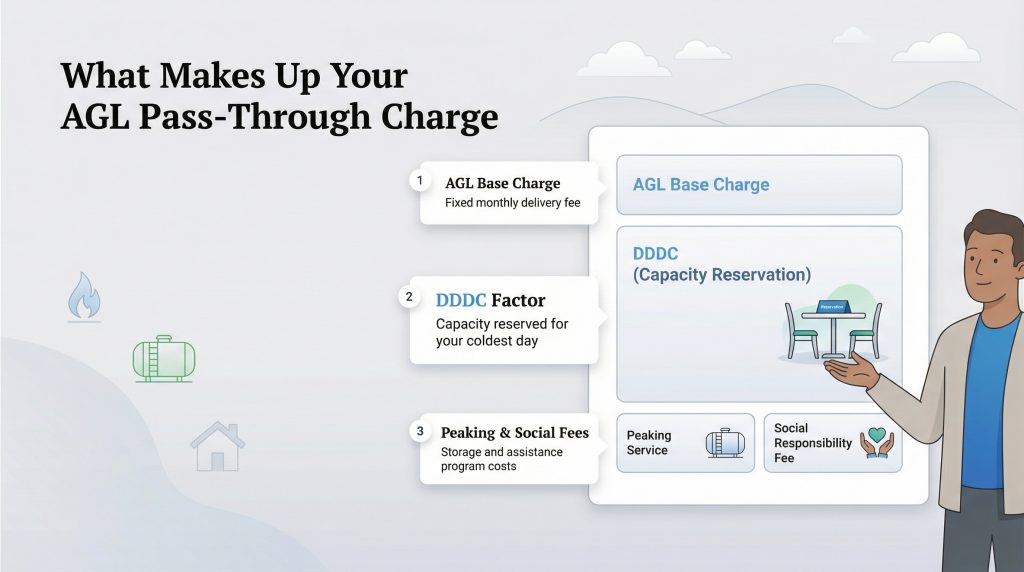
The pass-through charge isn’t just one flat fee; it is a sum of several distinct components often labeled as “AGL Base Charge,” “DDDC Factor,” or “Customer Charge.” Understanding these line items can help you make sense of where your money is going.
Dedicated Design Day Capacity (DDDC)
This is often the most confusing and expensive part of the AGL pass-through charge. The DDDC is a calculation of how much gas your home would theoretically need on the coldest day of the year. It ensures that the pipeline system is large enough to handle the demand if everyone turned on their heat at once during a deep freeze.
Think of it like a reservation at a popular restaurant. AGL has to “reserve a table” for your home that is big enough to seat your entire family (your maximum potential usage). They have to hold that table for you whether you show up to eat that day or not. You are paying for the capacity—the reservation—rather than just the meal itself. If you have a large, drafty house, your reservation needs to be bigger, so your DDDC charge is higher.
Peaking Service & Social Responsibility Fees
While the DDDC makes up the bulk of the cost, there are other smaller fees included in the total:
- Peaking Service: This covers the cost of operating gas storage facilities. These facilities hold extra gas in reserve to be released into the system during times of extremely high demand.
- Social Responsibility Fee: This small fee helps fund state-approved assistance programs so vulnerable residents can maintain access to heat.
The “Summer Mystery”: Why Charges Apply When You Don’t Use Gas
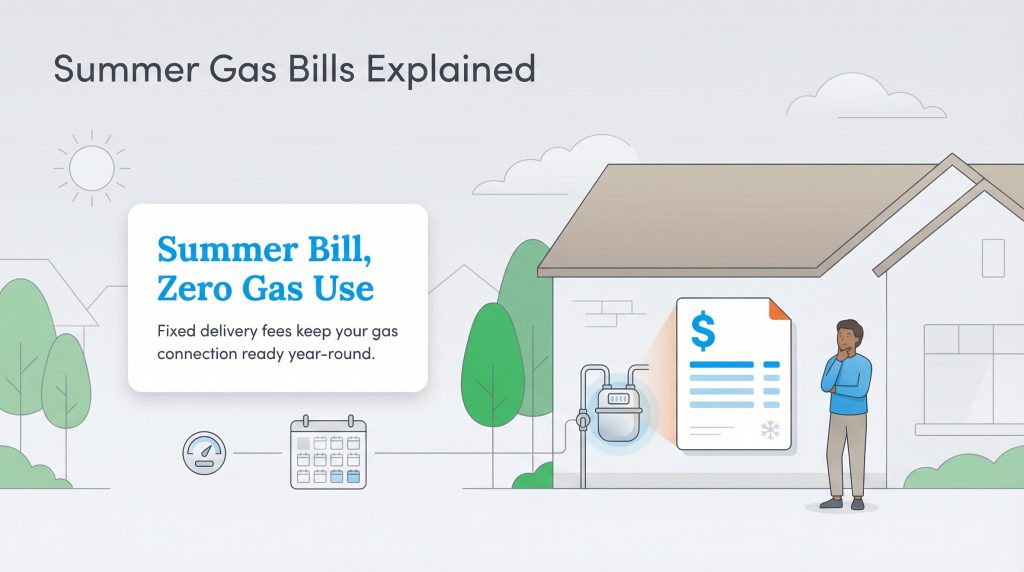
A common complaint among residents is receiving a bill in July or August that is surprisingly high, despite the furnace being off. This happens because AGL utilizes a Seasonal Rate Plan. To prevent customers from being hit with massive delivery fees solely in the winter months, AGL spreads the cost of service throughout the year. However, the weighting is still heavier in the winter.
Even if you use zero therms of gas in the summer, you still pay the fixed customer charge. This fee maintains your physical connection to the grid. As long as a meter is hooked up to your home, AGL must maintain the line, read the meter, and be ready to serve you instantly. Turning off your pilot light does not remove this charge because the infrastructure remains active.
Marketer vs. Utility: Who Actually Keeps This Money?
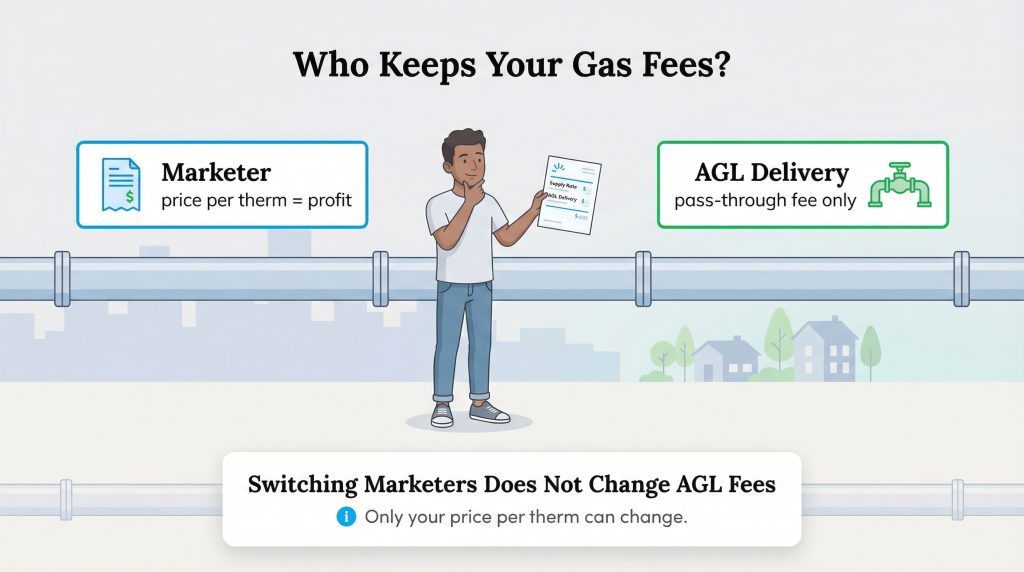
It is a common misconception that natural gas marketers are pocketing these fees to pad their profits. In reality, the marketer collects this money and passes it directly to AGL. The marketer’s profit comes from the price per therm (the supply cost) that you agreed to when you signed your contract.
This distinction is crucial because it means you cannot lower your AGL pass-through charge by switching providers. If you switch from Marketer A to Marketer B, the supply rate per therm will change, but the AGL delivery charges will remain exactly the same. You can verify these regulated rates through the Georgia Public Service Commission or by viewing the current AGL rates and tariff information.
Can You Lower Your AGL Pass-Through Charges?
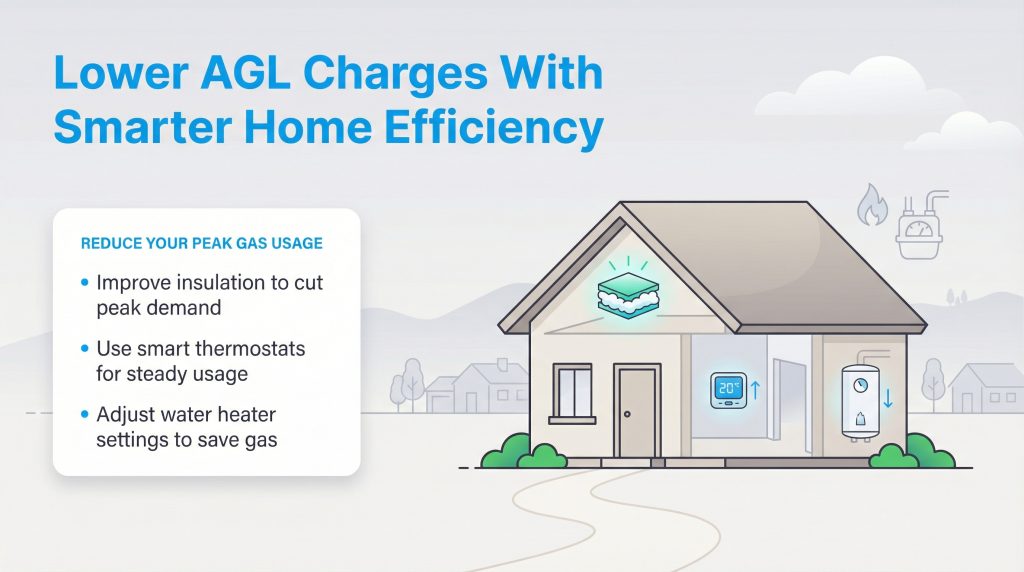
Since you cannot negotiate the rate with AGL or your marketer, you might feel stuck. While you cannot control the regulated AGL tariffs or the fixed connection fees, you can control your usage habits and home efficiency. Influence your DDDC calculation over the long term. Because your DDDC is based on your home’s usage during peak cold weather, improving your home’s efficiency can eventually place you in a lower peak usage profile.
- Improve Insulation: Better insulation in your attic and walls means your home retains heat better. On the coldest day of the year, your furnace won’t have to work as hard, lowering your theoretical maximum demand.
- Smart Thermostats: Maintaining consistent heating habits prevents massive spikes in usage data, which helps moderate your load profile over time.
- Water Heater Settings: Lowering your water heater temperature slightly reduces your overall gas use and can contribute slightly to a more efficient profile.
For more tips on making these improvements, check out our guide on how to save on heating costs.
How Understanding AGL Charges Helps You Take Control Of Your Gas Costs
While the Atlanta Gas Light pass-through charge is a fixed reality of living in the Atlanta area, understanding what it pays for helps remove the shock from your monthly statement. This fee ensures that the pipeline network remains safe, reliable, and capable of heating your home during the coldest snaps of winter. By focusing on the factors you can control, like your home’s insulation and your daily usage habits, you can manage your overall energy costs and contribute to a more sustainable future for your household.
Frequently Asked Questions About Atlanta Gas Light Charges
What is the AGL pass-through charge?
Why is my gas bill so high in the summer?
Can I switch gas providers to get rid of the AGL base charge?
Can I stop paying AGL charges if I don’t use gas?
What is the DDDC charge on my gas bill?
How can I lower my gas bill if I can’t change the AGL fee?
How often does the AGL pass-through charge change?
About the Author

David has been an integral part of some of the biggest utility sites on the internet, including InMyArea.com, HighSpeedInternet.com, BroadbandNow.com, and U.S. News. He brings over 15 years of experience writing about, compiling and analyzing utility data.