

Check Your New Address Before Scheduling Utilities, Comparing Internet Plans, or Budgeting for Energy-Saving Upgrades
Key Takeaways
- Your electric provider usually depends on your address, while natural gas supplier choices may vary.
- Confirm activation dates, deposits, and installation requirements before moving day.
- Compare efficiency upgrades and utility-specific solar terms before committing to major purchases.
Moving to Kentucky means setting up more than an electric account. You’ll also need to confirm who handles water, sewer, trash, and internet at your new address — and whether any services are included in your lease. We’ll help you organize those steps, plan for seasonal energy bills, and identify practical ways to make your new home more efficient.
Creating Your Kentucky Moving Checklist for Utilities
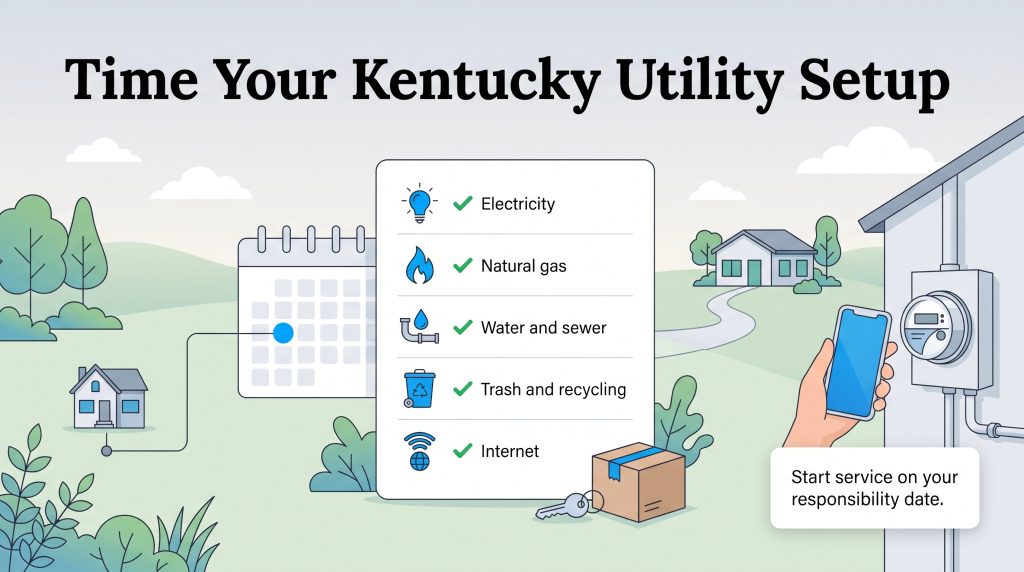
Managing a relocation brings plenty of stress, but a well-timed checklist helps you prioritize your utility connections so you aren’t left in the dark on move-in day. Rather than relying on a universal timeline, confirm when your lease or ownership responsibility begins, then arrange service for that specific date. We recommend utilizing a structured approach to handle these moving logistics smoothly. Keep your old service active through your final responsibility date at your previous residence, and always ask whether activation at your new Kentucky address requires an appointment, inspection, or physical access to the property.
| Service | What Readers Should Confirm |
|---|---|
| Electricity | Assigned utility, start date, deposit, and any activation requirements |
| Natural gas | Whether the home uses gas, delivery utility, and supplier-choice eligibility |
| Water and sewer | Municipal or district provider, landlord responsibility, and whether billing is combined |
| Trash and recycling | Municipal collection, private hauler, included fees, and pickup schedule |
| Internet | Address-level availability, upload speed, installation date, equipment fees, and contract terms |
If you are moving to a rural property, you should also check if the home relies on private wells, septic systems, or delivered propane, as these require different maintenance and setup procedures than traditional municipal utilities.
Pro Tip
Photograph your accessible utility meters upon arrival to record the initial readings for your records, but avoid entering restricted areas or touching the equipment.
Budgeting for Kentucky Utility Bills
Relocating often reshapes your monthly household budget, especially when adjusting to a different climate and regional energy market. Kentucky’s average residential electricity price is generally lower than the national average, according to the U.S. Energy Information Administration (EIA). However, a lower price per kilowatt-hour does not necessarily produce a lower monthly bill. The state experiences high summer humidity and chilly winter temperatures, which means your heating fuel, home size, insulation quality, and overall consumption habits play a massive role in your total expenses.
When you take possession of your new home, ask your utility provider for historical usage data from the property to help estimate your upcoming costs. You should also identify whether your home relies on electric, natural gas, or propane for heating. When reviewing your bills, remember to account for fixed delivery charges versus variable usage charges. If you want more predictable monthly expenses, ask your provider about budget billing programs, but keep in mind that these plans simply even out your payments throughout the year — they do not reduce your total annual costs.
Money Saver
Request a professional home energy audit to identify hidden drafts and insulation gaps that might spike your seasonal heating and cooling costs.
Understanding Your Electric Service and Gas Options
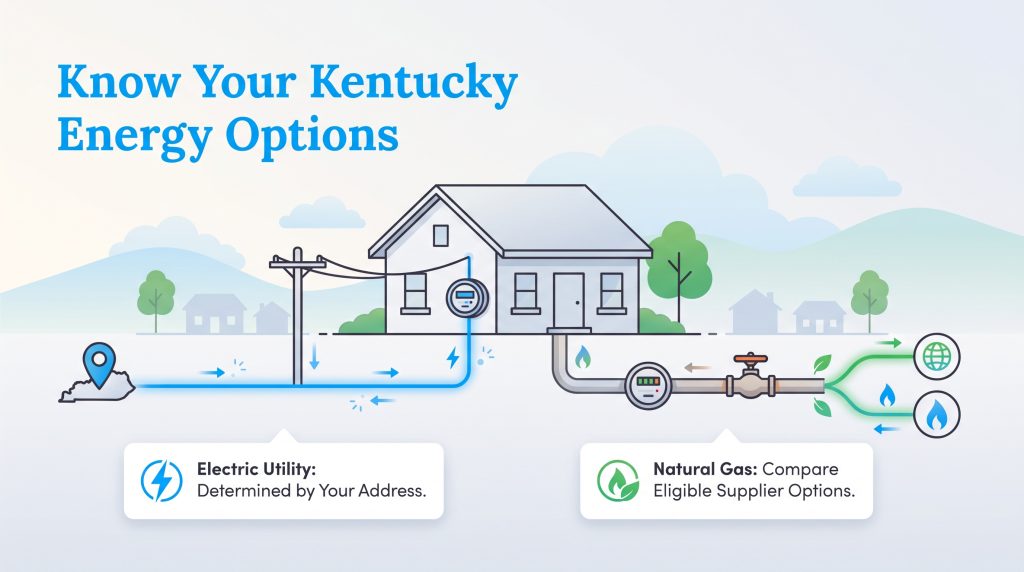
Navigating the energy grid in your new state is a primary step in your relocation journey. Setting up your electricity generally involves working with regulated, territory-specific companies. Your assigned Kentucky electric utility depends entirely on your specific home address. To find exactly who services your property, we recommend reviewing the service maps provided directly by the Kentucky Public Service Commission or contacting your local municipality, as an exact address lookup is required.
While electric service is geographically bound, natural gas customers in certain areas may have more flexibility. For instance, eligible residential customers served by Columbia Gas of Kentucky can participate in a customer-choice program to select a competitive natural gas supplier. If you opt for an alternative supplier, your local utility still delivers the gas, maintains the pipelines, and responds to emergencies. Supplier choice does not guarantee savings, so always compare the contract terms and rates carefully. Reviewing understanding your electric service or establishing natural gas service usually takes just a few minutes online, but providers may review your credit or payment history and may require a deposit under their service rules.
| Major Kentucky Provider | Where It Serves | Green Energy & Sustainability Options |
|---|---|---|
| LG&E | Louisville and surrounding counties (Electric and Gas) | Offers the Solar Share program for customers wanting to support local solar energy without rooftop panels. |
| Kentucky Utilities (KU) | Central, southeastern, and western Kentucky (Electric) | Participates in the Solar Share program alongside LG&E to support community solar generation. |
| Kentucky Power | Eastern Kentucky (Electric) | Provides the EnergyAdvantage at Home program, offering free energy assessments and residential weatherization rebates. |
| Columbia Gas of Kentucky | Various regions across central and eastern Kentucky (Gas) | Offers a customer-choice program allowing eligible users to shop for competitive gas suppliers. |
Heads Up
Ask about deposit alternatives, documentation requirements, and refund conditions before opening your utility account. Confirm identification requirements directly through the provider’s official website or customer service phone number.
Connecting Your Broadband Internet
A fast, reliable web connection is essential for everything from remote work to streaming your favorite shows after a long day of unpacking boxes. Choose internet service based on your household’s unique work, streaming, and communication needs. We recommend using the FCC National Broadband Map to search your individual address and review reported internet providers, technologies, and advertised speeds in your area.
When you compare internet plans, keep in mind that an eco-conscious smart home relies on your network. Connected devices like smart thermostats and intelligent lighting systems may need Wi-Fi for remote controls or automated features, but they do not automatically require an expensive, premium-speed plan. Additionally, do not assume that moving to a rural Kentucky address limits you to satellite or wireless internet; fiber and cable connections are available in various rural areas depending entirely on your specific property location.
Evaluating Solar Power and Energy Upgrades
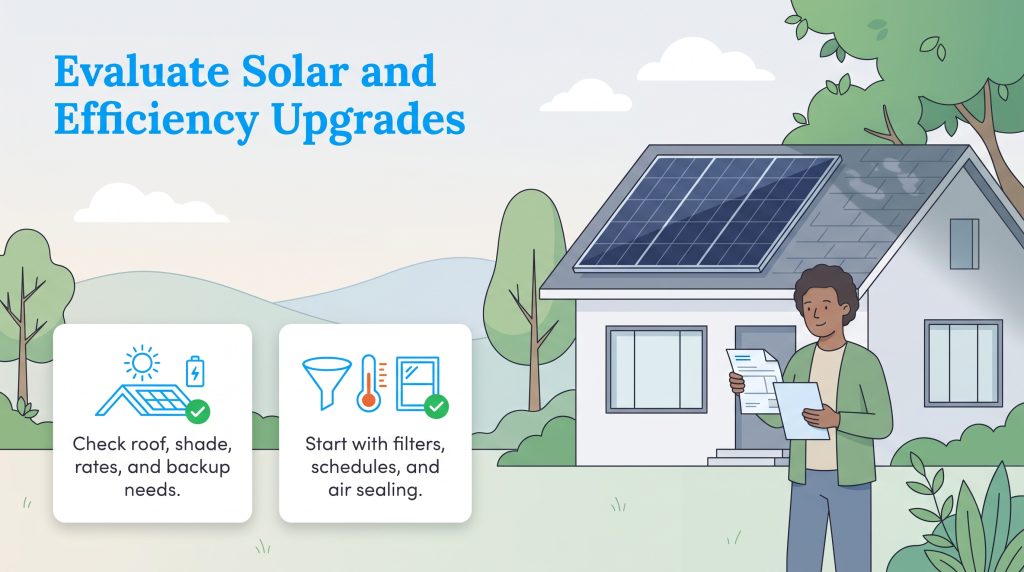
Before adding solar to your Kentucky home, it is important to understand the local policies and prioritize accessible efficiency upgrades. While the state receives enough sunshine to make solar viable, its financial return depends heavily on your roof’s condition, shade exposure, installation costs, and specific utility tariffs. Export-credit values and net-metering terms vary significantly depending on your utility company, and any exported electricity should not automatically be assumed to earn the full retail rate.
Furthermore, solar panels generally do not keep a home powered during a grid outage unless you pair them with appropriately configured battery storage equipment. If a comprehensive solar setup is outside your current budget, we recommend taking immediate, lower-cost steps to improve your energy efficiency. Start by replacing your HVAC filters according to the system’s guidance, setting up an optimized thermostat schedule, and addressing air leaks around windows and doors (with landlord permission if you are renting). These foundational steps offer an excellent, energy-saving option for any budget.
Eco Edge
Check your current appliances for ENERGY STAR ratings and inquire about utility-program eligibility for rebates before committing to major home improvements or solar financing.
Weighing the Utility Logistics of Moving to Kentucky
Before you officially unpack your boxes, it is helpful to look at the broader picture of your new lifestyle. Evaluating your new geographical environment highlights why so many people are drawn to the state, alongside a few regional realities you should prepare for. We encourage you to use these decision-oriented comparisons to ensure you are optimizing your new home appropriately.
| Regional Factors to Consider | How to Prepare |
|---|---|
| Generally lower electricity rates per kilowatt-hour | Ensure your heating system is efficient, as inefficient electric heating can quickly offset these lower rates during the winter. |
| Humid summers and shifting seasonal weather | Budget appropriately for higher air conditioning usage and prioritize regular HVAC maintenance to handle seasonal strain. |
| Diverse housing options, including remote rural properties | Check address-level broadband availability early and inquire about private wells or septic system responsibilities. |
Settling Into Your Sustainable Bluegrass Home
Arriving at your new property should feel exciting, not exhausting. Taking the time to research your specific service territory, understand your gas options, and schedule activations based on your official move-in date allows you to focus on enjoying your new life in Kentucky. By making practical efficiency upgrades and comparing internet plans early, you create a comfortable, environmentally mindful sanctuary from day one. We hope this guide empowers you to make confident decisions as you transition into your new space. Welcome to the Bluegrass State — your new home is ready for you.
Frequently Asked Questions About Moving to Kentucky
Preparing for your relocation involves managing a variety of local utility connections and home services. Here are some of the most common questions new residents ask when establishing their households in Kentucky.
How Far in Advance Should I Start Setting Up Utilities in Kentucky?
Are Utility Costs in Kentucky Higher or Lower Than the National Average?
Can I Choose My Own Kentucky Gas and Electric Providers?
Is Solar Power a Good Investment for Kentucky Homes?
What Do I Need to Provide to Establish a New Utility Account?
About the Author

LaLeesha has a Masters degree in English and enjoys writing whenever she has the chance. She is passionate about gardening, reducing her carbon footprint, and protecting the environment. She also recently served as President of the Board for City Sprouts (a community garden).

David has been an integral part of some of the biggest utility sites on the internet, including InMyArea.com, HighSpeedInternet.com, BroadbandNow.com, and U.S. News. He brings over 15 years of experience writing about, compiling and analyzing utility data.