

Mastering your move to the Last Frontier means tackling unique energy grids, exploring off-grid sustainability, and preparing for higher-than-average living expenses.
Key Takeaways
- Expect higher utility costs driven by extreme winter heating needs and remote energy grids.
- Sustainable heating options, like high-efficiency wood stoves and weatherization, can significantly offset your monthly energy expenses.
- Reliable internet requires advanced planning, especially if you choose to settle outside the main telecommunication hubs of Anchorage or Fairbanks.
Moving to Alaska can be incredible, but setting up a home there takes more planning than a typical move. Heating fuel, electric rates, internet access, water systems, and winter weather can all change dramatically depending on where you land. This guide walks you through the utility costs, home setup decisions, and energy-saving upgrades that can help you build a comfortable, connected, and more sustainable life in the Last Frontier.
The Reality of the Cost of Living in Alaska
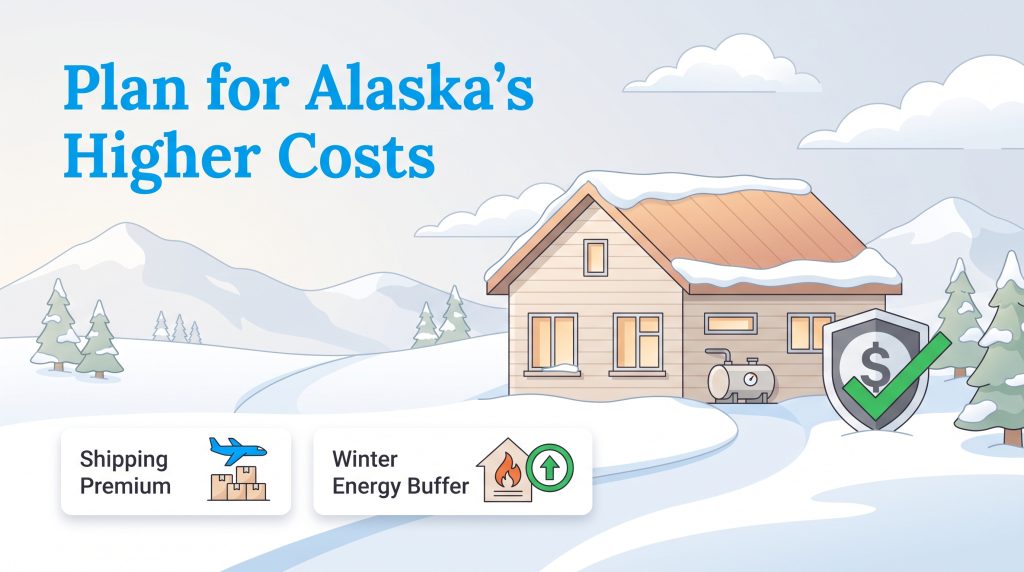
Relocating to Alaska requires a clear-eyed financial strategy, as geographic isolation makes everyday necessities notably more expensive. Alaska’s cost of living is commonly reported above the national average, but the gap varies widely by city and by whether a community is connected to the road system. Because most everyday goods are shipped via barge or aircraft, residents face a unique premium on basic household staples. We want you to feel fully prepared for these adjustments so your new life remains economically sustainable without any major sticker shock.
| Expense Category | Alaska Average | U.S. National Average |
|---|---|---|
| Overall Cost of Living | Varies widely; generally higher | Baseline (100%) |
| Winter Energy Costs | Highly variable; often higher than U.S. average | $150 to $200 |
| Groceries | Higher, especially in rural areas | Varies by region |
While those figures might look intimidating at a glance, strategic planning helps balance the budget. Many long-time locals offset their out-of-pocket expenses by embracing subsistence hunting, growing summer produce, and leaning heavily into energy-saving habits at home to keep overhead costs as low as possible. The Alaska Permanent Fund Dividend, or PFD, is an annual payment to eligible Alaska residents based on the state’s Permanent Fund program. Eligibility rules are specific, so you’ll need to meet residency requirements, intend to remain in Alaska, and apply during the annual filing period. Many households use the payment to offset winter expenses, including heating fuel, but it shouldn’t be treated as guaranteed income when building your first-year budget.
Planning Your First Alaska Winter Budget
Here’s a planning example for a household moving into a single-family home in Interior Alaska. Your actual costs may be much lower or higher depending on home size, fuel type, insulation, and location, but it helps to prepare a buffer. Consider saving for electric deposits, a full heating oil tank fill, internet installation, snow removal tools, winter tires, and emergency backup supplies. Preparing these funds ahead of time will ease the transition into your new northern lifestyle.
Navigating Alaska Utility Costs and Winter Heating
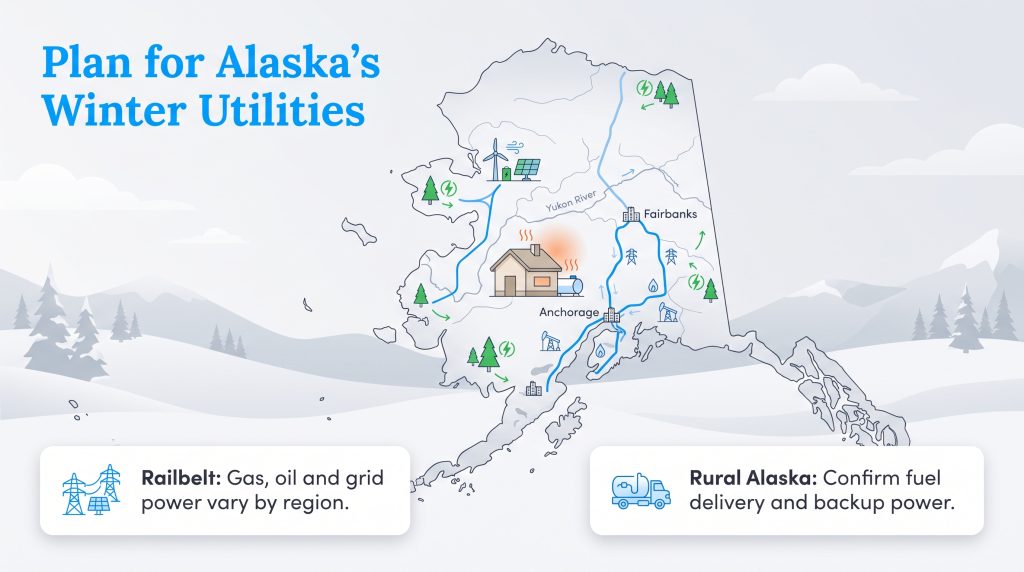
Bracing for utility adjustments is a rite of passage for newcomers, but understanding how the state generates and consumes power will help you manage your Alaska utility costs. Electricity generation heavily depends on the specific region you choose to call home. The Railbelt network connects communities from Fairbanks down to Anchorage and the Kenai Peninsula, primarily relying on natural gas and coal. If you move to a remote community, electricity is typically generated by local diesel microgrids. According to the U.S. Energy Information Administration, residential power rates in Alaska are generally higher than the national average, making phantom power drains and inefficient appliances costly mistakes. You might want to compare electricity setup steps before you finalize your move.
When temperatures drop, managing heating costs in Alaska becomes a matter of comfort and safety. Unlike the lower 48, where centralized grids supply affordable heat effortlessly, northern climates require hyper-local solutions tailored to your specific zip code. Diversifying your fuel sources often provides the best defense against volatile winter energy bills.
- Natural Gas: Primarily available in Anchorage and the Cook Inlet region, this is the most common and standard heating option for urban households.
- Heating Oil and Diesel: The prevailing standard for Fairbanks, the Interior, and rural areas without natural gas infrastructure. Residents rely heavily on massive outdoor storage tanks.
- Cordwood and Pellet Stoves: Frequently used as supplemental heat throughout the state. Cutting your own firewood can be one of the lowest-cost heating options, but you’ll need to follow local land-use rules and obtain any required permits before harvesting wood.
If you’re moving to a rural community, ask whether the area participates in Alaska’s Power Cost Equalization program. The program helps reduce residential electric costs in eligible rural communities, though it does not eliminate high energy costs entirely.
💡 Pro Tip: Schedule your mid-winter fuel oil deliveries well before the first deep freeze hits your neighborhood. Severe snowstorms routinely delay delivery trucks, and you absolutely do not want your tank running dry during a blizzard.
Where Alaska Utility Costs Vary by Region
Because the state is so massive, your utility experience will change drastically depending on where you settle. Here is a quick look at what to expect in different parts of the state.
| Region | Common Heating Setup | Electric Grid Situation | Utility Planning Tip |
|---|---|---|---|
| Anchorage / Mat-Su / Cook Inlet | Natural gas is common | Railbelt grid access | Compare electric providers, gas setup, and winter gas usage before leasing or buying. |
| Fairbanks / Interior | Heating oil, wood, pellets, electric supplements | Golden Valley Electric Association area | Budget for extreme cold, fuel delivery, and pipe protection. |
| Southeast Alaska / Juneau | Electric heat, oil, heat pumps in some homes | Hydropower plays a larger role in some communities | Ask about ferry logistics, outage history, and heating system age. |
| Rural / Roadless Alaska | Diesel, heating oil, wood, hybrid systems | Local microgrids, often diesel-based | Confirm fuel delivery, water, sewer, and backup power before moving. |
Staying Connected: The Quest for Reliable Internet
Relocating to the wilderness doesn’t mean you have to abandon modern communication. For remote workers and digital nomads, setting up home internet is just as critical as sourcing winter firewood. Urban hubs like Anchorage, Juneau, and Fairbanks feature excellent broadband access. Established local providers like GCI offer robust, high-speed cable and fiber networks that easily support daily video conferencing, heavy streaming, and standard smart home connectivity.
The telecommunications landscape changes drastically once you venture beyond city limits. If you’re comparing the best internet providers in Alaska, start by checking what’s available at the exact address, not just the city or ZIP code. Historically, rural cabins suffered from agonizingly slow, data-capped satellite connections. Fortunately, low-Earth orbit satellite service has improved rural internet options for many Alaska households, but it still requires a clear view of the sky, reliable power, and realistic expectations during storms or network congestion. Taking the time to set up internet before you move will ensure you stay securely plugged into your career while enjoying a scenic backyard.
Embracing Alaska Off Grid Living and Sustainability
For many adventurous newcomers, off-grid living in Alaska isn’t just a lifestyle choice. In remote areas, it may be the only practical way to power a home. Connecting a remote plot of land to the nearest public utility pole often costs a significant amount of money, making self-sufficient energy systems the most logical alternative. To build an independent homestead, you must balance robust power generation with serious conservation habits. We recommend you make your home more energy efficient before investing in expensive power generation equipment.
Successful off-grid setups typically rely on diverse hybrid systems. Solar can work in Alaska, but production is highly seasonal. Long summer days can generate strong output, while short, dark winter days produce much less. For off-grid homes, solar usually works best as part of a hybrid system with batteries, a backup generator, and aggressive energy conservation. Alaska’s solar support is more limited than in many Lower 48 states, but homeowners may still be able to use federal clean energy tax credits, local utility net metering options, or rural energy programs depending on where they live.
Of course, generating power only matters if your home can actually retain it. Air sealing and insulation usually deliver faster savings than solar. Upgrading to triple-pane windows, securing airtight weatherstripping, and investing in maximum R-value insulation significantly reduce your overall energy load. Exploring Alaska Housing Finance Corporation weatherization programs can help you uncover potential resources to offset the upfront costs of these improvements. When your home functions efficiently, your carbon footprint shrinks, and your expensive heating fuel stretches considerably further into the spring.
🌱 Eco Edge: Upgrading to an EPA-certified wood stove can reduce smoke, burn wood more efficiently, and help improve local air quality compared with older, uncertified models. This is especially helpful during winter inversions when wood smoke becomes a major issue in some communities.
How to Set Up Utilities Before Moving to Alaska
Establishing your household services from afar requires proactive communication with local providers. Because many properties rely on decentralized systems, you need a full picture of your home’s infrastructure before moving day. Follow these practical steps to get your utilities running smoothly.
- Confirm whether the property is on the road system, which directly impacts delivery logistics.
- Identify the local electric utility or cooperative and ask about deposit requirements.
- Determine if the home relies on city water, a private well, hauled water, or a holding tank.
- Check if wastewater is handled by a municipal sewer, a septic system, or a holding tank.
- Find out how trash and recycling are managed in your specific area, as rural options are often limited to local transfer stations.
- Schedule heating oil, propane, or firewood delivery well before your arrival if moving in the fall or winter.
What to Ask About Heating Before You Move In
If you are considering a new rental or a home purchase, always ask for specific details about the property’s heating setup. Taking the time to ask these questions can prevent unexpected financial strain during your first winter.
- What type of heat does the home use, and is there a backup heat source?
- How old is the furnace, boiler, wood stove, or heat pump, and when was it last serviced?
- What did the previous household spend on heat last winter?
- Where is the fuel tank located, and when was it last inspected?
- Does the home have working carbon monoxide detectors and a generator hookup for power outages?
- Are pipes protected with heat tape or safely buried below the local frost depth?
Your Essential Moving to Alaska Checklist
Managing the logistics of a northern relocation demands careful organization. While assessing the moving to Alaska pros and cons might leave you dreaming of northern lights, the reality of the transition requires actionable steps. Figuring out exactly how to move to Alaska means anticipating logistical obstacles before you even cross the Canadian border. Use this chronological moving to Alaska checklist to keep your transition smooth and stress-free.
- Three Months Out: Begin winterizing your vehicles. Install an engine block heater, switch to winter-grade fluids, and buy dedicated winter tires. Check Alaska’s current studded tire rules for your region before installing studs. If you plan to ship your car, book the barge service immediately, as spaces fill up months in advance.
- One Month Out: Establish your utility accounts early. Call local electric cooperatives and heating fuel suppliers to set up delivery schedules. Pay close attention to deposit requirements, as rural providers often demand larger upfront fees. Submit your mail forwarding requests to the USPS.
- Arrival Week: Inspect your home’s energy envelope. Check weatherstripping around all exterior doors and ensure heat trace tape is securely wrapped around any exposed plumbing pipes. Locate your water shut-off valve to prevent extensive damage in case a pipe ever freezes and bursts.
Settling Into Your New Alaskan Adventure
Carving out a comfortable life in the Last Frontier demands resilience, careful preparation, and a deep respect for challenging climates. Adapting to specialized winter heating systems, navigating complex rural utility grids, and mastering the nuances of off-grid self-sufficiency involve a steep learning curve. The challenges are undeniably real, but they foster a profound sense of true independence. When you successfully winterize your home, neatly stack your cordwood, and watch the aurora borealis dance directly above your roofline, you’ll understand exactly why so many people make the long journey north. The unrivaled access to wild, untamed landscapes and a fiercely loyal community make the demanding effort undeniably worthwhile.
Frequently Asked Questions About Moving to Alaska
How Much Money Should I Save Before Moving to Alaska?
What Is the Cheapest Way to Heat a Home in Alaska?
Can You Live Entirely Off-Grid in Alaska?
Do I Need a Special Vehicle to Live in Alaska?
Are Utilities More Expensive in Alaska Than the Lower 48?
How Does the Alaska Permanent Fund Dividend Work?
About the Author

Claudio is a sustainability-focused writer with a background in Anthropology and Psychology from NC State University. He has spent over 15 years working in writing, interpretation, and translation, driven by a deep interest in how human culture shapes the environment. Today, he shares his curiosity with readers by writing about sustainable living solutions and the connection between everyday choices and environmental impact.

David has been an integral part of some of the biggest utility sites on the internet, including InMyArea.com, HighSpeedInternet.com, BroadbandNow.com, and U.S. News. He brings over 15 years of experience writing about, compiling and analyzing utility data.