

Recognizing The Warning Signs Of Utility Fraud Is The Best Way To Keep Your Personal Information And Money Safe
Key Takeaways
- Urgency is a trap used by scammers to make you panic and pay without thinking.
- Legitimate utility companies will never demand payment via gift cards, cryptocurrency, or payment apps like Zelle.
- Verify before you act by hanging up and calling the official customer service number listed on your utility bill.
During extreme weather events, the chaotic process of relocating, or the busy holiday season, the absolute last thing you need is a sudden, aggressive threat to shut off your home’s power or water. Utility scams are deceptive, highly orchestrated tactics used by criminals who impersonate local energy or water providers to steal your money and harvest your sensitive personal information. Because household services are essential to your daily survival, scammers rely heavily on fear, urgency, and confusion to trick you into handing over cash before you have adequate time to process the situation. While fraud attempts are becoming incredibly sophisticated with the rise of artificial intelligence and modern spoofing technology, they almost always follow a predictable script. Whether you are dealing with a hostile phone call, an unexpected knock at your front door, or a suspicious email demanding immediate action, we are here to help you recognize the warning signs instantly. By understanding these red flags, you can hang up with confidence, protect your personal data, and keep your hard-earned money entirely safe from modern utility fraud.
What Are Utility Scams?
Utility scams occur when impostors intentionally pose as authorized representatives from your local electric, gas, water, or telecommunications provider to extort funds or steal your identity. These bad actors exploit the essential, life-sustaining nature of your home services. By threatening an immediate shutoff or, conversely, promising a massive, unexpected refund, they bypass your logical thinking and force a rapid, emotional reaction. Scammers know that the average homeowner does not want to risk living without air conditioning or hot water, making utility fraud one of the most consistently lucrative consumer scams in the country.
The core mechanism of these scams always centers around manipulating your timeline. If you are ever on a call and feel actively pressured to make a split-second financial decision regarding your household utilities, take a deep breath. You always have the right to hang up the phone, evaluate the situation, and reach out to your provider independently. A real utility company will never penalize you for taking five minutes to verify their identity.
The 3 Most Common Types Of Utility Scams
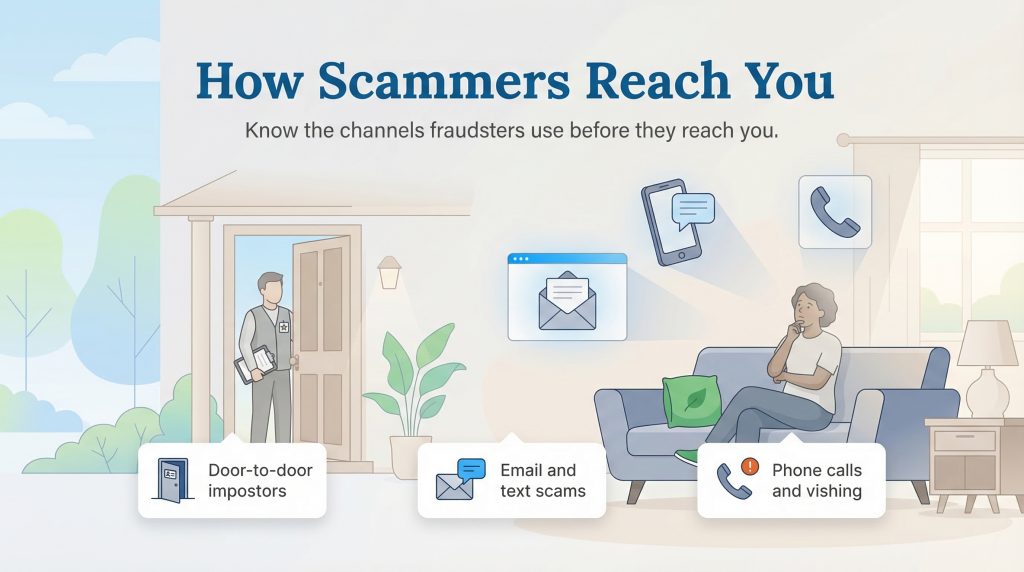
Fraudsters use a diverse, multi-channel approach to target homeowners and renters, ensuring that if they cannot reach you by phone, they will try your inbox or even your front door. By categorizing how these criminals operate, you can quickly identify the specific threats coming your way and easily avoid them before any damage is done.
Utility Phone Scams & Caller ID Spoofing Utilities
The most frequent method of attack involves direct phone calls. Fraudsters rely heavily on caller ID spoofing to manipulate the data that displays on your phone screen, making it look exactly like your local natural gas or electric company is calling. They will even clone the legitimate automated voice menus of real providers to make the initial connection sound authentic.
Once you are on the line, you will typically face a utility shut off scam where the caller loudly threatens to disconnect your power within 30 to 60 minutes unless you pay a supposedly past-due balance immediately. They use high-pressure tactics, aggressive language, and manufactured scenarios — like claiming a dispatch truck is already parked down your street — to overwhelm your decision-making and force a hasty payment.
💡 Pro Tip: Never trust the caller ID on your phone. Scammers can easily fake the display name to make it look exactly like your local water or electric company.
Door-To-Door Energy Scams & Fake Audits
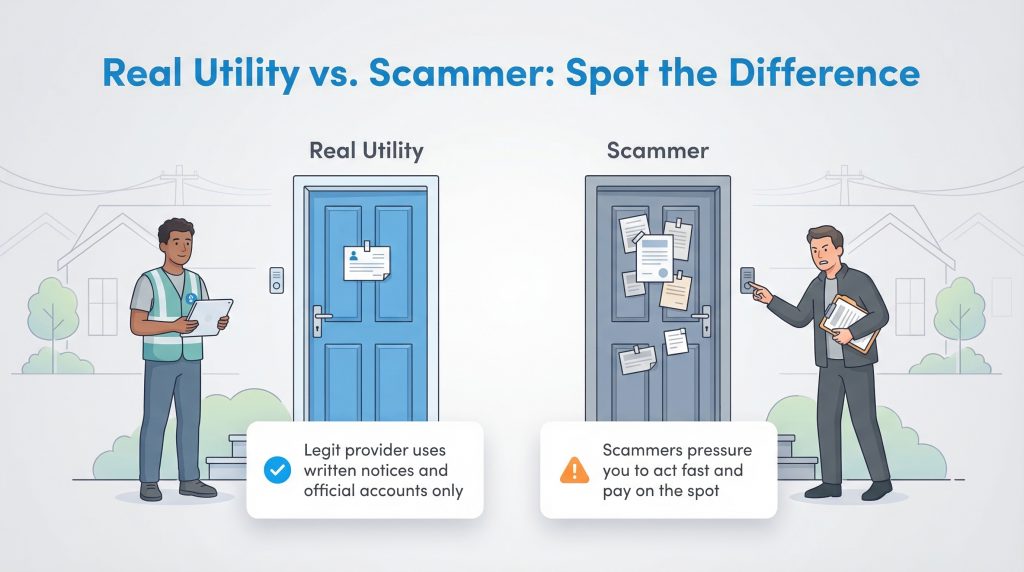
Some of the most dangerous fraud happens right on your front porch. In door to door energy scams, an impostor dressed in a high-visibility vest and carrying a fake clipboard might claim they need to upgrade your meter today for an upfront cash fee. In more severe cases, they may lie about a gas leak in the neighborhood to gain physical entry to your home, where they can scope out valuables or steal personal documents.
Additionally, solar panel fraud and energy audit scams are becoming highly prevalent as consumers seek environmentally mindful choices. A charismatic salesperson will knock on your door offering a “free home energy audit” to help you reduce your carbon footprint, but they use the visit to aggressively push overpriced, misleading contracts. They may also attempt to lock you into unfavorable Power Purchase Agreements (PPAs) for solar energy installations, claiming government checks will cover the entire cost — a blatant lie designed to secure your signature.
Online Fraud & Fake Electric Bills
Scammers manipulate digital spaces to harvest your financial data quietly and efficiently. You might receive a highly realistic fake electric bill via email claiming your last payment failed. This phishing email will feature your provider’s exact logo and color scheme. Clicking the link takes you to a cloned portal designed entirely to steal your credit card details and account passwords.
Alternatively, criminals frequently execute an overpayment refund scam. They will email or text you stating that you overpaid your previous bill and are owed a substantial refund. However, to “process” this money, they insist you provide your full bank routing number. In modern variations, they rely on a Zelle utility scam, directing you to send money to a “reversal agent” on the app to unlock your pending refund. Once the money is sent through Zelle, it is nearly impossible to retrieve.
Seasonal Scams: Why Winter And Summer Are High-Risk
Utility fraud does not happen in a vacuum — scammers actively follow the weather forecast. Criminals strategically amplify their efforts during extreme weather conditions to manufacture an intense, localized panic. When a severe winter freeze or a brutal summer heatwave approaches, the threat of losing basic home services transforms from a mere inconvenience into a terrifying safety hazard. Scammers exploit this heightened anxiety, knowing you are far more likely to pay an unverified bill if you are worried about your family’s immediate physical well-being.
During the coldest months of the year, winter utility scams spike dramatically. Fraudsters will call homeowners — specifically targeting the elderly — during a blizzard or snowstorm, threatening to shut off the home’s heating supply in less than an hour. Conversely, during historic summer heatwaves, scammers will threaten to disconnect the air conditioning just as temperatures peak. Legitimate utility companies are strictly regulated and typically have seasonal moratoriums in place that legally prevent them from disconnecting your power during extreme, life-threatening weather conditions. Anyone threatening to cut your heat during a freeze is undeniably a scammer.
Universal Red Flags: Real Utility Companies vs. Scammers
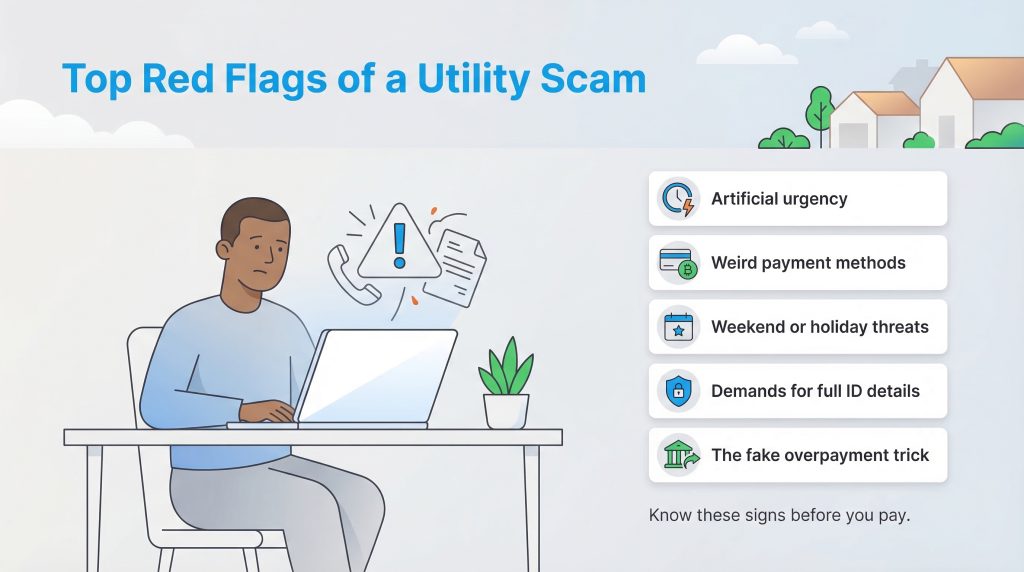
Scammers want you to act fast and ask questions later, but recognizing red flags instantly gives you the upper hand. Real utility companies operate with strict, transparent protocols that protect the consumer, whereas scammers rely on untraceable demands and shadowy operations. Use this comparative breakdown to easily spot the difference between legitimate utility practices and aggressive scammer tactics:
| Legitimate Provider | Scammer Demands |
|---|---|
| Offers multiple secure, highly traceable payment options through official online portals, automated phone systems, or physical mail. | Demands untraceable payments like a prepaid debit card utility scam (e.g., Green Dot), Zelle, Venmo, CashApp, Bitcoin, or store gift cards. |
| Sends multiple written disconnection notices by physical mail over the course of several weeks before ever interrupting your home service. | Creates artificial urgency, aggressively claiming your power will go out within an hour if you do not pay over the phone immediately. |
| Schedules service upgrades, standard maintenance, and property audits strictly during regular business hours with prior notice. | Shows up unannounced, calls late at night, or executes disconnection threats on weekends and holidays when real offices are closed. |
| Applies legitimate refunds directly as a credit to your next statement balance, or occasionally mails a physical, branded check. | Claims you overpaid your bill and demands your full bank routing number or account password to “process” the cash refund digitally. |
| Encourages you to ask questions, verify their identity, and consult your own account records before making a payment. | Becomes hostile, uses profanity, or refuses to let you hang up the phone to check your own account dashboard. |
How To Verify A Suspicious Utility Bill Or Notice
If you receive a threatening call, an alarming email, or a physical disconnection notice that seems slightly off, do not panic. Knowing how to independently verify the status of your account ensures you never accidentally hand your hard-earned money over to a criminal. Scammers go to great lengths to make their fake electric bills look authentic, but they can never mimic your secure, internal account data. If you suspect you are dealing with a scammer, follow this verification checklist:
- Hang Up or Disengage: Do not argue with the caller, do not click any links in an unexpected email, and never provide personal details to someone at your door. Simply end the communication immediately. Real utility representatives will never penalize you for disconnecting a call to check your personal records.
- Find Your Most Recent Bill: Locate a recent, physical paper bill you know is legitimate, or log directly into your utility provider’s verified mobile app. Always navigate directly to your utility provider’s verified website through your browser instead of clicking links embedded in unsolicited emails or texts.
- Call the Verified Number: Dial the official customer service number printed directly on your paper statement. Speak to a real representative and ask them to check your current account status. To confirm you are not holding a fake electric bill, verify your historical usage data and your exact account number with the agent.
What To Do If You Are Targeted By A Utility Shut Off Scam
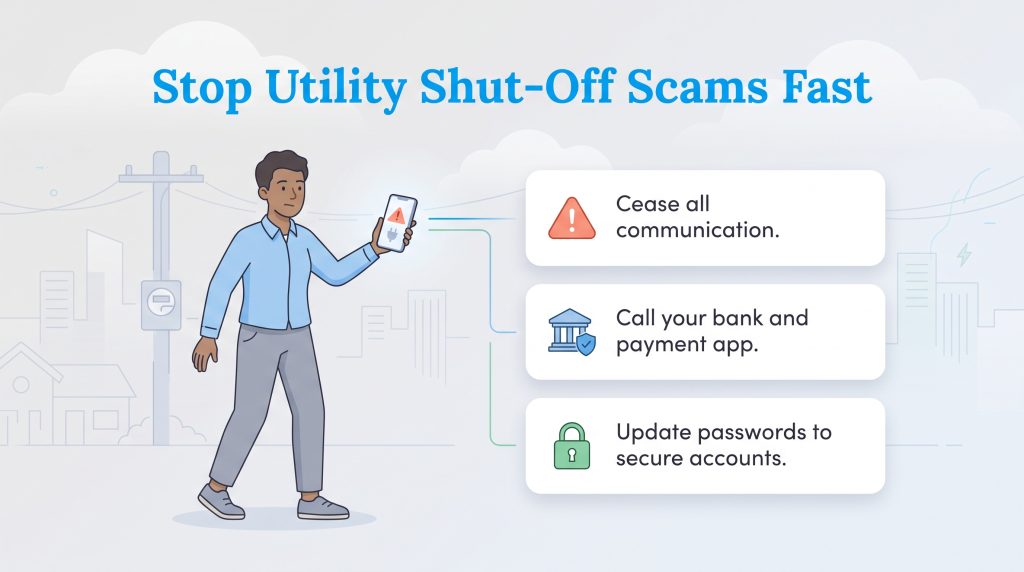
If you realize you are actively speaking to a fraudster or fear you have accidentally shared sensitive financial information, you must take rapid, calculated action to mitigate the damage. Follow this step-by-step action plan to secure your funds:
- Cease All Communication: Stop responding to the scammer’s calls or text messages instantly. Do not attempt to negotiate or ask for your money back, as this only confirms your contact information is active.
- Contact Your Bank Immediately: If you were targeted by a prepaid debit card utility scam, shared your credit card digits, or wired money, call your bank’s fraud department without delay. Ask them to freeze your accounts and dispute any unauthorized charges before the funds fully clear.
- Alert the Payment Platform: If you paid via a cash app (like Zelle or CashApp) or used a store gift card, contact their specific corporate support team right away to open a fraud investigation.
- Update Your Passwords: If you clicked a malicious link or logged into a fake portal, immediately change the passwords for your actual utility account, your email, and your online banking.
How To Report Utility Fraud
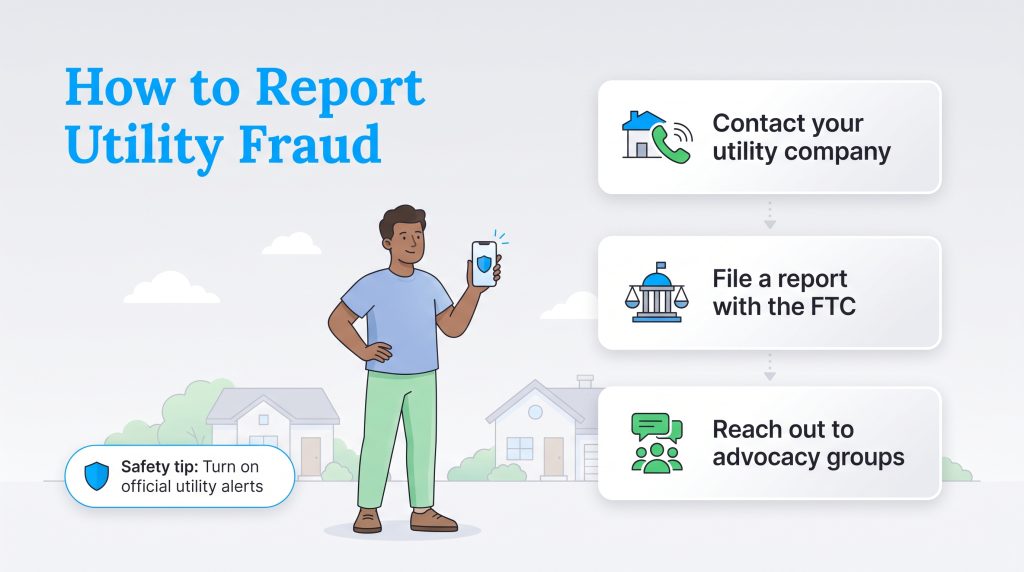
Once your personal finances are secured, you need to report utility fraud to the proper authorities. Documenting the encounter actively disrupts criminal networks, flags spoofed phone numbers for telecom carriers, and protects your vulnerable neighbors from falling for the exact same tricks. Follow these reporting steps:
- Contact Your Utility Company: Let your electric provider or water company know that someone is actively impersonating their staff in your specific area. If you have shared sensitive personal information, visit IdentityTheft.gov or call 1-877-438-4338 to set up a comprehensive recovery plan.
- File an FTC Report: Notify the Federal Trade Commission (FTC) at ReportFraud.ftc.gov or call their official hotline at 1-877-382-4357. This serves as the primary national database for tracking consumer fraud in the United States and helps law enforcement build cases against scammers.
- Consult Advocacy Groups: Check the consumer protection resources provided by the national awareness group Utilities United Against Scams at utilitiesunited.org to learn more about combating localized threats in your state.
🛡️ Safety Tip: Sign up for your utility company’s official text or email alerts. This ensures you know exactly what their real communication looks like, making fakes significantly easier to spot.
Safeguarding Your Household Finances
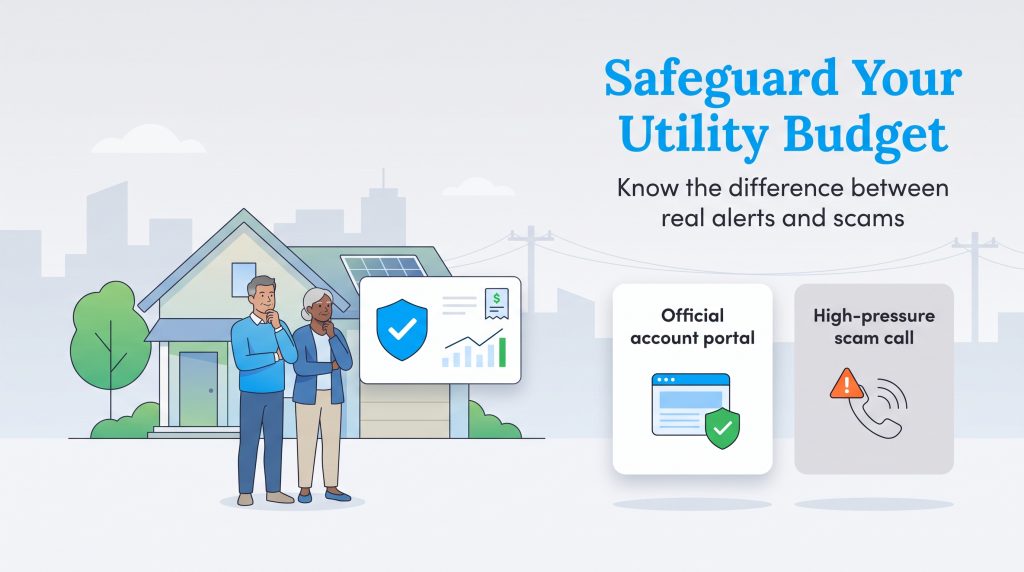
Utility companies are in the business of keeping your lights on and your water running, not cutting you off at a moment’s notice. They want to work collaboratively with you to resolve payment issues, establish reasonable payment plans, and ensure your home stays comfortable. By recognizing the critical difference between a helpful automated notification and a high-pressure scam tactic, you can confidently manage your household budget and make smart, eco-conscious energy choices without the constant fear of manipulation.
Taking a proactive approach is the best defense against fraud. Always set up an official online account portal directly with your provider, utilize their verified auto-pay systems, and never give out your information to unprompted callers. If you are in the process of setting up a new home, carefully review our moving resources to ensure you are contacting legitimate providers from day one. Please share this information with friends and family members — especially seniors who are frequently targeted by these aggressive schemes. A little knowledge and preparation go a long way in keeping your home and finances permanently secure.
Frequently Asked Questions About Utility Scams
How can I tell if a caller is really from my utility company?
How do scammers spoof utility caller ID numbers?
Will a utility company ever ask for Zelle or Bitcoin?
What is the utility overpayment refund trick?
What happens if I click a malicious link in a fake electric bill email?
Do real utility companies ever conduct unannounced door-to-door audits?
Can my utility company legally shut off my power on a weekend or holiday?
Will my power company call me before shutting off my electricity?
What should I do if I gave my payment information to a utility scammer?
Do solar panels really come with government checks?
About the Author

LaLeesha has a Masters degree in English and enjoys writing whenever she has the chance. She is passionate about gardening, reducing her carbon footprint, and protecting the environment. She also recently served as President of the Board for City Sprouts (a community garden).

Claudio is a sustainability-focused writer with a background in Anthropology and Psychology from NC State University. He has spent over 15 years working in writing, interpretation, and translation, driven by a deep interest in how human culture shapes the environment. Today, he shares his curiosity with readers by writing about sustainable living solutions and the connection between everyday choices and environmental impact.