
Recognizing the warning signs of utility fraud is the best way to keep your personal information and money safe
Key Takeaways
- Urgency is a trap used by scammers to make you panic and pay without thinking.
- Legitimate utility companies will never demand payment via gift cards, cryptocurrency, or payment apps like Zelle.
- Verify before you act by hanging up and calling the official customer service number listed on your utility bill.
Moving into a new home is stressful enough without the sudden threat of your power or water being shut off. Scammers rely on that fear to trick you into handing over money or personal information before you have time to think. While fraud attempts are becoming more sophisticated, they almost always follow a predictable script. We are here to help you recognize the warning signs instantly so you can hang up with confidence and keep your hard-earned money safe.
Stop! Read This If You Are On The Call Right Now
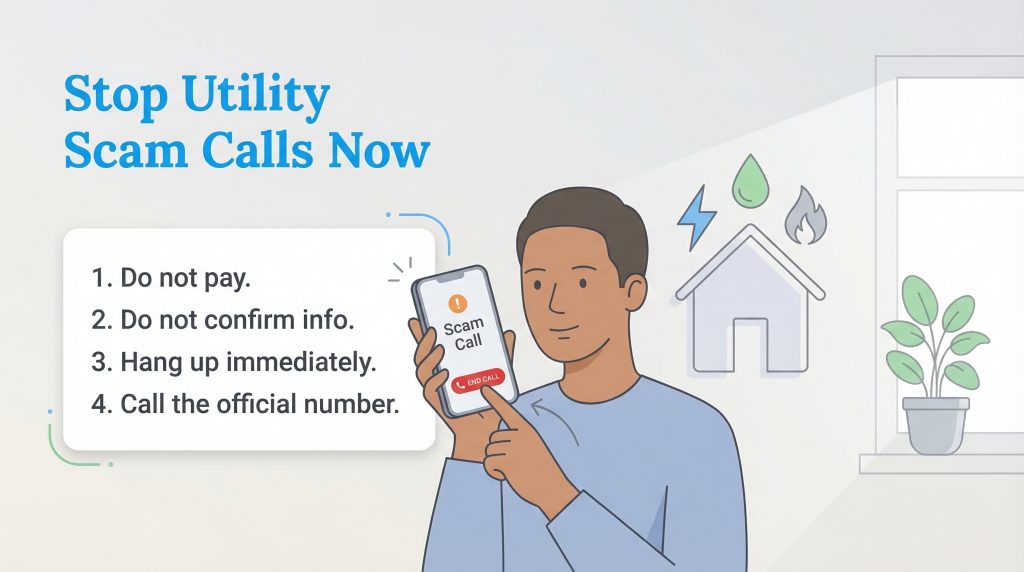
If you are currently on the phone with someone threatening to shut off your power, gas, or water immediately, take a deep breath. Follow this micro-checklist to protect yourself:
- Do not pay. Put your wallet away.
- Do not confirm info. Do not say “yes” or give them your address or account number.
- Hang up immediately. A real utility representative will not be offended.
- Call the official number. Look at your actual bill or the utility’s website and call them directly to verify your status.
The Top 5 Red Flags of a Utility Scam
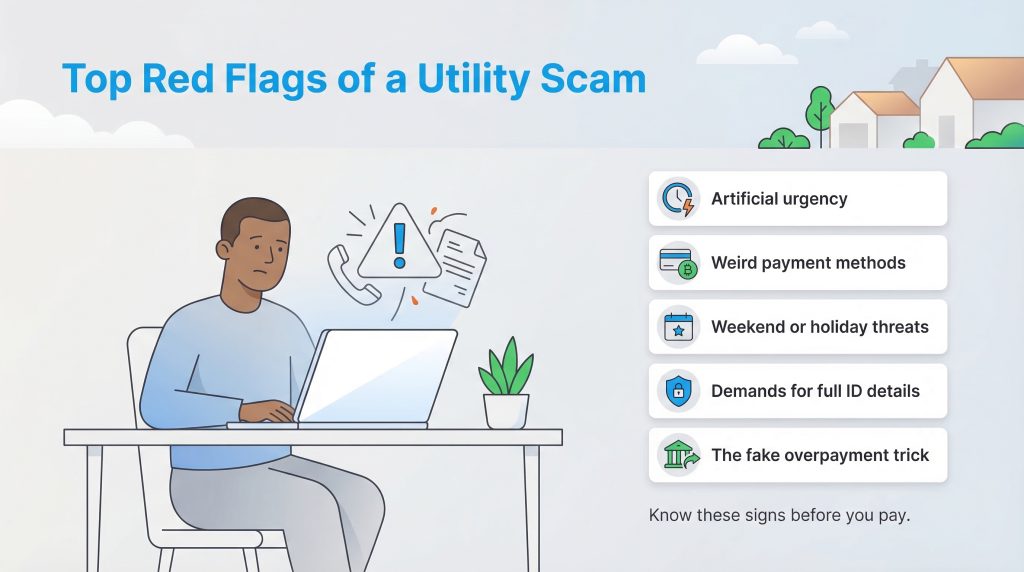
Scammers want you to act fast and ask questions later. If you know what to look for, you can spot a fraudulent request in seconds. Here are the five most common indicators that you are dealing with a scammer:
- Artificial Urgency: If the caller threatens “immediate disconnection” within a short window, such as 30 minutes or an hour, it is a major red flag. Real utility companies typically provide multiple written notices via mail before ever interrupting service.
- Weird Payment Methods: If they demand payment via prepaid debit cards (like Green Dot), gift cards, Bitcoin, or apps like Zelle and Venmo, it is likely a scam. While policies vary slightly by provider, legitimate utilities do not use these untraceable methods for collections.
- Weekend or Holiday Calls: If you receive a disconnection threat on a weekend, a holiday, or late at night, be extremely suspicious. While automated alerts may happen, real disconnection crews generally work during standard business hours and do not perform shut-offs on days when customer service centers are closed.
- ID Theft Attempts: If a caller asks for your full Social Security number, bank account password, or credit card details to “verify” your account, hang up. Your utility provider may ask for partial verification (like the last 4 digits of your SSN), but they will never ask for sensitive passwords or full details over the phone.
- The “Overpayment” Trick: If someone claims they owe you money for an overpayment but needs your bank account details to deposit the refund, it is a scam. Real refunds are typically applied as bill credits or sent via check.
Real Utility vs. Scammer: Spot the Difference
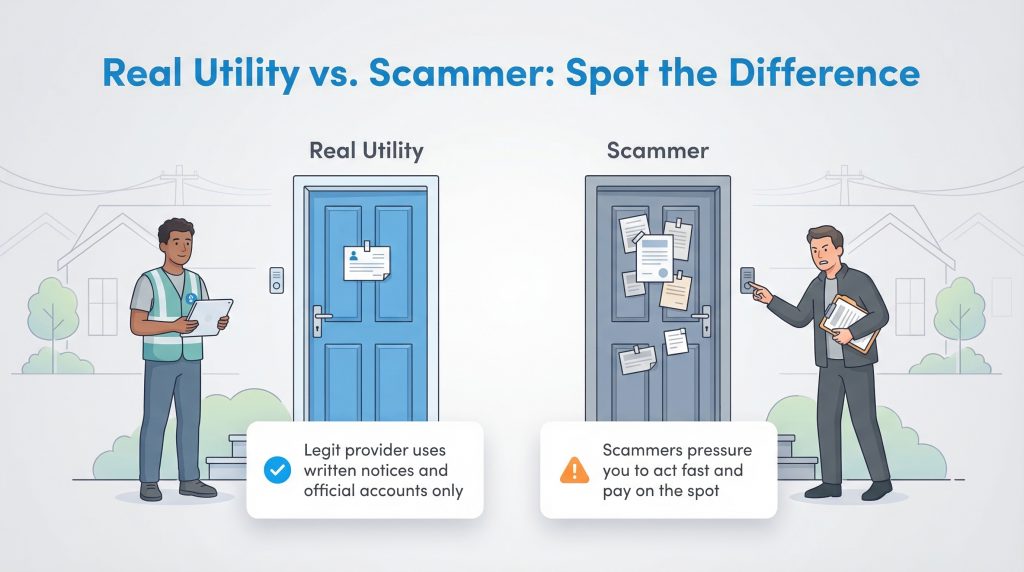
Knowing how a legitimate provider operates compared to a fraudster can save you from being victimized. Use this comparison to quickly evaluate a suspicious interaction.
| What a Real Utility Typically Does | What Scammers Do Instead |
|---|---|
| Sends multiple written notices by mail before disconnection. | Threatens immediate shutoff without prior warning. |
| Accepts checks, credit cards, or online payments via official portals. | Demands gift cards, Bitcoin, Zelle, or prepaid debit cards. |
| Encourages you to call customer service to verify the issue. | Pressures you to stay on the line and pay right now. |
| Operates primarily during standard business hours. | Calls on weekends, holidays, or late at night. |
How Scammers Will Try to Reach You
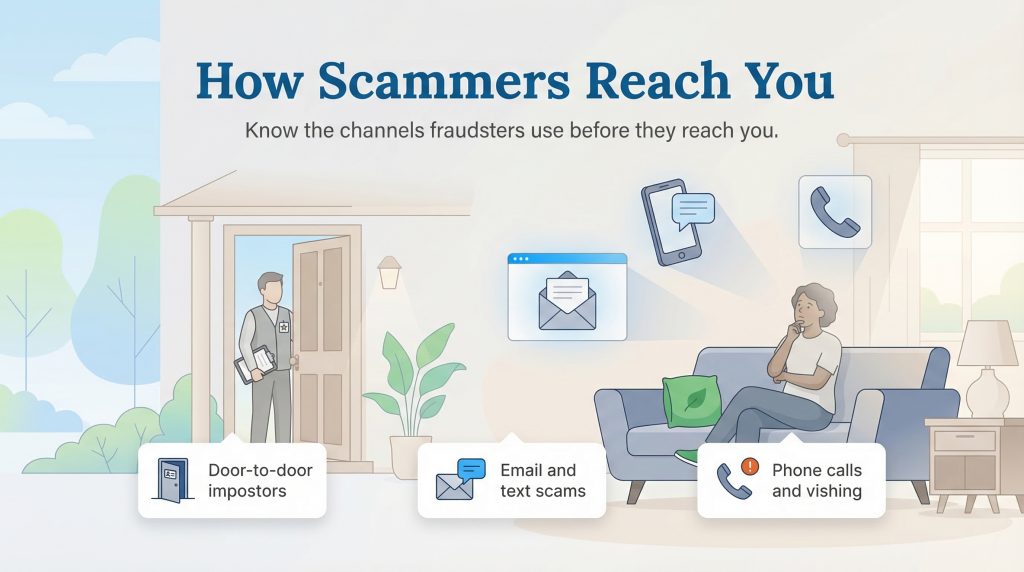
Fraudsters use various communication channels to target homeowners and renters. Understanding their delivery methods is the first step in shutting them down.
Phone Calls (Vishing)
Telephone scams are the most common method. Scammers use “spoofing” technology to make your caller ID display the name of your actual utility company. In recent years, AI Voice Cloning has emerged as a potential risk. This technology can allow scammers to mimic the voice of a customer service agent or even a specific person. If a voice sounds robotic or oddly familiar but the request is suspicious, hang up and call the number on your natural gas or electric bill.
Door-to-Door Impostors
Some scammers may show up at your front door claiming they need to “check the meter,” “perform an energy audit,” or collect an overdue payment. They may wear vests or carry clipboards to look official. However, uniforms and badges are easily faked. Always inspect their identification closely and never let a stranger into your home without a scheduled appointment.
Email and Text (Phishing and Smishing)
You might receive an email or text message that looks exactly like a bill from your provider. These messages often contain a link to a fake payment portal designed to steal your credit card information. They may also prompt you to download an attachment that installs malware on your device.
The Rise of Solar and Green Energy Scams
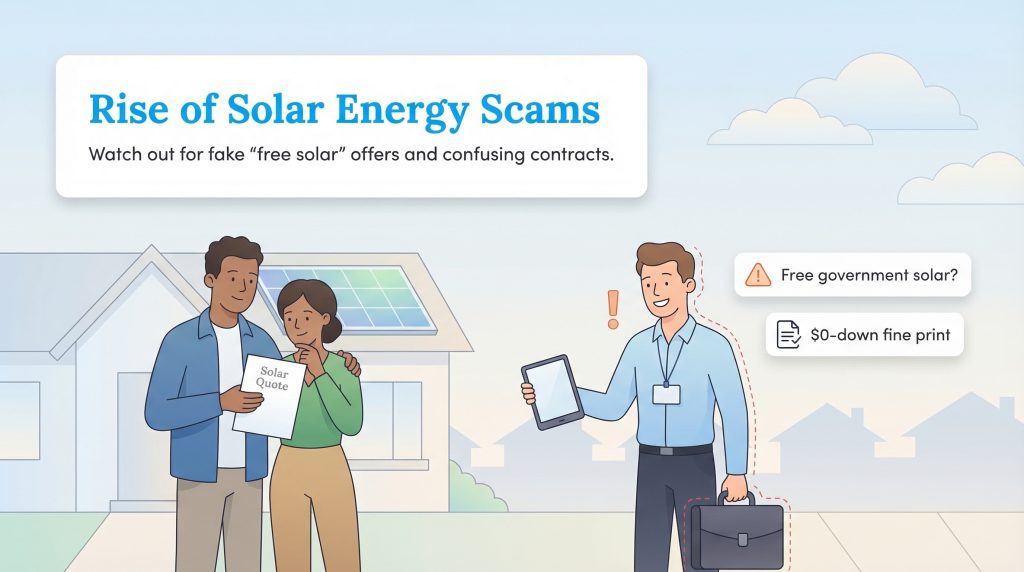
As more homeowners look for sustainable energy solutions, scammers have shifted their tactics to exploit eco-conscious consumers. These scams often promise deals that sound too good to be true.
One common tactic is the fake audit or rebate offer. You might see an ad or receive a call about a “free government solar program” that covers 100% of installation costs. While legitimate tax credits exist, fully free systems are virtually nonexistent. You may see $0-down offers, but these are typically leases or power purchase agreements, not “free solar.” These offers are usually designed to harvest your personal data or charge you illegal upfront fees.
Another trick involves misleading Power Purchase Agreements (PPAs). Unscrupulous salespeople may pose as utility workers conducting a “rate check.” They trick you into signing a contract that switches your energy supply or locks you into a long-term solar lease with unfavorable terms. If you are interested in legitimate renewable energy, always research providers thoroughly and read our guides on solar energy to understand what real quotes look like.
What to Do If You Are Targeted
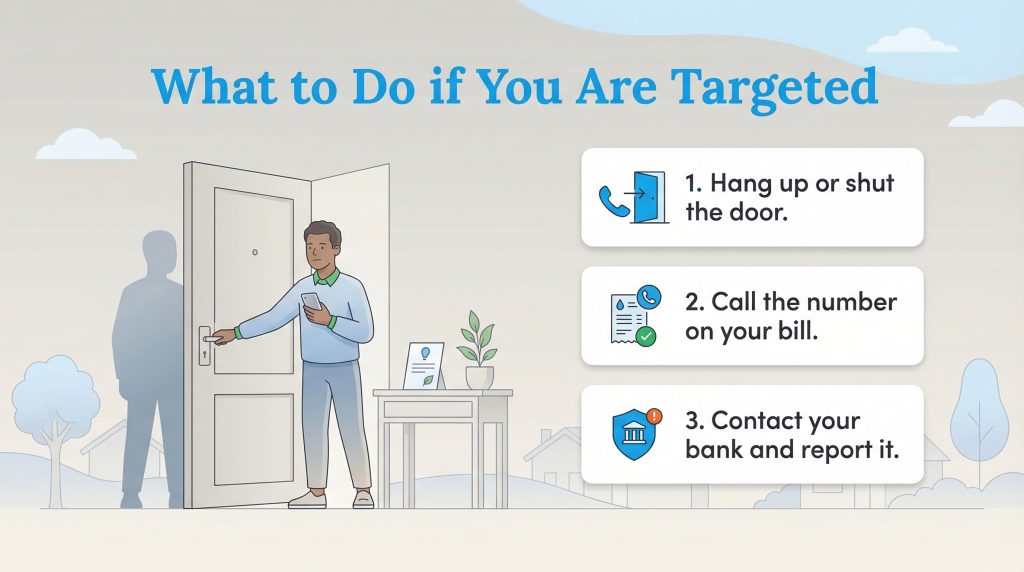
If you suspect you are on the phone with a scammer or standing in front of an impostor, stay calm and follow these steps immediately:
- Hang Up or Shut the Door: Do not engage, argue, or try to “outsmart” them. The longer you stay on the line, the more information they can gather.
- Verify the Status: Locate your most recent utility bill and call the customer service number listed there. Do not use the phone number the caller gave you. You can also log into your account online to check your balance. If you aren’t sure who your provider is, check our electric provider resources to find official contact information.
- Check Your Bank: If you accidentally shared any financial information or paid via credit card, contact your bank immediately to freeze your accounts. If you paid via gift cards or apps like Zelle, recovery may be difficult, but you should still report the fraud to the app support team and the FTC immediately.
How to Report Utility Scams
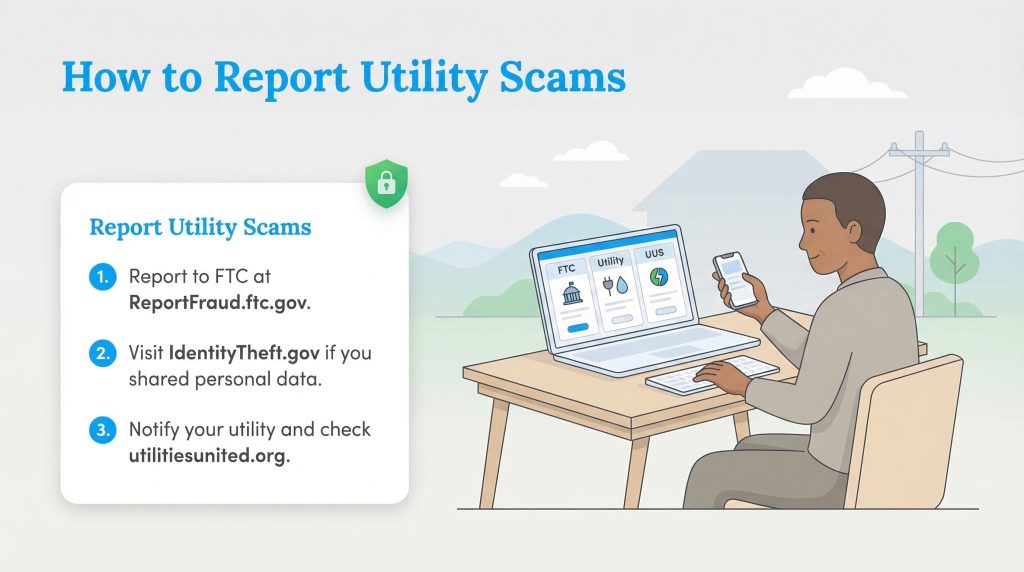
Reporting fraud helps authorities track down scammers and protects other customers from falling victim to the same tricks. It only takes a few minutes to file a report.
First, notify the Federal Trade Commission (FTC) at ReportFraud.ftc.gov. This is the primary database for tracking consumer fraud in the United States. If you have shared sensitive personal information, you should also visit IdentityTheft.gov to set up a recovery plan. Next, contact your local utility company to let them know someone is impersonating them. They can use this information to issue warnings to your neighbors.
You can also check resources from Utilities United Against Scams at utilitiesunited.org, a consortium of providers dedicated to stopping utility fraud.
Stay Vigilant to Keep Your Service Flowing
Utility companies are in the business of keeping your lights on and your water running, not cutting you off at a moment’s notice. They want to work with you to resolve payment issues, not threaten you. By recognizing the difference between a helpful notification and a high-pressure scam, you can manage your home with confidence. If you are in the process of setting up a new home, check our moving resources to ensure you are contacting legitimate providers from day one. Please share this information with friends and family members, especially seniors who are frequently targeted by these aggressive tactics. A little knowledge goes a long way in keeping your household secure.
FAQs About Utility Scams
How do I know if a utility call is real?
Will a utility company ever ask for Zelle or Bitcoin?
What should I do if I paid a scammer?
Can a utility worker enter my home without an appointment?
Do solar panels really come with government checks?
About the Author

LaLeesha has a Masters degree in English and enjoys writing whenever she has the chance. She is passionate about gardening, reducing her carbon footprint, and protecting the environment.