
Identifying and preparing for the surprise fees that often accompany a local or long-distance move
Key Takeaways
- Request a binding estimate from your moving company to ensure the price you see is the price you pay.
- Budget for hidden utility costs associated with setting up new services, including connection fees, deposits, and service overlaps.
- Review your insurance coverage to determine if you need third-party liability protection or full value protection for your belongings.
Moving to a new home is exciting, but the financial reality often hits harder than the physical lifting. While you may have budgeted for the movers and the truck, the final price tag often swells due to a variety of overlooked fees and surcharges. From technical mover terminology like “long carry fees” to the daily costs of living in transition, these expenses can quickly drain your wallet if you aren’t prepared. By understanding where these hidden moving costs lurk, you can build a more accurate moving budget and keep your bank account as organized as your boxes.
Common Professional Mover Surcharges
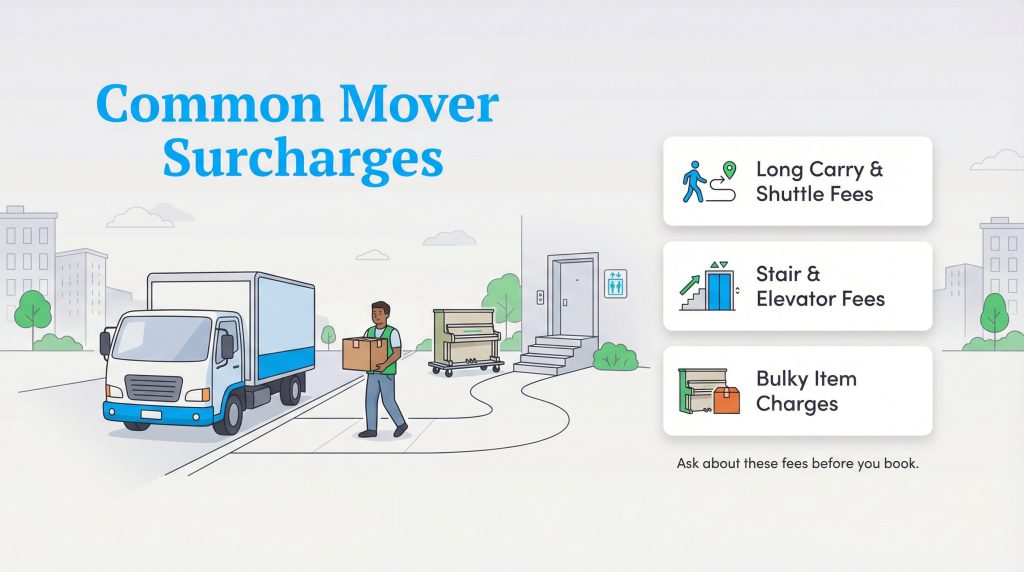
When you hire professional movers, the base quote usually covers loading, driving, and unloading. However, moving companies often apply surcharges for conditions that make the job more labor-intensive or time-consuming. These aren’t necessarily scams; they are fees designed to compensate the crew for extra physical effort, the use of specialized equipment, and the increased risk of injury or damage. Knowing these terms ahead of time helps you communicate clearly with your mover and avoid shock when the final bill arrives.
Long Carry and Shuttle Fees
Access is everything when it comes to moving logistics. A “long carry fee” applies when the moving truck cannot park close to your front door, forcing the crew to haul items over a specific distance, typically 75 feet or more. If your street is too narrow for a large semi-truck, the company might charge a “shuttle fee.” This covers the cost of renting a smaller vehicle to transfer your goods from the main van to your home. Measuring the distance from the street to your door and checking parking regulations beforehand can save you from these hefty additions.
Stair and Elevator Fees
Moving furniture on flat ground is one thing, but navigating vertical obstacles is much harder. Movers often charge extra for carrying items up and down flights of stairs, especially if you live on the third floor or higher without an elevator. Even if your building has an elevator, you might face an elevator fee if the crew has to wait for access or if they need to reserve it exclusively for a long period. This is particularly relevant for city moves in high-rise apartments.
Bulky Item Charges
Certain items require special handling, equipment, or extra personnel to move safely due to their weight and dimensions. Moving companies frequently have a specific price list for these heavy or awkward belongings. Common examples include:
- Pianos (upright or baby grand)
- Pool tables
- Large gun safes
- Hot tubs
- Exercise equipment like treadmills or ellipticals
Be honest about these items during your quote process. If the movers arrive and see a baby grand piano they weren’t expecting, they may not have the right equipment to move it, causing delays and extra fees.
Packing, Supplies, and Insurance Costs

The “before” stage of your move involves significant spending on materials to protect your belongings. Many people underestimate the sheer volume of boxes and tape required to pack up an entire household. Additionally, protecting the value of your goods is a critical cost of packing materials and services that needs careful consideration.
The True Cost of Packing Materials
Boxes, packing tape, bubble wrap, and specialty containers for dishes or wardrobes add up quickly. A typical three-bedroom home can require between $200 and $400 in supplies alone, depending on whether you buy new or source second-hand materials. To reduce waste and cost, consider renting reusable plastic moving bins. These are an eco-conscious alternative that often costs less than buying new cardboard and eliminates the hassle of breaking down boxes later.
Understanding Moving Insurance
For interstate moves, federal law requires movers to offer two types of liability options: Released Value Protection and Full Value Protection. Released Value Protection is usually free but offers minimal coverage, typically around 60 cents per pound per article. If your 50-pound flat-screen TV breaks, you would only receive $30. Full Value Protection requires an upfront premium, but the mover is liable for the replacement value of lost or damaged goods. You can learn more about these rights through the Federal Motor Carrier Safety Administration (FMCSA).
DIY vs. Professional Movers: Weighing the Hidden Costs
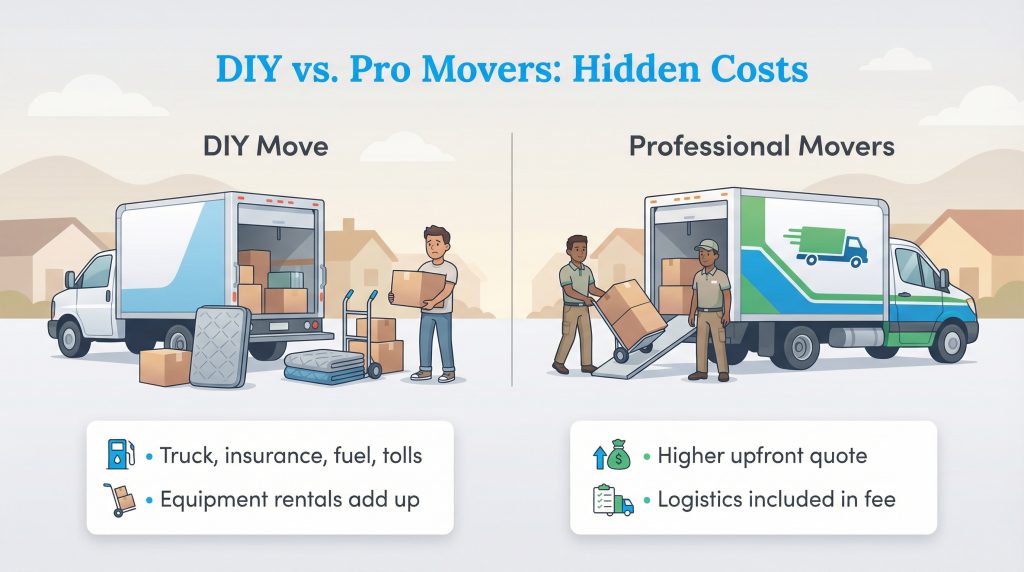
Deciding between renting a truck or hiring pros often comes down to budget, but both options have hidden price tags. While a DIY move eliminates labor costs, it introduces expenses like truck rental insurance, fuel, tolls, and equipment rentals (dollies and blankets). Professional movers have higher upfront quotes but include the logistics in the fee. Use this quick comparison to spot where costs might creep up:
| Expense Category | DIY Move | Professional Movers |
| Unexpected Fees | Mileage overages, fuel refuels, late return fees | Long carry, stair, or shuttle surcharges |
| Time Cost | High (packing, loading, driving) | Low (supervision only) |
| Equipment | Rental fees for dollies and pads | Usually included in the base tariff |
Hidden Utility and Service Fees

While you focus on physical boxes, don’t forget the digital and essential services that keep your home running. Utility connection fees, cancellation charges, and service overlaps are frequently missed in the budget, yet they can amount to hundreds of dollars.
Connection and Setup Charges
Even if you are staying with the same provider, moving to a new address often triggers a new account setup. Internet service providers (ISPs), cable companies, and municipal water districts frequently charge activation or installation fees. Conversely, you may face early termination fees if you cancel a contract with an ISP before the term ends to switch providers. When you are shopping for internet plans for your new home, ask if they can waive the installation fee as a promotion for new or transferring customers.
The Double-Billing Overlap
Ideally, you would stop paying for your old apartment the day you start paying for your new one. In reality, leases and closing dates rarely align perfectly. You will likely pay for electric, natural gas, and internet at two properties simultaneously for at least a few days or weeks. This “double-billing overlap” ensures you have lights on for cleaning the old place and unpacking in the new one, but it does inflate your monthly expenses significantly.
Deposits for New Services
If you are moving to a region served by a different utility provider, you are essentially a new customer to them. If you have a thin credit history or no prior relationship with that specific company, they may require a security deposit before turning on your power or water. These deposits can range from about $50 to several hundred dollars, though they are usually refundable after a set period of on-time payments, depending on the provider.
Smart, Sustainable Setup
Setting up new utilities is the perfect time to make eco-conscious choices that save money long-term. Look for providers that offer time-of-use rate plans or renewable energy credits. While not a hidden cost, failing to optimize your rate plan from day one is a “hidden loss” that can cost you monthly. Choosing an energy-efficient plan helps the planet and your wallet.
Lifestyle and Convenience Expenses

The chaos of moving week disrupts your normal routine. When your kitchen is packed in boxes and your cleaning supplies are buried in the truck, you end up paying for convenience. These lifestyle costs are often the most surprising because they happen in small increments that add up to a large sum.
Cleaning and Repairs
If you are renting, securing your full security deposit refund is crucial. This often requires a move-out cleaning cost, often running $150 to $300 for a standard apartment, that goes beyond a quick sweep. You might need to hire professional cleaners to steam carpets or scrub appliances to meet lease requirements. If you are selling a home, the closing contract often stipulates the home must be “broom clean” and free of debris. Whether you hire pros or buy heavy-duty supplies for a DIY deep clean, budget for these sanitation expenses.
Food and Temporary Housing
Cooking is nearly impossible during a move. You will likely rely on takeout, delivery, and coffee runs for several days. If your closing date gets pushed back or the moving truck encounters a delay, you may also need to pay for a hotel room for a night or two. This incidental spending is rarely accounted for but is a very real part of the process.
Tip for the Movers
Tipping is standard practice in the moving industry and is a way to show appreciation for the heavy labor involved. While not mandatory, it is expected for a job well done. A good rule of thumb is $4 to $5 per hour per mover, or roughly 10% to 15% of the total move cost divided among the crew. Make sure to visit an ATM beforehand so you have cash on hand to distribute at the end of the day.
Building a Moving Budget and Contingency Fund
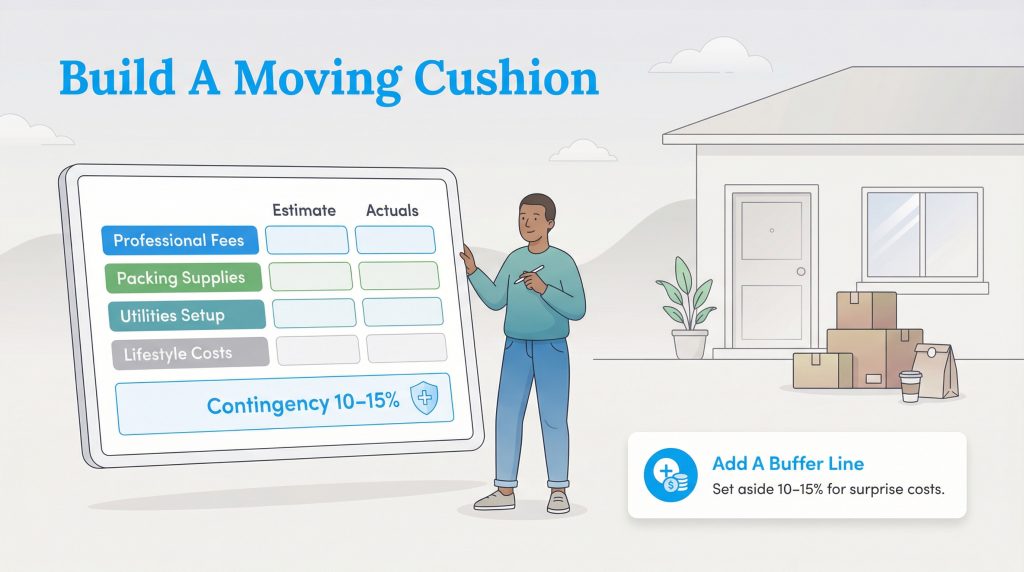
The best defense against hidden moving costs is a solid offense: a contingency fund. When you create your moving budget breakdown, do not just list the quotes and known fees. A comprehensive budget should include lines for:
- Professional fees: Quotes, insurance, and tips.
- Packing supplies: Boxes, tape, and protective wrap.
- Utility setup: Deposits, overlapping service days, and installation fees.
- Lifestyle costs: Cleaning, meals, and temporary lodging.
Set aside an emergency cushion of roughly 10% to 15% of your total estimated costs. This buffer protects you if the movers have to park further away than expected or if you need to buy an emergency dinner for the family because the stove isn’t working yet. Creating a spreadsheet that tracks estimates versus actual spending helps you stay in control.
Planning Ahead Pays Off
Moving is an investment in your future, and while it is expensive, the shock of hidden costs is largely avoidable with a little research. By asking the right questions early, reading the fine print on your estimates, and advocating for yourself with service providers, you can keep unexpected moving expenses to a minimum. Once the boxes are unpacked and the utilities are running, you can settle into your new home with the peace of mind that you managed your finances as effectively as your furniture.
FAQs About Hidden Moving Costs
What are the most common unexpected moving expenses?
Do moving companies charge for travel time?
How much should I budget for moving insurance?
Are moving expenses tax-deductible?
How can I avoid paying hidden fees to movers?
About the Author

LaLeesha has a Masters degree in English and enjoys writing whenever she has the chance. She is passionate about gardening, reducing her carbon footprint, and protecting the environment.