
Compare rates, renewable plans, and cancellation fees to decide which energy giant fits your specific usage style
Key Takeaways
- Constellation generally offers simpler fixed-rate plans that are often more cost-effective for homeowners with consistent, higher energy usage.
- TXU Energy excels in plan variety, offering specialized options like “Free Nights” that benefit users who can shift their electricity usage.
- Always check the Electricity Facts Label (EFL) for hidden base charges and bill credit thresholds before signing a contract with either provider.
Choosing between two of the biggest names in the Texas electricity market can feel like splitting hairs, but the difference in your monthly bill could be significant. While both TXU Energy and Constellation are massive, reliable retailers, they cater to very different types of energy users. If you are trying to cut through the marketing noise to find the best value for your apartment or house, you need to look past the advertised rate. We’re here to compare their price structures, customer service records, and potential fees to help you make the right choice.

- 13.5¢ /kWh
- 3-100%
- 60 days
- 1-36 Months
- Best for Plan Variety & Reliability

- 10.1¢ /kWh
- 26-100%
- 90 days
- 3-36 Months
- Proven Leader in Clean Energy
*rates may vary by location and household usage
At a Glance: How They Stack Up
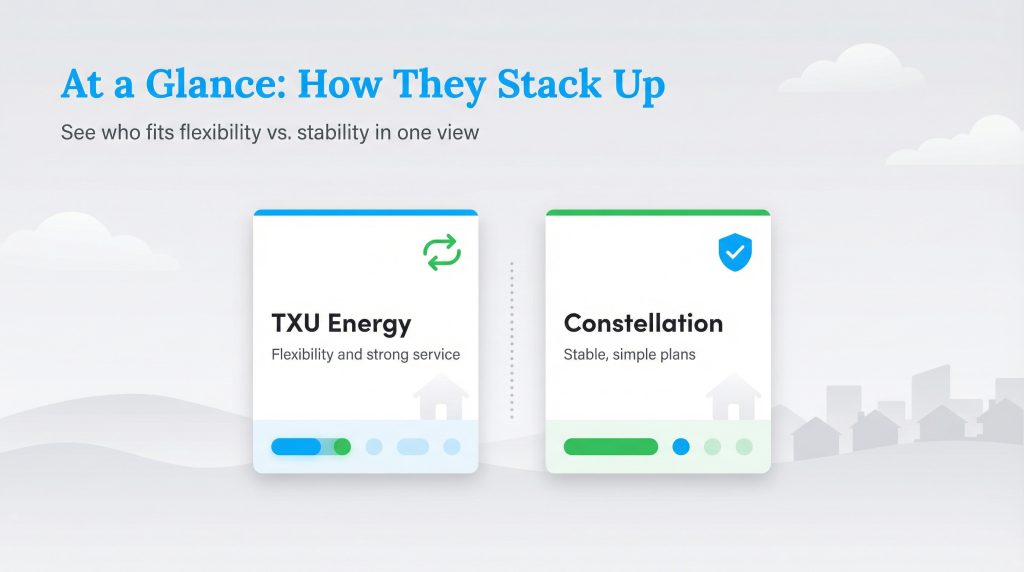
Before diving into the fine print of the Electricity Facts Label, here is a high-level look at how these two providers compare across the categories that matter most to your wallet and peace of mind. In short, TXU Energy tends to stand out for flexibility and service, while Constellation is often a strong fit for stability and simplicity.
| Feature | TXU Energy | Constellation |
|---|---|---|
| Price Stability | Moderate | High |
| Plan Variety | High (Time-of-Use, Solar perks) | Low (Standard fixed rates) |
| Customer Service | Varies by year (J.D. Power) | Varies by year (J.D. Power) |
| Green Options | Good options | Good options |
| Best For | Flexible users & Renters | Homeowners & Stable usage |
How to Compare Rates the Right Way
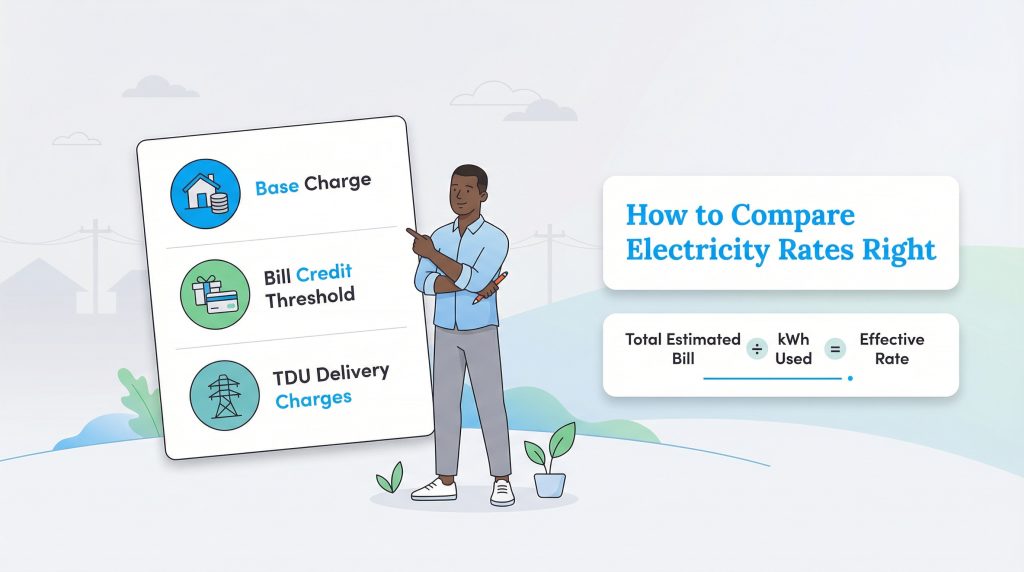
Before comparing brands, you need to know how to calculate the real cost. In Texas, the advertised rate in big print often assumes you use exactly 1000 or 2000 kWh per month. To avoid billing surprises, always check the Electricity Facts Label (EFL) for three things:
- Base Charge: A flat monthly fee (e.g., $9.95) that applies regardless of usage.
- Bill Credit Threshold: A discount that only kicks in if you use a certain amount (e.g., a $30 credit if you use over 800 kWh).
- TDU Delivery Charges: These are passed through from your local utility (like Oncor or CenterPoint) and are added to your provider’s rate.
To find your effective rate, use this simple formula based on your past bills: (Total Estimated Bill ÷ kWh Used) = Effective Cents per kWh.
Is Constellation Cheaper Than TXU Energy?
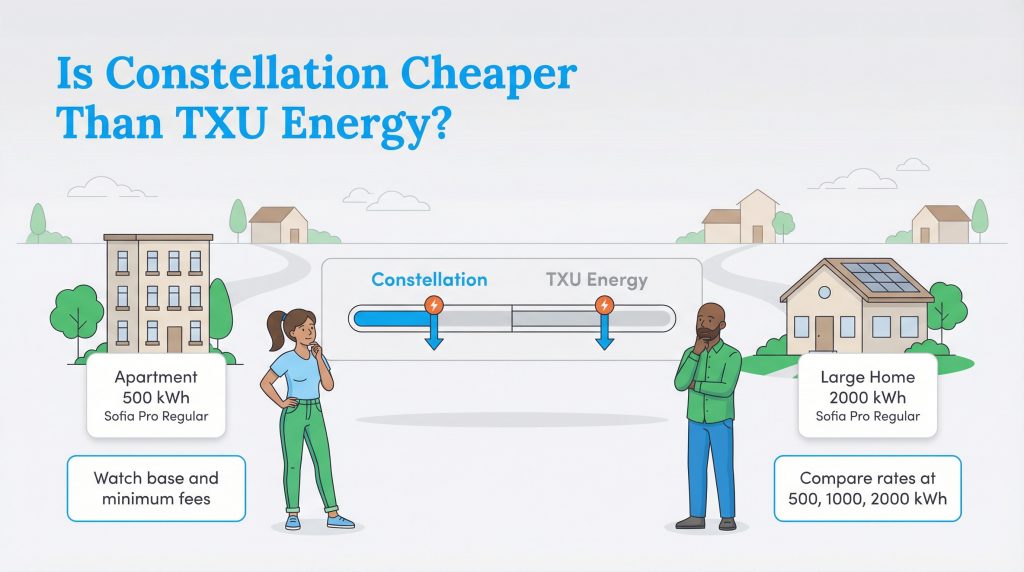
The question of “who is cheaper” is tricky in Texas because the advertised rate is rarely what you pay if your usage fluctuates. To understand if Constellation is cheaper than TXU for your home, you have to look at the “usage gap”, the difference in price per kilowatt-hour (kWh) at 500, 1000, and 2000 kWh usages.
Scenario A: Apartments (500 kWh usage)
If you live in an apartment or a small home, you need to watch out for base charges. TXU Energy plans often include base charges that can make the effective rate per kWh much higher for low-usage customers. Constellation also utilizes minimum usage fees on some plans, but they frequently offer “no minimum usage fee” options that are friendlier to apartment dwellers. If you consistently use less than 1000 kWh, a simple fixed-rate plan from Constellation might beat out a complex tiered plan from TXU.
Scenario B: Large Homes (2000 kWh usage)
For larger homes, Constellation can be a strong fit. Many of their plans are structured to reward high usage. For example, you might see a significant drop in your rate once you cross the 1000 kWh threshold due to bill credits. TXU Energy offers competitive rates here too, but their “Free Nights” plans only save you money if a large portion of that 2000 kWh is used during the free window. If you work from home and run the AC all day, a standard low rate from Constellation is often the safer bet.
Analyzing Plan Structures: Complexity vs. Simplicity
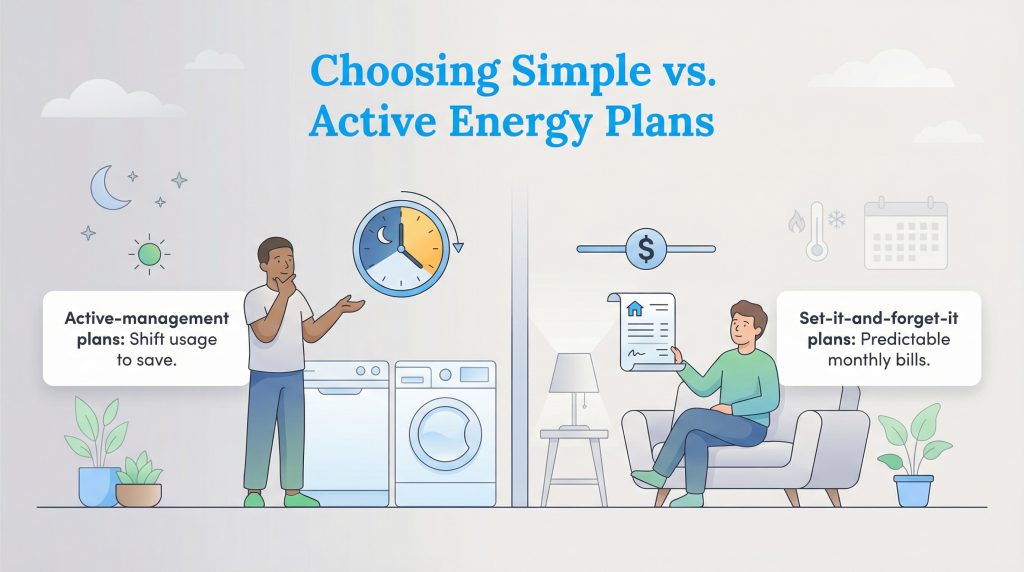
When comparing TXU Energy plans vs Constellation plans, you are essentially choosing between active management and a “set it and forget it” lifestyle. TXU Energy is famous for its marketing of time-of-use plans, such as “Free Nights & Solar Days.” These plans can offer incredible value, but they require you to shift your energy habits. If you can wait to run your dishwasher and laundry until after 8 p.m., you can capitalize on these offers. However, if your schedule is rigid, you might end up paying a premium for daytime electricity.
TXU Energy Plans & Pricing
| Plan Name | Rate | Plan Type | Cancellation Fee | |
|---|---|---|---|---|
| Value Edge 12 | $0.135 /kWh | 12 Months Fixed Rate | $150.00 | Check Availability |
| Smart Edge 12 | $0.139 /kWh | 12 Months Fixed Rate | $150.00 | Check Availability |
| Clear Deal 12 | $0.139 /kWh | 12 Months Rate | $150 | Check Availability |
| Smart Edge 24 | $0.145 /kWh | 24 Months Fixed Rate | $295.00 | Check Availability |
| Clear Deal 24 | $0.155 /kWh | 24 Months Rate | $295 | Check Availability |
| Solar Value 12 | $0.156 /kWh | 12 Months Rate | $150 | Check Availability |
| Simple Value 12 | $0.157 /kWh | 12 Months Fixed Rate | $150.00 | Check Availability |
| Simple Rate 12 | $0.173 /kWh | 12 Months Rate | $150 | Check Availability |
| On Your Terms | $0.175 /kWh | 1 Month Months Rate | $ | Check Availability |
| Free Nights & Solar Days 12 (8 pm) | $0.189 /kWh | 12 Months Rate | $150 | Check Availability |
| Solar Club 12 | $0.191 /kWh | 12 Months Fixed Rate | $150.00 | Check Availability |
| Texas Choice 12 | $0.192 /kWh | 12 Months Fixed Rate | $150.00 | Check Availability |
| Texas Choice 24 | $0.192 /kWh | 24 Months Fixed Rate | $295.00 | Check Availability |
| Ultimate Season Pass 12 | $0.192 /kWh | 12 Months Rate | $150 | Check Availability |
| Flex Rewards | $0.193 /kWh | Variable Rate | $0.00 | Check Availability |
| Flex Forward | $0.193 /kWh | 1 Month Months Rate | $ | Check Availability |
| Smart Deal 12 | $0.196 /kWh | 12 Months Fixed Rate | $150.00 | Check Availability |
| Smart Deal 24 | $0.204 /kWh | 24 Months Fixed Rate | $295.00 | Check Availability |
| Smart Deal 36 | $0.204 /kWh | 36 Months Fixed Rate | $395.00 | Check Availability |
| Solar Saver 12 | $0.205 /kWh | 12 Months Rate | $150 | Check Availability |
| Saver's Discount 12 | $0.217 /kWh | 12 Months Rate | $150 | Check Availability |
| Saver's Discount 24 | $0.228 /kWh | 24 Months Rate | $295 | Check Availability |
On the other hand, Constellation generally focuses on simplicity. Their core offerings are usually standard fixed-rate plans with terms ranging from 12 to 36 months. While they do have some tiered options, they are less known for the “gimmick” style plans that vary wildly by hour. For most homeowners who want a predictable bill without having to constantly check the clock, Constellation’s straightforward approach is appealing. You can read more about electric service basics to see which structure fits your daily routine.
Constellation Energy Plans & Pricing
| Plan Name | Rate | Plan Type | Cancellation Fee | |
|---|---|---|---|---|
| Simple Switch 3 | $0.101 /kWh | 3 Months Fixed Rate | $50.00 | Check Availability |
| Simple Switch 4 | $0.106 /kWh | 4 Months Fixed Rate | $50.00 | Check Availability |
| 5 Month Usage Bill Credit | $0.109 /kWh | 5 Months Fixed Rate | $50.00 | Check Availability |
| 12 Month Fixed Rate + Bill Credit 10% Discount | $0.116 /kWh | 12 Months Rate | $150 | Check Availability |
| 9 Month Usage Bill Credit | $0.129 /kWh | 9 Months Rate | $50 | Check Availability |
| 24 Month Usage Bill Credit | $0.129 /kWh | 24 Months Rate | $150 | Check Availability |
| 36 Month Usage Bill Credit | $0.131 /kWh | 36 Months Fixed Rate | $150.00 | Check Availability |
| 15 Month Usage Bill Credit | $0.131 /kWh | 15 Months Rate | $150 | Check Availability |
| 12 Month Usage Bill Credit | $0.133 /kWh | 12 Months Fixed Rate | $150.00 | Check Availability |
| 12 Month Electric Vehicle FlexCharge Plan | $0.137 /kWh | 12 Months Rate | $150 | Check Availability |
| 6 Month Usage Bill Credit | $0.141 /kWh | 6 Months Rate | $50 | Check Availability |
| 12 Month (No Min Usage Fee) | $0.143 /kWh | 12 Months Rate | $150 | Check Availability |
| Usage Bill Credit | $0.144 /kWh | 36 Months Rate | $150 | Check Availability |
| 12 Month Electric Vehicle FreeCharge Plan | $0.144 /kWh | 12 Months Rate | $150 | Check Availability |
| 24 Month (No Min Usage Fee) | $0.146 /kWh | 24 Months Rate | $150 | Check Availability |
| 12 Month | $0.148 /kWh | 12 Months Fixed Rate | $150.00 | Check Availability |
| 24 Month Electric Vehicle FreeCharge Plan | $0.148 /kWh | 24 Months Rate | $150 | Check Availability |
| 24 Month Electric Vehicle FlexCharge Plan | $0.150 /kWh | 24 Months Rate | $150 | Check Availability |
| AC Protect Plus | $0.152 /kWh | 12 Months Rate | $150 | Check Availability |
| 24 Month Fixed Rate + Bill Credit 10% Discount | $0.152 /kWh | 24 Months Rate | $150 | Check Availability |
| 24 Month A/C Protect Plus for 2 Units | $0.157 /kWh | 24 Months Rate | $150 | Check Availability |
| 12Mo Usage Bill Credit + A/C Protection for 2 Units and HVAC Monitoring | $0.159 /kWh | 12 Months Rate | $150 | Check Availability |
| 12Mo Usage Bill Credit + A/C Protection for 1 Unit and HVAC Monitoring | $0.159 /kWh | 12 Months Rate | $150 | Check Availability |
| 12 Month A/C Protect Plus for 2 Units | $0.163 /kWh | 12 Months Fixed Rate | $150.00 | Check Availability |
| 12 Month GREEN (No Min Usage Fee) | $0.164 /kWh | 12 Months Rate | $150 | Check Availability |
| 36 Month A/C Protect Plus for 2 Units | $0.169 /kWh | 36 Months Rate | $150 | Check Availability |
| 12 Month GREEN Usage Bill Credit | $0.169 /kWh | 12 Months Rate | $150 | Check Availability |
| 36 Month A/C Protect Premier for 2 Units | $0.172 /kWh | 36 Months Rate | $150 | Check Availability |
| AC Protect Premier | $0.176 /kWh | 12 Months Rate | $150 | Check Availability |
Hidden Fees and Cancellation Policies
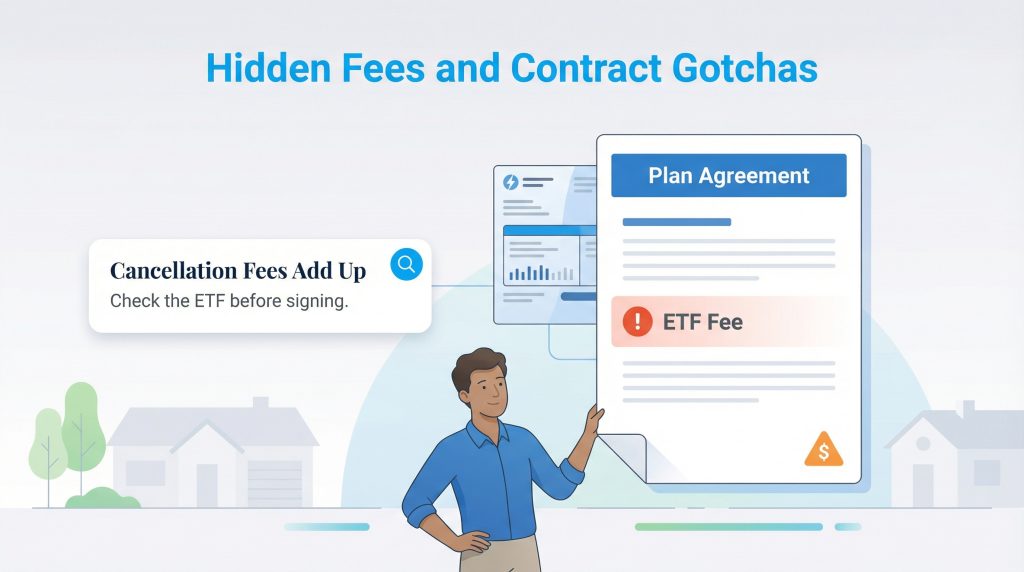
Cancellation fees, also known as Early Termination Fees (ETFs), are a major pain point for customers who want to switch providers before their contract expires. Both companies will charge you if you break a contract early, but the structure of these fees can vary.
TXU Energy and Constellation both typically charge cancellation fees, which vary significantly by plan and contract term. You will find the exact amount listed in the Electricity Facts Label or Terms of Service. While Constellation has historically used “liquidated damages” (a complex calculation of lost profit) for commercial contracts, their residential policies are generally straightforward flat fees. Always verify the ETF amount before signing, as breaking a long-term contract can sometimes cost hundreds of dollars.
Customer Service and Reputation
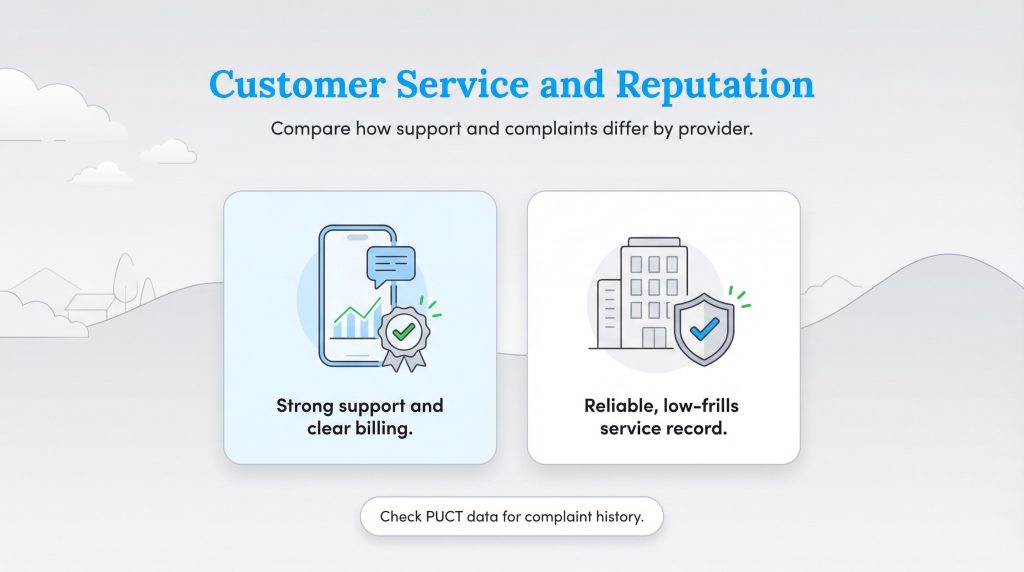
Customer service is where TXU Energy often aims to differentiate itself. As a legacy provider in Texas, they have invested heavily in their customer support infrastructure. J.D. Power publishes retail electric provider satisfaction research annually, and rankings vary by year and region. TXU often performs well in these studies regarding billing clarity and support. Their mobile app is also widely praised for being user-friendly and helping customers track usage in real-time.
Constellation is a massive national company with a solid reputation. While individual experiences vary, reviews often highlight that Constellation is a reliable, no-frills option. For official data on complaints, you can check the complaint history for any retailer through the Public Utility Commission of Texas (PUCT) to see how they stack up against the competition.
Sustainable Options: Who is Greener?
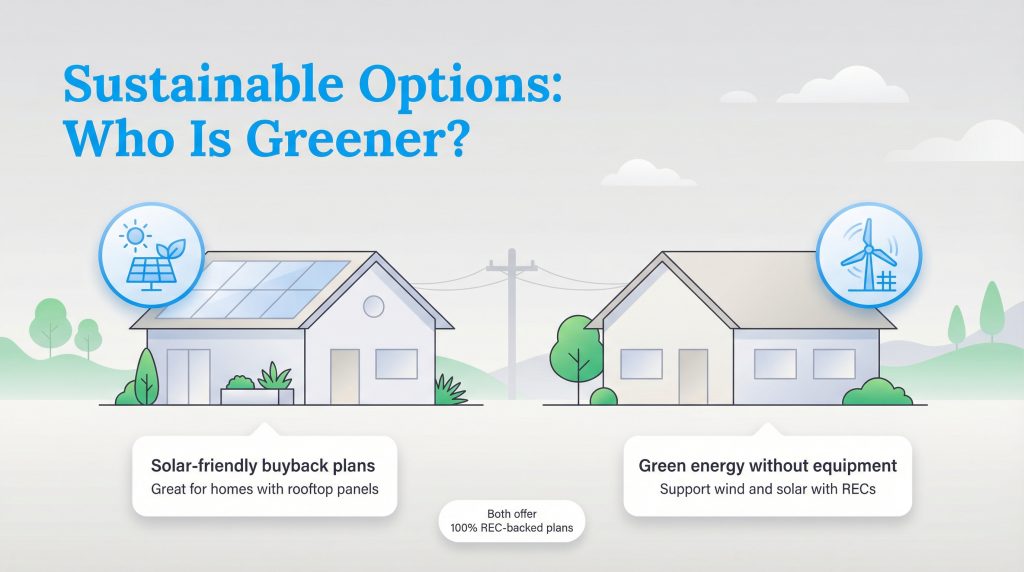
If reducing your carbon footprint is a priority, both providers have options for you. TXU Energy and Constellation both offer plans backed by 100% renewable energy credits (RECs). This means that for every kilowatt-hour you use, they purchase an equivalent amount of renewable energy to be added to the grid. You can learn more about how RECs work from the EPA’s Green Power Partnership.
TXU Energy has heavily marketed its solar buyback plans and “Solar Days” options, making them a strong contender for homeowners with rooftop solar panels. Constellation, backed by the diverse energy portfolio of its parent company, also offers robust green plans that allow you to support wind and solar generation without installing any equipment yourself. While neither company is exclusively “green” (both deal in fossil fuels as well), they both make it easy for the eco-conscious consumer to opt out of carbon-heavy plans.
Verdict: Which Provider Wins?
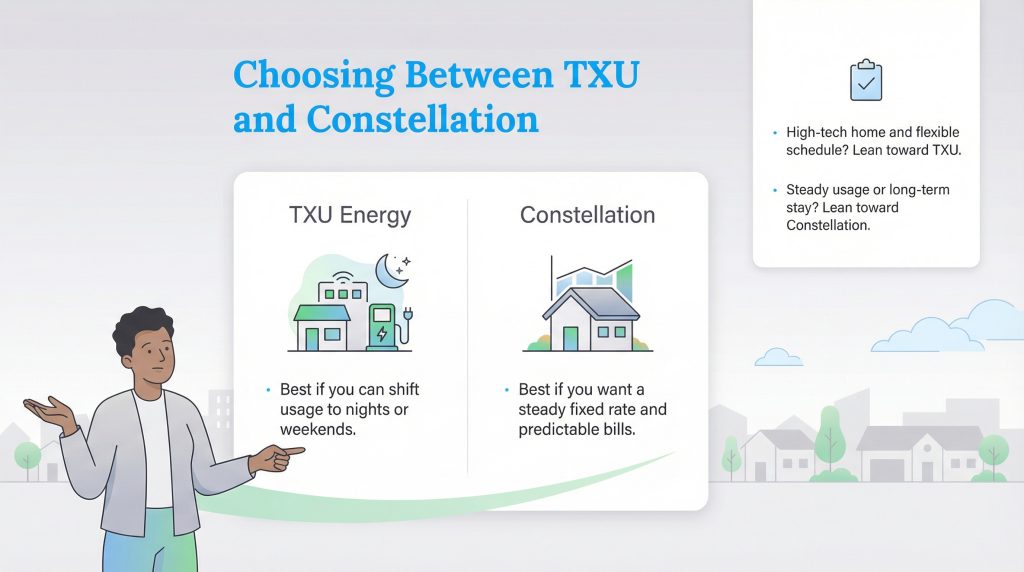
There is no single winner in the battle of TXU vs. Constellation, as the right choice depends entirely on your lifestyle and home type. However, we can break it down by user needs:
Choose TXU Energy if: You value top-tier customer service and have a high-tech home where you can actively manage your usage. If you can shift your laundry and EV charging to nights or weekends, their time-of-use plans can offer significant savings.
Choose Constellation if: You prefer a straightforward bill with no surprises. If you are a homeowner with high, consistent usage who wants a stable fixed rate for the next 12 to 36 months, Constellation is often the more practical, “hassle-free” choice. For more comparisons, check out our guide to Texas utility providers.
Quick Checklist: Which Provider Fits You?
- If you can shift usage to nights/weekends: Consider TXU Energy’s time-of-use plans.
- If your usage is steady and you want predictability: Look for a fixed-rate plan from Constellation.
- If you are renting and may move soon: Prioritize a plan with a low ETF or a clear move-out clause.
Final Thoughts on Your Energy Choice
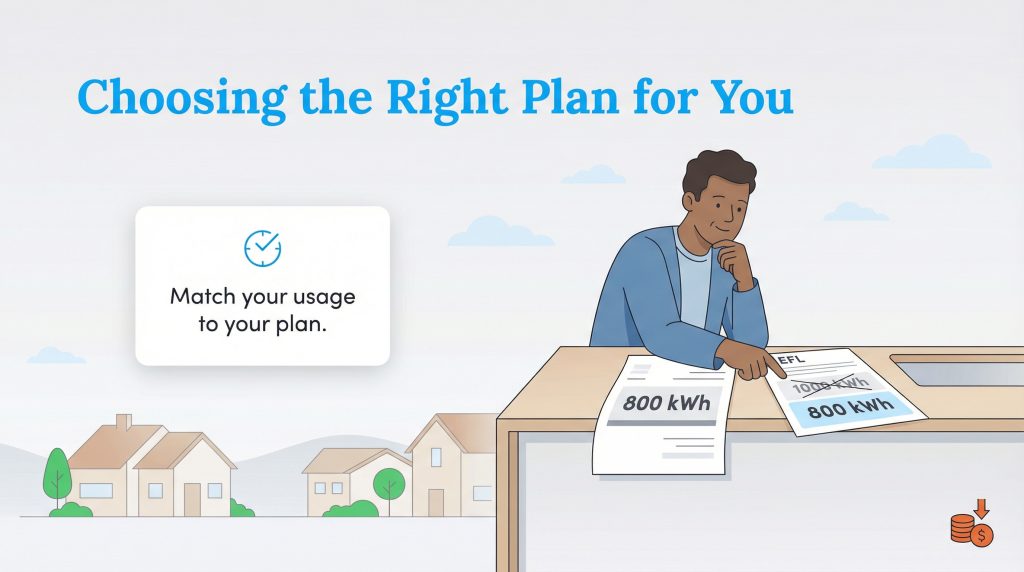
Ultimately, the “best” provider is the one that matches your specific usage history. Before you sign up, look at your last 12 months of electricity bills to see your average monthly usage. If you typically use 800 kWh, avoid plans that only offer credits at 1000 kWh. By taking five minutes to match your history with the Electricity Facts Label, you can save hundreds of dollars a year regardless of which brand you choose. For more tips on reducing your usage, read our guide on how to save on your electric bill.
FAQs About TXU vs. Constellation
Is TXU Energy the same as Constellation?
Does Constellation require a deposit?
Which company has better reviews in Texas?
Can I switch from TXU to Constellation without a penalty?
Do both providers cover all of Texas?
About the Author

LaLeesha has a Masters degree in English and enjoys writing whenever she has the chance. She is passionate about gardening, reducing her carbon footprint, and protecting the environment.