
The proposed rate hike could add nearly $35 per month to combined energy bills in the Philadelphia region starting in 2027.
Key Takeaways
- Typical residential customers could see a $20.08 monthly increase on electric bills and $14.52 on gas bills.
- PECO plans to use the $510 million in new revenue to fund a five-year, $10 billion infrastructure plan for grid safety and storm reliability.
- Residents can potentially lower their costs by choosing competitive suppliers or applying for assistance grants like the Customer Relief Fund.
If you live in the Philadelphia or Delaware County region, you might want to take a closer look at your upcoming utility projections. PECO Energy recently filed a request with state regulators for a substantial rate increase that could change your monthly budget starting in early 2027. We know that any jump in living costs is stressful, especially when it involves essential services like power and heat. This guide breaks down exactly why PECO is asking for more money, which neighborhoods are most affected, and, most importantly, what actionable steps you can take right now to protect your wallet and keep your home running efficiently.
Why PECO Rates Are Changing
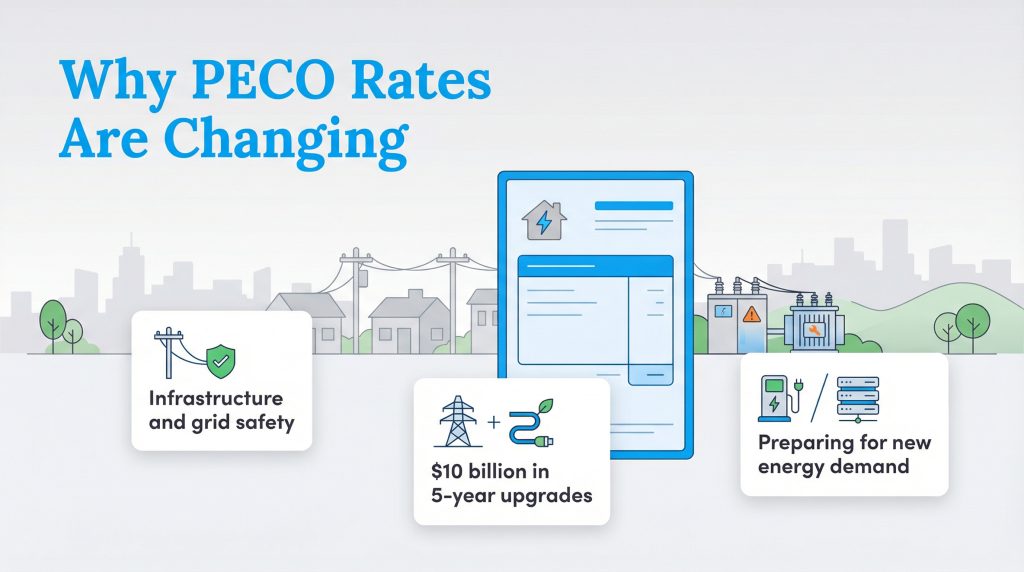
PECO filed two requests with the Pennsylvania Public Utility Commission (PUC) on March 30, 2026, seeking to increase its total annual revenue by $510 million. The utility argues that these extra funds are the “minimum necessary” to maintain a safe and modern energy system.
Infrastructure and Grid Safety
The primary driver is a massive five-year, $10 billion investment plan aimed at bolstering the regional grid. This includes replacing aging electric cables, retiring outdated substation equipment, and installing “tree-resistant” cables to prevent outages during severe storms. PECO is also focusing on the natural gas side by replacing older cast iron and bare steel mains with high-density plastic piping to reduce methane leaks and improve durability.
Managing New Demand
The region’s energy needs are shifting. New technology like AI-driven data centers and the growing adoption of electric vehicles are putting more strain on existing infrastructure. PECO’s plan includes grid upgrades to handle these large-load users while also supporting residential solar interconnections and battery storage pilots.
How Much Will Your Bill Actually Increase?
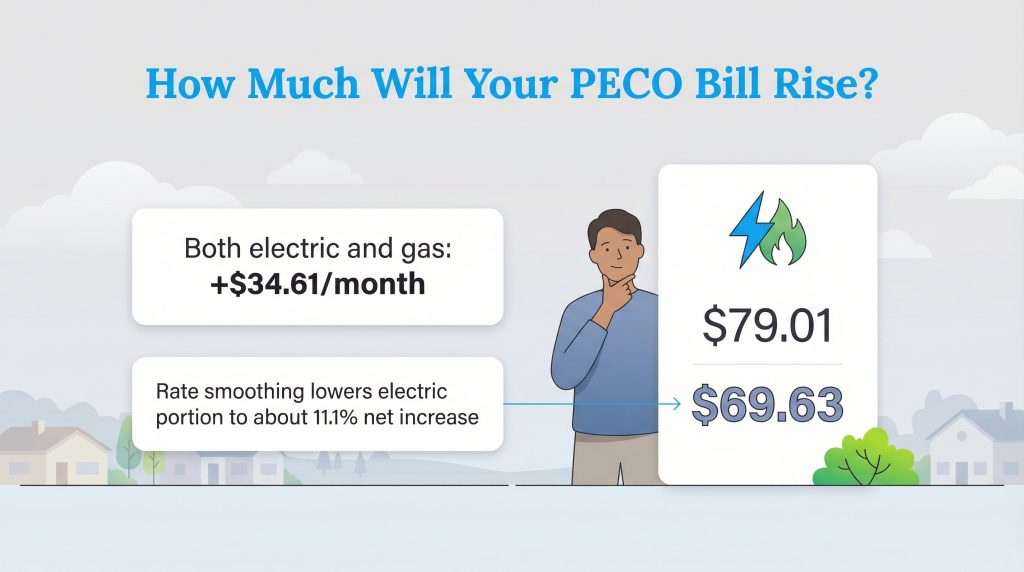
The financial impact depends on whether you receive just one service or both from PECO. If the PUC approves the request as filed, the changes would take effect on Jan. 1, 2027.
Breaking Down the Numbers
| Service Type | Typical Usage | Proposed Monthly Increase | Percentage Hike |
| Residential Electric | 700 kWh | $20.08 | 12.5% |
| Residential Natural Gas | 80 Ccf | $14.52 | 11.4% |
A typical residential customer who gets both electricity and natural gas from PECO is set to pay an additional $34.61 monthly.
Rate Smoothing Tools
To help ease the transition, PECO proposed two “smoothing” tools that spread out certain costs over 10 years instead of one. If these are approved, residential electric customers would see a small offset of about $2.30 per month starting in April 2027, effectively lowering the net increase for that portion of the bill to roughly 11.1%.
Areas and Cities Impacted by the Hike
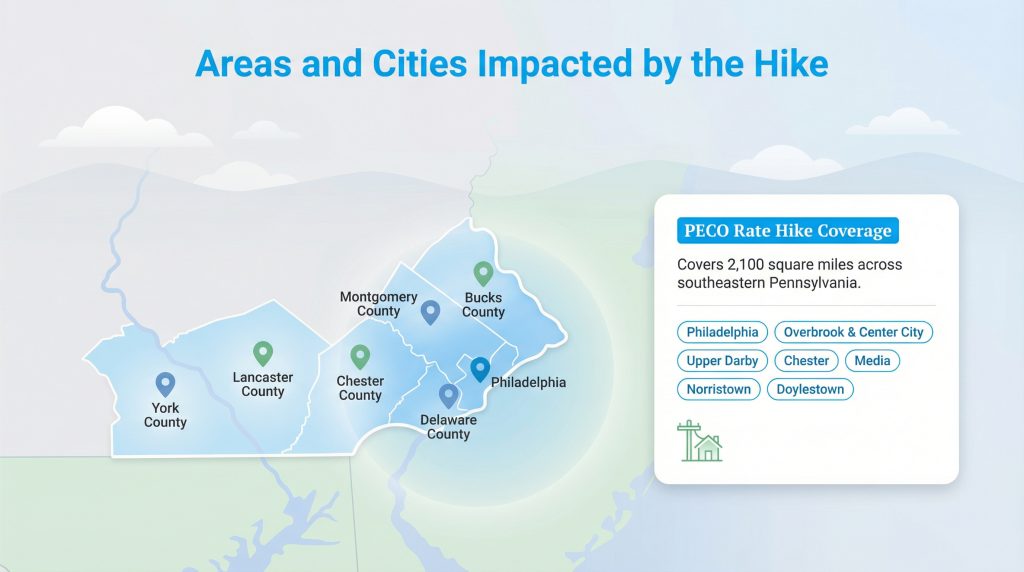
This proposal covers PECO’s entire 2,100-square-mile service territory in southeastern Pennsylvania. This includes Philadelphia and the surrounding suburban counties of Bucks, Chester, Delaware, and Montgomery, plus parts of York and Lancaster counties.
Specific areas mentioned for on-the-ground upgrades include:
- Philadelphia (Overbrook and Center City)
- Upper Darby
- Chester
- Media
- Norristown
- Doylestown
What You Can Do About Changing Rates
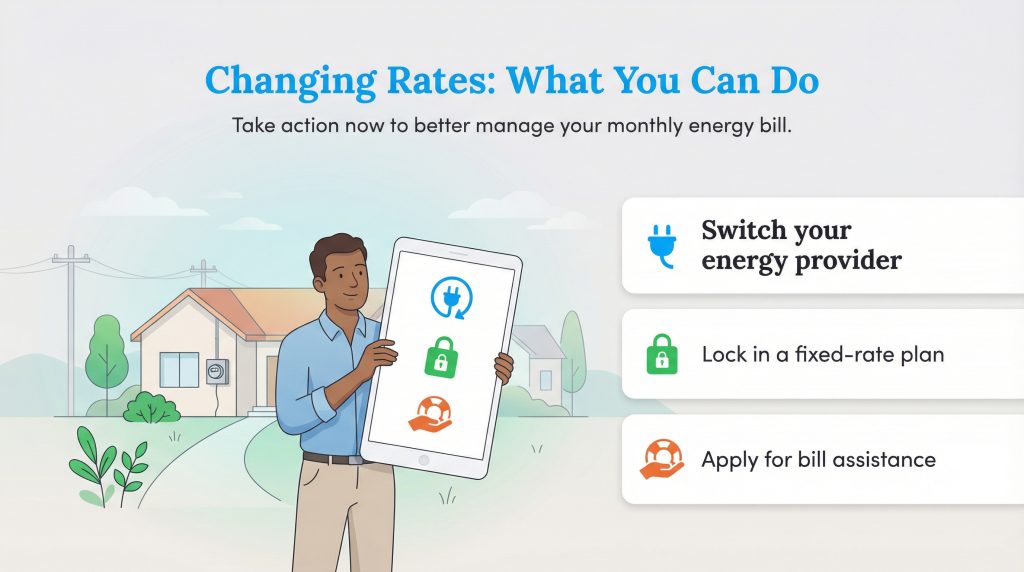
Even though distribution rates are regulated, you still have several ways to control your total monthly bill. Taking action now can help you stabilize your costs before the new rates kick in.
Switch Your Energy Provider
Pennsylvania is a deregulated state, meaning you can choose who supplies your electricity generation. PECO handles the “poles and wires,” but you can shop for a lower supply rate via PA Power Switch. As of April 2026, PECO’s default “Price to Compare” is 11.024 cents per kWh. Any rate you find below this number will save you money on the supply portion of your bill.
Lock in a Fixed-Rate Plan
With wholesale market volatility triggered by recent capacity auction spikes, we recommend looking for 12-month fixed-rate plans. This protects you from seasonal price shocks and the phase-in of higher capacity costs expected throughout 2026. Be sure to avoid “teaser” rates that only last a month or two before jumping up.
Apply for Financial Assistance
If the rate hike puts a strain on your finances, don’t wait to seek help. Several programs are available for income-qualified households:
- PECO Customer Relief Fund: A United Way-administered program offering one-time grants of $750.
- LIHEAP: Federal grants ranging from $200 to $1,000 to help with heating costs.
- Customer Assistance Program (CAP): Offers a fixed monthly bill based on household income.
You can visit PECO’s help page for more personalized recommendations on which programs might fit your needs.
Making Smart Choices for Your Home Energy
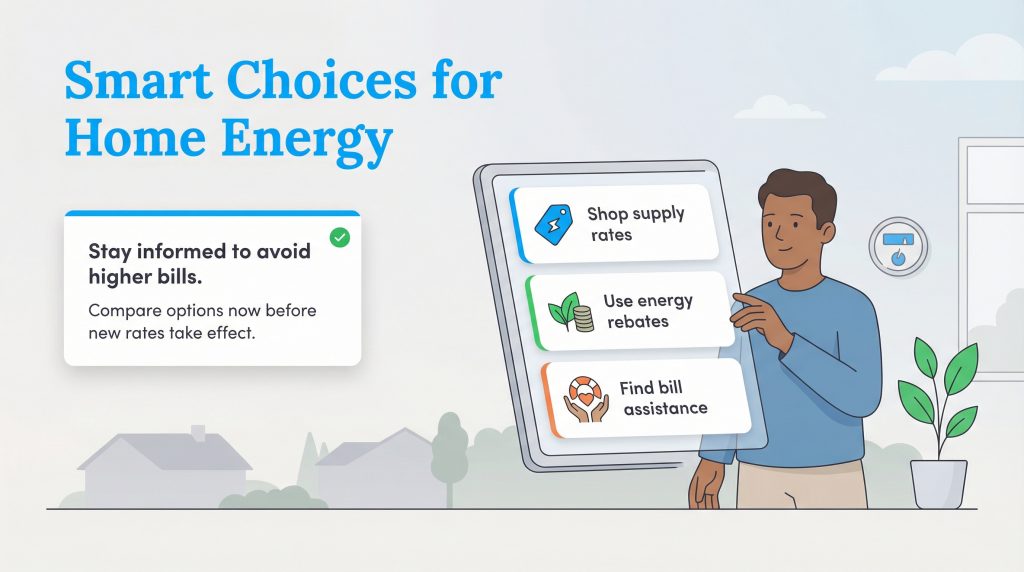
Navigating utility rate changes is never easy, but staying informed is your best defense against rising costs. While PECO’s proposed infrastructure investments are designed to make the grid more reliable for the long term, we encourage you to be proactive now. By shopping for competitive supply rates, taking advantage of energy-saving rebates, or applying for assistance programs, you can take control of your energy future. We will continue to monitor the PUC’s investigation and provide updates as the final decision approaches in late 2026.
Frequently Asked Questions About PECO Rate Hikes
When will the new PECO rates go into effect?
How can I find out if I am eligible for the $750 grant?
Can I avoid the rate hike by switching energy suppliers?
Why is Governor Shapiro opposing the rate hike?
About the Author

Claudio is a sustainability-focused writer with a background in Anthropology and Psychology from NC State University. He has spent over 15 years working in writing, interpretation, and translation, driven by a deep interest in how human culture shapes the environment. Today, he shares his curiosity with readers by writing about sustainable living solutions and the connection between everyday choices and environmental impact.