
Key Takeaways
- Mixed Generation Rates: While AEP Ohio is implementing a significant drop in its generation supply rate, other major utilities like FirstEnergy and Duke Energy are seeing slight increases as infrastructure and transmission costs begin to rise.
- The AEP Paradox: Despite a lower generation rate, AEP Ohio customers will likely see their total monthly bills increase by nearly $8.00 due to a new transmission rider approved by state regulators.
- Temporary Relief for FirstEnergy: A recent settlement has spread $245 million in infrastructure costs over 25 years rather than five, providing temporary bill credits this spring to buffer the impact of rising delivery fees.
- Strategic Window: With a massive 833% spike in regional capacity costs set to hit the market in June, April represents a critical window for residents to lock in fixed-rate plans to avoid a “double hike” this summer.
As of April 1, 2026, residential electricity customers across Ohio are facing a fragmented rate environment. While the “Price to Compare” (PTC), the rate for the electricity itself, is moving in different directions depending on your utility, the broader trend points toward higher total bills. Rising transmission costs, infrastructure recovery, and a surge in demand from large energy users like data centers are the primary forces reshaping what you pay for power.
April 2026 Rate Comparison
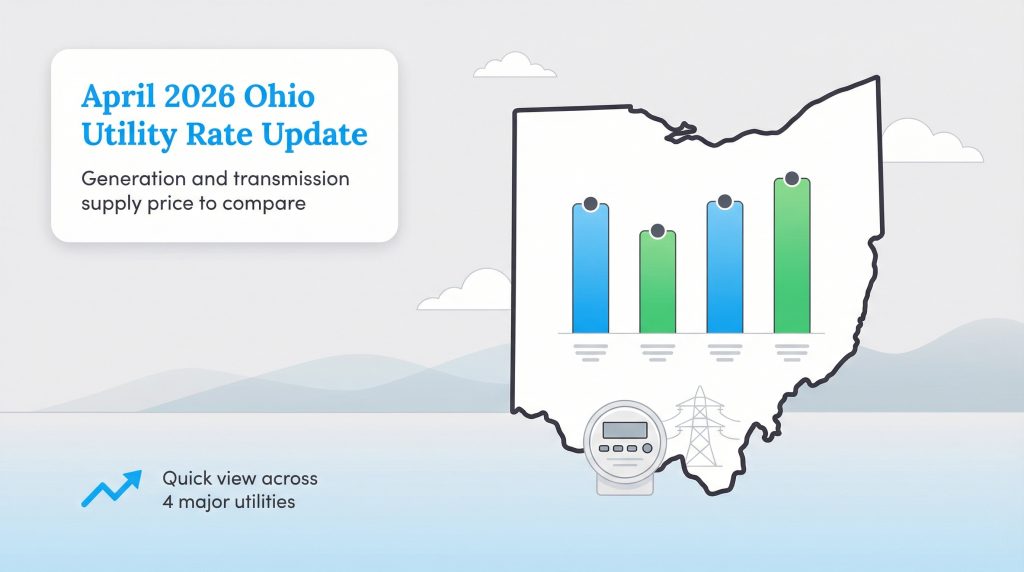
The following table summarizes the changes to the Price to Compare for Ohio’s four major investor-owned utilities. These rates represent the generation and transmission supply portion of your bill.
| Utility Provider | Previous Rate (per kWh) | New Rate (per kWh) | Change |
| FirstEnergy | $0.0969 | $0.0999 | +3.1% |
| AEP Ohio | $0.1065 | $0.0994 | -6.7% |
| Duke Energy Ohio | $0.1006 | $0.1008 | +0.2% |
| AES Ohio | $0.0945 | $0.0945 | No Change |
Why Are Rates Changing?
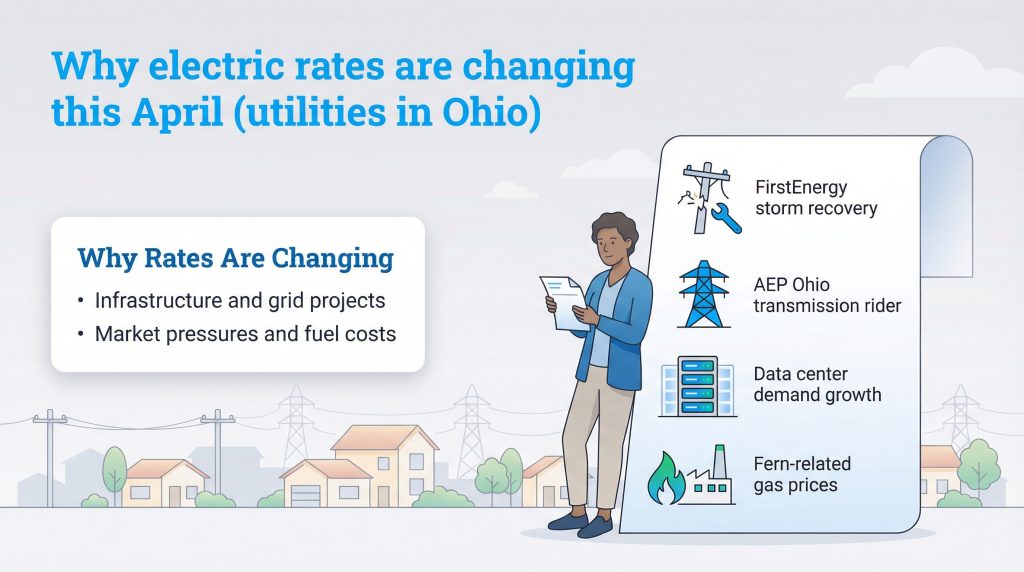
The shifts observed this April are driven by a combination of regulatory settlements and grid-wide economic pressures.
- Infrastructure Recovery (FirstEnergy): FirstEnergy (including Ohio Edison, Toledo Edison, and The Illuminating Company) is working through a recovery of $245 million in storm repair and grid modernization costs. A January 2026 settlement with the Public Utilities Commission of Ohio (PUCO) allows the utility to collect these funds over 25 years, significantly lowering the immediate monthly impact on households.
- Transmission Riders (AEP Ohio): While AEP Ohio lowered its generation supply charge to $0.0994$, regulators approved an update to the Basic Transmission Cost Rider (BTCR). This rider, which recovers the costs of high-voltage transmission projects, is increasing by approximately $0.79$ cents per kWh.
- Data Center Demand: The rapid expansion of data centers in Central Ohio is forcing utilities to invest heavily in new substations and power lines. AEP Ohio has faced scrutiny from the Ohio Manufacturers’ Association for its demand forecasts, which critics argue may lead to over-investment and higher rates for standard consumers.
- The “Fern” Echo: High natural gas prices caused by Winter Storm Fern earlier this year are finally filtering through to electricity rates. Because natural gas is a primary fuel for power generation in Ohio, spot price spikes in early 2026 are manifesting in April’s default utility rates.
Impact on Your Typical Bill
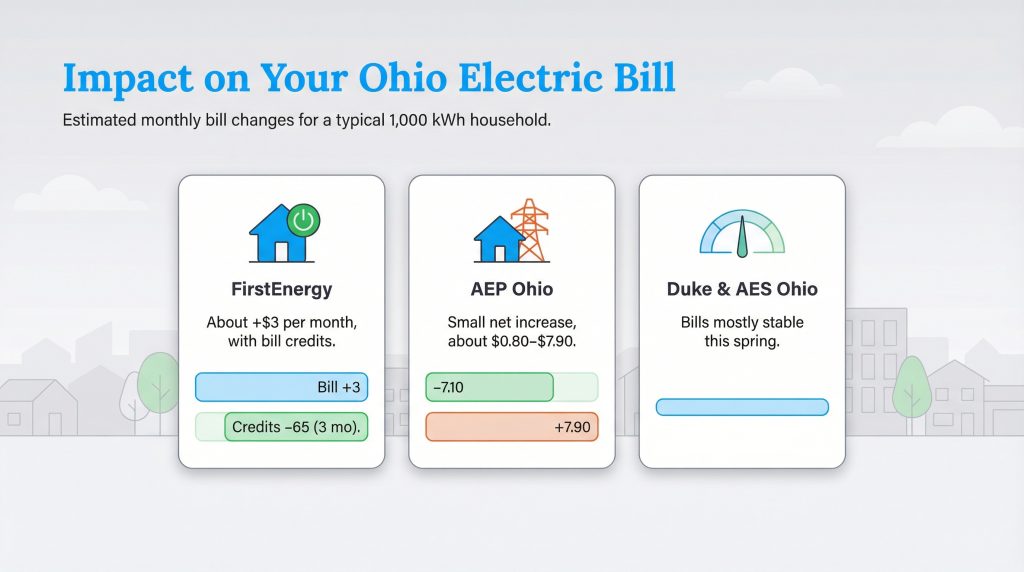
For a typical Ohio household using 1,000 kWh per month, here is how these changes translate to your pocketbook:
- FirstEnergy Customers: You will see about a $3.00 increase in your monthly supply charge. However, most residents will receive roughly $65.00 in bill credits over the next three months as part of the infrastructure settlement, temporarily lowering your total bill.
- AEP Ohio Customers: Despite the lower generation rate saving you about $7.10, the new transmission rider will add roughly $7.90 back to your bill. Most average users can expect a net increase of about $0.80 to $7.90 depending on their specific usage tier and local service zone.
- Duke and AES Ohio Customers: Bills will remain largely stable in April, though these regions are not immune to the broader regional price increases expected this summer.
Impacted Major Cities
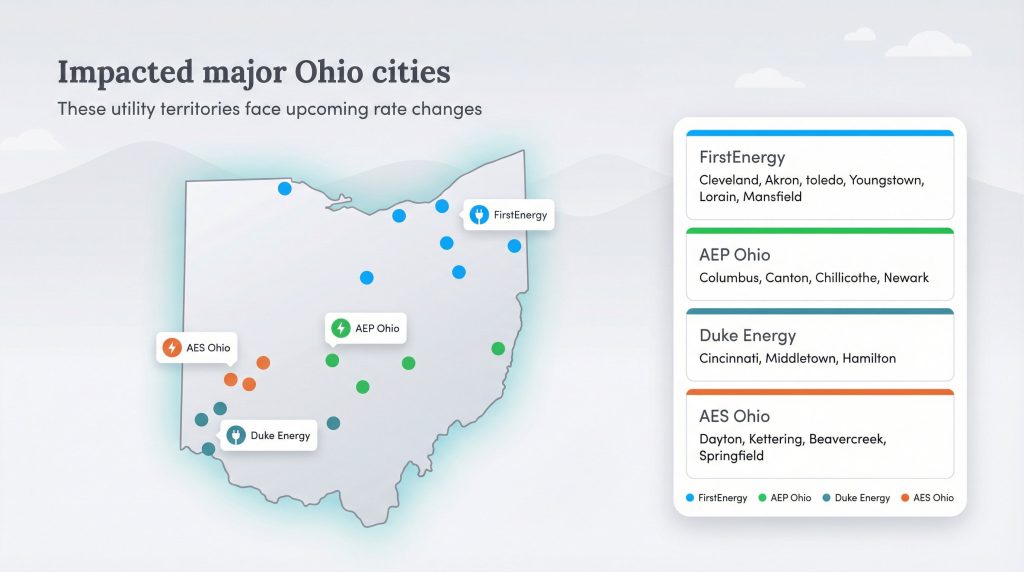
These rate changes are territory-specific. Here are the major metropolitan areas affected by each utility:
- FirstEnergy: Cleveland, Akron, Toledo, Youngstown, Lorain, and Mansfield.
- AEP Ohio: Columbus, Canton, Chillicothe, and Newark.
- Duke Energy: Cincinnati, Middletown, and Hamilton.
- AES Ohio: Dayton, Kettering, Beavercreek, and Springfield.
What You Can Do: Locking in Lower Rates
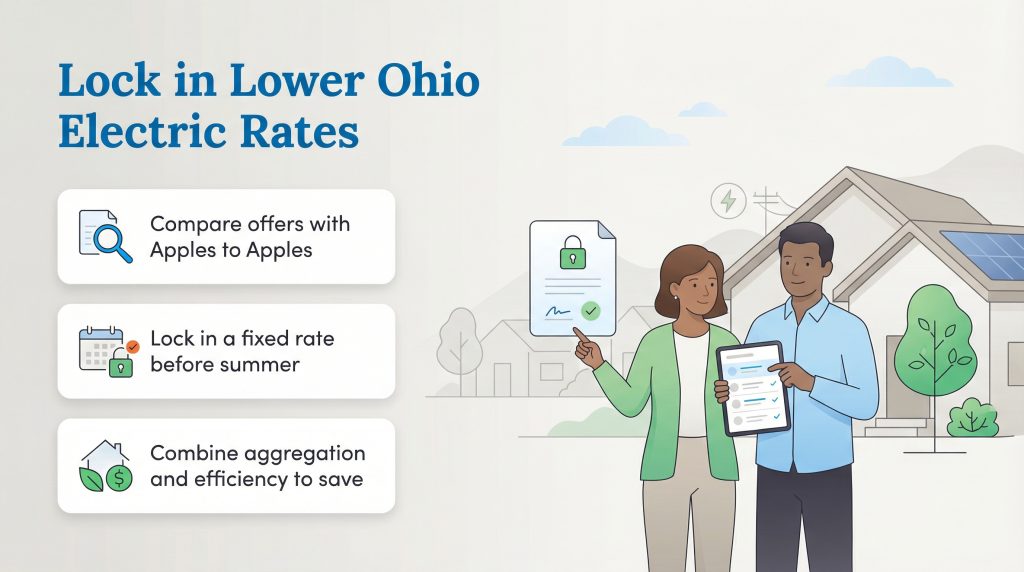
Ohio is a deregulated state, meaning you have the “Energy Choice” to shop for a supplier other than your utility.
- Compare Offers: Use the state-authorized Apples to Apples comparison tool to see fixed-rate offers from certified retail electric suppliers (CRES).
- Lock in Now: Market analysts warn of a “June Cliff.” Regional capacity costs, the fee paid to ensure generators are available during peak demand, surged by 833% in the last auction. Default utility rates are expected to jump significantly on June 1. Locking in a 12-month fixed rate in April can protect you from these summer spikes.
- Check Municipal Aggregation: Many Ohio cities and townships use bulk buying power to negotiate lower rates for their residents. Check with your local government to see if you are part of an opt-out aggregation program that might already have a lower rate secured.
- Energy Efficiency: Simple home upgrades, such as LED lighting and weather stripping, can reduce overall consumption by 5% to 15%, helping to offset the rising cost per kilowatt-hour.
About the Author

David has been an integral part of some of the biggest utility sites on the internet, including InMyArea.com, HighSpeedInternet.com, BroadbandNow.com, and U.S. News. He brings over 15 years of experience writing about, compiling and analyzing utility data.