
After a proposed multi-million dollar hike was rejected, Houston residents are seeing a modest monthly decrease in their electricity delivery charges.
Key Takeaways
- A $50 million annual rate reduction was approved for CenterPoint Energy, replacing a previously proposed $73 million hike.
- Residential customers can expect a modest monthly savings of $0.82, while small businesses will see a $1.28 reduction.
- The agreement impacts over 2.5 million customers across the Greater Houston area, including 37 cities in the Houston Coalition of Cities.
Setting up your utilities in a new Houston home just got a little bit cheaper, though you might not want to spend your savings all in one place just yet. After a roller-coaster year of regulatory battles and infrastructure debates following Hurricane Beryl, the Public Utility Commission of Texas (PUCT) recently finalized a deal that mandates a $50 million annual revenue reduction for CenterPoint Energy. This is a significant pivot from the company’s original request to hike rates by $73 million, providing some much-needed relief to a region that has faced both extreme weather and rising costs. While the direct savings on your monthly bill might seem small, the real victory for our community lies in the avoided costs and the push for a more reliable, resilient grid. We are here to help you understand what this means for your wallet, which cities are affected, and how you can take further action to keep your energy costs as low as possible.
Why Houston Electricity Rates Are Changing
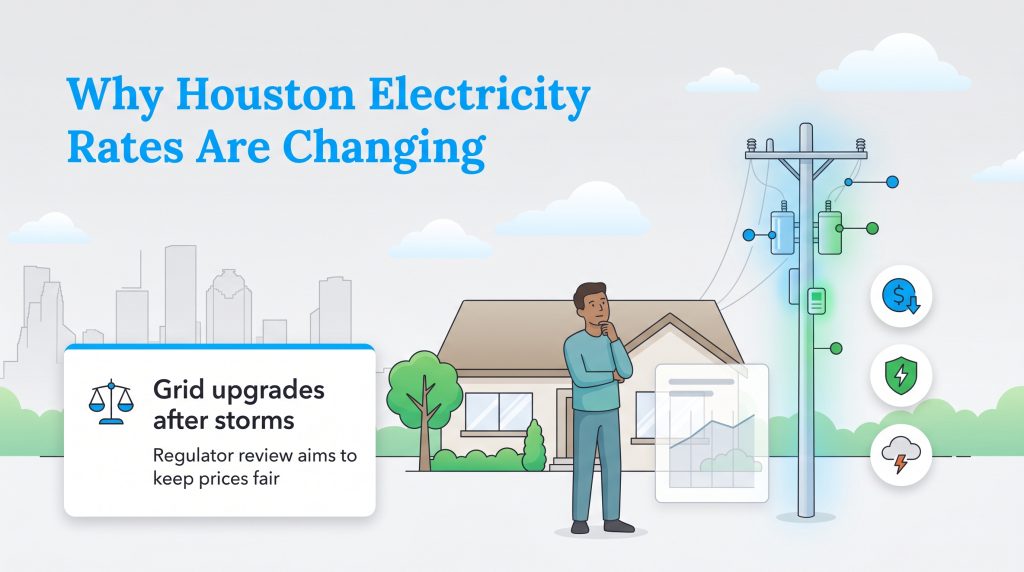
Every four years, Texas regulators take a close look at utility pricing to make sure things stay fair for consumers. CenterPoint originally asked for a big increase to help cover the $8 billion they’ve poured into the grid since 2019, but things changed after the 2024 hurricane season. Public frustration over power outages led to intense negotiations between the utility, the City of Houston, and a coalition of 37 local municipalities. The result was a settlement agreement that prioritizes customer affordability while still allowing for critical “self-healing” grid technology and storm-hardening projects.
How These Changes Impact Your Monthly Bill
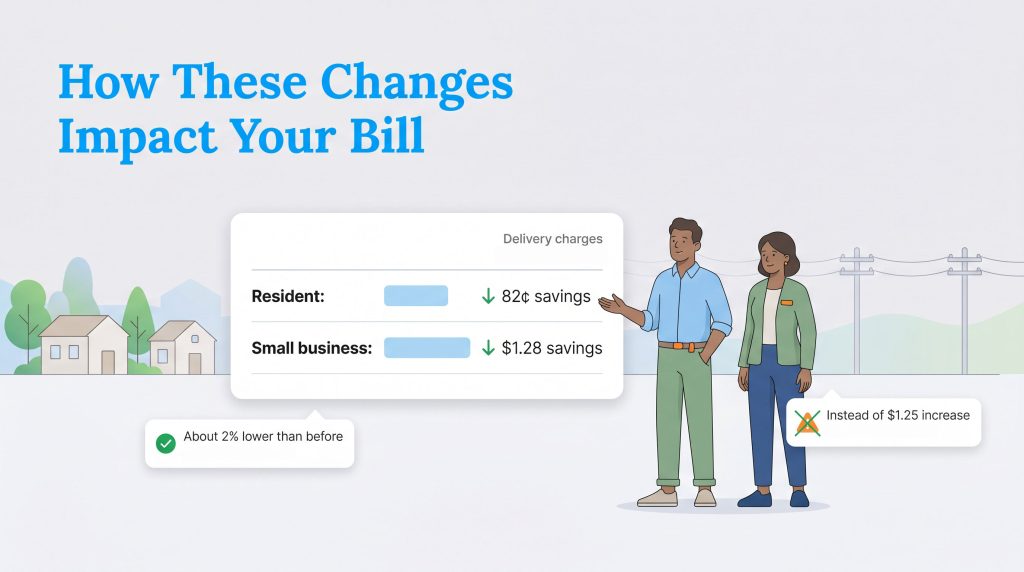
You will see a small drop in the “delivery” portion of your electricity bill, which is the part that pays for the poles and wires. For a typical home using 1,000 kWh of electricity, the savings come out to about $0.82 per month, or roughly $10 a year. Small businesses can expect to see a slightly larger reduction of about $1.28 per month. While this doesn’t sound like a fortune, it is a 2% reduction compared to what you were paying before — and a much better outcome than the $1.25 monthly increase that was initially proposed.
Major Cities and Areas Impacted by the Rate Cut
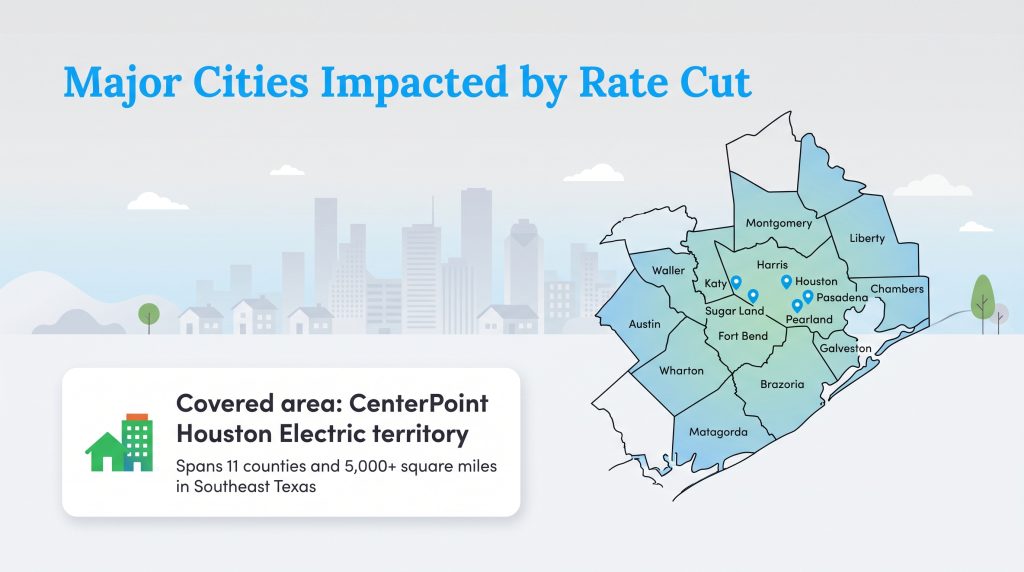
This rate reduction covers the entire CenterPoint Houston Electric service territory, which spans over 5,000 square miles and 11 counties in Southeast Texas. Whether you are moving into a high-rise in Harris County or a quiet suburban home in Fort Bend, you are likely within the footprint of this change. Major cities affected include Houston, Pasadena, Sugar Land, Pearland, and Katy, along with dozens of others represented by the Houston Coalition of Cities.
The counties impacted include:
- Harris and Fort Bend
- Galveston and Brazoria
- Wharton, Austin, and Waller
- Chambers, Liberty, Montgomery, and Matagorda
How to Lock in Even Lower Electricity Rates
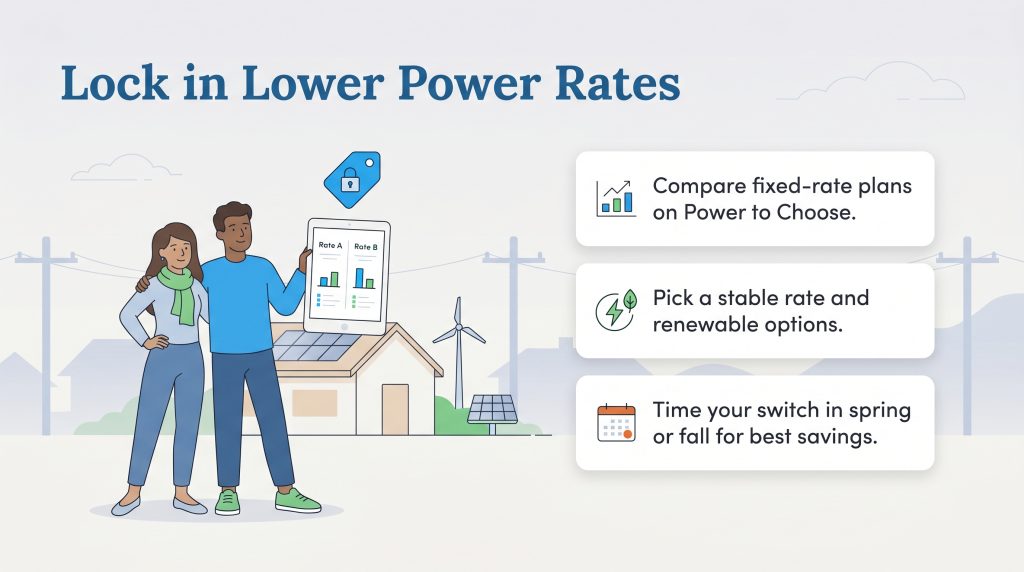
Since the CenterPoint reduction only affects the delivery side of your bill, the best way to save big is to shop for the competitive “supply” side of your bill. In Texas, you have the power to choose your retail electric provider (REP), and shopping around can save you way more than 82 cents. We recommend visiting the state’s official Power to Choose website to compare plans and find a fixed-rate option that fits your budget.
Look for Fixed-Rate and Eco-Conscious Plans
Fixed-rate plans are a great energy-saving option because they lock in your price per kWh for the length of your contract, protecting you from price spikes during the hot Texas summer. Many providers also offer renewable energy plans that use wind or solar power, which is an environmentally mindful choice that helps reduce your carbon footprint while keeping your lights on.
Timing Your Switch for Maximum Savings
The best time to switch providers is usually in the spring or fall — often called “shoulder months” — when the weather is mild and demand is low. If your contract is expiring soon, check your Electricity Facts Label (EFL) to see the true cost of your plan at your specific usage level. Most providers allow you to switch without a fee if you are within 14 days of your contract’s end date.
What the Future Holds for Houston Resiliency
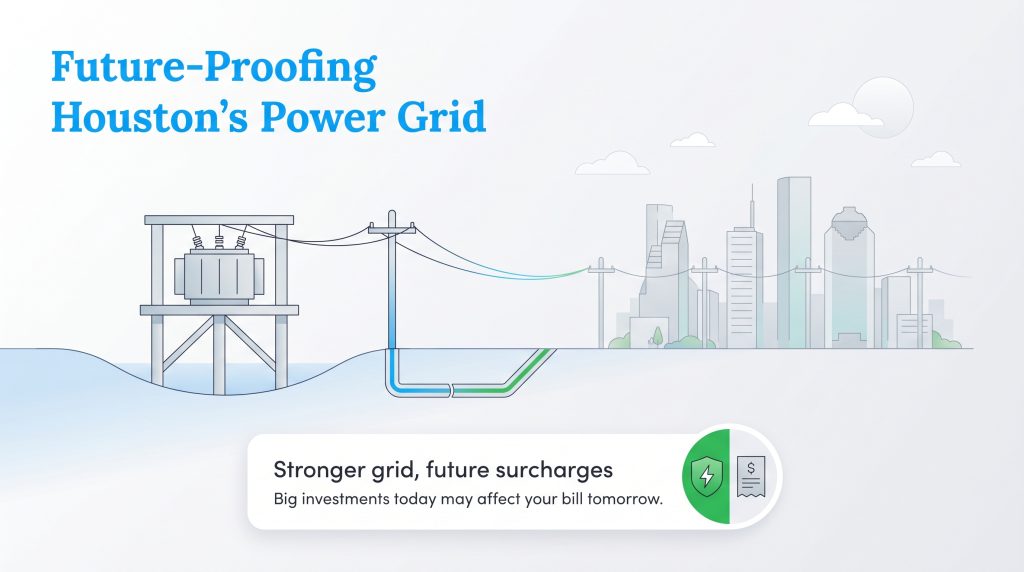
While we are enjoying these lower rates for now, the conversation about a stronger grid is just getting started. CenterPoint has recently filed a $5.75 billion Systemwide Resiliency Plan designed to underground more lines and raise substations above flood plains. These investments are vital for preventing future storm outages, but they may lead to new surcharges on your bill in the coming years. We will continue to monitor these filings to ensure you have the latest info on how to manage your home’s utility costs.
Navigating the Future of Your Houston Utilities

The CenterPoint rate reduction is a step in the right direction for Houstonians who want fair pricing and a more reliable power grid. By staying proactive — whether that means shopping for a competitive energy rate or investing in energy-efficient appliances — you can take control of your household expenses. We hope this guide helps you feel more confident as you set up or manage your services in the Bayou City.
Frequently Asked Questions About CenterPoint Rates
Do I need to do anything to receive the $0.82 savings?
Can I switch providers if I’m in the middle of a contract?
Are there eco-conscious alternatives to traditional power plans?
About the Author

Claudio is a sustainability-focused writer with a background in Anthropology and Psychology from NC State University. He has spent over 15 years working in writing, interpretation, and translation, driven by a deep interest in how human culture shapes the environment. Today, he shares his curiosity with readers by writing about sustainable living solutions and the connection between everyday choices and environmental impact.