
With Duke Energy raising rates and CenterPoint lowering them, now is the perfect time to review your energy plan and secure a better deal.
Key Takeaways
- Duke Energy Ohio is raising natural gas rates to $0.7586 per ccf, which may add nearly $100 to your yearly heating costs.
- CenterPoint Energy customers will see a rate decrease to $0.4388 per ccf, offering a rare break on monthly utility expenses.
- You can switch to a fixed-rate plan through Ohio’s Energy Choice program to protect your budget from future market spikes.
If you live in Southwest Ohio, your natural gas bill is about to look a lot different depending on which side of the street you’re on. While we usually expect prices to move in the same direction, Duke Energy and CenterPoint Energy are heading on opposite paths this May. Duke Energy is pushing rates up from $0.6504 to $0.7586 per ccf, but CenterPoint is dropping its price from $0.5377 to $0.4388 per ccf. We’re here to help you navigate these changes, understand why your neighbor might be paying less, and show you exactly how to take control of your energy costs so you can save time and money during your next move.
Why One Utility Is Up and the Other Is Down
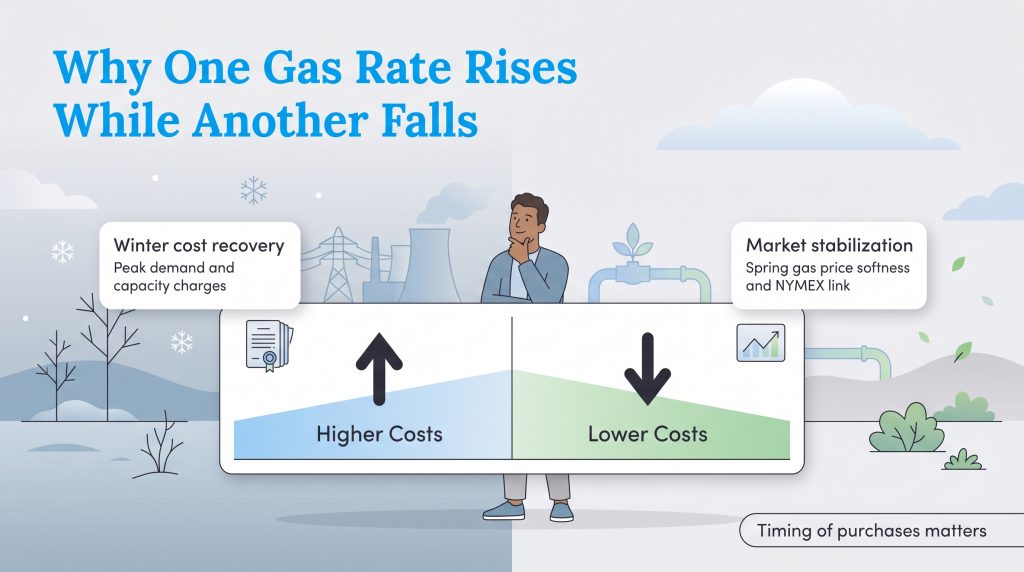
It might feel strange to see one company raise prices while another lowers them, but natural gas rates are influenced by a mix of market timing and regulatory filings. Duke Energy is currently recovering costs from a volatile winter — specifically from the impacts of Winter Storm Fern — and significant increases in regional capacity charges. These capacity charges ensure there is enough energy generation to meet peak demand, and a recent 833% surge in these costs has put upward pressure on Duke’s pricing.
The Role of Market Stabilization for CenterPoint
CenterPoint Energy, on the other hand, is benefiting from a stabilization in wholesale natural gas prices as the heavy heating season ends. Their rate is tied to a monthly variable formula linked to the New York Mercantile Exchange (NYMEX). As demand for natural gas softens in the spring, those savings are passed directly to you. This highlights how sensitive your bill can be to the exact timing of when a utility buys its supply.
How These Rate Changes Hit Your Household Budget
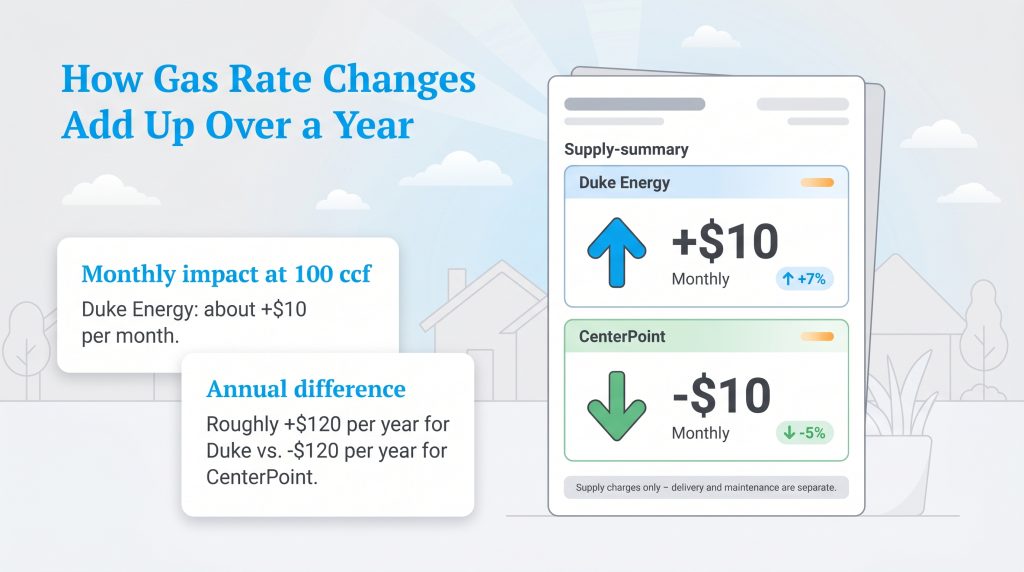
To understand the real-world impact, we look at the “supply” portion of your bill. The U.S. Energy Information Administration and state regulators estimate that a typical Ohio home uses about 100 ccf of gas per month. Even though you use less in the summer, these rate shifts change your baseline costs for cooking and heating water.
| Utility Company | Previous Rate (per ccf) | New Rate (per ccf) | Monthly Supply Cost (100 ccf) | Monthly Change |
| Duke Energy Ohio | $0.6504 | $0.7586 | $75.86 | +$10.82 |
| CenterPoint Energy | $0.5377 | $0.4388 | $43.88 | -$9.89 |
For Duke customers, this $10 monthly increase adds up to about $120 over a full year. If you are a CenterPoint customer, you are effectively getting a $10 monthly “discount” compared to last season. Keep in mind that these totals only cover the gas itself; you will still see separate charges for delivery and infrastructure maintenance on your statement.
Major Ohio Cities and Areas Feeling the Change
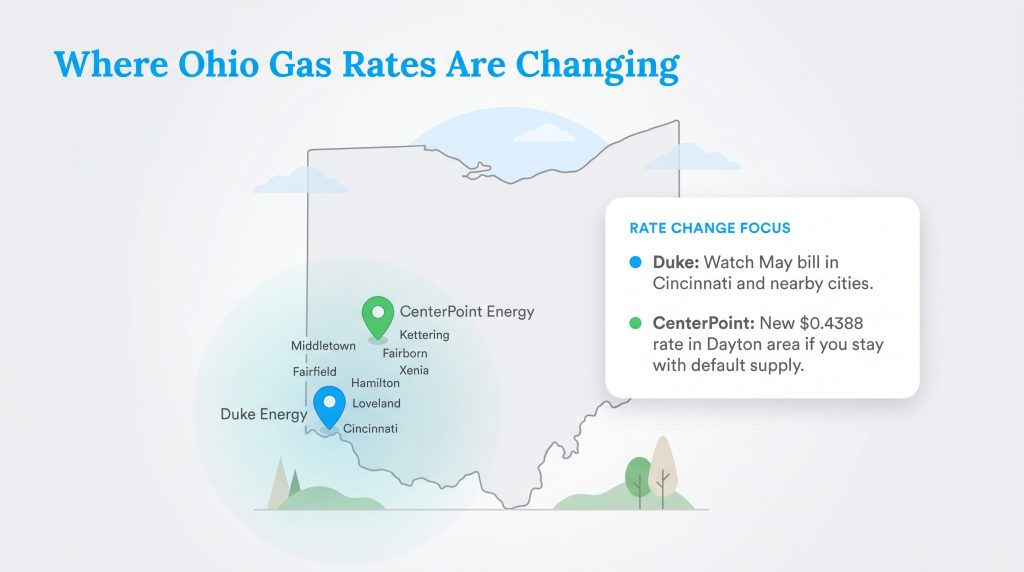
These rate adjustments are concentrated in the southwestern portion of the state. If you are moving to or currently living in the Cincinnati or Dayton areas, you are likely served by one of these two giants.
Duke Energy Service Territory
Duke Energy Ohio serves about 525,000 gas customers across a 3,000-square-mile area. Impacted cities include Cincinnati, Middletown, Fairfield, Hamilton, and Loveland. If you are in Hamilton or Butler County, you should keep a close eye on your upcoming May statement.
CenterPoint Energy Service Territory
CenterPoint Energy (formerly known as Vectren) serves a massive footprint that includes Dayton, Kettering, Fairborn, and Xenia. Residents in these areas will see the lower $0.4388 rate automatically applied if they haven’t already signed up with a private supplier. Smaller communities like Greenville, Piqua, and Sidney are also included in this service area.
Taking Action to Save on Your Gas Bill
Just because your utility changes its default rate doesn’t mean you are stuck paying it. Ohio is an “Energy Choice” state, which means you have the power to shop for a different natural gas supplier. We recommend using the Energy Choice Ohio Apples to Apples tool to compare offers.
Lock in a Fixed Rate
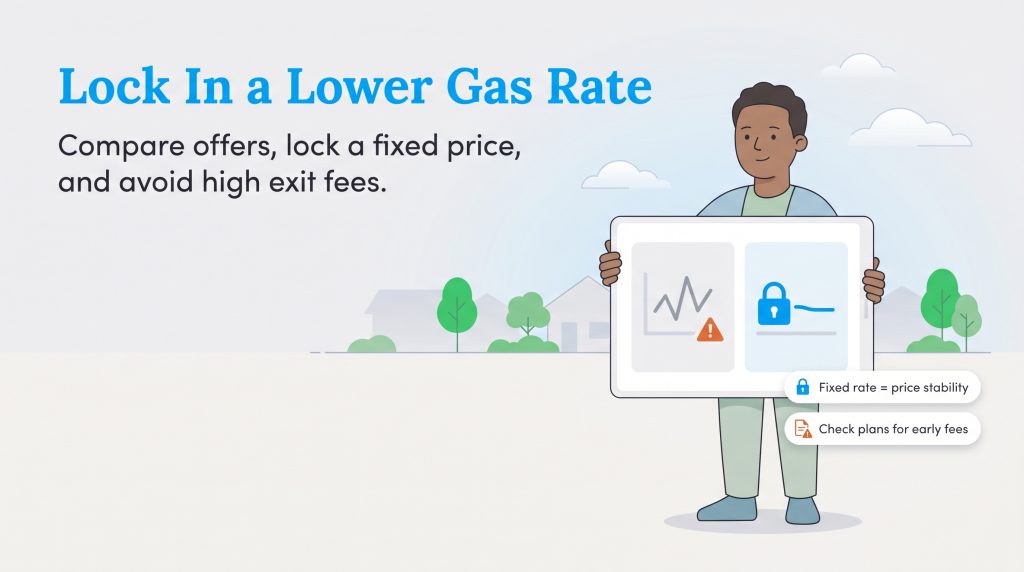
One of the smartest moves you can make is switching to a fixed-rate plan. This locks in your price per ccf for 12, 24, or even 36 months. This is an excellent energy-saving option for your budget — it protects you from the sudden price spikes that often happen during extreme winter weather. If you find a rate lower than Duke’s $0.7586, you could save hundreds of dollars over the next two years.
Watch for Early Termination Fees
As you shop, be a savvy neighbor and check the fine print. Some of the lowest rates come with high cancellation fees or monthly service charges. We always suggest looking for plans with no early termination fees so you have the flexibility to switch again if prices drop even further in the future.
Help for Households Facing Higher Costs
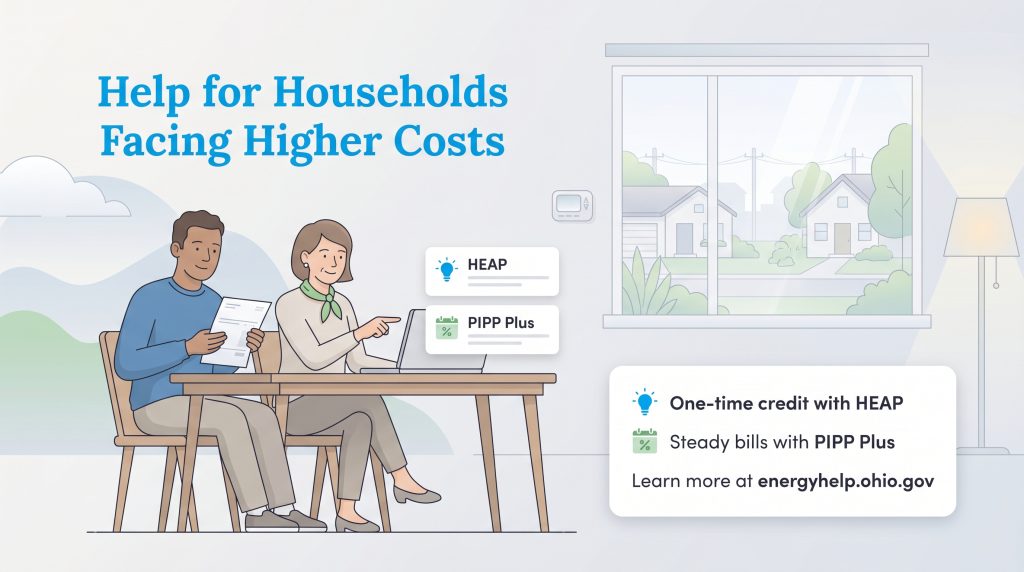
If the recent rate hike from Duke Energy makes it hard to keep the lights on and the house warm, there are state programs designed to help. The Home Energy Assistance Program (HEAP) provides a one-time credit to eligible low-income households. There is also the Percentage of Income Payment Plan (PIPP Plus), which allows you to pay a consistent monthly amount based on what you earn rather than what you use. Starting May 1, 2026, these programs are being transitioned to the Ohio Department of Job and Family Services, but you can still find all the details at energyhelp.ohio.gov.
Finding Stability in a Volatile Energy Market
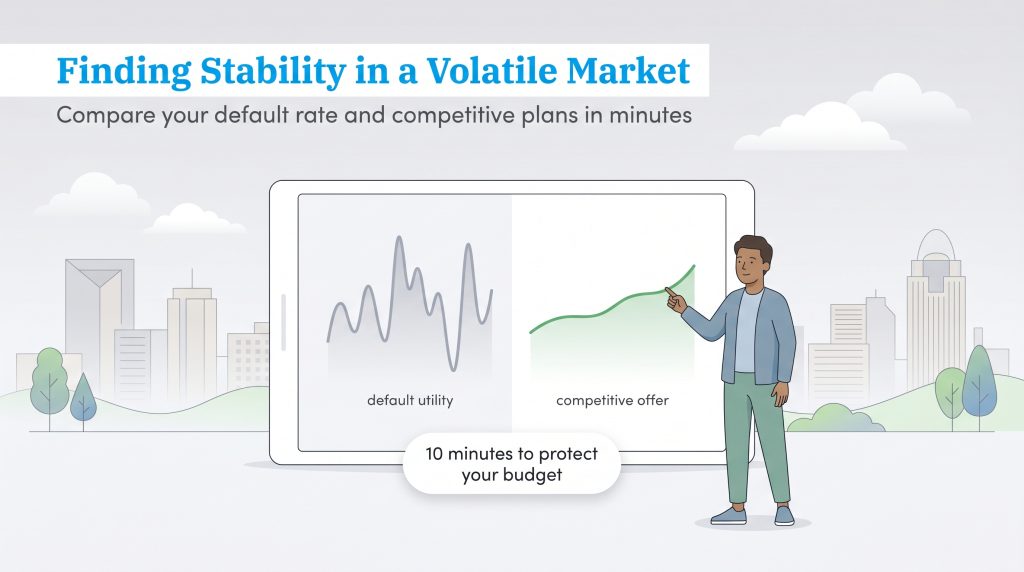
Energy prices will always go up and down, but you don’t have to be a victim of the market’s whims. By understanding the difference between your utility’s default rate and the competitive offers available, you can make an environmentally mindful choice that also protects your wallet. Whether you are moving into a new home in Dayton or settling into a condo in Cincinnati, taking 10 minutes to review your natural gas plan is one of the best investments you can make for your monthly budget. We are here to help you stay informed so you can spend less on utilities and more on enjoying your new home.
Frequently Asked Questions About Ohio Natural Gas Rates
What is a Standard Choice Offer (SCO)?
Is it better to have a fixed or variable natural gas rate?
How do I switch my natural gas supplier in Ohio?
About the Author

Claudio is a sustainability-focused writer with a background in Anthropology and Psychology from NC State University. He has spent over 15 years working in writing, interpretation, and translation, driven by a deep interest in how human culture shapes the environment. Today, he shares his curiosity with readers by writing about sustainable living solutions and the connection between everyday choices and environmental impact.