
Recent state approvals mean higher electric bills for thousands of Palmetto State households, but smart energy strategies can help you offset the cost.
Key Takeaways
- Residential bills are increasing by $10.20 to $11.23 per month on average for typical households using 1,000 kWh of electricity.
- Because South Carolina operates as a regulated monopoly, you cannot switch electric suppliers, but you can lower costs through billing choices and rebate programs.
- Duke Energy offers free home audits, time-of-use rate options, and up to $5,075 in energy efficiency rebates to help lower your monthly usage.
If you live in central or northeastern South Carolina, you may have noticed a higher total on your electric statement recently. State regulators approved a $36.6 million net residential rate increase for Duke Energy Progress, which translates to a roughly 6.25% to 8% jump on typical monthly utility bills. While rate hikes are never welcome news when you are trying to manage home expenses, understanding why these changes happen — and how our team at UtilitiesForMyHome can help you navigate them — makes it much easier to keep your budget under control.
Major Areas and Cities Impacted by the Rate Increase
This rate adjustment applies directly to approximately 177,000 residential and business accounts served by Duke Energy Progress across central and northeastern South Carolina, primarily in the Pee Dee region. If you live in or around these primary population centers, your household is affected by the new rate structure:
- Sumter (Sumter County)
- Florence (Florence County)
- Darlington and Hartsville (Darlington County)
- Cheraw (Chesterfield County)
- Marion (Marion County)
Suburban and rural residents across Lee, Marlboro, Dillon, Clarendon, and Horry counties who receive power from Duke Energy Progress will also see these adjusted charges on their billing statements.
Why Duke Energy Progress Rates Are Changing
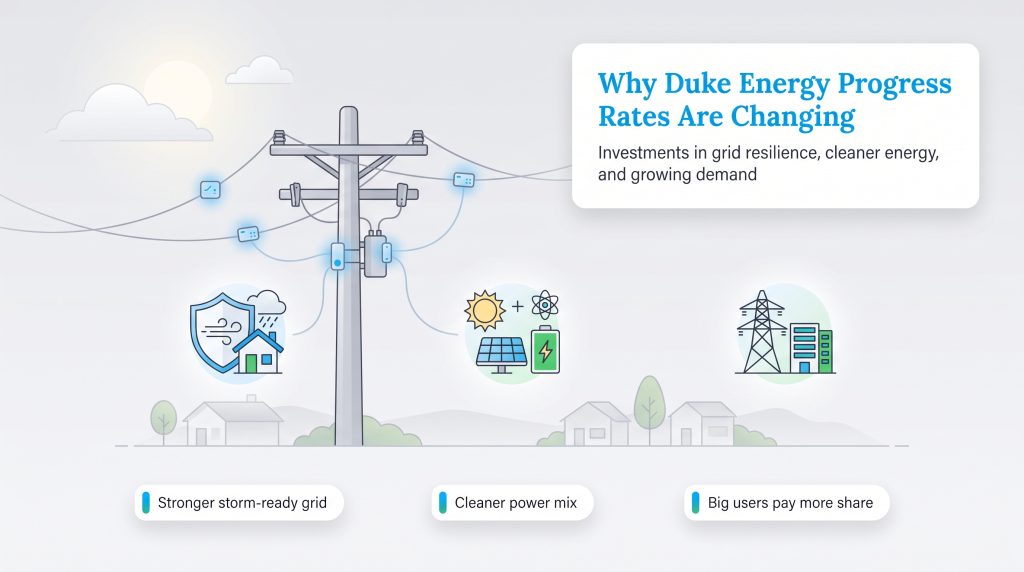
Power companies must periodically update their rate structures to reflect the changing costs of maintaining the electric grid and generating reliable power. According to official Duke Energy Progress filings, the utility originally asked the Public Service Commission of South Carolina for a $74.8 million annual revenue increase. However, consumer advocacy groups and state negotiators stepped in to lower that final figure to approximately $51.2 million across all customer classes.
Several major system drivers contributed to this approved rate adjustment:
- Grid Modernization and Storm Hardening: To protect local homes from severe weather events, the utility installed thousands of upgraded concrete or steel poles and deployed smart, “self-healing” grid technology. These digital switches isolate line faults and automatically restore power in seconds, which saved over 28,000 hours of cumulative outage time for local residents during Hurricane Helene.
- Cleaner Energy Upgrades: Capital investment went toward modernizing natural gas facilities, expanding solar and battery storage capabilities, and extending the operating license for the H.B. Robinson Nuclear Station in Darlington County.
- Managing Regional Energy Demand: South Carolina is growing quickly, and high-volume commercial developments — such as massive data centers — require major transmission upgrades. State regulators established a dedicated proceeding to ensure these large industrial users pay their fair share for infrastructure expansions rather than placing the burden on residential households.
How the Rate Increase Impacts Your Typical Household Bill
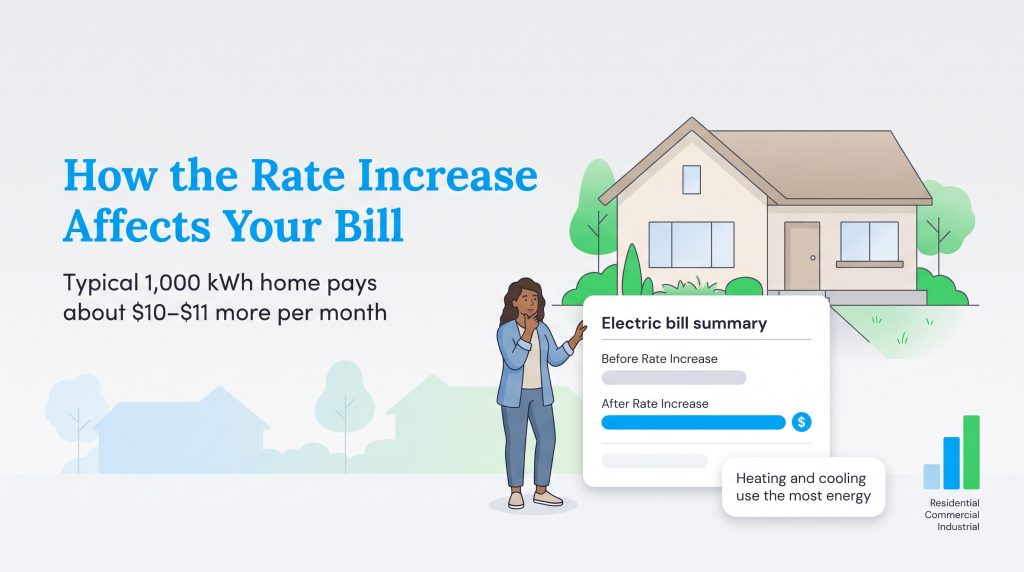
Understanding how a rate hike translates to your monthly household expenses helps you budget more effectively. For a standard single-family home consuming 1,000 kilowatt-hours (kWh) of power per month, the net residential base rate adjustment adds about $10.20 to $11.23 to your bill. Data from the U.S. Energy Information Administration shows that heating and cooling make up the largest portion of home energy use, meaning weather extremes can push those monthly totals even higher.
Here is how the final approved rate settlement compares across different customer categories:
| Customer Class | Original Proposed Impact | Final Approved Impact | Estimated Monthly Increase |
| Residential (1,000 kWh) | 15.1% increase | 6.25% – 8.0% increase | $10.20 – $11.23 per month |
| Commercial | 12.8% average increase | ~8.5% average increase | Varies by facility size |
| Industrial | 3.6% average increase | ~5.2% cost-aligned rate | Based on peak load demands |
While an extra $10 or $11 per month might sound manageable on paper, small price increases across multiple utility accounts add up quickly over the course of a year. That is why taking proactive steps to lower your home energy consumption is so beneficial.
Can You Switch Energy Providers or Lock in Lower Rates?
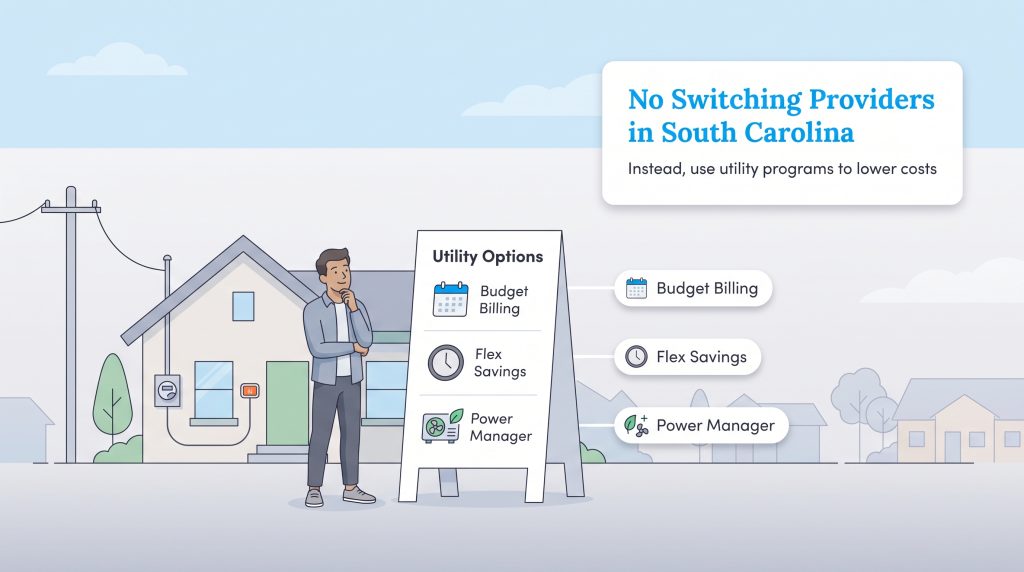
When utility prices rise, many homeowners immediately search for competitive energy suppliers to lock in a fixed rate or switch providers. However, South Carolina operates as a regulated, vertically integrated utility market. This means Duke Energy Progress holds an exclusive territory franchise to supply, transmit, and deliver your electricity.
Because retail energy choice is not available to residential customers in the state, you cannot switch to an independent third-party electricity provider. Fortunately, you still have several powerful, utility-sponsored strategies to lower your monthly electric bills without changing companies:
- Enroll in Budget Billing: If unpredictable summer or winter bills strain your finances, Duke Energy’s free Budget Billing program divides your estimated annual power costs into 12 equal monthly payments. This eliminates seasonal bill spikes and makes monthly planning much simpler.
- Switch to the Flex Savings Option: Under this time-of-use tariff, you pay lower rates when you run major appliances like clothes dryers, dishwashers, or EV chargers during off-peak hours when demand on the grid is low.
- Join the Power Manager Program: Enrolling your central air conditioner or heat pump in this program allows the utility to briefly cycle your compressor during peak grid strain. In return, you receive regular bill credits throughout the summer season.
Smart Energy Efficiency Options to Save Money at Home
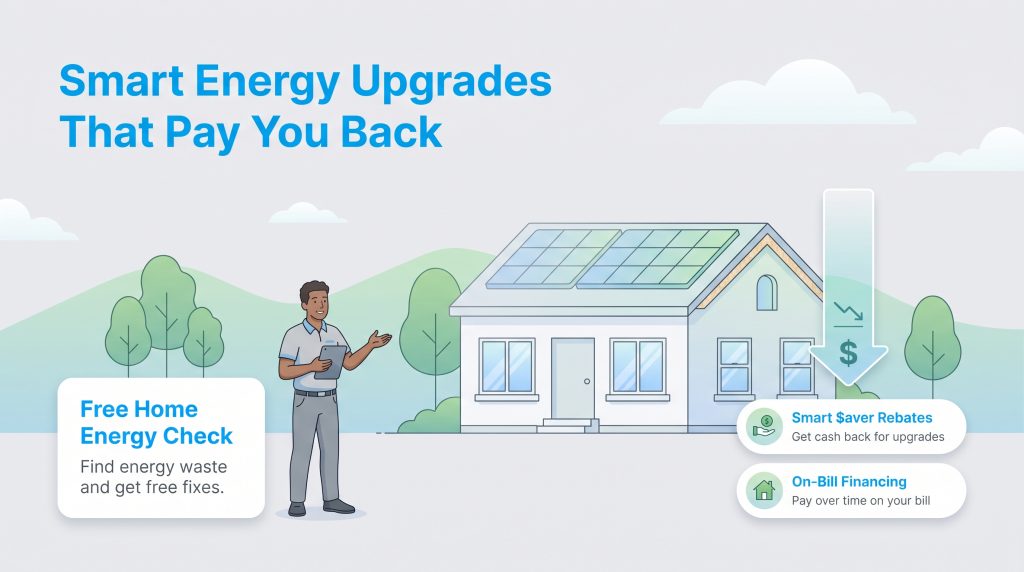
The most effective way to lower your monthly electricity bill is by reducing the overall amount of energy your home uses. Investing in energy efficiency upgrades serves as an environmentally mindful choice that trims your utility bill while reducing your household carbon footprint.
To help customers save, Duke Energy Progress offers several discount and incentive programs:
- Free Home Energy Check: You can schedule a complimentary home assessment (a $180 value) where an energy advisor evaluates your insulation, inspects ductwork, and gives you free energy-saving products.
- Smart $aver Home Improvement Rebates: Completing an assessment unlocks up to $5,075 in rebates for key home upgrades. You can claim rebates up to $1,000 for high-efficiency HVAC replacements, $800 for attic insulation and air sealing, and $800 for ENERGY STAR certified windows.
- Improve & Save On-Bill Financing: If you do not want to pay upfront for major energy-saving retrofits, this program covers installation costs for heat pumps and insulation with zero down payment and no credit check. The remaining balance is repaid directly on your monthly electric bill over 10 years at a fixed 7.33% rate.
For income-qualified households, local assistance programs — such as the Low Income Home Energy Assistance Program (LIHEAP) and the Share the Light Fund — provide direct crisis grants to assist families with utility costs.
Long-Term Outlook and System Savings for South Carolina
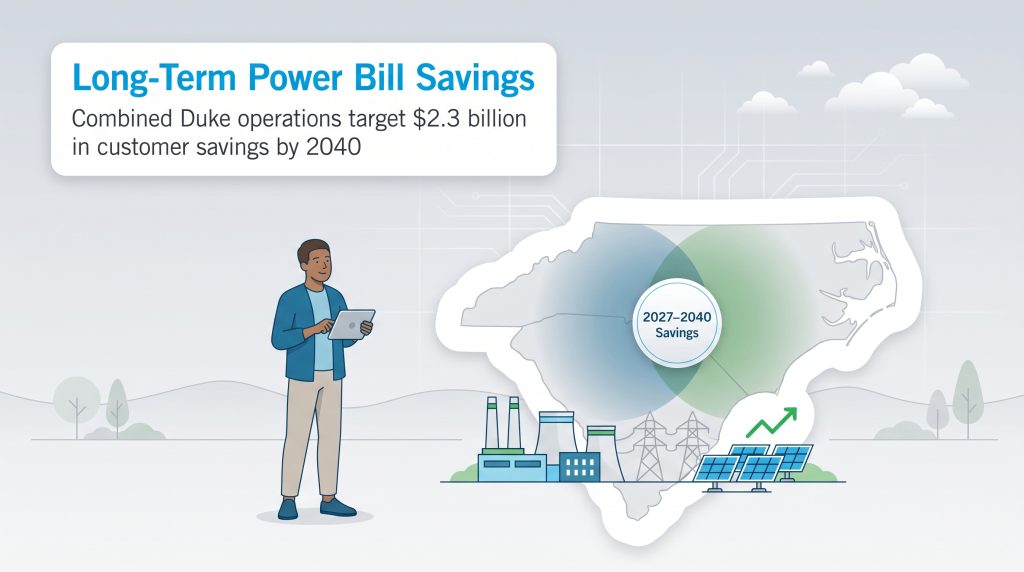
Looking ahead, South Carolina electricity customers may see broader system efficiencies as Duke Energy combines its regional operations. State regulators approved the operational merger of Duke Energy Progress and Duke Energy Carolinas, unifying 34,600 megawatts of generating capacity across both states.
This combined dispatch model is projected to generate roughly $2.3 billion in long-term customer savings between 2027 and 2040. By optimizing power plant operations, reducing out-of-state energy purchases, and streamlining long-range capital planning, the combined system aims to temper future rate spikes while expanding renewable generation.
Taking Control of Your Home Energy Costs
While rate adjustments are an inescapable part of living in a growing state, you do not have to let higher electric rates overwhelm your household budget. By taking advantage of free home energy checks, participating in time-of-use tariffs, and applying for utility rebates on modern appliances, you can trim unnecessary kilowatt-hours and keep your monthly utility costs manageable. Staying informed about your energy options empowers you to make smart, eco-conscious choices that protect both your home budget and the planet.
About the Author

Claudio is a sustainability-focused writer with a background in Anthropology and Psychology from NC State University. He has spent over 15 years working in writing, interpretation, and translation, driven by a deep interest in how human culture shapes the environment. Today, he shares his curiosity with readers by writing about sustainable living solutions and the connection between everyday choices and environmental impact.