
Understand the new $7.90 monthly increase, how data centers are paying their fair share, and how you can save on your next utility bill.
If you live in Central or Southern Ohio, you might have noticed some buzz lately about your electric bill. On Apr. 1, 2026, the Public Utilities Commission of Ohio (PUCO) approved a set of changes that will impact nearly 1.5 million customers. While a hike in your monthly costs is never fun news, we are here to help you navigate why these rates are shifting and what you can do to keep your home budget on track.
Key Takeaways
- Average bills are rising by $7.90 per month. Most residential customers using 1,000 kilowatt-hours (kWh) will see this increase primarily due to rising transmission costs rather than local distribution fees.
- Data centers now have a “take-or-pay” requirement. To protect you from shouldering the cost of new infrastructure, energy-intensive data centers must now pay for at least 85% of their intended energy capacity, even if they use less.
- You have options to lower your costs. From switching to a competitive energy provider via the “Apples to Apples” tool to applying for smart thermostat rebates, there are several ways to offset these new charges.
- Assistance is available for those who need it. Programs like the Neighbor to Neighbor grant offer up to $350 for eligible families who have fallen behind on their payments.
Why are AEP Ohio rates changing?
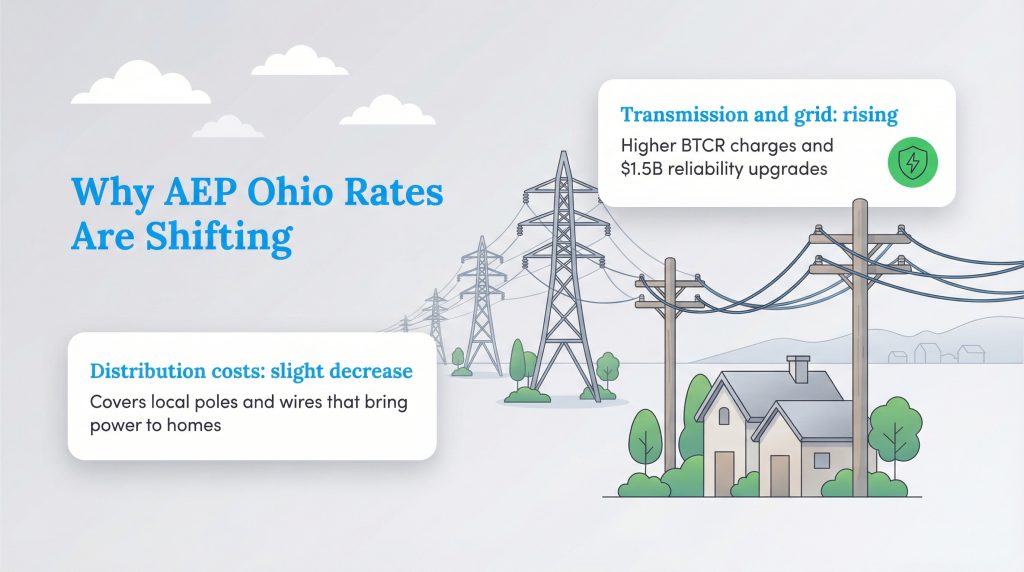
It is a bit of a mixed bag. While AEP Ohio actually settled a case to slightly decrease the “distribution” part of your bill, the part that covers local poles and wires, other costs are going up. The biggest driver is the Basic Transmission Cost Rider (BTCR), which covers the high-voltage lines that move power across the state.
AEP is also investing more than $1.5 billion into grid reliability, which includes updated equipment and an aggressive tree-trimming cycle to prevent outages during those wild Ohio storms.
Breaking down your bill: Where is the money going?
When you open your electric bill, the total amount is actually made of three separate parts: distribution, transmission, and generation. The current rate adjustment shifts these pieces around, which can make the “final” impact feel a bit confusing.
For a household using a typical 1,000 kWh per month, here is how the math works out as of April 2026:
- Transmission Charges (Up $7.90): This is the main reason for the hike. These fees cover the massive, high-voltage lines that move bulk power across the state. The rate for this component rose from 3.6 cents to 4.3 cents per kWh.
- Distribution Charges (Down $1.22): This part covers the local poles and wires in your neighborhood. Thanks to a recent settlement, this portion of your bill actually dropped slightly to help offset other costs.
- Generation Charges (Changing): This is the actual cost of the electricity you use. While AEP reported that generation costs for standard customers might drop by roughly $7 per month this spring, these rates fluctuate based on the market and the provider you choose.
The Bottom Line: While the specific transmission hike is $7.90, your actual bill might only rise by a smaller “net” amount if other costs drop at the same time. However, consumer advocates warn that as temporary tax credits expire over the next two years, the average household could see their total costs rise by more than $10 per month by 2028.
The data center factor: Protecting your pocketbook
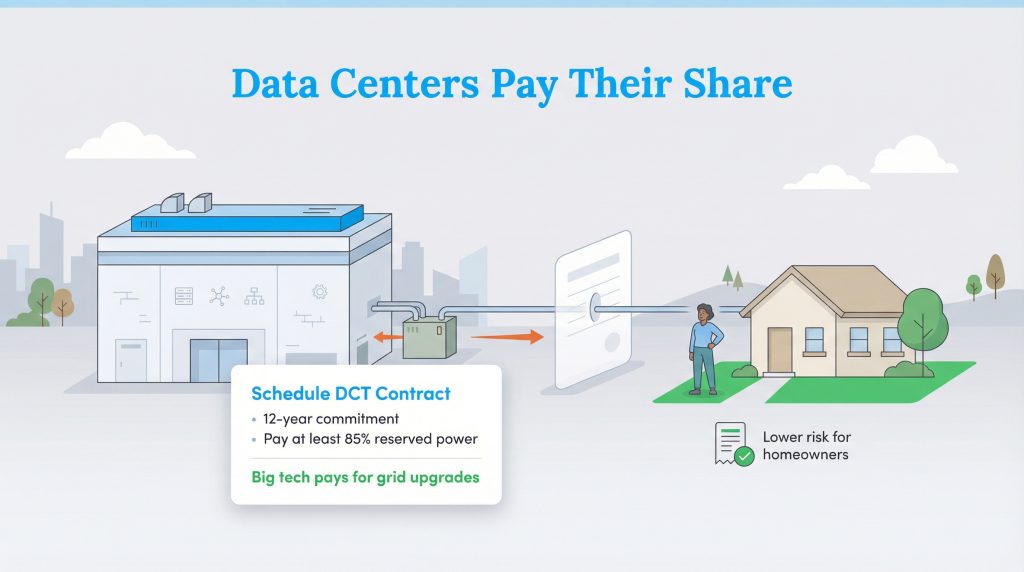
You have probably seen the massive data centers popping up around Columbus and New Albany. These facilities use an incredible amount of electricity. To ensure you aren’t stuck paying for the grid upgrades these “big tech” neighbors require, PUCO approved a new Data Center Tariff (Schedule DCT).
Under these new rules, large data centers must sign 12-year contracts and pay a minimum monthly charge based on 85% of the power they reserve. This “take-or-pay” model is a win for residential customers because it keeps those industrial-sized costs where they belong, with the companies generating the demand.
Is your city impacted?
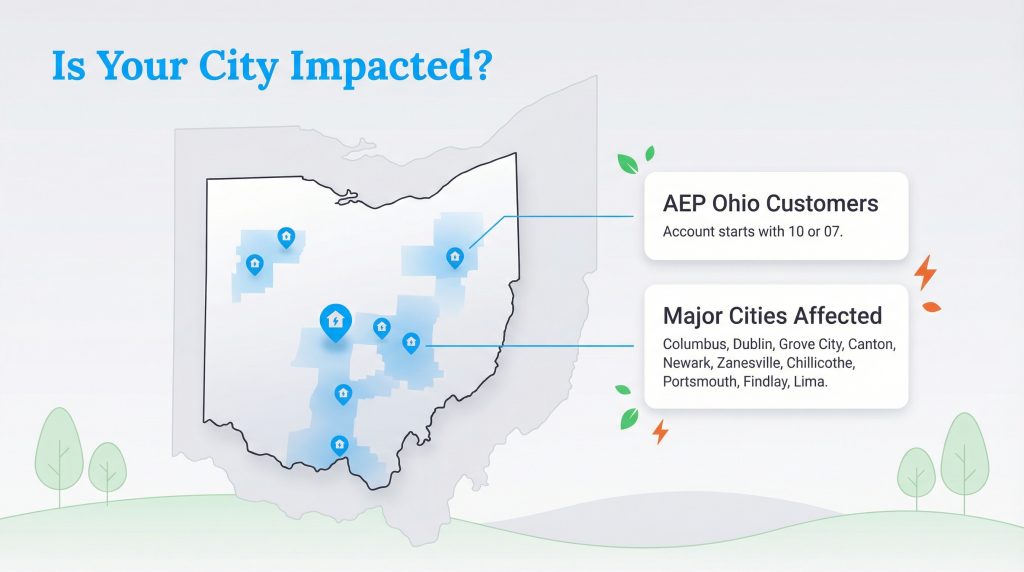
AEP Ohio serves 61 counties across the state. If your account number starts with 10 (Columbus Southern zone) or 07 (Ohio Power zone), these changes apply to you. Major cities impacted include:
- Columbus and surrounding areas like Dublin and Grove City.
- Canton and Newark.
- Zanesville, Chillicothe, and Portsmouth.
- Findlay and Lima.
Smart steps you can take today
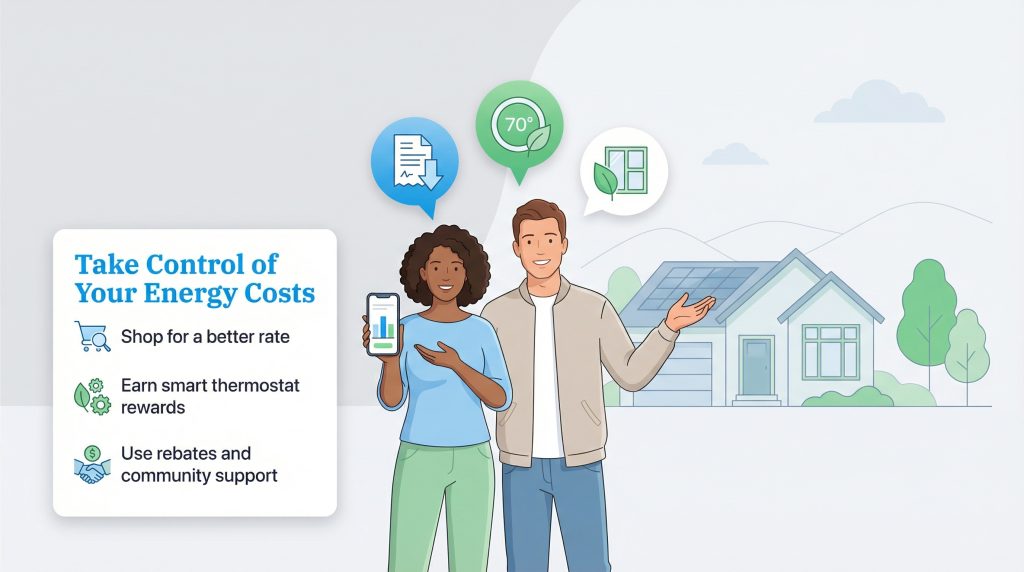
We know that an extra $7.90 a month can add up. Here is how you can take control:
1. Shop for a better rate
Ohio is a “choice” state, meaning you can pick who supplies your electricity. Use the Energy Choice Ohio “Apples to Apples” tool to compare offers. As of April 2026, some providers are offering fixed rates as low as 6.49 cents per kWh, which could significantly undercut the standard AEP offer.
2. Grab a smart thermostat rebate
AEP Ohio offers a $75 rebate if you buy a qualifying smart thermostat and enroll in their Demand Response program. This program helps the grid stay stable during peak summer heat, and you get an extra $25 every year just for participating.
3. Check for federal tax credits
If you are thinking about bigger upgrades like a heat pump or new windows, 2026 is a great year to act. Under the Inflation Reduction Act, you can claim up to 30% of the cost (up to $3,200) for energy-efficient home improvements.
4. Lean on community support
If you are struggling to keep up with rising costs, please do not wait to ask for help.
- Neighbor to Neighbor Program: Offers grants up to $350 for those at or below 200% of the federal poverty level.
- HEAP and PIPP Plus: These state programs help low-income households manage their monthly payments based on their actual income.
- HELP Program: Offers free or low-cost home energy assessments and upgrades like insulation or high-efficiency lighting for those who qualify.
You can find a full list of assistance options and take a two-minute eligibility survey at the AEP Ohio Assistance Portal.
Moving into a new home or managing a household is a lot of work. While these rate changes are a hurdle, staying informed and using the tools available to you can help keep your home energy-efficient and your bills manageable. If you have more questions about setting up your utilities, check out our other sustainable home guides.
About the Author

Claudio is a sustainability-focused writer with a background in Anthropology and Psychology from NC State University. He has spent over 15 years working in writing, interpretation, and translation, driven by a deep interest in how human culture shapes the environment. Today, he shares his curiosity with readers by writing about sustainable living solutions and the connection between everyday choices and environmental impact.