

Compare electricity rates, plan features, and customer reviews to make the smartest energy choice for your household
Key Takeaways
- Reliant Energy offers robust app features and plan varieties, while APG&E focuses on straightforward, no-frills electricity pricing.
- Checking for early termination and usage fees is the most critical step to avoid billing surprises with either energy provider.
- Both providers offer environmentally mindful choices, but comparing the exact percentage of renewable energy helps lower your carbon footprint.

- 13.9¢ /kWh
- 24%
- 90 days
- 0-36 Months
- Best for Smart Home Tools & App

- 6.9¢ /kWh
- 6-100%
- None
- 1-36 Months
- Best for Low Rates
*rates may vary by location and household usage
Moving into a deregulated market in Texas often feels overwhelming when you are suddenly faced with the “Power to Choose” your own electricity company. Navigating dozens of companies all vying for your attention makes it hard to distinguish between a genuinely great deal and a plan that looks cheap upfront but costs more once fees, usage tiers, and renewal terms kick in. We are looking closely at APG&E vs. Reliant Energy to help you compare rates, avoid surprise fees, and pick the most reliable, sustainable option for your new space. You deserve to settle into your new home with total confidence that your utility bills will stay predictable month after month.
Understanding Your Texas Electricity Options
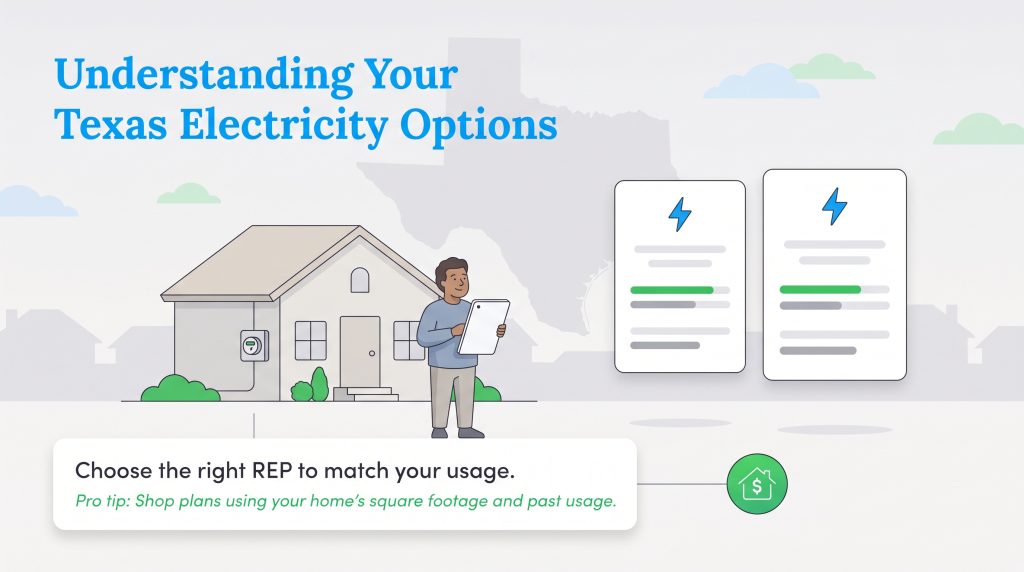
When you buy or rent a home in a deregulated area of the Lone Star State, the process of turning on the lights looks a bit different than in traditionally regulated markets. Your local utility company still maintains the physical power lines, repairs grid outages, and reads your meter. However, you actually hold the power to choose your retail electricity provider (REP), which is the company that buys power on the wholesale market and sells it to you. This structure forces companies to compete for your business, creating an excellent Texas electricity providers comparison opportunity. Whether you are setting up utilities in Houston, Dallas, or anywhere else with energy choice, selecting the right REP means keeping more money in your pocket.
💡 Pro Tip: Shopping based on your home’s exact square footage and historical usage is the secret to unlocking the cheapest electricity rates in Texas, as it prevents you from falling into mismatched usage tiers.
APG&E vs. Reliant Energy: At a Glance
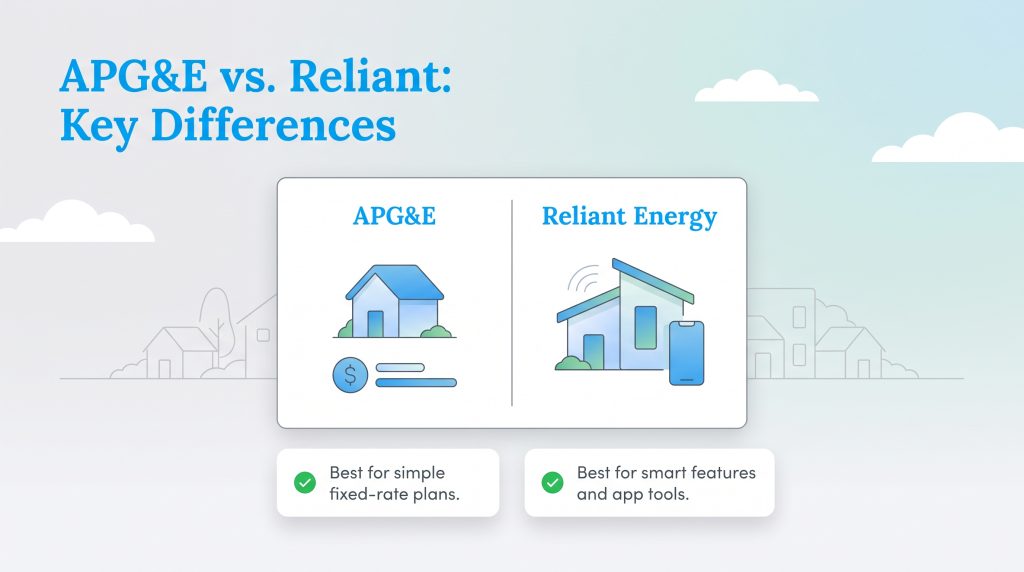
Putting Reliant vs APG&E side by side reveals two very distinct business models. APG&E operates as a smaller, streamlined provider that appeals to users seeking a no-nonsense approach to their utility bills. On the flip side, Reliant Energy sits under the massive NRG Energy corporate umbrella. This legacy brand leverages its immense size to deliver a highly feature-rich experience, complete with comprehensive smart home integrations and specialized plans. We broke down the essential differences so you can easily scan what each company brings to the table.
| Category | APG&E | Reliant Energy |
|---|---|---|
| Plan Variety | Primarily straightforward fixed-rate options | Extensive (Time-of-Use, Free Nights, Tiered) |
| Renewable Energy Options | Available as green add-ons or specific plans | Some 100% renewable plans may be available, depending on ZIP code and current offers |
| Smart App Availability | Basic online portal functionality | Mobile app with usage tracking and account tools |
| Typical Contract Lengths | 12 to 36 months | Varies by current offers |
Plan availability changes by service area, usage level, and enrollment date. Always review the current Electricity Facts Label before signing up for any utility service.
| Quick Comparison: Which Provider Is Right for You? | ||
|---|---|---|
| Category | Better Fit | Why |
| Simple fixed-rate plans | APG&E | Better for households that want predictable pricing without tracking free-use windows. |
| App tools and usage tracking | Reliant | Better for tech-forward users who want detailed usage insights on their phones. |
| Free nights or weekends | Reliant | Better if your household can reliably shift major usage to off-peak hours. |
| Low-effort bill planning | APG&E | Better if you do not want to manage strict usage tiers closely. |
| Green plan shopping | Depends | Compare the renewable percentage and REC details on each current EFL. |
Deep Dive Into Reliant Energy Plans and Rates
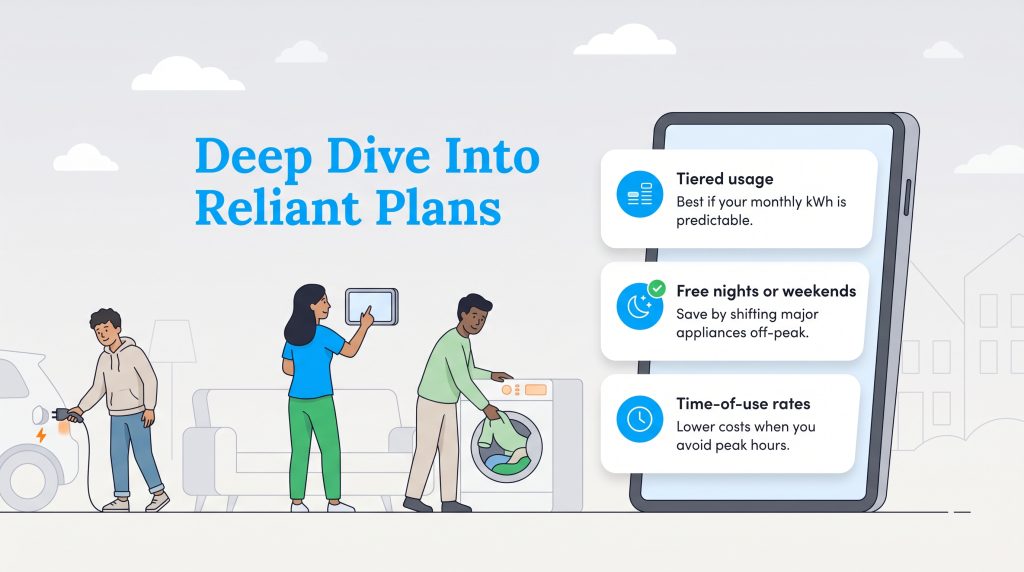
As one of the largest providers in the state, Reliant Energy relies heavily on offering something for many household needs. They build complex, highly customized energy packages that cater to specific lifestyles. While this can seem intimidating at first glance, digging into Reliant Energy plans and rates proves beneficial if your household operates on a strict, non-traditional schedule. Large families who run heavy-duty appliances like dishwashers and dryers late at night often thrive under these tailored plans, provided they strictly monitor their usage timing. If you can shift your energy habits, Reliant gives you the tools to maximize your savings.
Here are the primary types of plans you will typically see from them:
- Tiered Usage Plans: Rates fluctuate depending on hitting exact billing cycle thresholds, such as strictly using between 1,000 and 2,000 kWh a month.
- Free Nights or Weekends: You pay a slightly higher premium during standard daytime hours, but your electricity usage becomes completely free during designated off-peak periods.
- Time-of-Use Rates: The cost per kilowatt-hour changes based on grid demand, rewarding users who avoid running their air conditioning units during peak summer afternoons.
Free-use plans can be incredibly helpful if you reliably shift laundry, electric vehicle charging, pool pumps, or dishwasher cycles into the free window. However, if most of your usage happens during paid daytime hours, a simple fixed-rate plan will often cost less overall.
| Plan Name | Rate /kWH | Plan Term | Cancellation Fee | |
|---|---|---|---|---|
| Reliant Power on 9 Plan | 13.2¢ | 9 Months | $95.00 | Check Availability |
| Reliant Power On 8 Plan | 13.9¢ | 8 Months | $75.00 | Check Availability |
| Reliant Power On 12 Plan | 14¢ | 12 Months | $150.00 | Check Availability |
| Reliant Power on 6 | 14.3¢ | 6 Months | $75.00 | Check Availability |
| Reliant Power On 18 | 14.7¢ | 18 Months | $180.00 | Check Availability |
| Reliant Power On 13 | 14.7¢ | 13 Months | $150.00 | Check Availability |
| Reliant Power On 24 Plan | 15.2¢ | 24 Months | $295.00 | Check Availability |
| Reliant Basic Power 12 plan | 15.7¢ | Month to Month | N/A | Check Availability |
| Reliant Basic Power 24 plan | 16.1¢ | Month to Month | N/A | Check Availability |
| Reliant Power Savings 2,000 kWh 24 plan | 18.6¢ | Month to Month | N/A | Check Availability |
| Reliant Power Savings 2,000 kWh 12 plan | 20.3¢ | Month to Month | N/A | Check Availability |
Exploring APG&E Electricity Rates and Options
If the idea of tracking the clock before throwing a load of towels into the dryer sounds exhausting, APG&E may be a better fit. Unlike the heavily customized portfolios offered by larger competitors, APG&E focuses its business entirely on simplicity. They emphasize fixed-rate plans designed specifically to provide more predictable bill planning. When you sign a contract, your rate per kilowatt-hour remains exactly the same for the entire duration of your term, regardless of how the weather behaves or wholesale market prices fluctuate.
This straightforward model is often the much better fit for busy homeowners who just want a predictable monthly bill. When researching your electric options, securing APG&E electricity rates means you never have to guess what your next invoice will look like. It helps reduce the anxiety of accidentally missing a designated free period or falling just short of a strict usage tier.
Keep in mind that a fixed-rate plan only keeps your energy supply rate stable during the contract term. Your total bill will still change every month based on how much actual electricity you use and any fluctuating delivery charges passed down from your local utility.
| Plan Name | Rate /kWH | Plan Term | Cancellation Fee | |
|---|---|---|---|---|
| Simple Saver Smart Credit 9 | 6.9¢ | Month to Month | N/A | Check Availability |
| Simple Saver Smart Credit 12 | 6.9¢ | Month to Month | N/A | Check Availability |
| SimpleSaver 9 | 7.1¢ | 9 Months | $150.00 | Check Availability |
| Simple Saver Smart Credit 24 | 7.3¢ | Month to Month | N/A | Check Availability |
| SimpleSaver 12 | 7.3¢ | 12 Months | $150.00 | Check Availability |
| SimpleSaver 24 | 7.3¢ | 24 Months | $250.00 | Check Availability |
| Simple Saver Smart Credit 36 | 9.9¢ | Month to Month | N/A | Check Availability |
| SimpleSaver 36 | 10.8¢ | 36 Months | $350.00 | Check Availability |
| True Classic 24 | 13.5¢ | Month to Month | N/A | Check Availability |
| True Classic 11 | 14¢ | Month to Month | N/A | Check Availability |
| True Classic 12 | 14.1¢ | Month to Month | N/A | Check Availability |
| True Classic 13 | 14.1¢ | Month to Month | N/A | Check Availability |
| Simple Choice 10 | 14.2¢ | 10 Months | $150.00 | Check Availability |
| Simple Choice 11 | 15.2¢ | 11 Months | $150.00 | Check Availability |
| True Classic 36 | 15.3¢ | Month to Month | N/A | Check Availability |
| Simple Choice 12 | 15.9¢ | 12 Months | $150.00 | Check Availability |
| Simple Choice 24 | 16.2¢ | 24 Months | $250.00 | Check Availability |
| Simple Choice 36 | 16.3¢ | 36 Months | $350.00 | Check Availability |
| Simple Choice 13 | 16.4¢ | 13 Months | $150.00 | Check Availability |
| Simple Choice Green 12 | 16.6¢ | 12 Months | $150.00 | Check Availability |
| Simple Choice Green 24 | 16.7¢ | 24 Months | $250.00 | Check Availability |
| Simple Choice Green 36 | 16.8¢ | 36 Months | $350.00 | Check Availability |
| Simple Choice Green 14 | 17.4¢ | 14 Months | $150.00 | Check Availability |
💸 Money-Saver: Make sure to lock in your fixed APG&E electricity rates during the shoulder months of spring or fall, which is when Texas energy rates may be more favorable during lower-demand months.
Uncovering the Fine Print on Less Obvious Costs
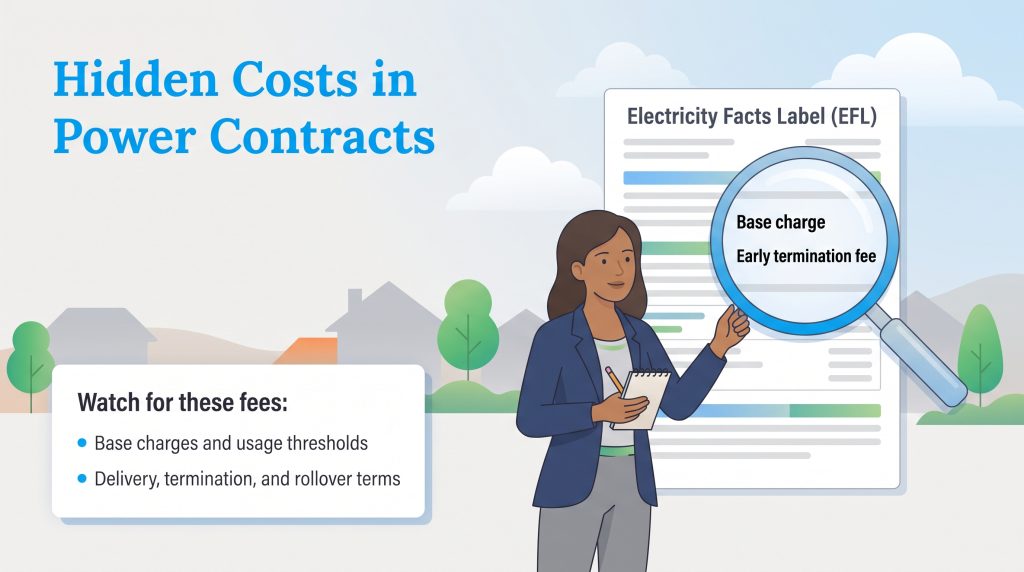
Finding a low advertised rate per kilowatt-hour is only half the battle. The true cost of your electricity plan often hides deep within the Electricity Facts Label (EFL). We always urge our readers to thoroughly examine this document to identify any easy-to-miss fees before signing a long-term agreement. Let’s break down the common culprits that tend to shock new homeowners.
| How to Compare APG&E and Reliant Plans on an Electricity Facts Label | |
|---|---|
| Average Price | Check the estimated cost at 500, 1,000, and 2,000 kWh thresholds to match your specific home size. |
| Base Charge | Look for any flat monthly fees charged simply for having an active account. |
| TDU Delivery Charges | Ensure the local utility delivery fees are clearly outlined and included in the average rate estimate. |
| Early Termination Fee | Verify the exact penalty amount if you need to break your contract before the term expires. |
| Contract Length | Confirm how many months the rate is securely locked in. |
| Renewable Content | Find the exact percentage of green energy backing the specific plan. |
| Usage Credits or Penalties | Identify any financial penalties for using too little electricity or credits for hitting a specific target. |
Early Termination Charges
Life happens, and sometimes you need to pack up and leave before your electricity contract actually expires. Early termination fees vary by plan, so check the Electricity Facts Label before enrolling. Some plans use a flat cancellation fee, while others charge based on the number of months remaining. In Texas, many providers will waive the fee if you move and provide the required documentation proving you are officially leaving the residence.
Base Charges and Usage Thresholds
You might secure an incredibly low rate that looks amazing on paper, but it usually comes attached to a strict minimum usage requirement. Many plans heavily penalize users for falling short of a 1,000 kWh threshold during a billing cycle. If your new home is highly energy-efficient or relatively small, you might accidentally use only 900 kWh in a mild month, triggering a sudden usage penalty or base charge that artificially inflates your bill. Always align your expected usage closely with the specific tiers outlined in the contract.
TDU Delivery Charges
Many Texas residents confuse their retail energy provider’s charges with local utility costs. Your local transmission and distribution utility (TDU), such as CenterPoint or Oncor, assesses delivery charges to maintain the poles, wires, and meters. These fees are passed through to you regardless of whether you choose APG&E or Reliant Energy, and they can significantly impact your total monthly cost. Always factor these into your budget when comparing plans.
Auto-Renewal and Variable-Rate Rollover Terms
If you do not renew or switch your plan before your contract ends, your provider may automatically move you to a month-to-month or variable-rate product. These rollover rates can cost substantially more than your introductory pricing, making it critical to set a reminder to shop for a new plan about a month before your term expires.
Eco-Conscious Choices for Your New Home
As more homeowners prioritize sustainability, finding an environmentally mindful choice for keeping the lights on has never been easier. Green energy plans are typically backed by renewable energy certificates (RECs), which help support renewable generation on the grid. If local sourcing matters to you, check the plan’s Electricity Facts Label and provider disclosures to see whether the renewable content is Texas-based or sourced more broadly. Both APG&E and Reliant Energy offer options to help you shrink your carbon footprint. Reliant features several 100% green energy plans, while APG&E also provides competitive green energy add-ons, allowing you to upgrade a standard fixed-rate plan to one entirely backed by renewable generation. Taking the time for understanding how green power works empowers you to make informed decisions that benefit both your wallet and the environment.
🌱 Eco Edge: Choosing a green energy plan directly helps support renewable generation markets on the grid, paving the way for a cleaner energy future.
Real Customer Sentiment and Reviews
Evaluating what actual Texans say about their power providers gives you a clearer picture of what to expect after the ink dries on your contract. In public customer reviews, common Reliant themes include app convenience, plan variety, and frustration with renewal pricing. APG&E reviews often focus on simple fixed-rate plans, though some customers report dissatisfaction with renewal offers or billing expectations.
Reviews can help you spot patterns, but they should not be the only factor in your decision. Pair customer sentiment with the provider’s current EFL, complaint history, and renewal terms before enrolling. We highly recommend reviewing official Texas Public Utility Commission complaint data to see how both companies resolve actual disputes.
How to Switch Your Energy Provider When Moving
The beauty of the Texas deregulated market is that the actual process of changing providers is incredibly seamless. Whether you are buying your first home or moving into a new apartment, you do not need to worry about scheduling an agonizing technician visit. Because your local utility manages the physical grid, switching or initiating service happens entirely on the back end. Standard switches often happen electronically and may take several business days. Move-in connections can be faster, but timing depends on the local utility, meter status, and whether power is already active at the address.
If you are renting, you may need to confirm your provider choice with your landlord or property manager. To avoid service gaps, try to schedule your connection at least a week before your move-in date.
- Gather your previous usage history or find out the exact square footage of your new home to properly estimate your monthly kilowatt-hour needs. Remember that older HVAC systems, pool pumps, and EV chargers will drastically alter your expected usage.
- Visit the official Power to Choose marketplace or use an independent brokerage site to compare current competitive rates.
- Select the plan that fits your lifestyle, paying close attention to the Electricity Facts Label to ensure you can effectively reduce your monthly electric bill.
- Submit your enrollment and desired start date directly through the chosen provider’s website.
Making the Final Call Between APG&E and Reliant Energy
Deciding between these two respected Texas providers ultimately boils down to how actively you want to manage your household electricity. APG&E may be the better fit if you want a simpler fixed-rate plan and don’t want to manage free-use windows. Reliant may be stronger if you value app tools, plan variety, and the ability to shift usage into lower-cost periods. Before choosing either provider, compare the current EFL against your expected monthly usage. Take a close look at your daily habits, secure your rate, and look forward to enjoying the reliable comfort of your new home.
Frequently Asked Questions About APG&E and Reliant Energy
Navigating the Texas electricity market often brings up a lot of specific questions. Here are answers to some of the most common inquiries readers have when comparing APG&E and Reliant Energy for their new homes.
Which Is Cheaper, APG&E or Reliant Energy?
Does Reliant Energy require a deposit to start service?
Is APG&E a Good Electricity Company for Large Homes?
Can I cancel my Reliant Energy plan if I move out of Texas?
Who Delivers My Electricity If I Choose APG&E or Reliant?
Are there hidden fees with APG&E?
How long does it take to switch from APG&E to Reliant Energy?
About the Author

David has been an integral part of some of the biggest utility sites on the internet, including InMyArea.com, HighSpeedInternet.com, BroadbandNow.com, and U.S. News. He brings over 15 years of experience writing about, compiling and analyzing utility data.

LaLeesha has a Masters degree in English and enjoys writing whenever she has the chance. She is passionate about gardening, reducing her carbon footprint, and protecting the environment. She also recently served as President of the Board for City Sprouts (a community garden).