
Understanding the Risks of PFAS Contamination and the Practical Steps You Can Take to Protect Your Home’s Drinking Water
Key Takeaways
- PFAS are persistent man-made chemicals found in many water supplies that can accumulate in the body over time.
- Not all water filters remove these chemicals, so choosing the right certification (like NSF/ANSI 53) is critical for safety.
- You can check your local water quality report to see if PFAS have been detected in your municipal supply before investing in filtration.
Recent headlines about forever chemicals in tap water have understandably caused concern for many homeowners and renters trying to ensure their families stay healthy. While the science behind PFAs in water is complex, navigating the path to clean, safe drinking water doesn’t have to be a stressful ordeal. Contamination from these long-lasting compounds is a widespread issue affecting both massive municipal systems and rural private wells across the United States. However, you are far from powerless when it comes to securing your home. At UtilitiesForMyHome, we want to help you cut through the confusion, understand exactly what these chemicals are, and confidently choose an environmentally mindful water filtration solution that effectively protects your household without stretching your budget.
What Are PFAS and Why Are They in Our Water?
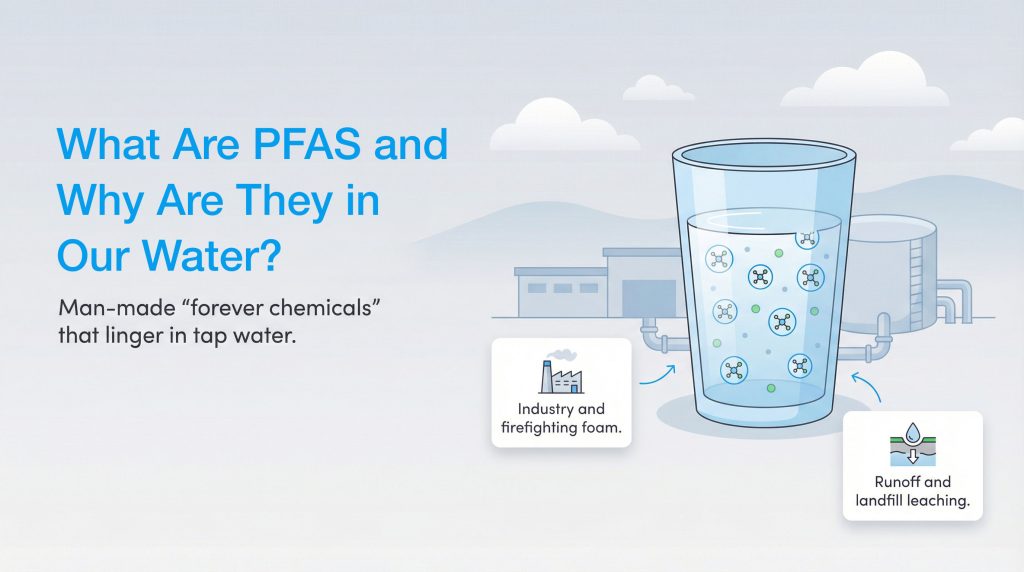
PFAS stands for per- and polyfluoroalkyl substances, which is a broad category of man-made chemicals utilized heavily in consumer and industrial products since the 1940s. You likely know them by their notorious nickname, “forever chemicals.” They earned this label because their incredibly strong chemical bonds prevent them from breaking down naturally in the environment or inside the human body.
Originally, manufacturers prized these compounds for their remarkable ability to repel heat, water, and grease. Unfortunately, because these synthetic materials simply do not degrade, they eventually make their way into our soil and water systems. Contamination typically occurs when these persistent chemicals migrate into public groundwater aquifers and municipal supplies from several common sources:
- Aqueous film-forming foam (AFFF): Specialized firefighting foams used extensively at military bases, commercial airports, and local fire training facilities.
- Industrial runoff and discharge: Waste from factories producing water-resistant clothing, stain-resistant carpeting, and specialized packaging.
- Household consumer products: Discarded non-stick cookware, fast-food wrappers, and certain cosmetics breaking down in local landfills.
Once introduced to the environmental cycle, these forever chemicals easily seep into the public water supply. While you might occasionally see the term spelled as “PFAs” during casual internet searches, environmental scientists and regulatory agencies strictly refer to this entire group of persistent contaminants as PFAS.
The Health Risks: Symptoms of PFAS Exposure
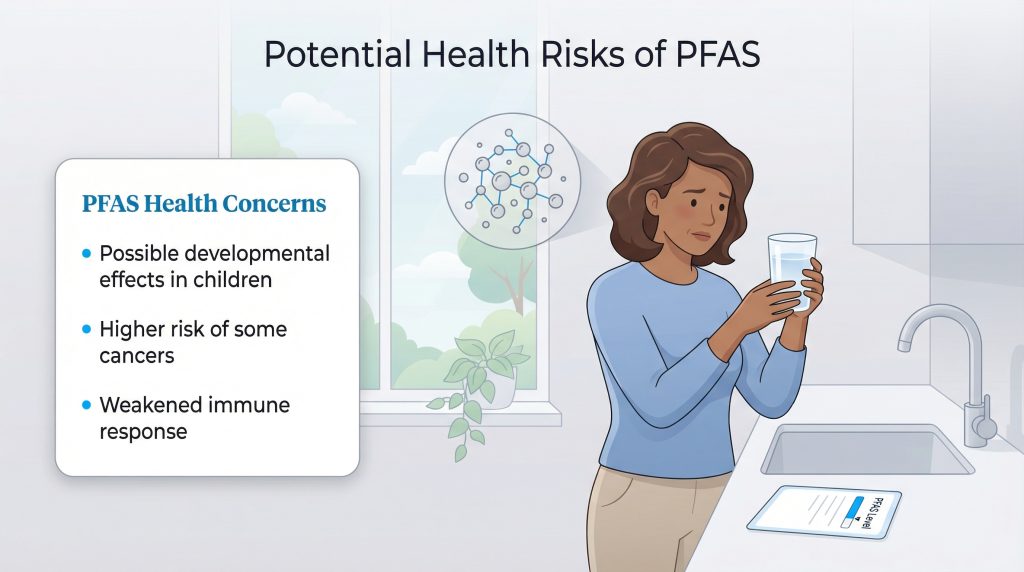
The health effects of PFAS are a critical subject of ongoing scientific research, and major regulatory bodies have identified significant causes for concern. Because these specific chemicals bioaccumulate — meaning they build up in your body over long periods — routinely drinking water with even microscopic amounts of contamination can lead to elevated levels in your blood over time.
According to the U.S. Environmental Protection Agency (EPA) and the Centers for Disease Control and Prevention (CDC), prolonged exposure to certain PFAS is linked to severe adverse health outcomes. Because potential health impacts trigger at surprisingly low concentrations, current peer-reviewed studies suggest clear links to the following risks and symptoms of PFAS exposure:
- Immune system suppression: A reduced ability to fight off common infections and a notably decreased antibody response to routine vaccines.
- Specific cancers: An elevated risk of developing prostate, kidney, and testicular cancers.
- Thyroid changes: Disruption of the body’s natural hormone production, leading to thyroid disease and related metabolic issues.
- Developmental effects: Potential behavioral and developmental delays in children, including accelerated puberty, bone variations, and low birth weight.
- Cardiovascular issues: Increased cholesterol levels and a higher potential risk for obesity.
It is vital to rely on verified, scientific data when assessing your household’s risk. For the most up-to-date and detailed information, you can directly review the EPA’s page on Our Current Understanding of the Human Health and Environmental Risks of PFAS or the ATSDR’s comprehensive health effects overview.
EPA PFAS Regulations: What Homeowners Need to Know
In April 2024, the federal government took a historic step toward securing the nation’s drinking water by establishing the first-ever national, legally enforceable drinking water standards for forever chemicals. Understanding the EPA PFAS regulations 2024 update is essential for homeowners who want to know exactly what their local utility is legally required to test for and treat.
The EPA established strict Maximum Contaminant Levels (MCLs) of just 4 parts per trillion (ppt) for PFOA and PFOS — two of the most widely studied and hazardous forever chemicals. To help visualize this, 4 parts per trillion is roughly the equivalent of a single drop of water diluted across 20 Olympic-sized swimming pools. The new ruling also regulates other variations, such as PFNA, PFHxS, and GenX chemicals, at an equally strict 10 ppt.
What does this mean for your neighborhood? Public municipal water utilities across the country are now legally obligated to upgrade their testing procedures and filtration infrastructure to meet these new federal standards. Utilities have a designated grace period over the next few years to fully comply and complete these massive infrastructural upgrades. While this is a huge victory for public health, it practically means that many municipal tap water supplies will continue to contain trace amounts of these chemicals until local facilities finish their overhauls.
How to Test Water for Forever Chemicals
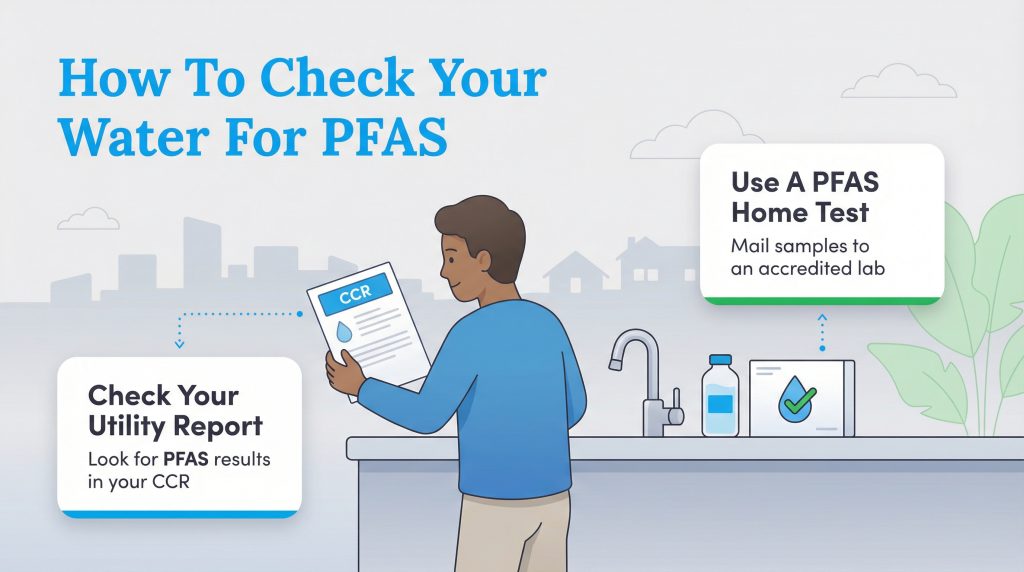
Before you spend money on expensive whole-home water filtration systems, you should confirm if your specific water supply is actually affected. Contamination levels vary widely depending on your region and your proximity to industrial manufacturing sites or military bases. Thankfully, discovering your baseline risk is easier than ever.
Check the EWG Tap Water Database
If you rely on municipal tap water, your easiest first step is to utilize the Environmental Working Group (EWG) Tap Water Database online. By simply typing in your zip code, you can instantly pull up aggregated testing data for your local utility. Public utilities are also required by law to provide an annual Consumer Confidence Report (CCR), which details recent contaminant levels. You can easily request this document directly from your water provider’s website.
Order an At-Home Water Testing Kit
If you rely on a private well, public municipal data won’t help you. You will need to test the water yourself to uncover exactly what flows from your tap. Professional on-site lab testing offers high accuracy but often comes with a steep price tag. Using accredited mail-in testing kits is a highly convenient and cost-effective alternative. Simply follow this three-step process:
- Order a certified kit: Ensure the laboratory you select is specifically accredited for PFAS analysis, as standard private well tests do not look for forever chemicals.
- Collect your sample: Follow the kit’s exact instructions to draw water directly from your kitchen tap into the provided sterile vials.
- Mail it to the lab: Ship the vials back to the accredited facility and wait for your detailed digital breakdown of any detected contaminants.
How to Remove PFAS From Water: Best Filtration Methods
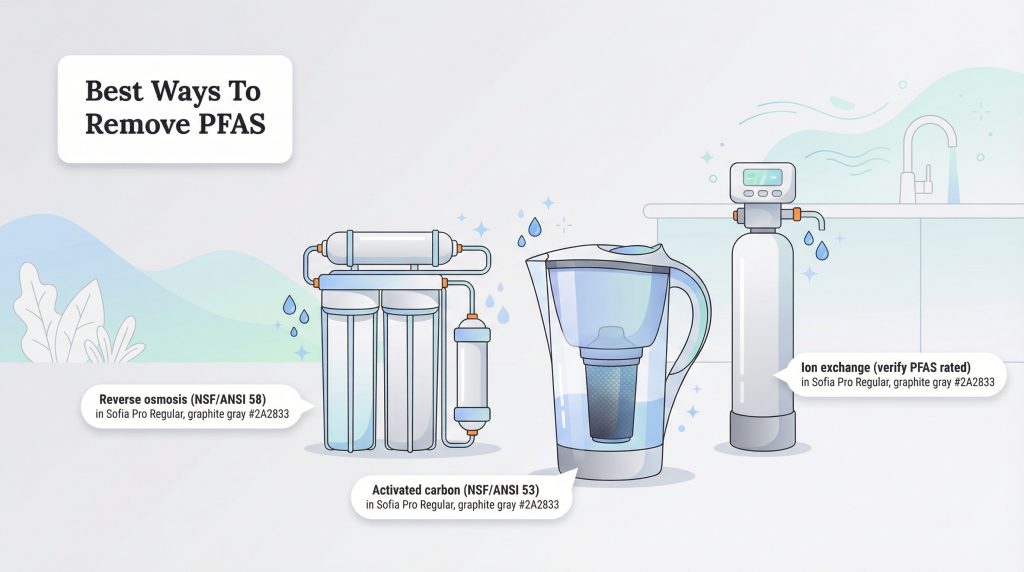
If testing confirms the unfortunate presence of forever chemicals in your home, your next logical step is securing reliable filtration. However, not every product on the shelf is up to the task. You must seek out specific filtration technologies and verify third-party certifications to guarantee the system actively removes these stubborn contaminants.
When shopping for a unit, always look for NSF/ANSI Standard 53 (for carbon-based filters) or NSF/ANSI Standard 58 (for reverse osmosis systems). These independent certifications verify that the product has been rigorously tested. Read the fine print to confirm the model explicitly lists PFOA, PFOS, or PFAS reduction, rather than just general taste and odor improvement.
| Filtration Method | Effectiveness for PFAS | Maintenance Requirements | Cost Range |
|---|---|---|---|
| Reverse Osmosis (RO) | High (NSF 58 Certified) | Annual filter changes; membrane replacement every 2-3 years | $$$ (High) |
| Activated Carbon Filter | High (NSF 53 Certified) | Frequent cartridge replacements (every 3-6 months) | $$ (Medium) |
| Whole-Home Ion Exchange | High (Specialty Resin) | Regular salt refills; professional servicing | $$$$ (Very High) |
| Standard Pitcher | Low / None | Monthly filter replacements | $ (Low) |
Reverse Osmosis PFAS Removal
Reverse osmosis is widely considered the gold standard for residential water purification. These robust under-sink systems push your tap water through an ultra-fine, semipermeable membrane that successfully blocks microscopic molecules, making reverse osmosis PFAS removal highly effective. While they carry a higher upfront cost and produce a small amount of wastewater during the purification process, they offer unmatched peace of mind. For helpful tips on offsetting this overall water usage, review our guide on how to save water at home.
Activated Carbon Filters
Activated carbon is the primary technology utilized in high-end refrigerator filters and specialized under-sink units. It purifies water by attracting and physically trapping chemical contaminants within the dense pores of the carbon block. Granular activated carbon (GAC) is incredibly effective, provided you verify the NSF/ANSI 53 certification for PFOA and PFOS reduction on the product’s packaging. Without this specific rating, the filter likely only removes standard chlorine and unpleasant odors.
Ion Exchange Systems
Whole-home ion exchange treatment represents a heavy-duty, point-of-entry solution. These large systems utilize specialized, positively charged resin beads that act like powerful magnets, actively swapping safe ions for the hazardous contaminant ions as water flows into your house. While this method requires a substantial financial investment and regular maintenance, it guarantees treated water from every single faucet and showerhead in the home.
For more foundational information on managing your home’s infrastructure, including initiating water service, visit our water utility hub.
Water Treatment Methods That Do Not Work
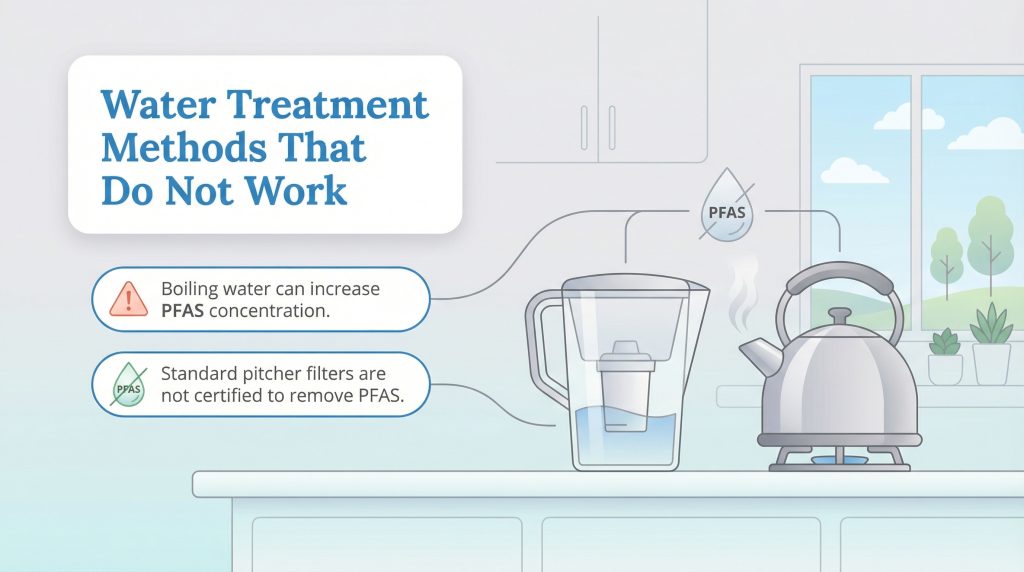
There are several widespread misconceptions regarding water purification that can unfortunately lead to a false sense of security. Knowing exactly what fails to remove forever chemicals is just as important as knowing what works.
Boiling Water
Unlike harmful bacteria, viruses, or common parasites, you cannot kill or destroy PFAS simply by boiling your water. In reality, boiling a pot of tap water can actually increase the overall concentration of these dangerous chemicals. As the clean water evaporates into steam, the resilient chemical compounds are left behind in a much denser ratio.
Standard Pitcher Filters
Generic, budget-friendly water pitchers designed strictly to improve taste lack the proper density and specialized media required to trap microscopic PFAS molecules. Unless the pitcher’s box explicitly states it is certified to remove forever chemicals under NSF Standard 53, you should safely assume it does not offer meaningful protection.
Are PFAS in Bottled Water?
When faced with contaminated tap water, many concerned homeowners instinctively turn to the grocery store shelves. But are PFAS in bottled water? The frustrating answer is that they certainly can be. The commercial bottled water industry is not as strictly regulated regarding forever chemicals as public municipal water utilities are under the comprehensive new 2024 EPA guidelines. Because many popular bottled water brands simply source their product directly from municipal tap systems or local natural springs, the risk of chemical contamination still remains.
While a few premium brands utilize commercial reverse osmosis systems that effectively remove these contaminants, buying massive cases of plastic bottles is not a sustainable, long-term solution for your home. Installing a certified at-home filtration system serves as a far more environmentally mindful choice. It cuts down heavily on single-use plastic waste while providing an energy-saving option that secures your family’s health and saves you substantial money at the grocery store over time.
Securing Your Home Against Forever Chemicals
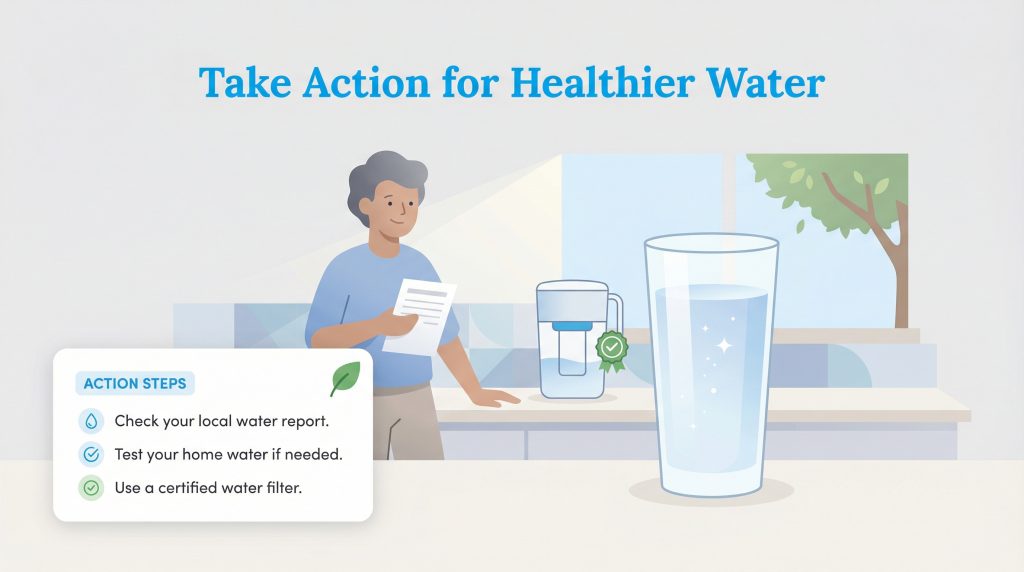
While discovering the widespread presence of PFAS in drinking water is undoubtedly unsettling, you now possess the actionable knowledge required to manage the situation effectively. By thoroughly investigating your local utility report, proactively testing your private supply when necessary, and investing in certified, proven filtration technology, we know you can take full control of your home’s water quality. Prioritizing these practical steps today grants you lasting peace of mind and fosters a much healthier, safer living environment for your entire household.
Frequently Asked Questions About PFAS in Water
What is the best water filter for PFAS?
Does a standard refrigerator water filter remove forever chemicals?
How can I remove PFAs from my water?
Can you boil PFAS out of water?
Is bottled water free of PFAS?
What does “parts per trillion” mean?
How do PFAS get into the water supply?
About the Author

David has been an integral part of some of the biggest utility sites on the internet, including InMyArea.com, HighSpeedInternet.com, BroadbandNow.com, and U.S. News. He brings over 15 years of experience writing about, compiling and analyzing utility data.