
Simple strategies to reduce waste and keep your recycling bin contamination-free.
Key Takeaways
- Clean and dry your recyclables to prevent food residue from contaminating the entire bin.
- Never bag your recyclables in plastic liners, as they can tangle in sorting machinery.
- Check local guidelines since accepted materials vary significantly by city and provider.
We have all stood over the recycling bin, holding a greasy pizza box or a plastic container with a bit of yogurt left in the bottom, wondering if it belongs in the trash or the recycling. It is a common dilemma, and unfortunately, tossing items in with good intentions can sometimes do more harm than good. While rules change depending on where you live and which service provider handles your waste, there are universal best practices that every homeowner can follow. These recycling tips are especially helpful if you are new to managing waste at home or feel like you need a simple, beginner-friendly reset. Our goal is to help you move past “wish-cycling” and establish confident, effective habits that actually make a meaningful difference for your community and the environment.
The Golden Rules of Curbside Recycling
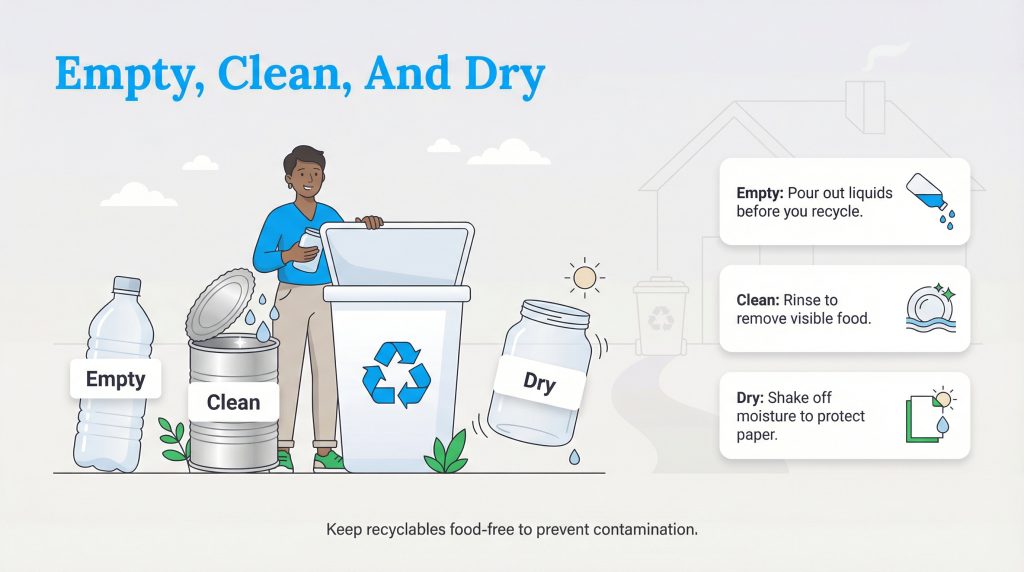
If you remember only one thing about recycling, let it be this mantra: Empty, Clean, and Dry. Modern recycling facilities rely on technology and manual sorters to separate materials, but food residue acts as a major contaminant.
Warning: Do not crush or flatten your plastic bottles and aluminum cans before tossing them in the bin. Single-stream sorting machines rely on the robust, three-dimensional shape of these containers to correctly identify and separate them from flat paper products. When you prepare your recyclables, keep these two crucial factors in mind:
- Why Rinsing Matters: Rinsing your containers is about more than just being tidy; it actively protects the value of the materials. Food rot attracts pests like rats and insects to processing facilities, creating severe health hazards for workers. Furthermore, buyers who purchase bales of recycled plastic or metal pay for the material, not the leftover sauce. If a bale is too dirty, buyers will reject it, and all that effort to recycle goes entirely to waste.
- The “Dry” Factor: Moisture is the enemy of the recycling bin, specifically when it comes to paper products. When paper gets wet, the delicate fibers weaken and become incredibly difficult to process into new paper. Even if the moisture comes from a freshly rinsed soda can that was not shaken out, it can easily ruin the newspapers or mail sitting next to it. Always give your containers a quick shake or let them air dry before tossing them in.
What Can Be Recycled At Home? The “Definite Yes” List
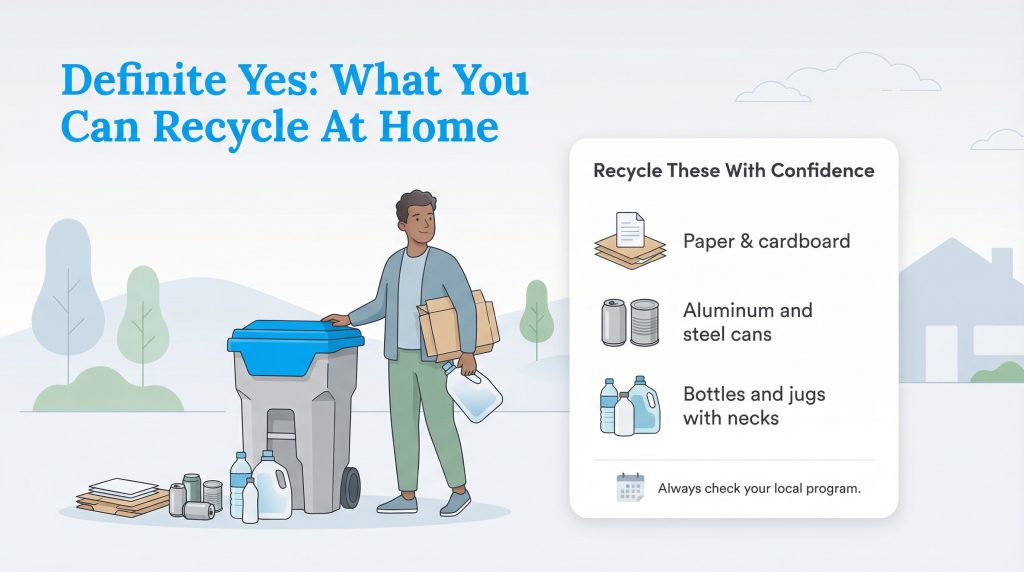
Wondering exactly what can be recycled at home? While you should always check with your specific provider, most curbside recycling programs accept a core group of materials. Focusing your efforts on these high-value items ensures you are contributing positively to the system. Generally, you can confidently recycle paper, metal (aluminum and steel cans), and plastic bottles and jugs with necks (like water bottles, milk jugs, and detergent jugs).
| Material | Preparation Tip |
|---|---|
| Plastic Bottles & Jugs | Keep the cap on; ensure they are empty. |
| Cardboard | Flatten completely to save space. |
| Aluminum & Steel Cans | Rinse lightly; labels can usually stay on. |
| Glass Bottles & Jars | Remove lids; rinse out residue. |
Curbside recycling programs are expressly designed to process household volumes of these core items. If you are unsure about your local pickup schedule or need to set up new service, checking your local waste management services is an excellent first step to guarantee you are following municipal guidelines.
The “No-Go” List: Common Contamination Culprits
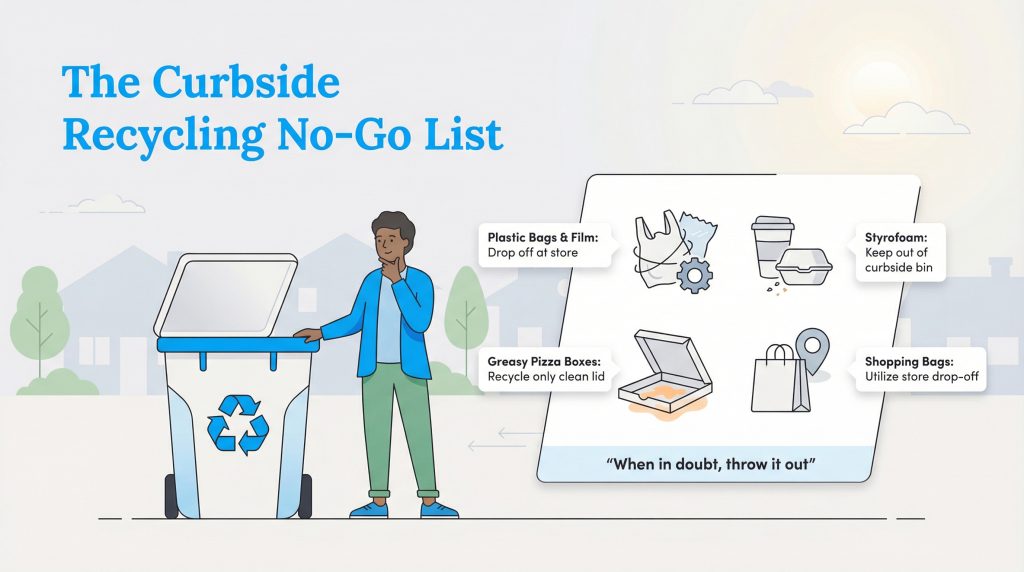
Some items seem like they should be recyclable but actually cause massive headaches for sorting facilities. Keeping these out of your curbside bin is just as important as putting the right things in.
Plastic Bags and Film: This is the number one problem for many facilities. Grocery bags, bread bags, and plastic wrap act as Tanglers. They get caught in the rapidly rotating gears of sorting machines, forcing the plant to shut down completely so workers can safely cut them loose. Never bag your recyclables; keep them loose in the bin. If you are wondering how to recycle plastic bags, the best method is to gather them up and return them to designated grocery store drop-off bins.
Polystyrene Foam (Styrofoam): Whether it is a coffee cup, a takeout container, or packing peanuts, this material is generally not accepted in curbside programs. It breaks apart easily into tiny unmanageable pieces and contaminates other high-quality materials (and the environment).
Greasy Pizza Boxes: The cardboard itself is technically recyclable, but the grease is not. Oil stubbornly prevents the paper fibers from separating during the pulping process. Rip off the clean lid to recycle and throw the greasy bottom half directly in the trash or compost.
For items that cannot go in your curbside bin, like plastic grocery bags, you can often find a drop-off location at a local grocery store or specialized facility.
Quick Guide: Common Items And Recycling Rules
Use this chart to quickly decide whether an item belongs in your home recycling bin or needs special handling.
| Item | Curbside? | What To Do Instead |
|---|---|---|
| Plastic Grocery Bags | No | Drop off at grocery store bins. |
| Greasy Pizza Boxes | No | Compost or trash the greasy part; recycle clean lid. |
| Styrofoam | No | Check specialized local drop-off or trash. |
| Batteries and Electronics | No | Take to specialized e-waste recycling centers. |
| Plastic Clamshells | Check Locally | Often trash; verify with your hauler. |
| Glass Jars | Yes (Usually) | Rinse and recycle (remove lid). |
Common Recycling Mistakes: The Problem With “Wish-cycling”
“Wish-cycling” happens when you toss something questionable into the bin, hoping it will somehow get recycled. You might think, “It’s plastic, so it probably counts.” Unfortunately, this optimism drives up the cost of recycling and drastically slows down the sorting process. If you have time, check your city’s recycling guide or hauler’s website first, but if you are still unsure, it is better to throw it out than risk contaminating the bin. When in doubt, throw it out. It is far better to send one item to the landfill than to contaminate a whole truckload of good recycling.
How to Safely Dispose of E-Waste and Hazardous Materials
As we increasingly rely on smart home devices, gadgets, and specialized lighting, proper electronic waste disposal has become an essential aspect of household maintenance. Tossing these items into your standard curbside recycling bin is a severe safety hazard. Batteries can easily spark and cause dangerous, fast-moving fires inside collection trucks or automated sorting facilities, while broken electronics and bulbs leak highly toxic chemicals into the local environment.
To safely handle these hazardous materials, you should always search for local e-waste drop-off days hosted by your municipality or utilize established retail recycling programs at major electronics stores. Keep a sturdy box in your garage or utility closet to securely collect these items over a few months, then make a single efficient trip to dispose of them responsibly. Here is a brief breakdown of how to handle the most common household hazards:
- Batteries: Standard alkaline batteries (like AAs and AAAs) can technically go in the trash in many states, though recycling them is much better for the environment. However, rechargeable lithium-ion batteries — commonly found in laptops, cell phones, and power tools — are highly volatile and must be taken directly to a specialized battery drop-off location or a household hazardous waste facility.
- Light Bulbs: Traditional incandescent and halogen bulbs are safe to throw in your regular household trash (wrap them in newspaper first to prevent dangerous glass shards). Conversely, compact fluorescent lamps (CFLs) contain trace amounts of mercury. They require specialized handling and should be taken to a local hardware store that offers a specific bulb take-back program.
- Old Tech and Electronics: Televisions, computer monitors, printers, and outdated smartphones contain valuable heavy metals like gold, silver, and copper. By dropping these off at certified e-waste recycling centers, you ensure these precious metals are reclaimed and reused, directly reducing the need for destructive mining practices globally.
Setting Up Your Home Recycling System for Success
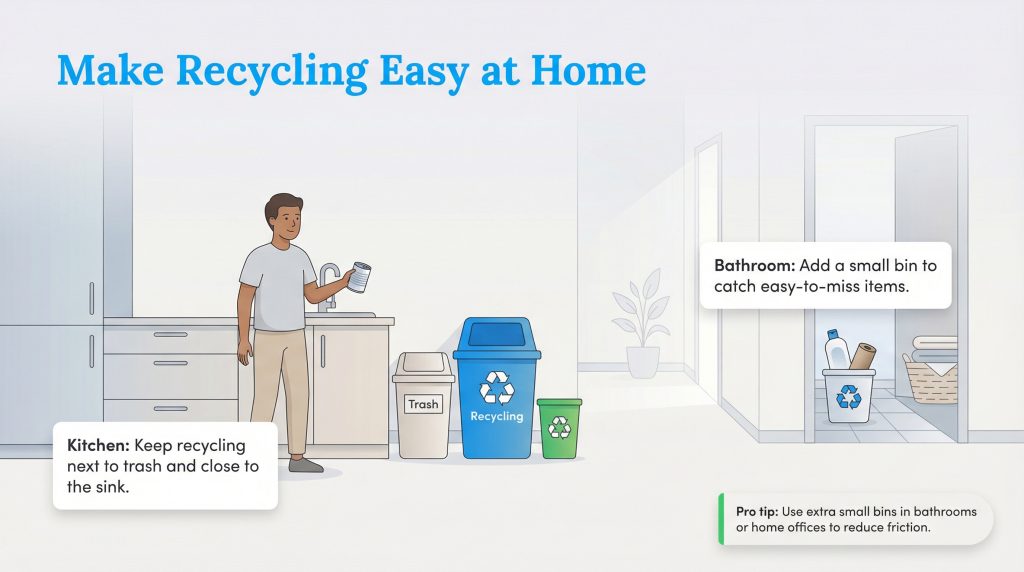
When you are settling into your new home, establishing a smart recycling system early can make the habit stick seamlessly. In the kitchen, create a designated station near the trash can, but ensure it is close enough to the sink that rinsing isn’t an annoying chore. If you have to walk completely across the room to rinse a can, you are significantly less likely to do it.
Don’t forget the rest of the house. Many highly recyclable items, like thick shampoo bottles, toilet paper rolls, and cardboard boxes from cosmetics, end up in the trash simply because there is no recycling bin nearby. Implementing a house-wide strategy is one of the easiest ways to boost your recycling efficiency. Follow these step-by-step instructions to capture those missed materials:
- Assess your spaces: Walk through your bathroom, laundry room, and home office to identify exactly where you generate the most paper and plastic waste.
- Add small secondary bins: Purchase or repurpose small, unlined baskets for these specific rooms. You do not need a massive container; a simple, stylish wastebasket works perfectly for toilet paper tubes, empty skincare jars, and junk mail.
- Establish a collection routine: Once a week, right before trash day, take a quick walk through your home and empty these smaller baskets directly into your primary kitchen or outdoor bin.
Decoding the Numbers: What Plastic Symbols Actually Mean
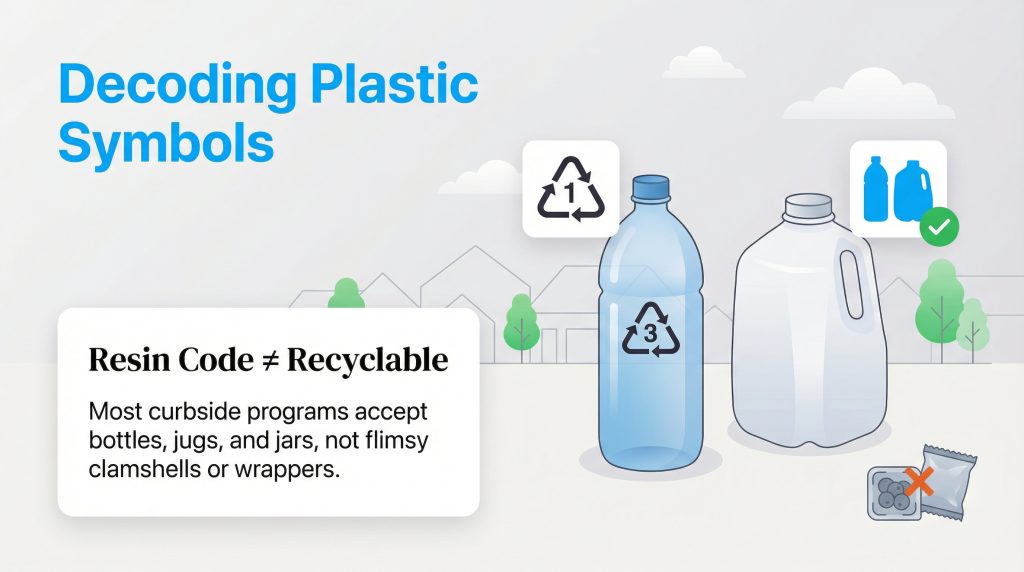
Many of us were taught to look closely for the “chasing arrows” symbol with a number inside to determine if something is recyclable. However, assuming every stamped plastic item belongs in the bin is one of the most common recycling mistakes people make. That symbol identifies the chemical makeup of the resin used to make the plastic, not its recyclability in your local program. The chasing arrows symbol is often misunderstood as a “recycling guaranteed” sign, but it is really just a resin identification code. Just because an item has the arrows heavily stamped on the bottom does not mean your curbside hauler accepts it.
Instead of squinting at tiny numbers, trust the physical shape of the container. Most curbside programs accept sturdy bottles, jugs, and jars because their robust shape is easy for machines to process. Items like flimsy plastic clamshells (the kind fresh berries come in) or crinkly snack wrappers are almost universally rejected, even if they have a number prominently displayed on them. For a deeper, more comprehensive dive into specific materials, the EPA offers valuable resources on how to recycle common recyclables properly.
Precycling and Composting: Going Beyond the Bin
While mastering your curbside bin is an excellent starting point, true sustainability means proactively stopping waste before it ever enters your home. This intentional approach is known as precycling. Simply put, precycling means making purchasing decisions that actively reduce or completely eliminate the need for packaging, particularly single-use plastics. By shifting your perspective at the grocery store, you can dramatically cut down on the total volume of waste your household generates each week.
Here are three highly actionable ways to practice precycling and avoid bringing single-use plastics into your home during your next shopping trip:
- Choose loose produce: Instead of buying apples tightly wrapped in plastic clamshells or potatoes secured in heavy mesh netting, confidently select loose items and place them directly in your cart or into reusable cloth produce bags.
- Buy in bulk: Take full advantage of bulk bins for dry goods like rice, beans, pasta, and nuts. Bring your own glass jars or heavy-duty containers, weigh them at the register, and fill up exactly what you need without paying for unwanted disposable packaging.
- Opt for glass and aluminum: When you do need to buy packaged goods, deliberately choose items stored in glass jars or aluminum cans over plastic bottles. Glass and aluminum are infinitely recyclable materials, meaning they never degrade in quality no matter how many times they go through the rigorous recycling process.
A Quick-Start Guide to Composting at Home
Another incredibly powerful strategy to keep heavy waste out of local landfills is composting at home. Organic food waste — like vegetable peels, used coffee grounds, and crushed eggshells — creates potent greenhouse gases when it decomposes anaerobically in a compacted landfill. By setting up a small compost bin in your backyard or utilizing a municipal green bin program, you allow these organic materials to break down naturally with fresh oxygen.
To begin composting at home successfully, aim for a balanced mix of “greens” (nitrogen-rich materials like fresh food scraps and grass clippings) and “browns” (carbon-rich materials like dry dead leaves, shredded cardboard, and twigs). Keep the pile slightly damp and turn it occasionally with a pitchfork or shovel to aerate it. Over time, this natural process will produce rich, dark soil perfect for gardening or revitalizing your lawn. Not only does this heavily reduce your weekly trash output, but it also creates a free, eco-friendly alternative to harsh chemical fertilizers.
Preparing for a Zero Waste Lifestyle
The timeless motto to reduce reuse recycle serves as a strict hierarchy for sustainable living, prioritizing prevention over processing. We must first reduce our consumption of disposable goods, then rigorously reuse the items we already own. Only after exhausting those two options should we rely on recycling to manage the remaining materials.
Transitioning toward a true zero waste lifestyle takes time, patience, and intentionality, but the environmental and financial benefits are profound. To take your immediate next steps as a homeowner, start by critically analyzing your weekly trash. Take note of the items you throw away most frequently — whether that is bulky paper towels, flimsy plastic wrap, or heavy food scraps — and deliberately seek out one permanent, reusable alternative for that specific category. Swap paper towels for washable microfiber cloths, or confidently replace plastic food wrap with reusable beeswax covers. Once you master one new habit, move seamlessly onto the next. Eventually, these incremental adjustments compound into a highly efficient, environmentally mindful home that produces a mere fraction of the waste it once did.
Frequently Asked Questions About Recycling Rules
Is it necessary to remove labels from cans and bottles?
Can I recycle pizza boxes?
Do I need to wash my recyclables with soap?
Can plastic bags go in the recycling bin?
What should I do with bottle caps?
How do I recycle batteries and electronics?
Should I crush my aluminum cans and plastic bottles before recycling?
What does precycling mean?
About the Author

LaLeesha has a Masters degree in English and enjoys writing whenever she has the chance. She is passionate about gardening, reducing her carbon footprint, and protecting the environment.