
Setting up your electricity, gas, internet, and water before move-in day ensures a smooth and stress-free transition to your new NYC apartment.
Key Takeaways
- Start setting up utilities at least two weeks before your move-in date to avoid unexpected connection delays, administrative headaches, and extra fees.
- Check your lease carefully to understand exactly whether you or your landlord is legally responsible for paying the water, heat, and natural gas bills.
- Opt for green energy programs through your provider or local energy service companies to reduce your carbon footprint and support renewable energy in New York.
After you sign a lease in NYC, utility setup is one of the quickest ways to make your new apartment feel livable. A little planning helps you avoid move-in day surprises, whether you are starting Con Edison service, scheduling internet installation, or confirming which bills your landlord covers. If you are moving to New York, setting up utilities might feel like one more task on an already crowded checklist, but it is actually straightforward if handled correctly. Getting your electricity, cooking gas, and internet accounts activated ahead of time means you can flip the switch on move-in day and actually see your new home. We know the local landscape inside and out, so let us help you check these essential connections off your to-do list so you can focus on enjoying your new neighborhood.
Tenant vs. Landlord Utility Responsibilities in NYC
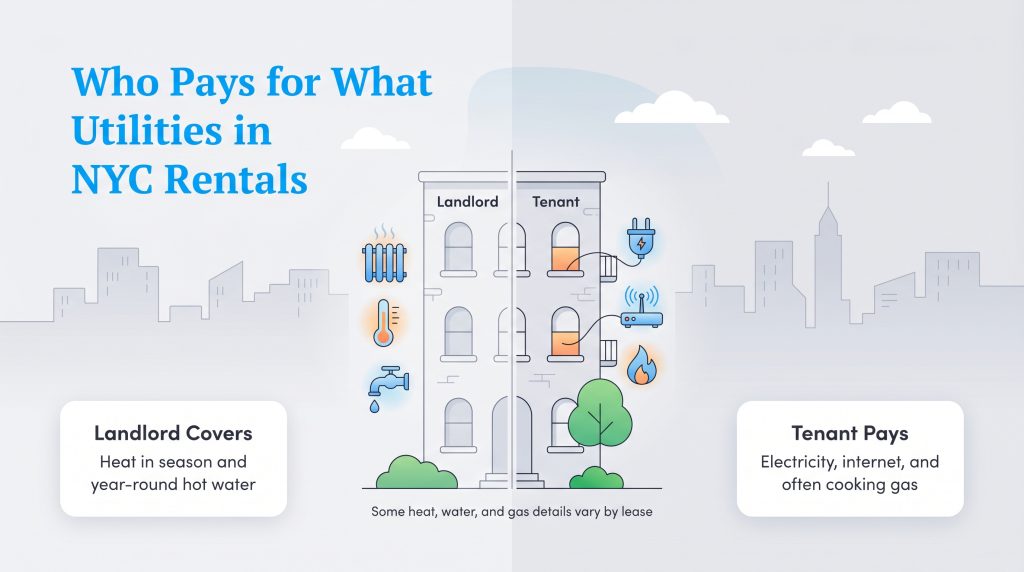
Renting in the city comes with a unique set of building laws that dictate who pays for what. One of the most important regulations centers around the NYC “Heat Season,” which runs from Oct. 1 through May 31. During these months, your landlord is legally required to provide heat under specific guidelines. Between 6 a.m. and 10 p.m., indoor temperatures must be at least 68 degrees when the outside temperature falls below 55 degrees. Between 10 p.m. and 6 a.m., indoor temperatures must be at least 62 degrees, regardless of outside temperature. Additionally, hot water must generally be provided year-round. In many standard rental buildings, you will not see heating charges on your personal utility bill, though tenants with electric heat or individual systems may pay directly. In most NYC apartment buildings, the property owner receives the water and sewer bill from the NYC Department of Environmental Protection, and tenants do not set up a separate water account. Your lease should still spell out whether any water or sewer costs can be passed through to you. Cooking gas responsibilities are split; older buildings often include it in the rent, while newer constructions might meter it individually. You will usually be responsible for establishing and paying for your own electricity and internet services.
What to Ask Your Landlord Before Move-In
Before finalizing your paperwork, clarify utility expectations to avoid surprises during your first few months. We recommend asking your property manager these essential questions:
- Is electricity individually metered?
- Is cooking gas included in rent?
- Who pays for water and sewer?
- Is heat provided by the building, or will I pay for it directly?
- Which internet providers are wired into the building?
- Where are trash, compost, and recycling collected?
- Are there specific building rules or times for technician appointments?
When to Set Up Utilities Before Moving to NYC
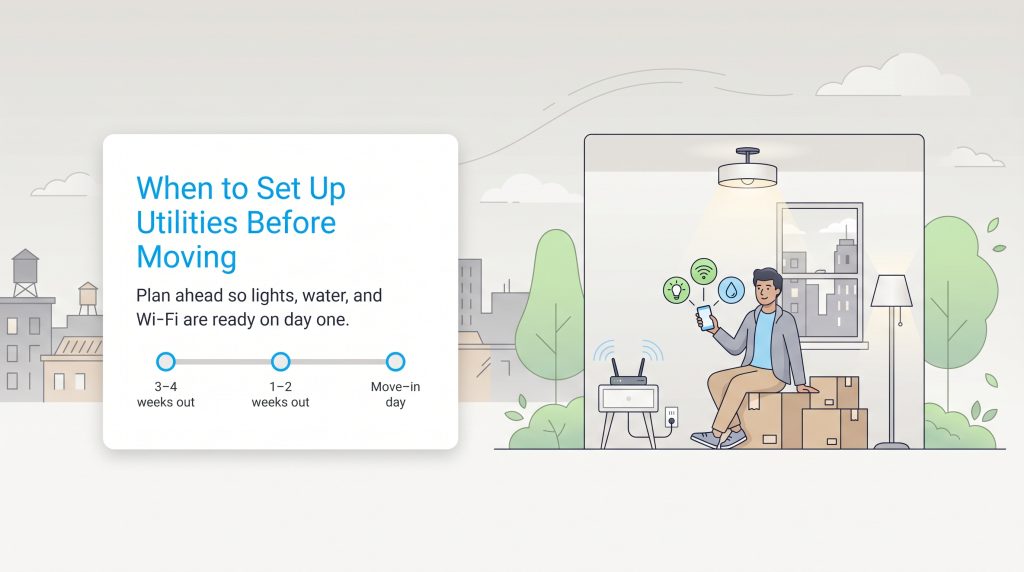
Plan ahead to reduce the risk of delays when establishing your connections. Working through a clear timeline guarantees you will not spend your first night sitting in the dark with zero Wi-Fi. Set aside extra room in your moving budget, as connection and activation fees vary depending on the provider, your account history, and potential deposit requirements.
| Timing | What to Do |
|---|---|
| Two to three weeks before move-in | Confirm which utilities your lease requires you to set up. |
| One to two weeks before move-in | Start Con Edison, National Grid, or ESCO service as needed. |
| One week before move-in | Schedule internet installation and gas safety appointments. |
| Move-in day | Confirm lights, outlets, stove, heat, hot water, and Wi-Fi work. |
What You Will Need Before Starting Service
Having your personal and property information organized accelerates the setup process with local providers. Make sure you have the following details ready:
- Full service address and apartment number
- Move-in date
- Legal name and contact information
- Government-issued ID or Social Security number, depending on provider requirements
- Lease start date
- Previous address
- Payment method
- Access details for gas or internet appointments
How to Start Electricity, Gas, Water, and Internet Service
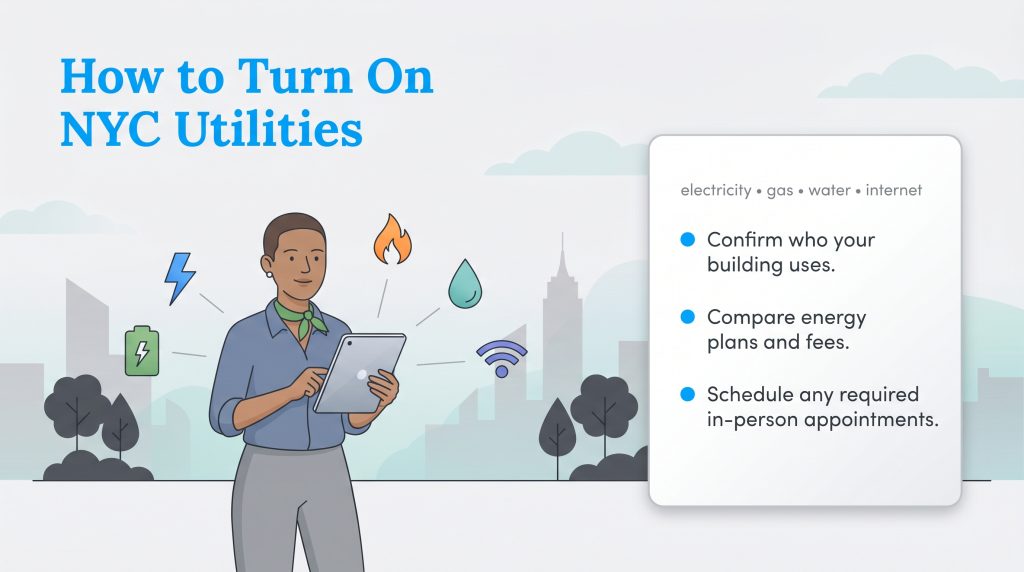
Consider this section your comprehensive directory for getting everything turned on efficiently. Knowing exactly who to contact for each service keeps your move organized and predictable. Below is a quick overview of typical NYC providers and when to reach out to them.
| Utility | Common NYC Provider | Who Usually Sets It Up | What You Will Need | Timing |
|---|---|---|---|---|
| Electricity | Con Edison | Tenant | Address, move-in date, ID | One week before |
| Gas | Con Edison or National Grid | Tenant (if individually metered) | Appointment access | One to two weeks before |
| Water/Sewer | NYC DEP | Usually Landlord | Lease confirmation | Before signing lease |
| Internet | Spectrum, Verizon Fios, Optimum, Astound | Tenant | Building availability | One to two weeks before |
Starting Con Edison Electric Service
When setting up electricity in NYC apartment buildings, Con Edison serves as the primary delivery utility for all five boroughs. To initiate service, you can easily open an account online through the Con Edison start or move service page or call their customer service line directly. Navigating a Con Edison start service new apartment request requires your move-in date, the exact service address (including your apartment number), and a valid form of identification. While Con Edison maintains the physical infrastructure and delivers the power to your home, New York residents actually live in a deregulated energy market. This means you have the freedom to choose a third-party Energy Services Company (ESCO) for your electricity supply rather than accepting the default provider rate.
ESCO Plan Checklist
Before choosing an ESCO, compare the supply rate, contract length, cancellation fee, renewable content, and whether the rate is fixed or variable. Green plans can be a good fit, but they are not automatically cheaper than the default utility supply rate. When evaluating your options, use this checklist to make an informed decision:
- Fixed vs. variable rate: Determine if your price will stay the same or fluctuate with the market.
- Renewable percentage: Check how much of the energy is sourced from renewables or offset by renewable energy certificates.
- Contract length: Note how many months you are locked into the plan.
- Early termination fees: Understand the penalties if you cancel or move before the contract ends.
- Introductory rate expiration: Beware of low starting rates that jump significantly after a few months.
- Billing structure: Confirm whether your ESCO charges will simply be added to your standard Con Edison bill.
Starting Natural Gas Service
Determining who provides gas in NYC depends entirely on where your new apartment is located. The market is geographically split between two major utility companies. Con Edison typically handles natural gas distribution for Manhattan, the Bronx, and specific northern parts of Queens. Meanwhile, National Grid serves Brooklyn, Staten Island, and the remainder of Queens. When you are setting up natural gas service, keep in mind that safety protocols are strictly enforced across the city. Turning on a new gas line frequently requires an in-person appointment, and an adult over the age of 18 must be physically present in the apartment while the technician conducts a thorough safety check of the valves and appliances.
Confirming Water, Sewer, and Trash Responsibilities
You likely won’t need to spend much time worrying about water and waste management in the city. The NYC Department of Environmental Protection (DEP) bills property owners for water and sewer services, while the Department of Sanitation handles residential trash collection. In most multi-family buildings, these services are managed by your landlord, and you will not open a separate water account. The only rare instance you might need to set up a DEP account yourself is if you are renting an entire single-family home and the lease specifies water as a tenant responsibility. However, mandatory recycling is strictly enforced across the city for all residents, so make sure you familiarize yourself with the designated sorting protocols in your building.
Choosing Internet Service for Your Building
Exploring your NYC cable and internet options often reveals a surprisingly limited selection depending on your exact address. While the city boasts massive telecommunications infrastructure, your choices are heavily dictated by how your specific building is wired. Major providers operating across the boroughs include Spectrum, Verizon Fios, Optimum, and Astound Broadband. Before you waste hours comparing promotional packages on the phone, immediately ask your super or property manager which provider the building is wired to accommodate. Some older brownstones might only support Optimum, while a newly constructed high-rise could have exclusive fiber-optic lines dedicated to Verizon Fios. Consider the following comparison framework when deciding:
- Fiber internet: Usually the best choice for remote work and high upload speeds.
- Cable internet: Often widely available and fast enough for most standard households.
- 5G home internet: A useful wireless alternative if wired options are limited or slow in your area.
Once you know your viable candidates, you will have a much easier time choosing the right internet service provider that fits your remote work demands and streaming habits.
How Much NYC Utilities May Cost Each Month
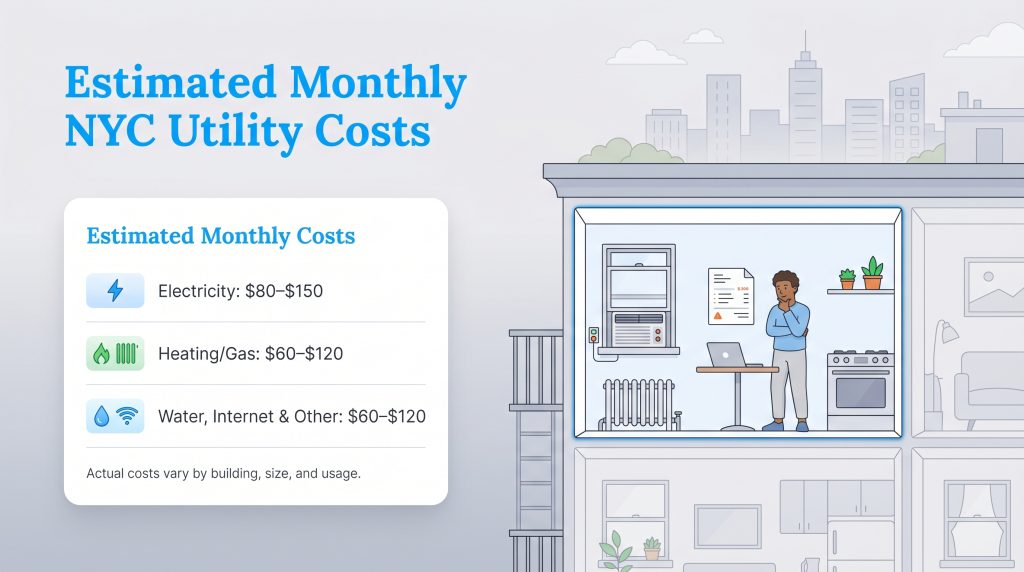
Giving yourself a realistic expectation of monthly costs will help you budget effectively for city living. The average utility bill in New York City fluctuates wildly depending on the square footage of your unit, the age of the building’s insulation, and your personal consumption habits. Seasonal shifts also drastically change these averages. Running an inefficient window AC unit around the clock in August will spike your electricity bill, while drafty windows might cause your heating costs to creep up in January if you pay for gas heat. Below is an estimated breakdown of what you can expect to pay monthly for standard utilities in a typical apartment. Please note these are rough planning estimates, and actual costs will vary based on current market rates and usage.
| Utility Service | 1-Bedroom Apartment | 2-Bedroom or Larger |
|---|---|---|
| Electricity | $75 to $120 | $130 to $200+ |
| Cooking Gas | $15 to $30 | $30 to $50 |
| Internet / Cable | $50 to $90 | $75 to $150 |
Energy-Saving Choices for Your NYC Apartment
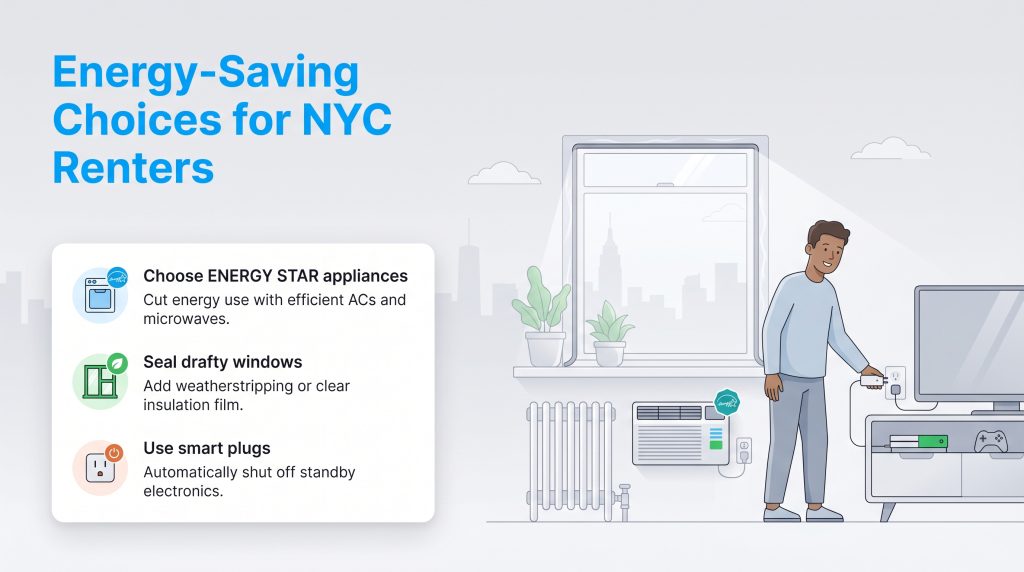
Even if you are renting on the fifth floor and cannot install solar panels on the roof, there are still plenty of ways to create an environmentally mindful home. Apartment dwellers have several actionable options for reducing energy consumption and lowering their overall environmental footprint. If you are supplying your own window air conditioners or replacing an old microwave, prioritize purchasing ENERGY STAR certified products. These appliances undergo rigorous testing to ensure they use significantly less power than standard models. Additionally, older city apartments are notorious for drafty windows that let climate-controlled air escape into the streets. Installing simple weatherstripping or using clear window insulation film during the winter provides an affordable, energy-saving solution. You can also integrate smart plugs throughout your living space to automatically shut off power to televisions and gaming consoles when they aren’t actively in use.
Make Your First Night in NYC Easier
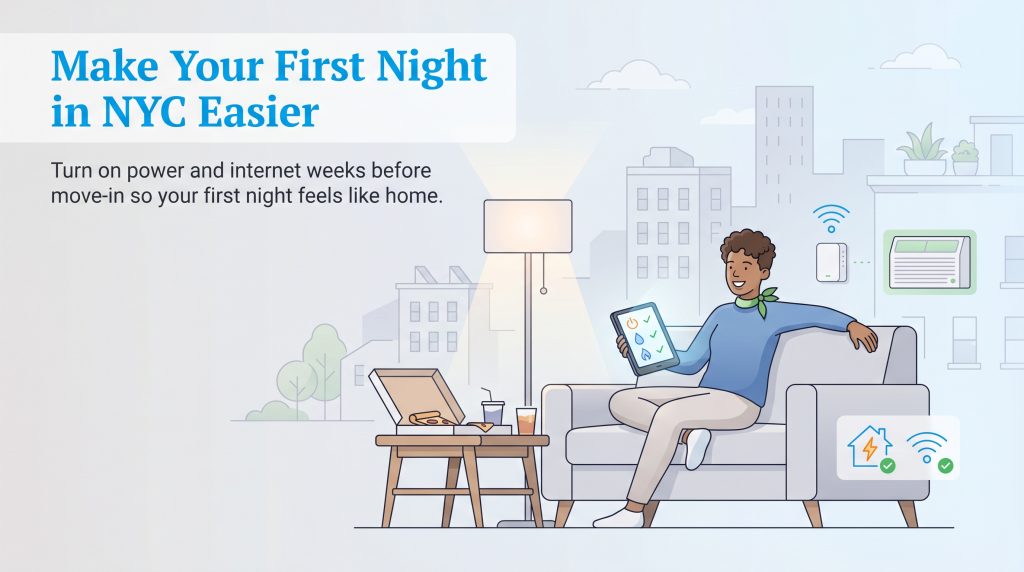
Knocking out your administrative tasks before you even pack your first moving box transforms a chaotic relocation into a highly organized transition. Tackling these utility connections a few weeks before the moving trucks arrive allows for a much more enjoyable first night in the city. Instead of scrambling to find an internet hotspot or eating takeout in the dark, you can actually relax and celebrate your new space. Welcome to New York — we hope settling into your new apartment is just the beginning of an incredible chapter.
Frequently Asked Questions About Setting Up Utilities in NYC
Setting up your apartment connections often sparks a few lingering questions. Here are the most common inquiries renters have when managing their accounts across the five boroughs.
How Much Notice Does Con Edison Need to Start Service?
Can I Set Up Con Edison Before My Lease Starts?
Do I Need to Be Home for the Utility Company to Turn On My Power?
Why Is My First NYC Electric Bill So High?
Do NYC Apartments Usually Include Heat?
Can My NYC Landlord Charge Me for Water?
How Do I Choose the Best Internet Provider in NYC?
Can I Choose a Renewable Electricity Plan in NYC?
About the Author

LaLeesha has a Masters degree in English and enjoys writing whenever she has the chance. She is passionate about gardening, reducing her carbon footprint, and protecting the environment. She also recently served as President of the Board for City Sprouts (a community garden).