
Understanding why your PECO bills are rising this summer and how you can take control of your energy choices to save money.
Key Takeaways
- PECO default electric supply rates are increasing by 3.1% on June 1, 2026, adding about $4.94 to the typical household’s monthly bill.
- The rate changes are driven by surging capacity costs on the regional PJM Interconnection grid, heavily influenced by data center growth.
- You have the power to switch to a competitive supplier to lock in a fixed rate and protect your wallet from summer price spikes.
If you are moving into a new home in southeastern Pennsylvania, or just trying to keep your current household budget from boiling over, we have some important news that might make your summer air conditioning feel a bit more stressful. On June 1, 2026, PECO implemented a 3.1% electric rate hike and a 0.52% natural gas rate hike for default-service customers. While an extra $5 on your monthly bill might sound like small change, these adjustments are hitting right as the summer heat begins, meaning your actual usage could send your bills skyrocketing. At Utilities For My Home, we believe you shouldn’t have to choose between staying cool and saving green. We have put together this friendly, comprehensive guide to help you understand exactly why these rates are changing, who is affected, and how you can use Pennsylvania’s deregulated energy market to your advantage.
What Are the New PECO Rates?
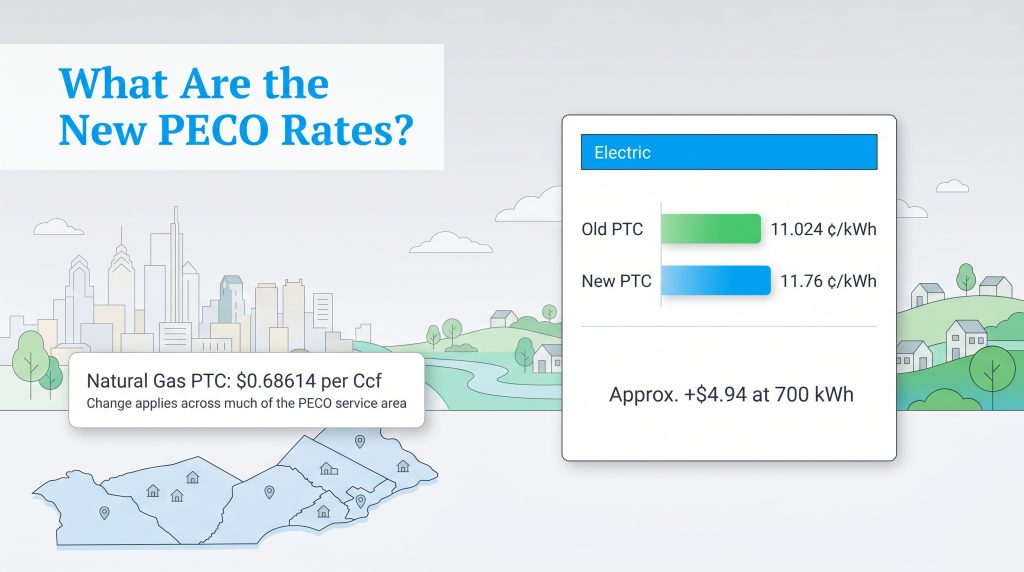
We know that looking at utility bills can feel like reading a foreign language. Under the new tariff schedules approved by the Pennsylvania Public Utility Commission (PUC), default-service residential customers will see their electric Price to Compare (PTC) rise to 11.76 cents per kWh, up from 11.024 cents. This means a typical household using 700 kWh of electricity per month will see an increase of $4.94 on their bill. Natural gas rates are also tickling upward, with the natural gas PTC climbing to $0.68614 per Ccf. Together, these changes affect approximately 3.8 million people and 1.7 million active customer accounts across the greater Philadelphia region.
Major Cities and Areas Affected by the Hike
The rate adjustments are not isolated to the city of Philadelphia itself. PECO’s massive service footprint covers about 2,100 square miles across southeastern Pennsylvania. If you live, work, or are moving into any of the following counties, you are likely impacted:
- Philadelphia County: The entire city of Philadelphia is serviced by PECO.
- Delaware County: Cities like Upper Darby, Media, and Chester.
- Bucks County: Suburban hubs including Doylestown and Bristol.
- Montgomery County: Major areas like Norristown and King of Prussia.
- Chester County: Including West Chester and surrounding communities.
- York and Lancaster Counties: The southeastern corner of York County and eastern Lancaster County.
Why Are Your PECO Rates Changing?
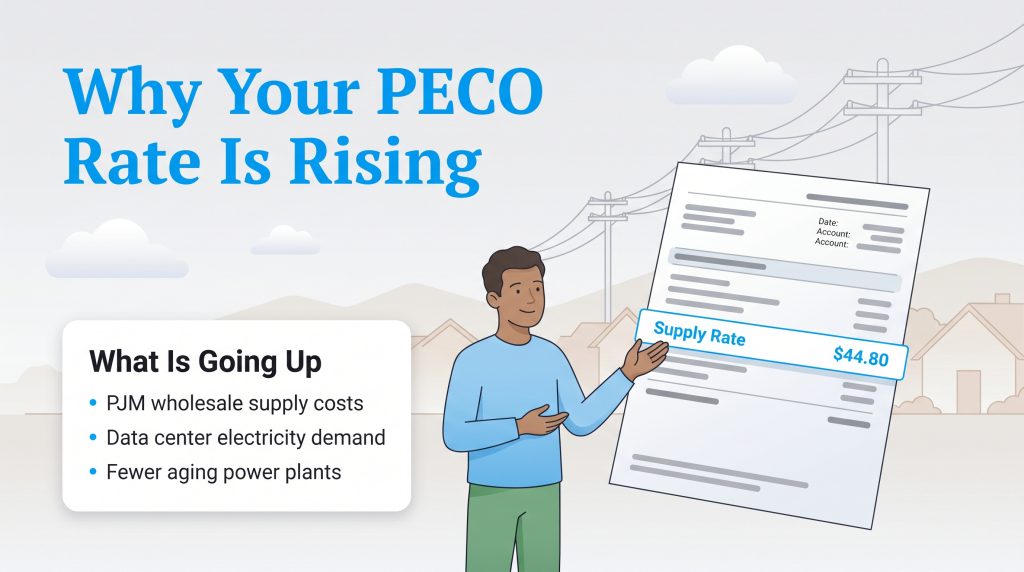
It is easy to get frustrated when your monthly bills creep up, but understanding the “why” can help you make smarter energy decisions. First, it is important to know that PECO does not actually generate the electricity you use — they simply deliver it to your home through their network of poles and wires. The rate hike you are seeing on June 1 applies strictly to the supply portion of your bill, which PECO passes directly to you without any retail markup.
The Regional Grid and the PJM Capacity Crisis
The heavy lifter behind this rate hike is a structural supply-and-demand squeeze on the regional power grid managed by the PJM Interconnection. PJM, which coordinates wholesale electricity across 13 states and Washington, D.C., secures future power reliability through capacity auctions. Recently, PJM’s capacity clearing prices have surged. The primary drivers of this squeeze include:
- Explosive Data Center Growth: The rapid expansion of massive, power-hungry artificial intelligence and cloud computing data centers across the PJM footprint has placed unprecedented demand on the grid.
- Power Plant Retirements: Older fossil-fuel plants are retiring faster than new, clean generation resources can be approved and connected to the grid.
- Widespread Electrification: The transition to electric vehicles, heat pumps, and other clean tech means the overall baseline for electricity consumption is rising.
A Slashed Infrastructure Rate Hike
There is a bit of good news in the regulatory mix. Earlier in 2026, PECO had proposed a much larger 12.5% delivery rate increase that would have added approximately $20.08 per month to a typical electric bill and $14.52 to a gas bill starting in 2027. However, following intense discussions with Governor Josh Shapiro — who publicly criticized the request as “pure greed” — and strong pushback from local community leaders, PECO officially withdrew the request. While this protects your wallet from a double-whammy delivery rate hike, the wholesale supply-side hikes from PJM are still passing through to your bill.
Potential Operational Disruptions Ahead
On top of wholesale market volatility, PECO’s local distribution network is facing some operational friction. On May 30, 2026, members of the IBEW Local Union 614 — which represents PECO’s linemen, mechanics, and call center workers — voted with a 94% supermajority to authorize a strike. While this vote does not guarantee a work stoppage, it highlights ongoing labor negotiations. If a strike does occur during the hot summer cooling season, it could delay routine maintenance and power restoration efforts if extreme weather knocks out local lines.
How to Fight Back and Lower Your Utility Bills
The beauty of living in Pennsylvania is that you are not stuck with whatever rate your utility company sets. Because the state operates under a deregulated choice framework, you have the legal right to shop around and choose a licensed competitive electric generation supplier. If you switch, PECO still delivers your electricity, handles outages, and sends your consolidated bill — but you pay the supplier’s rate instead of PECO’s default Price to Compare.
Shopping Around for the Best Fixed-Rate Plans
To start comparison shopping, the Pennsylvania Public Utility Commission (PUC) operates a neutral, independent portal called PA Power Switch. When shopping, we strongly recommend choosing a fixed-rate contract. Fixed-rate plans lock in your price per kWh for a set period (usually six to 12 months), protecting you from variable market spikes during extreme summer heatwaves. You can also read the official PUC press release to see how regional utility rate shifts compare across the state.
To help you get started, we have compiled a quick comparison of some popular residential fixed-rate plans available in the PECO service territory as of June 2026 :
| Supplier and Plan | Contract Term | Rate per kWh | Monthly Supply Cost (700 kWh) | Early Exit Fee |
| PECO Default Price to Compare | Quarterly Reset | 11.76¢ | $82.32 | $0 |
| Clearview Energy (ClearGuarantee6Plus) | 6 months | 9.6¢ | $67.20 | $0 (plus $9.99 monthly fee) |
| Public Power (Fixed Plan) | 12 months | 10.6¢ | $74.20 | Yes |
| XOOM Energy (SureLock 6) | 6 months | 11.39¢ | $79.73 | $110 |
| Direct Energy (Live Brighter 6) | 6 months | 11.59¢ | $81.13 | $0 |
Note: When analyzing supplier plans, always read the fine print. A plan with a slightly lower rate might carry a hefty early termination fee or a high monthly service charge that erases your savings.
Embracing an Environmentally Mindful Choice
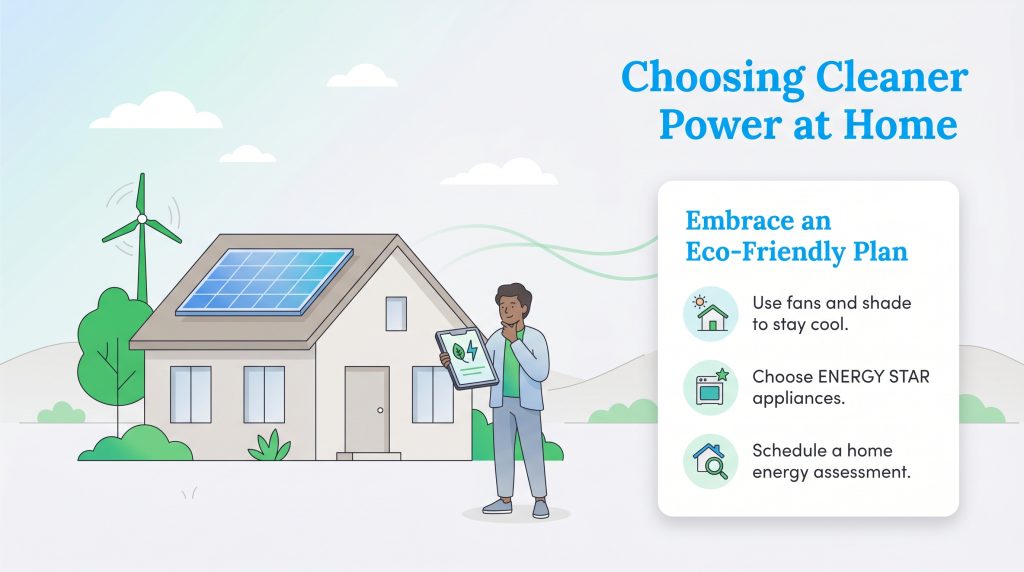
At Utilities For My Home, we love when saving money aligns with saving the planet. Shopping for a new supplier is a perfect opportunity to select an environmentally mindful choice. Many third-party energy suppliers offer plans that source 100% of their electricity from renewable resources like solar, wind, and low-impact hydro.
Practical Energy-Saving Options for Your Home
Reducing your overall electricity usage is the absolute best way to lower your bills. PECO spokesperson Candice Womer notes that simple daily habits really do add up. You can take several simple, energy-saving actions today:
- Keep It Cool Naturally: Close your blinds during the hottest hours of the day to block solar heat, and use ceiling fans to keep air moving.
- Look for ENERGY STAR Products: If you are moving or upgrading, choose appliances with the ENERGY STAR label to drastically cut your energy baselines.
- Schedule a Home Energy Assessment: You can sign up for a professional PECO home energy assessment. These audits identify areas where cool air is leaking out, helping you apply for rebates on weatherization or high-efficiency HVAC equipment.
Taking Charge of Your Home Energy Future
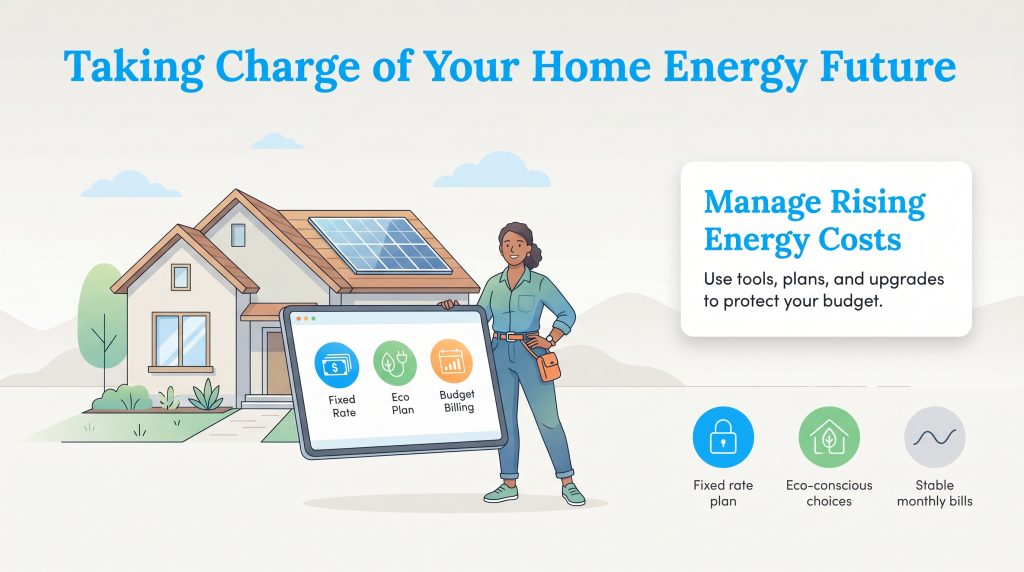
Managing your household utilities does not have to be a source of stress, even when rates are on the rise. By understanding the forces driving these PECO rate hikes and utilizing Pennsylvania’s retail shopping tools, you can actively protect your budget and make eco-conscious decisions. Whether you choose to lock in a lower fixed rate on the state’s official website, sign up for PECO’s budget billing to average out seasonal peaks, or invest in simple weatherization upgrades, taking proactive control of your energy choices today is the best way to secure peace of mind for the hot summer months ahead.
Frequently Asked Questions About PECO Rate Changes
We want to make sure you have all the answers you need to navigate this rate transition smoothly. Below, we have compiled the most common questions we hear from local residents about managing their PECO utility bills.
How do I switch my electric supplier in Pennsylvania?
What is the difference between a fixed and variable rate?
Can I also shop for a natural gas supplier?
What should I do if I am struggling to pay my PECO bill?
About the Author

Claudio is a sustainability-focused writer with a background in Anthropology and Psychology from NC State University. He has spent over 15 years working in writing, interpretation, and translation, driven by a deep interest in how human culture shapes the environment. Today, he shares his curiosity with readers by writing about sustainable living solutions and the connection between everyday choices and environmental impact.