
Understanding how synthetic gas could bridge the gap between fossil fuels and a greener future.
Key Takeaways
- Synthetic natural gas (SNG) is a man-made fuel chemically similar to the natural gas drilled from the ground.
- SNG can be produced from various sources, ranging from carbon-heavy coal to sustainable biomass and hydrogen.
- Because it works with existing pipelines and appliances, SNG is often viewed as a “drop-in” fuel that doesn’t require home upgrades.
Most homeowners know that traditional natural gas comes from underground reservoirs, but new terms like renewable gas and synthetic gas are starting to appear on utility bills and energy news. Synthetic natural gas (SNG) is a man-made alternative designed to mimic the fuel that currently powers your stove, furnace, or water heater. In this guide, we’ll explain how SNG compares to regular natural gas and help you understand the method used to create it, which determines whether it is a sustainable solution for the future or just another fossil fuel variant.
What Exactly Is Synthetic Natural Gas?
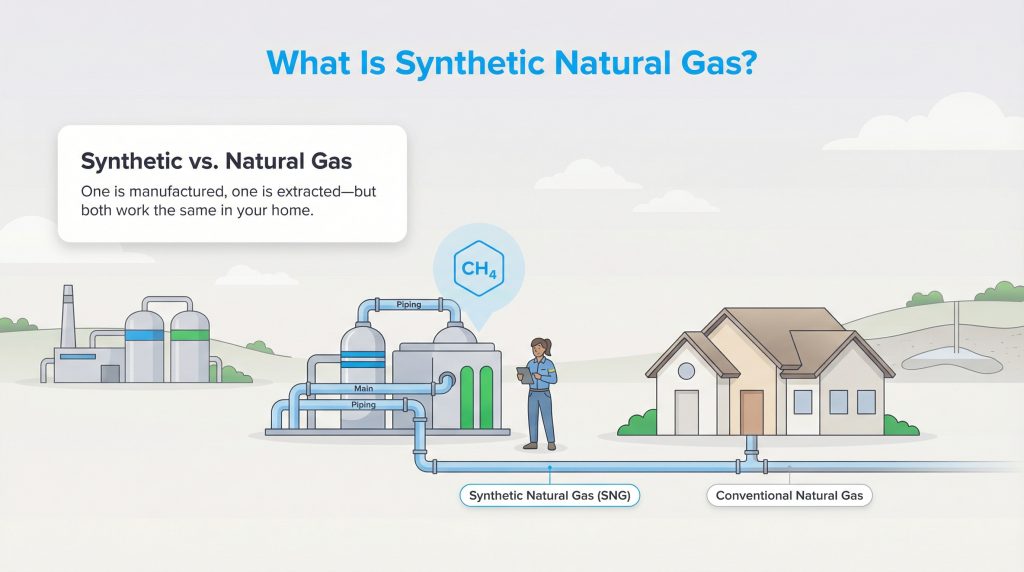
Synthetic Natural Gas, often referred to as Substitute Natural Gas, is a fuel produced from carbon-based materials rather than being extracted directly from the earth. While conventional natural gas is a fossil fuel trapped in rock formations, SNG is manufactured through chemical processes. Ideally, the final product is nearly pure methane, making it interchangeable with the gas already flowing through utility grids.
How SNG Is Made (Simply Explained)
Creating SNG generally involves a process called gasification. Engineers take a carbon source, which can be anything from coal and wood chips to municipal waste, and subject it to high heat and pressure. This breaks the material down into a mixture of gases. Through a subsequent process called methanation, this mixture is cleaned and chemically reacted to form methane. The result is a gas that carries a similar energy content to the standard natural gas you rely on for heating.
SNG vs. Conventional Natural Gas
When comparing synthetic gas to the conventional supply, the primary difference lies in their origin. Conventional gas is extracted, processed to remove impurities, and shipped. SNG is manufactured in a facility. However, once the gas enters the distribution network, it is virtually indistinguishable to the end-user. Both travel through the same natural gas pipelines and are odorless in their pure form. Utility companies add the same safety odorant, mercaptan (which smells like rotten eggs), to both fuels so you can detect leaks immediately.
The Sustainability Spectrum: Dirty Coal vs. Clean Bio-SNG

For many of us looking to reduce our carbon footprint, the source of our energy matters. SNG occupies a unique place in the energy world because it can be extremely dirty or surprisingly clean. It is only as green as the material used to make it.
Coal Gasification (The Fossil Method)
Historically, SNG was developed to turn coal into gas suitable for piping into homes and businesses. This method, known as coal gasification, is still used in some large industrial plants, such as the Great Plains Synfuels Plant in North Dakota. While this provides a steady supply of energy, it is not an eco-friendly process. Converting coal into gas releases significant carbon emissions unless advanced carbon capture and storage (CCS) technology is utilized. Even with CCS, the process is rarely emission-free, often prolonging reliance on fossil fuel extraction.
Bio-SNG and Power-to-Gas (The Green Future)
The exciting side of this technology lies in Bio-SNG and Power-to-Gas SNG. Bio-SNG is produced by gasifying biomass, such as forestry residue or agricultural waste. Even more innovative is the power-to-gas concept, where excess renewable electricity from wind or solar farms is used to split water into hydrogen, which is then combined with captured carbon dioxide to create methane. According to the National Renewable Energy Laboratory (NREL), these technologies offer a way to store renewable energy in gas form, turning intermittent wind and solar power into a reliable fuel source.
Will Synthetic Natural Gas Work in My Home?

If your utility company starts blending SNG into the local supply, you might worry about your appliances. The good news is that you generally do not need to take any action.
Compatibility with Appliances
Because synthetic natural gas is refined to be methane, it burns with the same characteristics as geological natural gas. Your existing furnace, water heater, and gas stove will run on it without modification. This compatibility is a major selling point for SNG, as it allows for a transition to cleaner fuels without forcing homeowners to invest thousands of dollars in new electric heat pumps or induction stoves immediately.
LPG-Air Systems: A Common Confusion
Homeowners sometimes confuse SNG with “peak shaving” systems used by utilities during extremely cold weather. These often involve mixing propane (LPG) with air to create a substitute fuel. When looking at LPG air mix vs natural gas, the LPG mix is heavier and behaves slightly differently, but utility companies carefully engineer the ratio so it remains compatible with standard natural gas appliances. While this is a form of “synthetic” mixture, it is distinct from the manufactured methane we discuss as SNG.
Renewable Natural Gas vs. SNG: What’s the Difference?
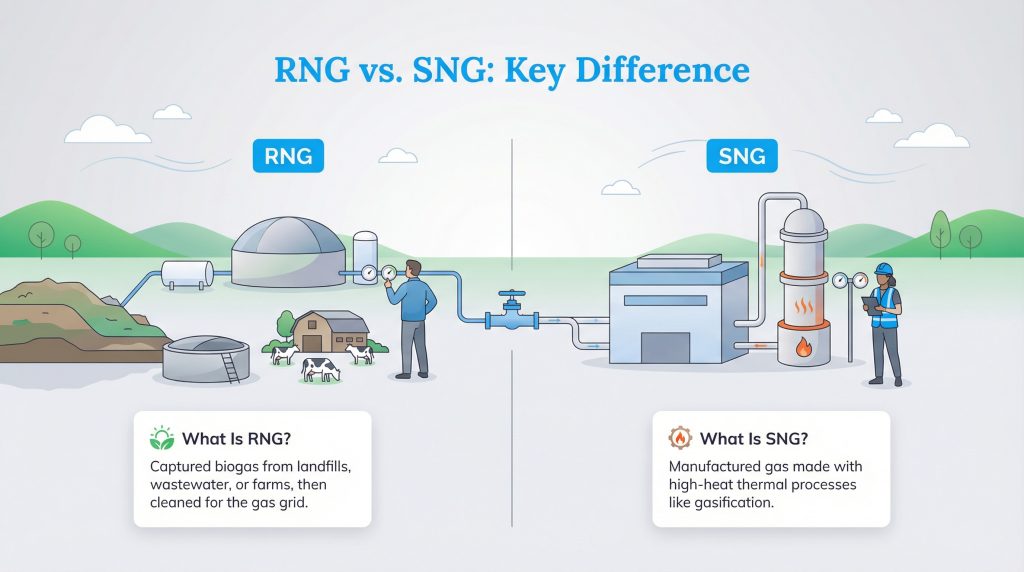
In the world of sustainable living, you will often hear about Renewable Natural Gas (RNG) and SNG used interchangeably, but there is a nuance. Renewable Natural Gas typically refers to biogas that is captured directly from decomposing organic matter in landfills, wastewater treatment plants, or dairy farms and then cleaned. SNG, on the other hand, usually refers to gas produced through a thermal manufacturing process (gasification) involving high heat.
Think of them as cousins in the green energy family. RNG is captured from biological rot, while SNG is manufactured through thermal chemistry. Both aim to displace fossil fuels in the grid.
Pros and Cons of Synthetic Natural Gas

We’ll break down the main trade-offs of SNG to help explain why it is becoming a larger part of the energy conversation.
Pros:
- Uses existing pipeline infrastructure (no new construction needed).
- Can be stored seasonally, offering reliability that batteries currently cannot match.
- Bio-SNG reduces waste and recycles carbon emissions.
Cons:
- Production can be energy-intensive and expensive compared to drilling.
- Coal-based SNG is not environmentally friendly and prolongs fossil fuel reliance.
- Still releases CO2 when burned (though Bio-SNG offsets this during the production phase).
The Future of SNG in Residential Energy

We likely won’t see synthetic natural gas replace conventional gas entirely in the near future due to production costs. As technology improves and policies evolve, utilities may increase the share of renewable gases, including Bio-SNG and RNG, in local grids. For homeowners, that could mean cleaner heating over time without immediately replacing every gas appliance.
How Synthetic Gas Fits Into Your Home’s Energy Future

Synthetic natural gas is a versatile bridge fuel that mimics the energy you already use, but its environmental impact depends heavily on how it’s made. For most homeowners, SNG will likely appear as a subtle shift in your utility’s fuel mix rather than a product you buy directly. To stay ahead of the curve, we recommend keeping an eye on your local gas utility’s sustainability reports and considering a mix of energy-efficient upgrades and cleaner fuel options for the long term.
FAQs About Synthetic Natural Gas
Is synthetic natural gas renewable?
Is SNG safer than regular natural gas?
Can I buy synthetic natural gas for my home?
Will switching to electric heating be cleaner than using synthetic natural gas?
How can I find out if my utility uses renewable or synthetic gas?
How is synthetic natural gas different from hydrogen?
What is the difference between SNG and LNG?
About the Author

LaLeesha has a Masters degree in English and enjoys writing whenever she has the chance. She is passionate about gardening, reducing her carbon footprint, and protecting the environment.