
Illinois Regulators Slash Utility Proposals by More Than 70% While Still Raising Base Delivery Rates This December
Key Takeaways
- Illinois regulators cut 72% to 78% from the original utility requests, approving a $40.4 million (4.1%) base delivery hike for Peoples Gas and a $1.9 million (1.8%) increase for North Shore Gas.
- The higher base delivery rates will take effect no later than Dec. 18, 2026, impacting nearly 900,000 Chicago customers and about 166,000 northern suburban households.
- Because Illinois is a deregulated natural gas choice state, you can shop for a lower supply rate, enroll in Budget Billing, or tap into LIHEAP and energy-saving rebates to help cushion your winter heating costs.
If you heat your home with natural gas in Chicago or the northern suburbs, your monthly utility bill is getting a small bump right as winter settles in. On Nov. 19, 2026, the Illinois Commerce Commission (ICC) approved new base delivery rate increases for both Peoples Gas and North Shore Gas, though regulators trimmed the vast majority of what the utilities originally requested. We broke down the numbers, the exact communities affected, and the practical steps you can take right now to keep your winter heating bills manageable.
What the Illinois Commerce Commission Approved
The ICC’s written orders delivered a mixed result for northern Illinois households. While consumer advocates pushed back against any increase, regulators rejected more than $100 million in proposed charges from WEC Energy Group, the parent company of both utilities that reported $1.6 billion in profits in 2025. According to the WEC Energy Group SEC Form 8-K filing, the approved rate hikes must go into effect no later than Dec. 18, 2026.
| Rate Metric | Peoples Gas (PGL) | North Shore Gas (NSG) |
| Original Request (Jan. 5, 2026) | $144 million (down from $202 million in early filings) | $8.7 million |
| Approved Base Rate Increase | $40.4 million ($40.3 million in state news tallies) | $1.9 million |
| Amount Cut by the ICC | ~72% ($103 million cut) | ~78% ($6.8 million cut) |
| Base Delivery Rate Hike | 4.1% | 1.8% |
| Authorized Return on Equity | 9.48% (down from 10.1% sought) | 9.48% (down from 10.1% sought) |
| Customers Affected | Nearly 900,000 | About 166,000 |
| Effective Date | No later than Dec. 18, 2026 | No later than Dec. 18, 2026 |
Why Natural Gas Delivery Rates Are Rising
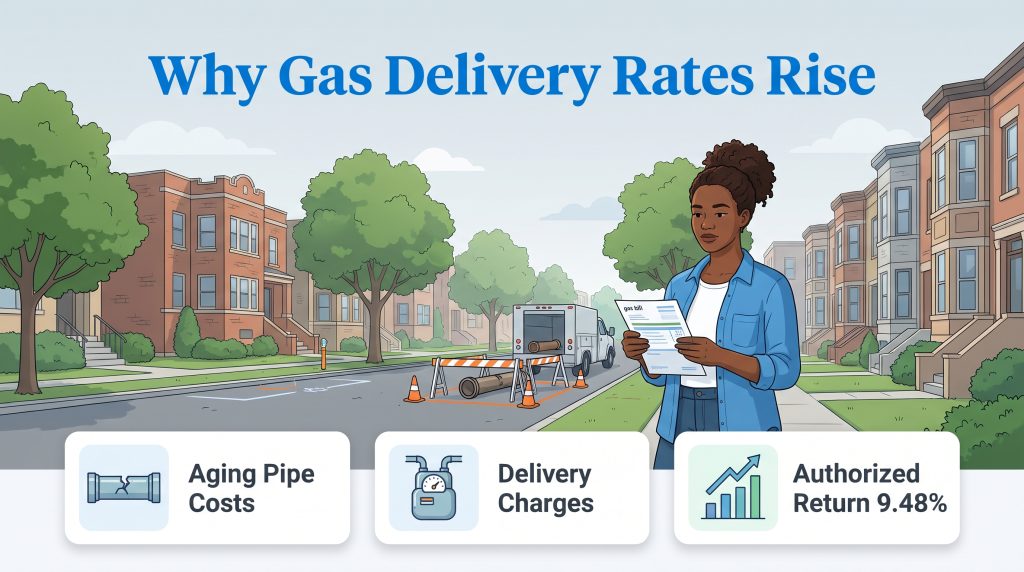
Understanding why your gas bill is going up helps you know which parts of the bill you can control. These increases apply strictly to base delivery rates — the regulated charges that pay for underground pipelines, maintenance, and utility shareholder returns — which make up roughly two-thirds of a typical residential gas bill.
Aging Pipe Retirement Costs
The biggest driver behind the Peoples Gas filing was its ongoing program to retire aging cast-iron natural gas pipes beneath Chicago. While the ICC kept the safety mandate in place, Capitol News Illinois reported on the rate decision that regulators criticized the utility’s approach to pipe retirement as unnecessarily narrow and expensive. The commission plans to reevaluate the program’s spending and progress after reviewing a Safety Monitor report in March 2027.
Utility Shareholder Profit Margins
Both Peoples Gas and North Shore Gas requested a 10.1% return on equity for shareholders. Consumer watchdogs, including the Citizens Utility Board statement on the Peoples Gas ruling, argued that profit margins should stay capped at 9.45% or lower, especially after Peoples Gas had already raised rates by $499 million since 2011. Regulators landed in the middle, setting the authorized return at 9.48%.
Regions and Communities Impacted by the Rate Hikes
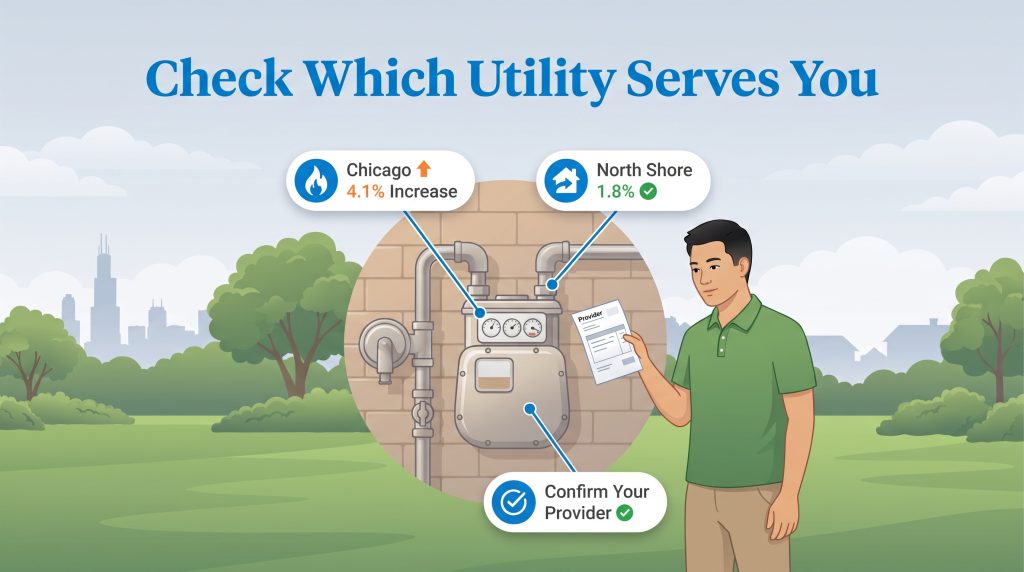
Because natural gas service territories in northern Illinois overlap across county lines, your specific address determines whether you’ll see these new delivery rates on your statement. Together, the two utilities serve more than one million residential and commercial accounts across Cook County and Lake County.
- City of Chicago (Peoples Gas): Nearly 900,000 customers across all Chicago neighborhoods fall under the 4.1% base delivery rate increase.
- Northern Suburbs and Lake County (North Shore Gas): Roughly 166,000 customers (including about 152,000 residential accounts) across 54 communities stretching from Winnetka north to the Wisconsin border fall under the 1.8% increase. Major municipalities include Waukegan, Gurnee, Libertyville, Lake Forest, North Chicago, and Park City.
- Neighboring Suburbs Not Affected: Many nearby Cook County suburbs — including Evanston, Skokie, Des Plaines, Northbrook, and Glenview — receive natural gas from Nicor Gas rather than Peoples Gas or North Shore Gas. Towns like Buffalo Grove and Waukegan also have split service boundaries, so we recommend checking the utility name at the top of a recent bill to confirm your provider.
How Much More You Could Pay Each Month
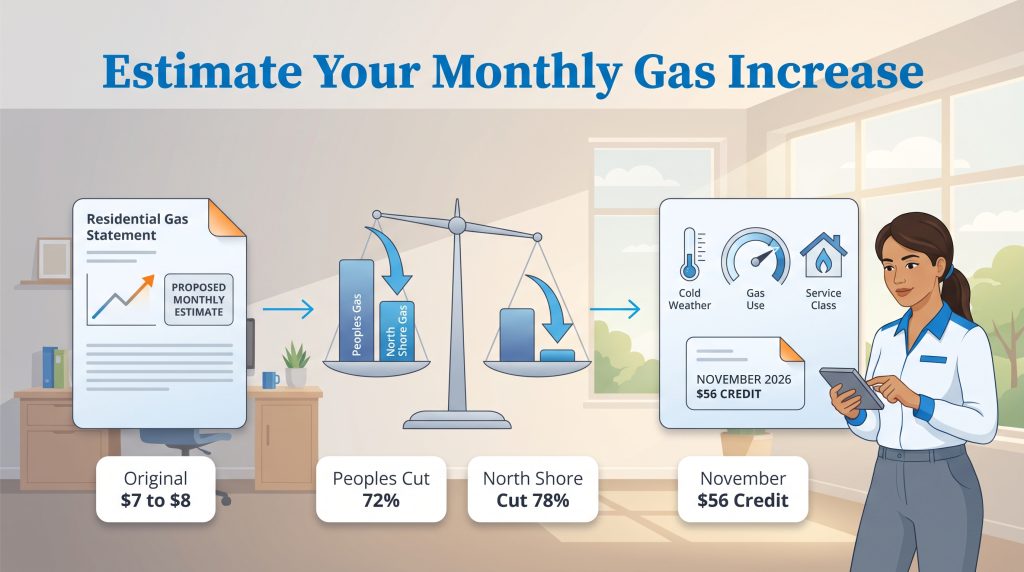
Because regulators cut 72% from Peoples Gas’s proposal and 78% from North Shore Gas’s proposal, the hit to your monthly budget will be much smaller than originally feared. Peoples Gas’s initial $144 million request would have added an estimated $7 to $8 per month to an average residential bill, meaning the approved increase will translate to a fraction of that amount.
Your exact monthly increase will still depend on your service class and how much gas you burn during cold snaps. On the bright side, Peoples Gas customers received an average $56 bill credit in November 2026, which provides a brief cushion right before the higher delivery charges appear on winter statements.
Ways to Lower Your Natural Gas Bill This Winter
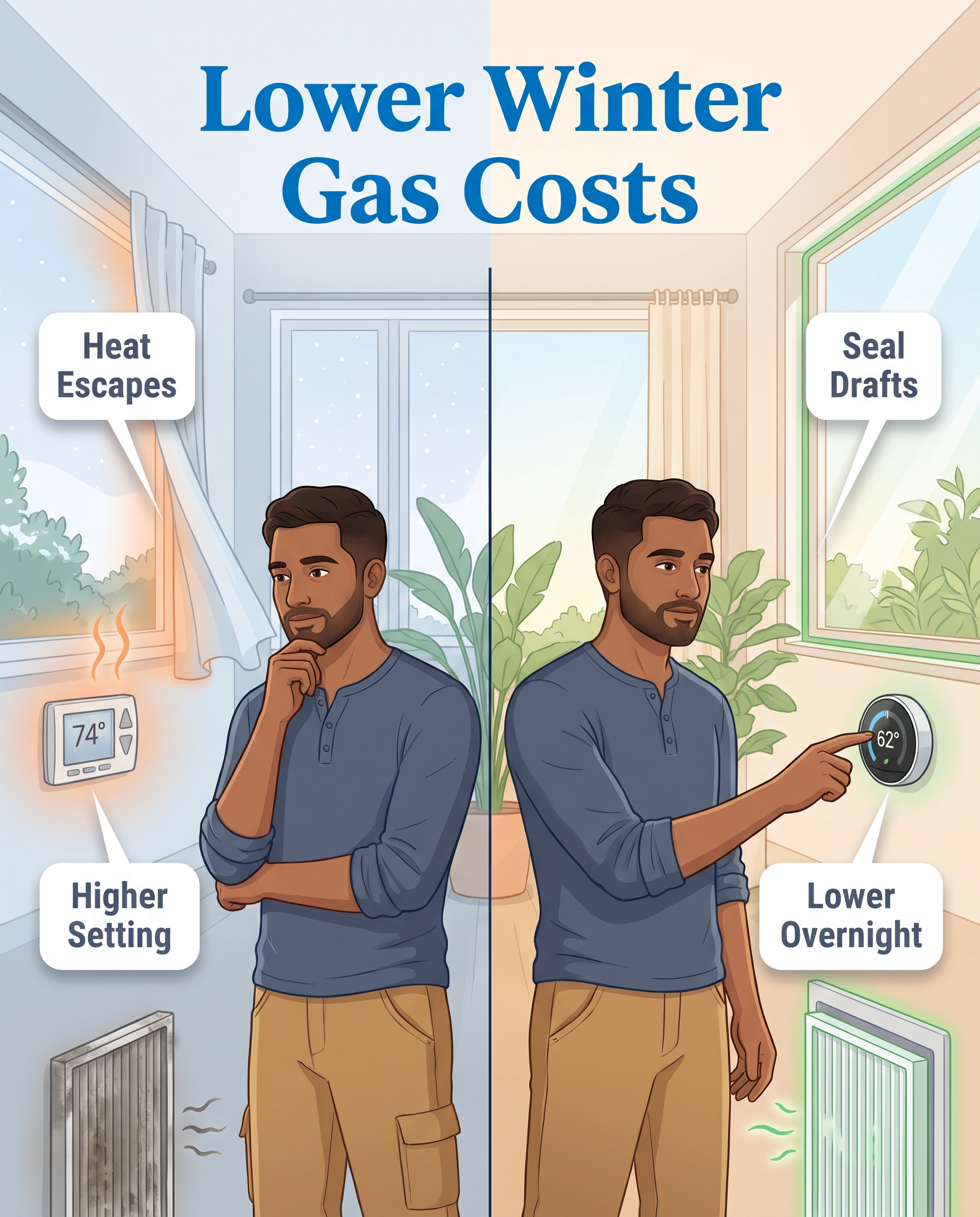
You can’t opt out of regulated delivery fees, but you still have several practical ways to keep your heating costs in check. Combining smart supplier shopping with eco-conscious home upgrades can offset a delivery hike and lower your carbon footprint at the same time.
Shop the Illinois Natural Gas Choice Market
Illinois is a deregulated natural gas choice state, which means Peoples Gas and North Shore Gas customers can choose a licensed Alternative Gas Supplier (AGS) for the supply portion of their bill. Switching suppliers won’t eliminate the new utility delivery rate, since Peoples Gas or North Shore Gas will still maintain your pipes and handle emergencies, but locking in a competitive supply rate can reduce your overall total.
Peoples Gas’s default gas supply rate fluctuates every month with the wholesale market, sitting at $0.3518 per therm in November 2026. If you prefer predictable winter bills, compare fixed-rate plans from licensed suppliers against your utility’s monthly gas charge, and read the fine print carefully to avoid variable-rate teaser offers that spike after a few billing cycles.
Enroll in Budget Billing
Both Peoples Gas and North Shore Gas offer Budget Billing to smooth out seasonal price swings. Instead of paying low bills in July and jarring bills in January, the utility estimates your annual gas usage and divides it into 12 roughly equal monthly payments, reviewing your account every six months to keep you on track.
Apply for LIHEAP and Local Utility Assistance
If heating bills are straining your household budget, financial help is open for the 2026 – 2027 winter season:
- LIHEAP: Income-eligible Illinois households can apply for the Low Income Home Energy Assistance Program starting Nov. 1. Chicago-area residents can apply through CEDA at 800-571-2332, or reach the Illinois Department of Commerce and Economic Opportunity at 833-711-0374.
- Share the Warmth and Low-Income Discounts: Peoples Gas offers one-time Share the Warmth grants of up to $200 for eligible past-due accounts, along with an ongoing Low Income Discount program.
- Illinois Home Weatherization Assistance Program (IHWAP): Qualifying households can receive free air sealing, insulation, and furnace efficiency upgrades that permanently cut heating waste.
Choose Energy-Saving Home Upgrades
Using less gas is the most reliable way to beat any rate increase, and it’s an environmentally mindful choice that trims household emissions. Both Peoples Gas and North Shore Gas offer free home energy assessments and cash rebates when you upgrade to ENERGY STAR certified smart thermostats, high-efficiency furnaces, or upgraded attic insulation. Even simple, low-cost habits like sealing drafty window frames, replacing furnace filters regularly, and dialing your thermostat back three to five degrees overnight can noticeably shrink your monthly therm usage.
Preparing Your Home for Winter Gas Bills
While the ICC’s decision spared Chicago and northern suburban households from the steep hikes utilities originally wanted, higher base delivery rates are still arriving just in time for the coldest stretch of the year. Taking a few minutes now to review your recent gas bill, compare fixed-rate supply options in Illinois’s deregulated market, and claim available energy-saving rebates puts you back in control before temperatures drop.
About the Author

Claudio is a sustainability-focused writer with a background in Anthropology and Psychology from NC State University. He has spent over 15 years working in writing, interpretation, and translation, driven by a deep interest in how human culture shapes the environment. Today, he shares his curiosity with readers by writing about sustainable living solutions and the connection between everyday choices and environmental impact.