
Major utilities announce double-digit price hikes: What every Massachusetts homeowner needs to know about the March rate revision.
Key Takeaways
- Record Rate Hikes: Major utilities across Massachusetts are seeing substantial rate increases this March, with some providers nearly doubling their per-therm costs compared to February levels.
- Immediate Relief Available: Governor Maura Healey has implemented a temporary 10% rate reduction for residential customers to help “smooth” these spikes, with interest charges waived for deferred payments.
- Underlying Drivers: The surge is fueled by state-mandated pipeline safety upgrades (GSEP) and a significant rise in energy demand from regional AI and data center expansions.
- Actionable Support: Eligible low-income households can access the Home Energy Assistance Program (HEAP) for direct bill credits and 100% covered efficiency upgrades through Mass Save.
Massachusetts residents are facing a significant financial squeeze this month as natural gas rates across the Commonwealth’s five major investor-owned utilities have climbed sharply for March 2026. The price adjustments, which reflect a combination of seasonal demand, global market volatility, and long-term infrastructure investments, see some residents paying nearly $0.75 more per therm than they did just 30 days ago.
The March 2026 Rate Landscape
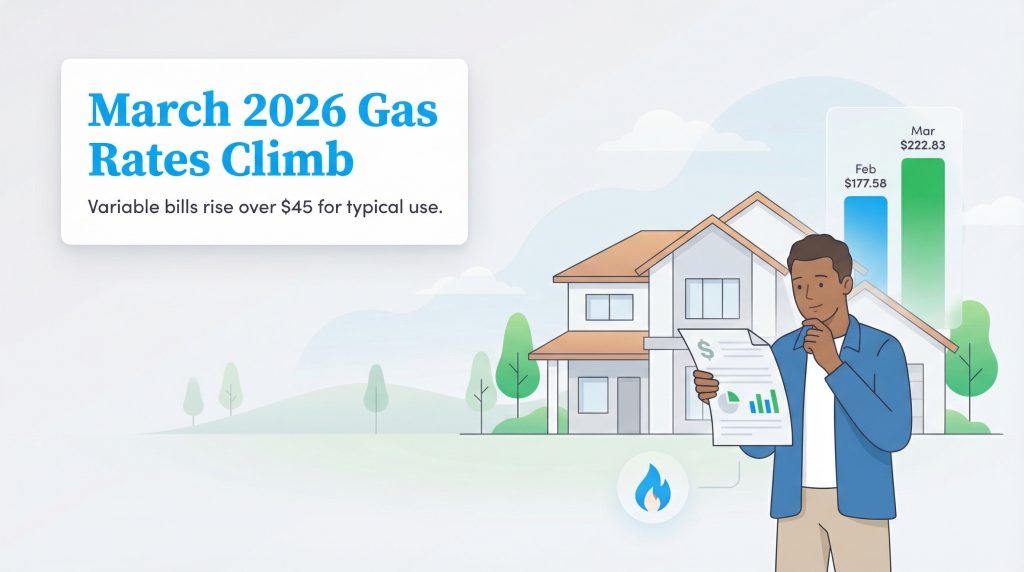
The following table outlines the rate transitions from February to March for the state’s primary providers. These figures include both the gas supply (commodity) and the local delivery charges.
| Utility Provider | February Rate ($/therm) | March Rate ($/therm) | Percentage Increase |
| National Grid | 1.5226 | 1.7901 | 17.6% |
| Eversource | 1.4798 | 1.8569 | 25.5% |
| Liberty Utilities | 0.9919 | 1.7383 | 75.3% |
| Unitil | 1.1299 | 1.6632 | 47.2% |
| Berkshire Gas | 0.7853 | 1.0933 | 39.2% |
For a typical heating customer using 120 therms a month, an Eversource customer will see their variable bill costs rise from $177.58 to $222.83, a monthly increase of over $45.
Why Are Rates Increasing?
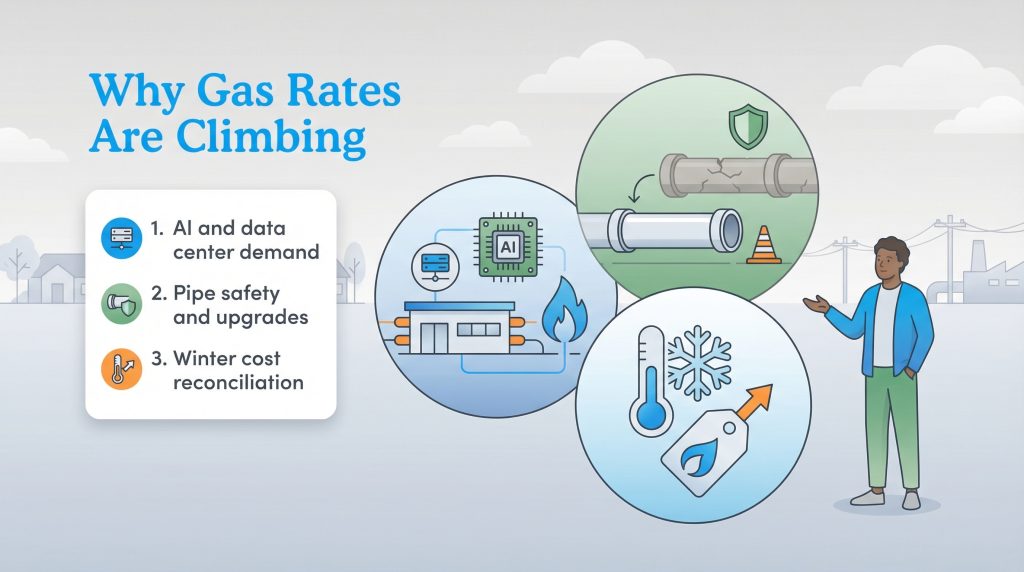
The March escalation is not the result of a single event but a “perfect storm” of regulatory and economic factors:
- The AI and Data Center Boom: New England’s grid is under unprecedented pressure from the rapid expansion of artificial intelligence infrastructure and large-scale data centers. These facilities require massive amounts of electricity, much of which is generated by natural gas, driving up wholesale prices for everyone.
- Infrastructure Modernization (GSEP): Under the state-mandated Gas System Enhancement Program, utilities are permitted to recover the costs of replacing aging, leak-prone cast iron and steel pipes. National Grid, for example, is currently seeking a $342 million revenue increase largely to support these safety and reliability upgrades.
- Winter Procurement Reconciliation: Following extreme weather events like the February 2026 blizzard, utilities were forced to buy supplemental gas on the expensive “spot market.” March rates (often referred to as Revision 4) are the mechanism used to reconcile these actual costs with previous estimates.
Impacted Cities and Service Areas
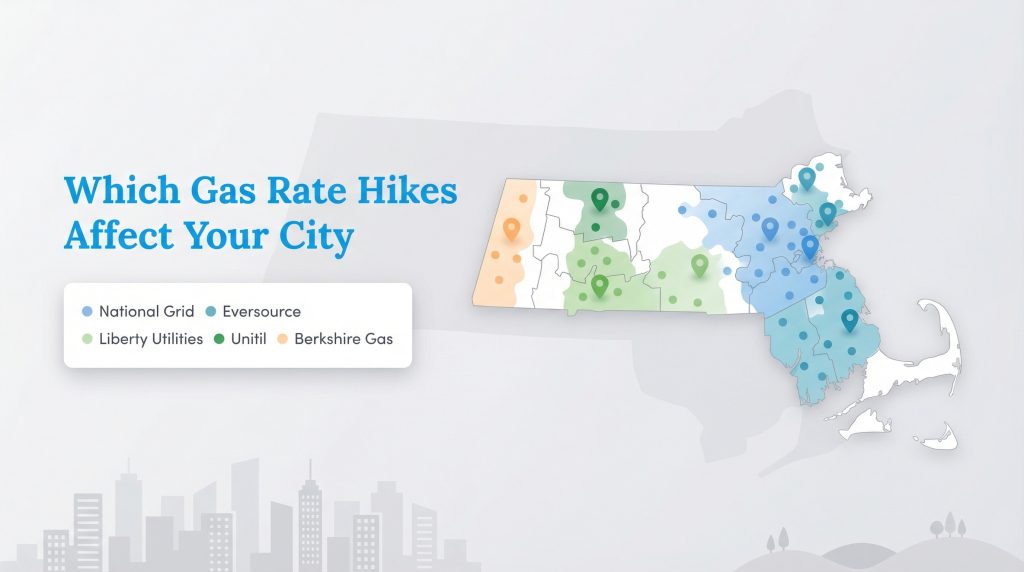
The rate hikes are nearly universal, impacting major urban centers and rural communities alike:
- National Grid: Serves Boston, Quincy, Lowell, Worcester, and Cape Cod (Barnstable, Falmouth).
- Eversource: Covers Cambridge, Somerville, New Bedford, Brockton, and Springfield.
- Liberty Utilities: Impacts the South Coast and Norfolk County, including Fall River, North Attleboro, and Blackstone.
- Unitil: Serves the North-Central region, specifically Fitchburg, Ashby, and Townsend.
- Berkshire Gas: Provides service to 20 Western MA towns including Pittsfield, North Adams, Greenfield, and Amherst.
How to Manage Higher Bills
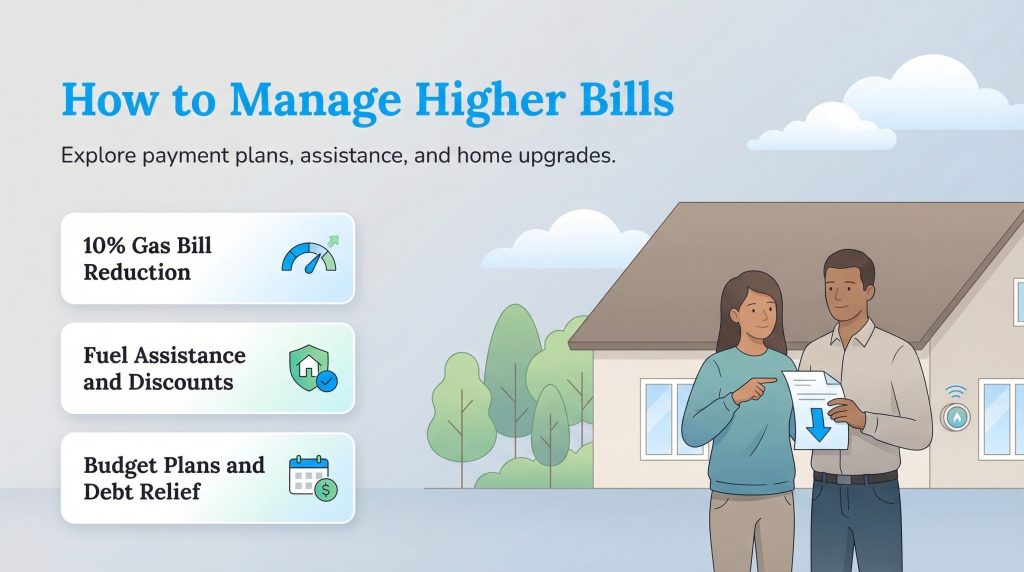
The Healey-Driscoll administration has intervened to provide immediate relief for residential customers.
- The 10% Reduction Plan: Residential customers of the five major utilities will see a 10% reduction in their gas rates for February and March usage. These costs are being deferred to summer months, and the utilities have agreed to waive all interest charges on these balances.
- Fuel Assistance (HEAP): Households with incomes at or below 60% of the state median (approximately $99,573 for a family of four) can apply for the Home Energy Assistance Program. This provides a fixed benefit paid directly to the utility and automatically qualifies you for a discount rate of 20% to 42%.
- Mass Save: All residents should consider a no-cost Home Energy Assessment. This program can lower heating costs by up to 15% through free air sealing and heavily subsidized insulation upgrades.
For those struggling to pay, contact your utility immediately to ask about Budget Billing, which averages your annual costs into 12 equal monthly payments, or Arrearage Management Programs that offer debt forgiveness for qualified customers.
About the Author

David has been an integral part of some of the biggest utility sites on the internet, including InMyArea.com, HighSpeedInternet.com, BroadbandNow.com, and U.S. News. He brings over 15 years of experience writing about, compiling and analyzing utility data.