
Residential Customers Face Higher Delivery Charges Starting This Fall
Key Takeaways
- Average residential gas bills will increase by $10.81 per month under interim rates before final regulatory approval.
- Columbia Gas plans a secondary rate bump of $3.03 per month in October 2027 to fund infrastructure upgrades.
- Eligible Virginians can apply for heating assistance through the state Fuel Assistance program starting Oct. 13.
As outdoor temperatures drop across the Commonwealth, more than 290,000 Virginia households face a sharper increase in their seasonal heating bills. Columbia Gas of Virginia has enacted an interim base rate increase that adds nearly $11 each month to typical residential accounts while state regulators continue reviewing the utility’s $78.9 million modernization petition. Because residential consumers cannot purchase natural gas from competing retail suppliers in this service territory, navigating this heating season requires understanding why rates are rising, where the changes hit hardest, and how to protect your household budget before winter arrives.
Understanding the Virginia State Corporation Commission Rate Case
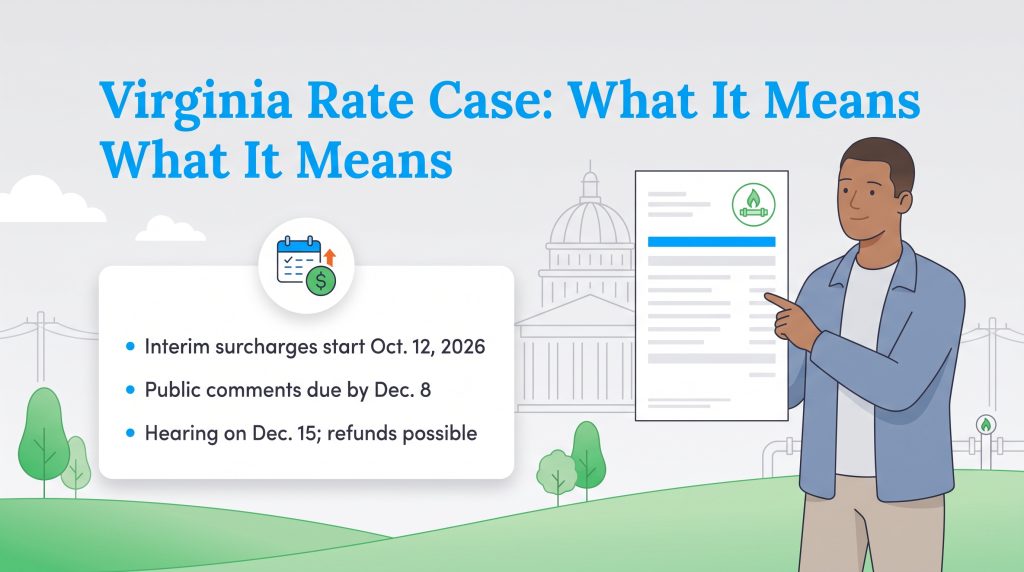
Utility regulations in Virginia grant investor-owned energy companies the ability to enact interim tariffs while their formal applications undergo regulatory scrutiny. Columbia Gas filed its application with the Virginia State Corporation Commission in May, requesting a two-phase revenue bump to finance extensive communications infrastructure, advanced metering rollouts, and pipeline safety replacements. Under Virginia regulatory procedure, the interim surcharge took effect for service rendered on or after Oct. 12, 2026, meaning your upcoming bills will directly reflect the adjustment.
The formal proceeding remains active, and ratepayer feedback plays an essential role in the final ruling. The State Corporation Commission has opened a public comment period running through Dec. 8, followed by a formal hearing on Dec. 15, 2026. If the commission eventually determines that Columbia Gas is entitled to less revenue than what the interim tariffs collect, the utility must issue customer refunds with interest.
How the Interim Rate Adjustment Changes Your Monthly Bill
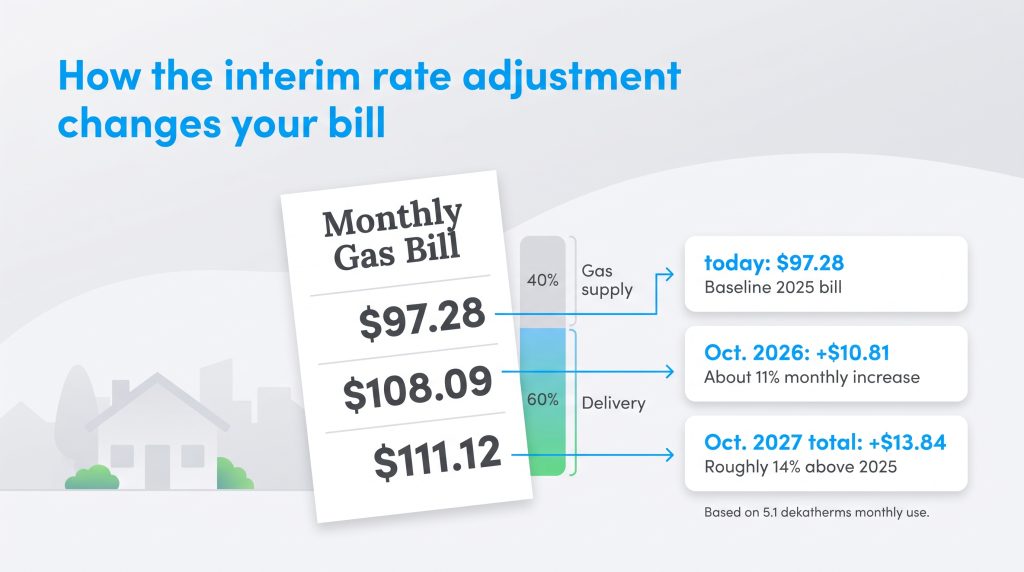
Your natural gas invoice contains two primary components: the cost of the gas supply itself and the base rate delivery charge. The commodity price passes directly to consumers without utility profit or markup, whereas base rates cover pipes, meters, maintenance, and administrative operations.
| Billing Component | Current Average | Interim Rate (Oct. 2026) | Proposed Rate (Oct. 2027) | Total Change |
| Typical Monthly Bill (5.1 Dth) | $97.28 | $108.09 | $111.12 | +$13.84 (+14.2%) |
| Monthly Increase | Baseline | +$10.81 (+11.1%) | +$3.03 (+2.8%) | N/A |
| Annualized Bill Outflow | $1,167.36 | $1,297.08 | $1,333.44 | +$166.08 |
For a household using the utility benchmark of 5.1 dekatherms monthly, base distribution fees represent about 60% of total charges. The initial interim hike raises monthly payments by 11.11%, pushing typical seasonal costs from $97.28 to $108.09. If the commission approves the second phase requested for October 2027, bills will jump another $3.03 per month, representing a total increase of roughly $14 over 2025 rates as reported by Cardinal News.
Impacted Virginia Counties and Municipal Service Areas
Columbia Gas operates an extensive delivery network that spans 98 cities, towns, and counties across Virginia. Unlike deregulated energy markets where shoppers can change suppliers, residents within this territory receive distribution and commodity supply directly from Columbia Gas as a regulated monopoly.
Central Virginia and the Piedmont
Central communities such as Chesterfield and Prince George counties, alongside Piedmont towns, represent a large share of the utility’s suburban customer base. Infrastructure investments in these growing suburbs focus on replacing aging distribution lines and deploying advanced automated meters to streamline meter-reading routes.
Southside Virginia and the Lynchburg Metro Region
In Lynchburg, Bedford, and surrounding Southside areas, thousands of homeowners depend on natural gas as their primary heating fuel. Because local temperatures in the foothills drop earlier in autumn, families in these communities will notice the higher delivery charges immediately on November invoices.
Shenandoah Valley and Southwest Virginia
The utility also provides service to households throughout Alleghany and Giles counties. Rural terrain often increases maintenance and pipeline stabilization expenses, which Columbia Gas cited as a major justification for its capital modernization investments.
Practical Steps to Shield Your Household Budget
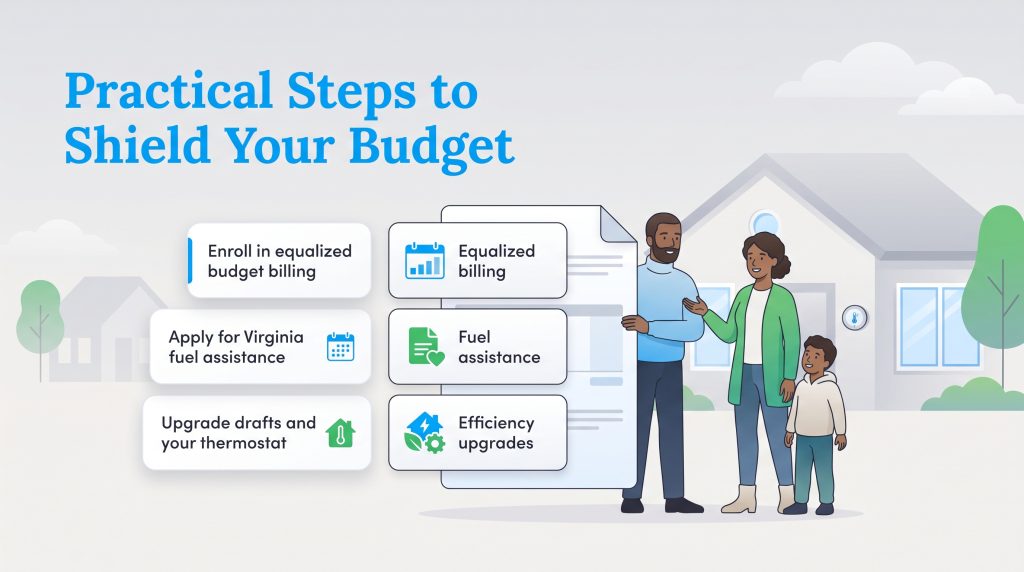
While you cannot switch to an alternative natural gas provider, you can implement effective budgeting adjustments and efficiency upgrades to control your utility expenses this season.
Enroll in Equalized Budget Billing
Cold-weather natural gas usage frequently spikes bills in January and February. Enrolling in Columbia Gas budget billing recalculates your anticipated yearly usage and splits it into 12 consistent monthly installments, eliminating sharp winter budget shocks.
Apply for Virginia Fuel Assistance Programs
Income-eligible households should explore state and local assistance programs before winter arrives. The Virginia Department of Social Services accepts applications for its Fuel Assistance program from Oct. 13 through Nov. 13, 2026. This federally funded program helps qualifying families pay heating bills regardless of whether their heat comes from gas, electricity, or heating oil.
Implement High-Return Efficiency Upgrades
Reducing demand remains the cleanest, most environmentally mindful choice for curbing your winter expenses. Sealing drafts along windows and doors with weatherstripping can reduce heating waste by up to 10%. Pairing proper air sealing with an ENERGY STAR certified smart thermostat lets you schedule automated temperature rollbacks when your home is unoccupied, keeping your heating system operating efficiently.
Managing Your Home Energy Costs This Winter and Beyond
Coping with rising utility bills requires proactive planning, particularly when distribution tariffs increase before cold weather sets in. Keeping track of the State Corporation Commission docket ensures you stay informed about potential rate refunds or future adjustments. By combining equalized budget payments, state assistance options, and sensible home weatherization, you can protect your monthly finances from the full impact of these rate changes.
Frequently Asked Questions
Can I choose a different natural gas company in Virginia?
What happens if the State Corporation Commission rejects or reduces the rate hike?
When can eligible households apply for Virginia Fuel Assistance?
How do I submit public comments regarding this rate case?
About the Author

Claudio is a sustainability-focused writer with a background in Anthropology and Psychology from NC State University. He has spent over 15 years working in writing, interpretation, and translation, driven by a deep interest in how human culture shapes the environment. Today, he shares his curiosity with readers by writing about sustainable living solutions and the connection between everyday choices and environmental impact.