

Prepare for a seamless transition to the Centennial State by mastering your home setup and utility options
Key Takeaways
- Establish your utility services early by researching local electric cooperatives or major providers like Xcel Energy before your move-in date.
- Embrace eco-conscious living by taking advantage of Colorado’s abundant sunshine with solar options and energy-efficient home upgrades.
- Handle DMV deadlines early by updating your Colorado driver’s license within 30 days and confirming the vehicle registration timeline for new residents.
Moving to Colorado offers a mix of breathtaking mountain landscapes, vibrant city living, and a strong culture of outdoor adventure, but settling in requires more than just unpacking boxes. Transitioning to this unique state means navigating a competitive housing market, understanding regional utility providers, and adapting to a climate that experiences abundant sunshine alongside snowy winters. Whether you’re relocating to the bustling streets of Denver, a quiet mountain town, or the sprawling Front Range, taking the time to set up your home efficiently and sustainably will save you time, money, and energy. This guide walks you through the essential steps to quickly establish your utilities, reduce your environmental footprint, and make your new Colorado house feel like home.
Understanding the Colorado Cost of Living and Housing Market
Relocating to Colorado often comes with a bit of sticker shock, especially if you’re coming from the Midwest or South. The cost of living in Colorado currently sits higher than the national average, largely driven by the competitive housing market in major metropolitan areas. Cities like Denver, Boulder, and Colorado Springs command premium prices for both renting and buying due to high demand and their proximity to world-class amenities. If you prefer a quieter pace, exploring rural communities or smaller mountain towns might offer slightly more affordable real estate, though remote areas sometimes carry higher transportation and grocery costs. Renters may also face higher upfront costs, such as security deposits, pet rent, parking, or application fees.
While housing expenses might take up a larger portion of your budget, you can find financial relief in other areas. Colorado property taxes are relatively low compared with many states, which can help offset some ownership costs. Balancing your monthly budget requires a realistic look at your location choice, as living closer to ski resorts or downtown hubs will naturally stretch your wallet further than settling in the eastern plains. Homeowners should also check insurance costs early, paying special attention to wildfire and hail coverage, as these regional threats can significantly impact premiums.
📌 Quick Fact: While housing costs might be higher than the national average in certain cities, Colorado’s residential electricity rates are often competitive and frequently fall below the national average.
Setting Up Your Colorado Utilities
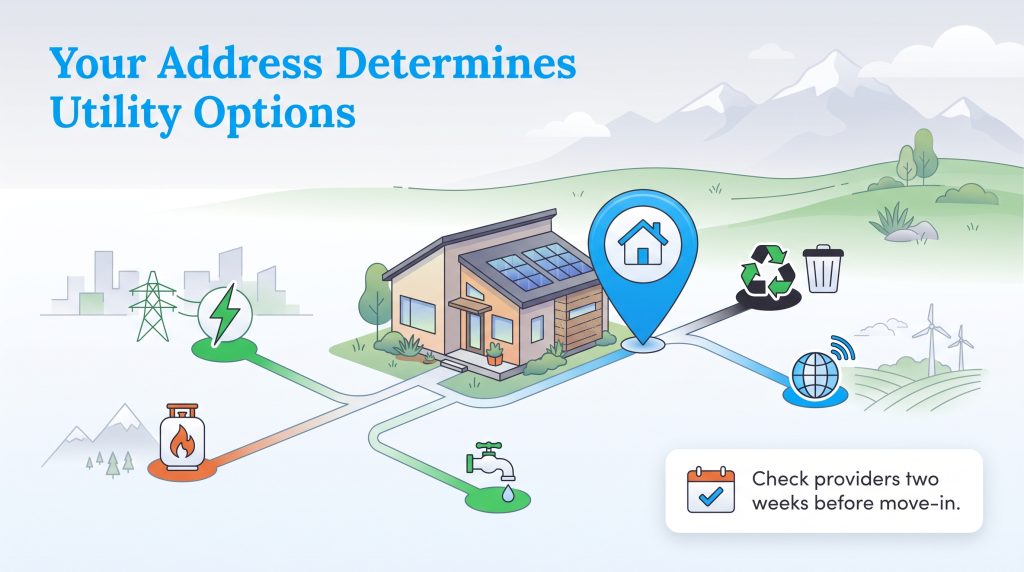
Your Colorado utilities setup will largely depend on your specific zip code and whether you live within city limits or in an unincorporated county. The state features a diverse mix of utility structures, including investor-owned companies like Xcel Energy, robust municipal operations like Colorado Springs Utilities, and numerous rural electric cooperatives powering the mountains and plains. Your exact address determines your available providers, so identifying them before moving day guarantees you won’t spend your first night in the dark.
| Area | Common Utility Setup Notes |
|---|---|
| Denver Metro / Front Range | Xcel Energy commonly provides electric and natural gas service in many communities, though municipal and co-op territories vary. |
| Colorado Springs | Colorado Springs Utilities provides electric, natural gas, water, and wastewater services within its service area. |
| Northern Colorado | Communities may use municipal utilities, Xcel Energy, or electric cooperatives depending on the address. |
| Mountain Communities | Electric cooperative service is common, and some homes may rely on propane instead of piped natural gas. |
| Rural Eastern / Western Colorado | Co-ops, municipal providers, propane delivery, wells, and septic systems may be more common depending on the property. |
Electricity and Natural Gas Providers
Finding your Colorado electricity providers starts with checking your new address through the local county website or asking your landlord or real estate agent. It’s always a smart idea to ask the previous owner or landlord for utility history so you know what costs to expect. In densely populated areas along the Front Range, you’ll likely encounter large investor-owned utilities like Xcel Energy or Black Hills Energy that handle both electricity and natural gas under one convenient account. However, mountain residents or those in smaller rural communities often rely on rural electric cooperatives for power and separate private companies for propane or natural gas delivery.
To ensure a smooth transition, we highly recommend initiating your utility transfers at least two weeks before your move-in date. Delays during peak moving seasons are common, and getting your name on the schedule early provides peace of mind. Taking a look at Colorado’s energy profile reveals a state actively transitioning away from coal toward renewable sources, meaning your home energy mix is becoming greener every year.
Water and Trash Services
Water management is a highly regulated and deeply respected resource due to the state’s arid climate and frequent drought conditions. For most residents, water and trash collection fall under the jurisdiction of local municipal governments or are directly managed through a Homeowners Association (HOA). If you’re renting, your landlord might bundle these services — along with sewer and recycling — into your monthly rent, so always double-check your lease agreement before opening new accounts. If you are purchasing a rural property, you may rely on private wells and septic systems instead of municipal connections.
Activating your water and waste management services usually requires a few specific actions shortly before or immediately after you move. Follow this standard process to establish your accounts:
- Verify who manages the services by checking with your landlord, real estate agent, or HOA representative.
- Visit your local city or county utility website to fill out a new resident service request.
- Pay any required initial deposit, which municipalities often mandate for first-time account holders.
- Determine your neighborhood’s specific trash and recycling pickup days, as well as the rules for large item disposal.
- Ask your local water authority about summer watering restrictions, as many districts strictly limit irrigation days.
Setting Up Internet Service
When choosing an internet plan, checking availability by your exact address is critical, as coverage can vary significantly from one street to the next. In metro areas, you’ll generally find competitive options for fiber and high-speed cable. However, mountain towns and rural properties may have fewer wired choices, meaning you might need to compare fixed wireless, satellite, or 5G home internet providers.
Schedule your internet installation as early as possible, especially if you work from home or are moving to a remote area where technician visits are less frequent. Be sure to ask providers about equipment rental fees, data caps, and contract terms before locking in a service.
Embracing Sustainable Living in the Centennial State
Colorado consistently ranks as a national leader in green initiatives, making it an ideal place to adopt an eco-conscious lifestyle. Achieving sustainable living in Colorado involves simple, everyday choices that lower your environmental impact while simultaneously reducing your monthly expenses. Taking advantage of the statewide energy efficiency programs provides incredible opportunities to upgrade your home and access an energy-saving option that fits your budget.
Solar Energy and Renewable Options
Boasting abundant sunshine annually, Colorado serves as prime real estate for residential solar panel installations. Homeowners can reduce their reliance on the traditional grid and take advantage of both federal tax credits and local incentives. Just remember to compare quotes and check your roof’s age before installing panels. If you’re renting an apartment or live in a shaded property where roof panels simply aren’t feasible, community solar gardens offer a great alternative.
Subscribing to a community solar garden allows you to purchase a share of a local solar array and receive credits directly on your standard utility bill. This environmentally mindful choice ensures that everyone, regardless of homeownership status, can participate in the renewable energy transition. Renters should always review the contract terms, cancellation fees, and whether the subscription can transfer if they move to a new address.
🌱 Eco Edge: Many local utilities offer green power purchasing programs where residents can opt to have their electricity sourced entirely from wind or solar for a small monthly premium.
High-Altitude Climate and Energy Efficiency
In many parts of Colorado, especially higher-elevation areas, temperature swings can be sharp, often delivering blistering hot afternoons followed by near-freezing nights. This rapid fluctuation forces your heating and cooling systems to work overtime, driving up your energy bills if your home lacks proper preparation. Focusing on thermal retention keeps your indoor environment comfortable without stressing your HVAC unit.
Start by programming a smart thermostat to adjust the temperature automatically when you’re sleeping or away at work. Next, check your attic and wall insulation, sealing any drafty windows or doors with weatherstripping to prevent precious conditioned air from escaping. As winter approaches, remember to winterize outdoor spigots, check your furnace or heat pump, and replace HVAC filters regularly. Using window coverings can also help with heat retention in the winter and sun control in the summer. When the time comes to replace old appliances, prioritize ENERGY STAR certified models — such as high-efficiency heat pumps, refrigerators, and smart thermostats — to ensure you’re maximizing every watt of power you consume. You might also want to invest in a humidifier if the dry indoor air becomes uncomfortable.
Water Conservation and Xeriscaping
Traditional lush, green lawns demand an enormous amount of water, making them incredibly expensive and environmentally taxing in a semi-arid region. Xeriscaping solves this problem by utilizing a water-efficient landscaping method that replaces thirsty turf with drought-tolerant native plants, rocks, and mulch. This practice thrives in the local dry climate and significantly reduces the need for constant summer irrigation. Before you begin digging up grass, always check your local rules and HOA restrictions to ensure your landscaping plans are approved.
Homeowners who transition to a xeriscaped yard often see their summer water bills plummet while enjoying a beautiful, low-maintenance outdoor space. It represents a major financial win that also protects the region’s fragile watershed for future generations.
💸 Money-Saver: Many local water districts offer generous cash rebates for replacing thirsty turf grass with drought-tolerant native plants and efficient drip irrigation systems.
Your Essential Moving to Colorado Checklist
Handling the administrative side of a major relocation often feels overwhelming, but tackling tasks systematically keeps the chaos at bay. Beyond scheduling your moving truck and activating the lights, your moving to Colorado checklist must include updating your legal presence in the state. New residents face specific deadlines for official documentation, and missing these windows can result in unnecessary fines or complications if you’re pulled over.
| Timing | What to Do |
|---|---|
| 3–4 Weeks Before Move-In | Confirm your electric, gas, water, trash, and internet providers by address. |
| 2 Weeks Before Move-In | Schedule utility start dates and internet installation. |
| Move-In Week | Verify services are active, locate shutoff valves, and document meter readings if needed. |
| First 30 Days | Update your driver’s license, insurance, mailing address, and local accounts. |
| First 90 Days | Confirm vehicle registration requirements and review energy-saving upgrades. |
Knock out these critical administrative duties during your first few weeks to firmly establish your new residency:
- Submit a formal change of address with the USPS to guarantee your mail forwards correctly to your new home.
- Contact your insurance provider to update your auto and homeowners policies, ensuring adequate coverage for regional threats like hail, high-altitude exposure, and wildfire risks.
- Visit the Department of Revenue DMV to learn Colorado’s new resident license and vehicle registration requirements, updating your driver’s license within 30 days and registering your vehicle within the state’s required 90-day window.
- Update your voter registration and enroll your children in local schools if applicable.
- Sign up for local emergency alerts, wildfire notifications, or county communication systems to stay informed.
Getting Ready to Enjoy Your New Colorado Home
Relocating across the country or just across county lines brings its own unique set of logistical challenges, but proactive planning makes all the difference. When you secure your electric, gas, internet, and water accounts early, you eliminate the stress of moving into a dark, uncomfortable house. Investing a little time into understanding the local utility landscape helps you budget effectively while empowering you to make environmentally mindful choices right from the start.
With the heavy lifting finished and your accounts fully activated, you can finally focus on the exciting parts of your new life. Whether you’re eager to hike the Rocky Mountain trails, explore Denver’s thriving culinary scene, or simply relax on your patio enjoying the crisp evening air, having your home efficiently set up leaves you with more time to soak in everything the Centennial State has to offer. By setting up utilities early, verifying local requirements, and making energy-smart choices from day one, you’ll be well-prepared for your new adventure.
Frequently Asked Questions About Moving to Colorado
How much are average utility bills in Colorado?
Do I need to winterize my home when moving to Colorado?
Can I choose my own electricity provider in Colorado?
What are the rules for collecting rainwater in Colorado?
How soon should I set up utilities before my move-in date?
Is internet access reliable in rural Colorado?
Do Colorado homes need air conditioning?
Do rural Colorado homes use propane, wells, or septic systems?
About the Author

David has been an integral part of some of the biggest utility sites on the internet, including InMyArea.com, HighSpeedInternet.com, BroadbandNow.com, and U.S. News. He brings over 15 years of experience writing about, compiling and analyzing utility data.

LaLeesha has a Masters degree in English and enjoys writing whenever she has the chance. She is passionate about gardening, reducing her carbon footprint, and protecting the environment. She also recently served as President of the Board for City Sprouts (a community garden).