
Average Residential Electric Bills Rise by Less Than Four Dollars per Month Under the Approved State Order
Key Takeaways
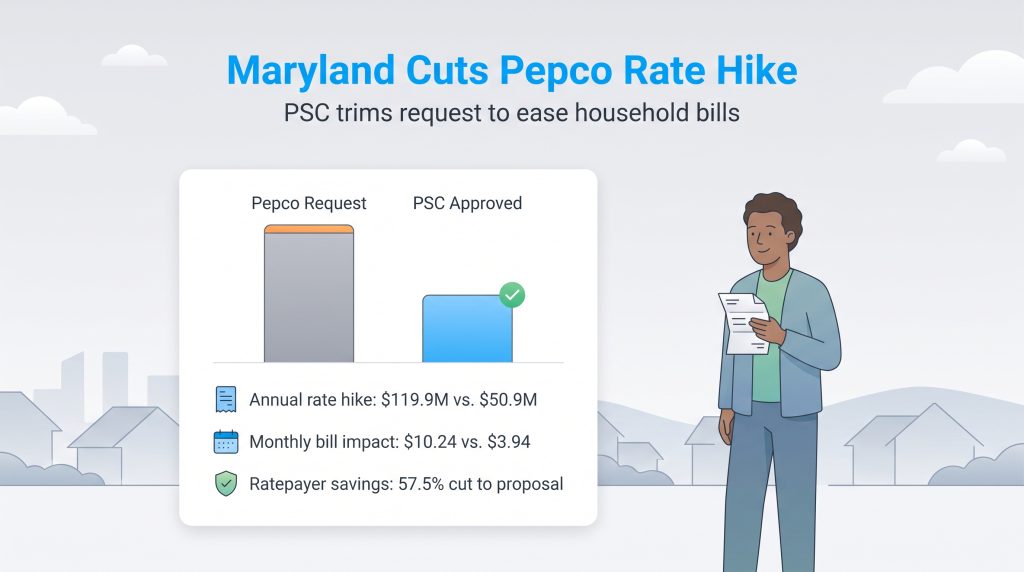
- Regulators at the Maryland PSC approved a $50.9 million revenue increase, slashing Pepco’s original $119.9 million request by more than 57%.
- Average residential customers will see bills increase by $3.94 per month, representing a modest 2.23% to 2.25% bump that stays below the national inflation rate.
- The new distribution rates took effect on Aug. 28, 2026, impacting roughly 610,000 households across Montgomery and Prince George’s counties.
If you open your latest electric statement and notice a slight uptick, you are not alone. Following months of evidentiary hearings and public testimony, state utility regulators recently decided on Potomac Electric Power Company’s (Pepco) rate case. While Pepco originally asked for double-digit monthly increases, regulators stepped in to protect household budgets from steep rate shocks. We broke down the official ruling to show you exactly what changed on your monthly bill, why the state rejected more than half of the utility’s financial request, and what practical steps you can take to keep your energy expenses manageable.
Understanding the Maryland Public Service Commission Decision
The Maryland Public Service Commission
approved an annual revenue increase of $50.9 million for Pepco, denying more than half of the $119.9 million the utility initially sought. Regulators determined that Pepco’s original filing placed an unreasonable financial burden on residential ratepayers, particularly as families manage broader cost-of-living increases.
The table below outlines the contrast between what Pepco requested and what state regulators ultimately authorized for residential customers.
| Rate Case Component | Pepco Proposed | PSC Authorized | Ratepayer Impact |
| Total Annual Revenue Increase | $119.9 million | $50.9 million | $68.93 million reduction (57.5% cut) |
| Average Monthly Bill Impact | +$10.24 / month | +$3.94 / month | Saves households $6.30 / month vs. proposal |
| Montgomery County Bill Change | +5.85% | +2.25% | Capped below the 3.4% U.S. inflation rate |
| Prince George’s County Bill Change | +5.79% | +2.23% | Capped below the 3.4% U.S. inflation rate |
| Return on Equity (ROE) | 10.50% | 9.40% | Reduced from previous 9.50% benchmark |
| Adjusted Rate Base | — | $2.994 billion | Pruned unapproved capital expenses |
Why Regulators Disallowed Over Half of Pepco’s Request
Consumer advocacy groups, state agencies, and commercial tenant organizations pushed back heavily against several speculative line items in Pepco’s application. The Commission agreed with key findings from the Maryland Office of People’s Counsel, disallowing large portions of the utility’s capital expenditures.
- White Flint Infrastructure Disallowance: Regulators ruled that Pepco’s capital spending for White Flint infrastructure projects was not prudent at this time, shielding ratepayers from roughly $164.9 million in capital costs.
- Rejection of Speculative Inflation Adjustments: The Commission refused to let Pepco pad future rates based on forecasted labor costs and projected capital inflation beyond the established test year.
- Lower Return on Equity: Regulators lowered Pepco’s authorized Return on Equity from 9.50% to 9.40%, limiting the profit margin the utility can collect from customer delivery charges.
Service Territory and Communities Affected by the Ruling
This rate decision applies exclusively to Pepco’s Maryland service territory, covering approximately 610,000 electric accounts in the suburban Washington, D.C. region. If you live in Montgomery County or Prince George’s County and receive power delivery from Pepco, the updated rate structure applies to your home.
Residents across the following major suburban municipalities and surrounding communities will see the adjusted rates on upcoming billing cycles:
- Montgomery County: Bethesda, Silver Spring, and Rockville.
- Prince George’s County: Bowie, College Park, and Hyattsville.
(Note: Pepco customers located inside the District of Columbia fall under the separate regulatory jurisdiction of the D.C. Public Service Commission and are unaffected by this Maryland order).
Delivery Rates Versus Supply Rates on Your Electric Bill
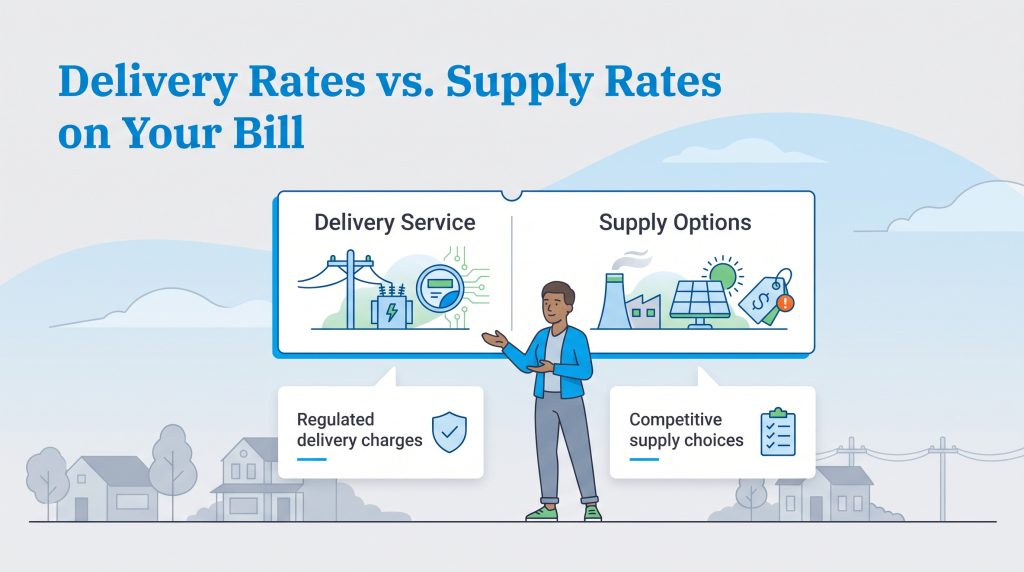
To understand where this increase lands on your statement, you need to look at how Maryland’s restructured energy market divides your monthly charges. Your bill consists of two distinct components: delivery service and commodity supply.
Regulated Distribution Charges
The recent PSC order impacts only your distribution and transmission delivery rate. Pepco owns and maintains the physical electrical grid — including neighborhood power poles, wires, transformers, and smart meters. Because Pepco operates as a regulated monopoly for delivery in its territory, state commissioners must review and approve any rate adjustments to these delivery charges.
Competitive Supply Options
Your electricity supply charge covers the actual power generation you consume. Under Maryland’s Electric Choice program, you can choose where your power comes from:
- Standard Offer Service (SOS): If you do not choose an independent supplier, you automatically receive default supply power procured by Pepco through state-monitored wholesale market auctions.
- Retail Energy Suppliers: You can shop for competitive third-party electricity plans. If you explore independent suppliers, look for fixed-rate agreements, avoid contracts with steep cancellation penalties, and be mindful of introductory teaser rates that roll into volatile variable pricing.
Energy-Saving Programs and Ratepayer Relief Options
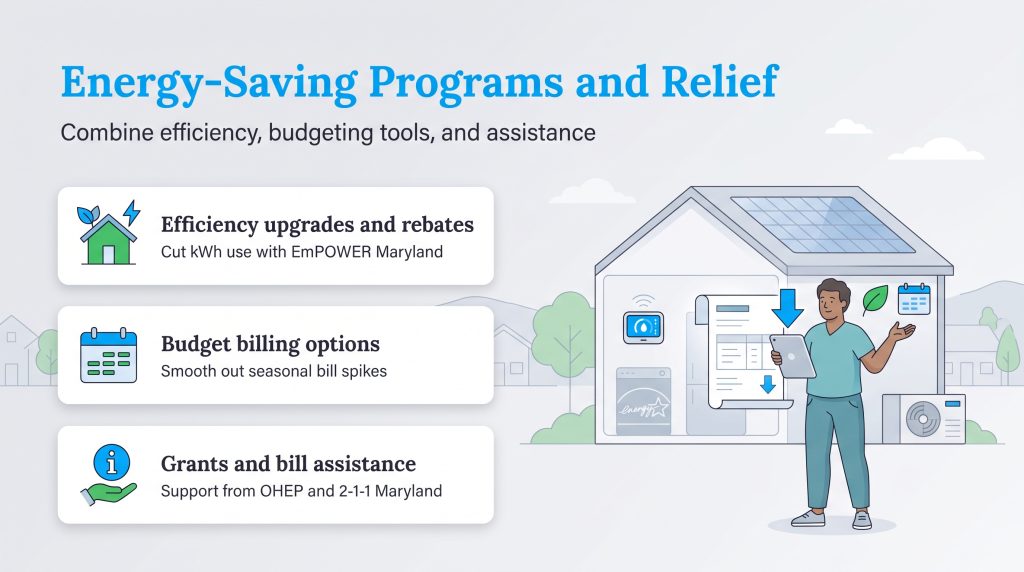
Even though the approved $3.94 monthly increase is far smaller than the original request, every extra dollar adds up over a full year. Taking advantage of state efficiency incentives and utility billing options can help offset these new distribution charges.
Efficiency Upgrades and Rebates
You can lower your home’s total kilowatt-hour consumption by tapping into incentives funded through DHCD EmPOWER Maryland. These offerings provide comprehensive in-home energy assessments, rebates on ENERGY STAR certified heat pumps and cooling equipment, and appliance recycling credits that reduce your baseline demand. Selecting an energy-saving option like a smart thermostat can also help shift your cooling and heating cycles away from expensive peak demand windows.
Levelized Budget Billing
If seasonal spikes during hot Maryland summers or cold winter snaps strain your monthly household budget, you can enroll in Pepco’s Budget Billing plan. This program averages your annual electric usage into 12 predictable monthly payments, helping you avoid unexpected seasonal bill surges.
Financial and Grant Assistance
If you or someone in your community is having difficulty paying utility bills, state and community assistance programs can provide direct relief:
- Office of Home Energy Programs (OHEP): Qualifying low-to-moderate-income Marylanders can apply for grants through the Maryland Department of Human Services OHEP, including the Electric Universal Service Program (EUSP) for bill credits and arrearage retirement.
- 2-1-1 Maryland: Dialing 2-1-1 connects residents with local emergency utility grants, fuel funds, and flexible payment arrangements.
Practical Steps to Keep Your Energy Costs Down
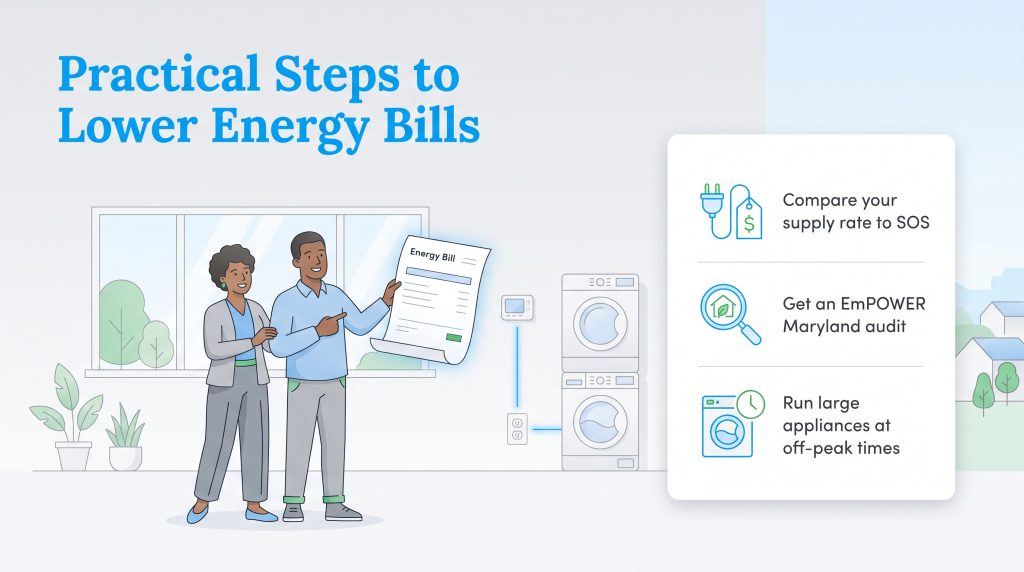
State regulators delivered an important win for Maryland consumers by rejecting the majority of Pepco’s requested rate hike and holding residential increases to an average of $3.94 per month. Moving forward, taking control of your household energy habits — whether by evaluating your supply rate against Standard Offer Service, participating in EmPOWER Maryland energy audits, or shifting heavy appliance use — remains the most reliable way to keep your monthly electric bills predictable and affordable.
About the Author

Claudio is a sustainability-focused writer with a background in Anthropology and Psychology from NC State University. He has spent over 15 years working in writing, interpretation, and translation, driven by a deep interest in how human culture shapes the environment. Today, he shares his curiosity with readers by writing about sustainable living solutions and the connection between everyday choices and environmental impact.